
- Industries

Home Backup & Garden BMS
View More >Electric Forklift BMS
View More >Golf Cart BMS
View More >Electric Two-wheeler BMS
View More >Aviation & UAV BMS
View More >BMS For Power Tools
View More >Medical Equipment BMS
View More >








Home About Us EVENTS & NEWS Why Modern Energy Systems Require BMS Battery and Their Function
There is a greater need than ever for safer, smarter, and more efficient battery systems in the rapidly evolving energy landscape of today.
The BMS battery, a battery pack with an intelligent Battery Management System (BMS) that keeps an eye on, safeguards, and maximizes the entire energy storage process, is at the center of this revolution.
However, what is a BMS battery exactly?
Why is it better than conventional batteries, and how does it operate?
We examine the reasons why BMS batteries are essential to contemporary energy systems, their benefits to the economy and the environment, and how to select the best option for your needs.
A rechargeable battery pack with a built-in battery management system is called a BMS battery.
As the battery’s brain, the BMS controls vital processes like temperature monitoring, voltage balancing, short-circuit prevention, overcharge protection, and real-time data transfer.
A BMS battery, in contrast to traditional battery packs, guarantees the safe and efficient operation of every cell in the pack.
Whether for solar energy storage, electric cars, or industrial backup power, a dependable BMS battery maintains systems operating effectively and avoids malfunctions that could result in expensive downtime or safety risks.
There are many drawbacks to conventional batteries, such as lead-acid packs or simple lithium packs without BMS:
Uneven charging and discharging of cells
Reduced usable capacity
Risk of overheating or overcharging
Shorter lifespan
In contrast, a BMS battery offers clear advantages:
Cell Balancing: Actively balances cells to prevent overcharging or deep discharge.
Safety Protection: Monitors for short circuits, overvoltage, undervoltage, and abnormal temperatures.
Longer Lifespan: By reducing stress on cells, BMS batteries last much longer than unmanaged battery packs.
Smart Monitoring: Many BMS batteries provide real-time data via CANBUS, RS485, or SMBUS interfaces.
Higher Efficiency: Better energy utilization means less waste and more power available when needed.
A BMS battery’s primary functions are to increase performance, prolong the battery pack’s lifespan, and shield it from possible problems.
The BMS tracks individual cells, identifying imbalances early and redistributing energy as necessary.
For high-capacity applications where efficiency and safety are paramount, such as solar energy storage systems, electric cars, and industrial machinery, this active control is essential.
Additionally, remote diagnostics, predictive maintenance, and smooth integration with smart energy systems are made possible by a well-designed BMS battery.
Technically speaking, a BMS battery operates by following these fundamental procedures:
Monitoring: The BMS constantly checks the voltage, current, and temperature of each cell.
Balancing: If one cell has a higher charge, the BMS transfers energy to balance it with the others.
Protection: If an abnormal condition occurs, such as overcurrent or overheating, the BMS isolates affected cells or shuts down the system to prevent damage.
Communication: Many advanced BMS batteries use protocols like CANBUS or SMBUS to share data with inverters, chargers, or monitoring software.
Maximum safety, effectiveness, and lifespan are guaranteed by this clever orchestration.
Using a BMS battery makes financial and environmental sense in addition to being technically sound. Here’s why:
Lower Total Cost: Fewer replacements and reduced maintenance mean a better return on investment.
Energy Savings: Better efficiency means less energy is wasted.
Sustainability: Many BMS batteries use safer chemistries like LiFePO₄ and recyclable materials, supporting a cleaner energy lifecycle.
These advantages result in reduced carbon footprints and increased return on investment for both homes and businesses in industries like solar energy storage.
Selecting the appropriate BMS battery is dependent upon:
Voltage and Capacity: Match your system’s energy storage needs.
Communication Protocols: Ensure compatibility with your inverter and monitoring setup.
Build Quality: Look for durable design and proven safety protections.
Brand Reputation: Partner with a trusted supplier with strong engineering and support.

A high-performance BMS battery with a continuous current of up to 300A, the AY-L24S300A-ES001 supports 7S–24S variants.
Applications: Ideal for forklifts, large energy storage systems, and industrial vehicles.
Voltage Range: Flexible to meet various system designs.
Smart Monitoring: Equipped with CANBUS/RS485/UART for real-time data exchange.
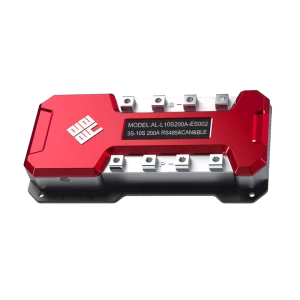
The AY-L10S200A-ES002 is intended for 4S–10S packs while maintaining a constant 200A current.
Material: High-quality PCB with robust circuit design.
Communication: Supports multiple protocols for smart monitoring.
Use Cases: Perfect for wheel-based vehicles and medium-scale energy storage.
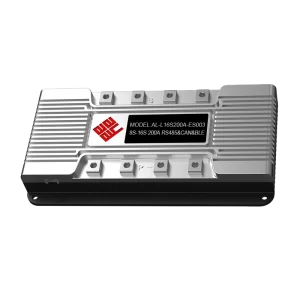
With a continuous 200A current, the AY-L16S200A-ES003 can accommodate 8S–16S packs.
Parallel Ready: Supports parallel connection for higher capacity.
Compatibility: Works seamlessly with diverse inverters and controllers.
Protocols: CANBUS/RS485 for easy integration.
| Model | Voltage Range | Continuous Current | Communication | Key Features |
|---|---|---|---|---|
| AY-L24S300A-ES001 | 7S–24S | 300A | CANBUS / RS485 / UART | Flexible voltage, industrial-grade |
| AY-L10S200A-ES002 | 4S–10S | 200A | CANBUS / RS485 | Compact, strong PCB, smart monitoring |
| AY-L16S200A-ES003 | 8S–16S | 200A | CANBUS / RS485 | Parallel-ready, wide compatibility |
Shenzhen Ayaa Technology Co., Ltd. has been providing cutting-edge BMS solutions for contemporary batteries for more than 18 years.
We create, produce, and modify BMS batteries for a range of applications, including solar energy storage, e-mobility, medical devices, and forklifts.
Our solutions enable clients achieve greater efficiency, longer lifespans, and lower maintenance costs with the use of state-of-the-art BMS technology, intelligent communication protocols, and strong protections.
Q:What is BMS for batteries?
A: Definition: A battery management system (BMS) is a piece of technology used to monitor a battery pack.
Which is a collection of battery cells electrically arranged in a row x column matrix, in order to deliver a specific range of voltage and current for a predetermined amount of time under anticipated load conditions.
Q:What is the role of the BMS?
A:In order to maintain the battery cells within a safe operating range, the BMS, which is usually an embedded system and a specially created electronic regulator, monitors and regulates a number of battery characteristics, including temperature, voltage, and current.
Q:Is BMS necessary for a lithium-ion battery?
A:It is an essential part of modern battery technology, particularly when it comes to lithium-ion battery applications.
Monitoring the temperature, voltage, state of health (SOH), and state of charge (SOC) of every cell in a battery pack is one of the many responsibilities of the BMS.
Are you prepared to switch to a more intelligent energy system?
Get in touch with Shenzhen Ayaa Technology Co., Ltd. right now to find out how our BMS batteries can effectively and safely fuel your success.
Contact Us


