


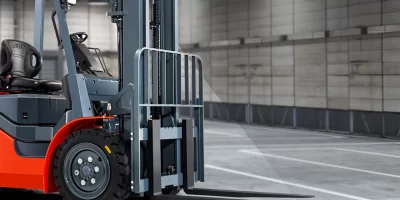





A forklift is a powered industrial truck designed to lift, move, and stack palletized materials. It operates across busy manufacturing plants, logistics warehouses, and distribution facilities worldwide. Choosing the right machine demands understanding mechanical structures, hydraulic systems, and powertrain options. Battery architecture and electrical safety define the long-term operational efficiency of your fleet.
This comprehensive guide examines core structural assemblies, operational mechanics, and common lift truck classes. We evaluate total ownership expenses and contrast lithium battery conversions against traditional fuel systems. Engineering safety principles and load center calculations help facility managers prevent costly warehouse accidents.

Core Structural Components of an Industrial Forklift
Every industrial lift truck relies on a reinforced chassis designed to handle immense mechanical stress. The structural frame balances heavy payloads against rear counterweights during high-lift cycles.
Mast, Carriage, and Fork Assemblies
The vertical mast assembly provides mechanical guidance for lifting and lowering bulky pallet loads. Engineers utilize duplex, triplex, or quad mast configurations depending on required warehouse ceiling clearance. Heavy hydraulic lift chains connect the mast rails directly to the carriage assembly. The steel carriage supports forged forks and an integrated load backrest extension.
A sturdy backrest prevents shifted cargo from slipping backward into the operator cabin. Forged steel forks slide directly into standard pallet entry pockets. Technicians adjust fork spacing manually or through hydraulic fork positioners to match variable load widths.
Counterweight, Overhead Guard, and Chassis
The rear counterweight consists of a massive cast-iron casting bolted to the chassis frame. It counteracts heavy cargo weight suspended across the front drive axle fulcrum point. Without adequate counterweight mass, a forklift tips forward during heavy mast elevation.
A welded steel overhead guard shields the operator in compliance with ISO 3691-1 safety requirements. Grid openings in the steel guard maintain clear vertical visibility during rack loading. The low-slung chassis houses critical traction motors, steering linkages, and high-voltage electrical harnesses.
How Does a Forklift Work Under Heavy Loads?
Forklift operation integrates fluid power hydraulics with dedicated rear-wheel steering geometry. Understanding these mechanical systems ensures smooth pallet positioning and safe transit across warehouse floors.
Hydraulic Lifting and Mast Tilt Mechanics
The hydraulic system converts mechanical pump pressure into controlled lifting and tilting forces. An electric motor or engine drives a high-pressure positive displacement hydraulic pump. Pressurized hydraulic fluid enters vertical lift cylinders to elevate the carriage along mast channels. Proportional control valves regulate hydraulic flow rates for ultra-smooth vertical acceleration.
Dual hydraulic tilt cylinders connect the mast base directly to the main chassis frame. Operators tilt the mast backward to stabilize palletized goods during horizontal travel. Forward tilt allows precise pallet drop-off onto storage racks or truck beds.
Rear-Wheel Steering and Stability Dynamics
Unlike road automobiles, forklifts utilize rear-wheel steering systems. Rear steering enables an extremely tight turning radius inside crowded warehouse aisles. The rear wheels pivot up to ninety degrees around the front drive axle.
However, rear-wheel steering generates significant tail swing during sharp directional maneuvers. Operators must maintain low driving speeds when negotiating tight warehouse intersections. Centrifugal forces push the center of gravity outward during fast turns. Controlled deceleration prevents dynamic rollovers when carrying heavy loads near rated limits.
Major Forklift Types and Warehouse Environments
Material handling operations deploy specialized lift trucks tailored to distinct storage densities and floor conditions. Selecting the appropriate equipment class maximizes material throughput while preventing workplace bottlenecks.
Counterbalance Forklifts for High-Volume Transport
Counterbalance forklifts serve as the primary workhorses of modern shipping and receiving docks. They feature front forks without protruding outrigger legs, driving straight up to flatbed trailers. Facilities deploy three-wheel and four-wheel models spanning Industrial Truck Association (ITA) classifications for dock and staging duties. These trucks handle standard indoor pallet transport, container loading, and production line replenishment.
Narrow-Aisle Reach Trucks and Order Pickers
Narrow-aisle reach trucks maximize warehouse cubic storage density. They utilize scissor pantograph mechanisms or moving mast channels to reach deep into racking. Stabilizing base legs support forward loads, eliminating the need for bulky chassis counterweights. Reach trucks navigate narrow aisles measuring less than nine feet wide.
Order pickers elevate the operator alongside the forks to pick individual cartons directly from high racks. Safety harnesses and deadman foot switches ensure fall prevention at working heights above thirty feet.
Rough Terrain Forklifts for Outdoor Operations
Outdoor construction sites and lumber yards require rough terrain lift trucks. These machines feature large pneumatic tractor tires and high undercarriage ground clearance. Differential locking systems and four-wheel drive conquer mud, unpaved gravel, and loose dirt. Reinforced mast frames withstand intense vibrational shock over uneven terrain.
Forklift Power Systems: Electric Lithium vs Internal Combustion
Powertrain selection dictates long-term operating costs, maintenance demands, and warehouse air quality. Industrial facilities are shifting rapidly from internal combustion engines to high-voltage electric platforms.
Fuel Efficiency, Emissions, and Operational Trade-Offs
Internal combustion forklifts run on diesel, gasoline, or liquefied petroleum gas. They provide rapid refueling capability on remote job sites without reliable electric charging access. However, combustion engines generate dangerous carbon monoxide emissions and intense engine heat indoors. Routine engine maintenance includes frequent motor oil, filter, and drive belt replacements.
Electric forklifts generate zero tailpipe emissions and operate at whisper-quiet sound levels. Electric drivetrains convert electrical energy into mechanical movement with over ninety percent efficiency. Facility operators save substantial capital on fuel expenses and scheduled engine downtime over multi-shift cycles.
The table below contrasts standard powertrain characteristics across commercial warehouse environments.
| Performance Attribute | Electric Forklift (LiFePO4) | LPG / Gasoline Forklift | Diesel Forklift |
|---|---|---|---|
| Tailpipe Emissions | Zero Emissions | High (Indoor Ventilation Needed) | Extreme (Outdoor Only) |
| Fuel / Energy Cost | Lowest ($0.40 – $0.60 / hr) | High ($2.20 – $3.50 / hr) | High ($2.50 – $4.00 / hr) |
| Powertrain Noise | Quiet (< 65 dB) | Moderate (75 – 85 dB) | Loud (> 85 dB) |
| Daily Refuel / Charge Time | 1 – 2 Hours (Opportunity Charging) | 5 Minutes (Cylinder Swap) | 5 Minutes (Tank Refill) |
| Indoor Food/Pharma Suitability | Excellent | Poor (Requires Scrubbers) | Prohibited |
Modern logistics operations choose to switch to electric forklift fleets to eliminate indoor hazardous exhaust fumes and slash operating costs.

LiFePO4 Battery Advantages Over Traditional Lead-Acid
Legacy electric forklifts relied heavily on flooded lead-acid forklift battery packs. Lead-acid batteries require weekly water additions, equalizing charges, and specialized ventilated battery rooms. Operators must physically swap heavy multi-ton battery packs between consecutive warehouse work shifts. Deep discharging below twenty percent capacity causes severe lead sulfation and permanent plate failure.
Lithium iron phosphate battery chemistry eliminates routine watering and messy acid corrosion. LiFePO4 packs deliver over 3,500 full charge cycles at high depth of discharge. Fast opportunity charging allows warehouse operators to plug in during routine fifteen-minute lunch breaks. Partnering with a reliable forklift battery supplier ensures proper cell matching, mechanical enclosure fit, and consistent voltage delivery across an entire eight-hour shift.
Smart BMS Protection for Demanding Lifting Cycles
Elevating multi-ton cargo loads draws severe instantaneous surge currents through the battery pack. Bare lithium cells require electronic supervision complying with IEC 62619 industrial safety standards to prevent thermal runaway.
AYAA TECH manufactures industrial-grade forklift BMS platforms, precision SMT assemblies, and battery pack modules. AYAA engineers complete electrification architectures, covering bare PCB development, smart battery packs, and matching forklift battery charger systems. Our Smart BMS integrates high-speed CANbus communications to relay real-time pack telemetry directly to vehicle controllers.
State of Charge tracking remains challenging during temperature fluctuations inside cold storage facilities. AYAA TECH deploys an adaptive temperature-compensated SOC algorithm with an error rate under 5%. Warehouse fleet supervisors receive trustworthy battery runtimes, eliminating unexpected mid-shift forklift shutdowns.
Thermal management architecture safeguards high-power switching components under prolonged hydraulic duty cycles. AYAA engineers place power MOSFETs and shunt resistors in uniform layouts to eliminate localized hot spots. High-grade thermal silicone interface pads conduct heat efficiently toward structural enclosures. Heavy-duty aluminum alloy heat sinks dissipate thermal buildup rapidly during continuous heavy lifting.

Looking for Reliable Industrial Smart BMS & Battery Systems?
Critical Safety Rules and Load Center Calculations
Safe forklift operation requires a thorough understanding of vehicle physics and capacity ratings. Operating beyond engineered stability envelopes causes catastrophic vehicle rollovers and fatal crushing accidents.
Rated Capacity and Load Center Principles
Every forklift carries a manufacturer data plate mandated by OSHA standard 29 CFR 1910.178 indicating certified lifting capacity. Standard capacity ratings assume a uniform load with a 24-inch load center distance. The load center measures horizontally from the fork face to the cargo center of gravity.
Carrying oversized cargo shifts the center of gravity forward, reducing effective machine lifting capacity. Operators must calculate derated capacities when handling long pipes, machinery crates, or wide pallets. Exceeding the rated load center severely overloads front drive axles and compromises steering control.
The Stability Triangle and Tip-Over Avoidance
A counterbalanced forklift rests on a dynamic three-point suspension stability triangle. The front drive wheels form the base while the rear steer axle pivot forms the apex. The combined vehicle and cargo center of gravity must remain inside this suspension triangle.
Elevating a heavy load raises the center of gravity closer to the narrow apex. Sudden braking or sharp turns at height will throw the balance point outside the triangle boundary.

【Engineering Note】
Never turn a forklift with elevated forks, and always keep payloads tilted backward during transit. When traversing warehouse ramps or grades, always keep the load pointed uphill to prevent forward rollovers.
Forklift Acquisition Costs and Maintenance Lifecycle
Procuring an industrial lift truck involves balancing upfront purchase capital against long-term maintenance overhead. Fleet managers must evaluate complete operational lifecycles rather than initial purchase discounts alone.
Upfront Purchase Pricing vs Total Cost of Ownership
New standard 5,000-pound warehouse electric forklifts range from $22,000 to $35,000. Heavy outdoor rough terrain units often exceed $75,000 depending on mast height and powertrain options. Used warehouse forklifts provide budget-friendly alternatives, trading warranty protection for lower entry costs.
However, electric models recover their premium within twenty-four months through reduced energy costs and zero oil changes. Investing in durable LiFePO4 battery packs minimizes premature cell degradation and battery replacement cycles.
Preventative Maintenance Checkpoints
Daily pre-shift inspections prevent minor mechanical wear from developing into catastrophic operational failures. Technicians must inspect mast lift chains for elongation, link cracking, and proper lubrication. Inspect hydraulic hoses and cylinder seals regularly for fluid weeping or pressure drops. Monitor electrical harness connections, contactor tip wear, and lithium battery cell balance voltages weekly.
Conclusion
Selecting the ideal forklift requires balancing load capacity, mast lift height, and powertrain efficiency. Modern electric forklifts powered by advanced lithium technology deliver superior lifecycle return on investment. Partnering with experienced power engineering specialists ensures your industrial material handling fleet stays productive.
Need Custom Battery Management for Heavy Lifting Fleets?
FAQ
What is the primary purpose of a forklift?
A forklift lifts, transports, and stacks palletized industrial cargo over short distances. It streamlines material loading across factories, freight terminals, and high-density warehouse storage systems.
How does the forklift stability triangle work?
The stability triangle connects the two front drive wheels to the rear steering axle pivot point. A forklift remains stable only when its combined center of gravity stays within this triangular footprint.
What is the average price of an industrial forklift?
Standard new electric warehouse forklifts generally cost between $22,000 and $35,000. Specialized heavy-duty or rough terrain diesel models can exceed $70,000 to $100,000.
Why are warehouses switching from lead-acid to lithium forklift batteries?
Lithium batteries eliminate weekly acid watering, equalizing cycles, and dangerous battery swapping rooms. They support rapid opportunity charging, deliver 3,500+ cycles, and maintain steady operating voltage throughout shifts.
What does the load center rating mean on a forklift?
Load center is the horizontal distance from the fork face to the cargo center of gravity. Standard industrial forklifts use a 24-inch load center to calculate maximum certified lifting capacity.
How does a Smart BMS protect an electric forklift battery?
A Smart BMS monitors cell voltages, regulates heavy lifting surge currents, and balances individual cell series. It prevents cell over-discharge, over-temperature conditions, and unexpected mid-shift vehicle shutdowns during operation.
How long can an electric forklift operate on a single charge?
A properly sized lithium forklift battery operates continuously for eight to ten hours on a charge. Opportunity charging during operator breaks can easily extend operation across continuous twenty-four-hour multi-shift schedules.


