
- Industries

Home Backup & Garden BMS
View More >Electric Forklift BMS
View More >Golf Cart BMS
View More >Electric Two-wheeler BMS
View More >Aviation & UAV BMS
View More >BMS For Power Tools
View More >Medical Equipment BMS
View More >




Home About Us EVENTS & NEWS How to Choose a Golf Cart: Types, Battery Systems, and Costs
A modern golf cart serves far beyond the manicured greens. Today, it powers gated residential neighborhoods, industrial logistics complexes, and large resort grounds.
Choosing the right cart requires understanding chassis configurations, drivetrain platforms, and total operating expenses. Furthermore, battery chemistry and smart powertrain management define long-term vehicle reliability.
This comprehensive guide breaks down modern vehicle classes, compares power sources, and analyzes commercial pricing tiers. We also examine essential safety requirements and advanced battery architectures to protect your fleet investment.

Selecting a vehicle starts with clearly defining your primary operating environment. Today, golf carts handle turf maintenance, personnel transport, and industrial cargo hauling across diverse facilities.
Standard fleet carts operate primarily on private property, gated resorts, and dedicated golf courses. They reach top speeds between 12 and 15 miles per hour.
These models feature simple mechanical drum brakes and basic forward headlamps. They rarely carry vehicle identification numbers or DOT-approved safety gear. Standard fleet units provide cost-effective, low-maintenance transport across private roads.
In contrast, Low-Speed Vehicles (LSVs) are legally certified for public neighborhood streets. They achieve regulated maximum speeds of 25 miles per hour.
Federal motor vehicle safety standards mandate specific automotive equipment on all LSV platforms. These include three-point seat belts, windshield wipers, and integrated turn signals. They also require high-mounted brake lights, automotive mirrors, and DOT-compliant windshields. LSVs cost more upfront but deliver flexible, street-legal mobility for community transit.
Industrial facilities demand rugged transport platforms for demanding daily maintenance operations. Commercial utility carts replace standard rear passenger seating with heavy-duty flatbeds or cargo boxes.
These versatile work vehicles haul heavy tools, bulk replacement parts, and maintenance crews. Operators rely on them inside manufacturing plants, distribution warehouses, and expansive university campuses.
Engineers equip these utility models with reinforced tubular steel frames and heavy leaf springs. Upgraded transaxles provide the necessary torque reduction for towing heavy industrial trailers.
Optional enclosed aluminum cabs protect drivers during freezing rain and harsh weather conditions. Many warehouses now deploy electric utility carts to replace full-sized pickup trucks. This fleet transition reduces indoor carbon emissions and minimizes localized facility traffic congestion.
Powertrain selection directly dictates your ongoing maintenance schedule, charging infrastructure, and fuel logistics. Both internal combustion and electric drivetrains offer distinct mechanical trade-offs for commercial fleets.
Gasoline golf carts rely on single-cylinder four-stroke internal combustion engines. They deliver consistent driving range across remote job sites lacking electrical grid access. Refueling a gas cart takes only a few minutes at a commercial fuel pump.
However, mechanical complexity brings recurring engine maintenance requirements. Gas engines demand scheduled motor oil changes, fuel treatment, and spark plug replacements.
Technicians must also inspect drive belts, fuel filters, and valve clearances periodically. Gas carts generate continuous tailpipe emissions, noticeable engine vibration, and irritating exhaust noise.
Electric golf carts deliver instant motor torque and whisper-quiet operation across all speeds. Electric drivetrains feature only one primary rotating assembly inside the motor.
This simplicity completely eliminates routine engine oil changes, spark plugs, and air filters. Regenerative braking systems also capture kinetic energy to reduce physical wear on mechanical brake shoes.
Evaluating vehicle powertrains requires looking far beyond the initial purchase invoice. Cumulative operating expenses over several years tell the true financial story for fleet managers.

The comparative breakdown below outlines typical operational expenses across a five-year service lifecycle.
| Expense Category | Electric Fleet Cart (LiFePO4) | Gasoline Fleet Cart (Internal Combustion) |
|---|---|---|
| Energy Cost (10,000 miles) | $320 – $450 (Grid Electricity) | $1,800 – $2,400 (Commercial Fuel) |
| Routine Drivetrain Service | Minimal (Inspection only) | $800 – $1,200 (Oil, Belts, Filters) |
| Brake Pad Wear & Tear | Low (Regenerative braking) | Moderate (Friction braking only) |
| Powertrain Noise Level | Silent (< 50 dB) | Noticeable (70 – 80 dB) |
| Scheduled Downtime | Very Low | Moderate |
Electric models consistently demonstrate lower cumulative operating costs over extended multi-shift duties. Lower energy costs and zero engine servicing rapidly offset initial vehicle hardware expenses.
The energy storage system serves as the core operational heart of any modern electric cart. Selecting the right golf cart battery directly determines vehicle acceleration, payload capacity, and daily operating range.
Traditional electric carts relied on heavy banks of 6-volt or 8-volt lead-acid batteries. A standard six-battery lead-acid pack weighs between 300 and 400 pounds.
This dead weight accelerates tire wear, stresses mechanical steering gears, and strains suspension bushings. Lead-acid chemistry also suffers from severe usable capacity limitations under heavy acceleration loads.
Discharging lead-acid batteries beyond 50% depth of discharge causes permanent lead plate degradation. Routine acid boiling also creates corrosive sulfuric acid fumes inside the battery compartment.
Lithium iron phosphate (LiFePO4) technology has completely transformed golf cart energy storage. A comparable lithium battery pack weighs roughly 60% less than conventional lead-acid blocks.
This significant weight reduction improves vehicle acceleration and increases hill-climbing speeds on steep grades. LiFePO4 cells deliver a full 100% usable depth of discharge without damaging cell chemistry.
They also maintain steady voltage output until the entire battery pack is completely depleted. Lead-acid packs deliver only 500 to 800 charge cycles before requiring full replacement. In contrast, premium LiFePO4 packs achieve over 3,500 full charge cycles under daily commercial use.
Upgrading to lithium technology requires sophisticated onboard supervisory electronics to maintain absolute system stability. Bare lithium cells demand continuous individual voltage balancing and multi-point thermal surveillance.
This is where advanced engineering makes a crucial operational difference. As an established golf cart battery supplier and engineering partner, AYAA TECH manufactures integrated power systems, precision SMT assemblies, and industrial Smart BMS platforms.
AYAA develops complete turnkey electrification packages for light electric vehicles. These encompass custom PCB hardware layouts, durable battery modules, and matching dedicated high-frequency chargers.
An industrial golf cart bms protects every individual cell series in accordance with IEC 62619 industrial battery safety standards from overvoltage, undervoltage, and overcurrent conditions. State of Charge estimation represents another critical operational challenge in fluctuating ambient temperatures.
AYAA TECH utilizes high-precision adaptive SOC algorithms that automatically compensate for ambient temperature shifts. This proprietary algorithm limits SOC calculation error to 5% or less. Fleet managers receive trustworthy remaining range figures across blistering summer heat or freezing winter chill.
Thermal management architecture forms another essential pillar of high-reliability electrical design. High continuous discharge currents generate significant heat across power electronics during hill climbs.
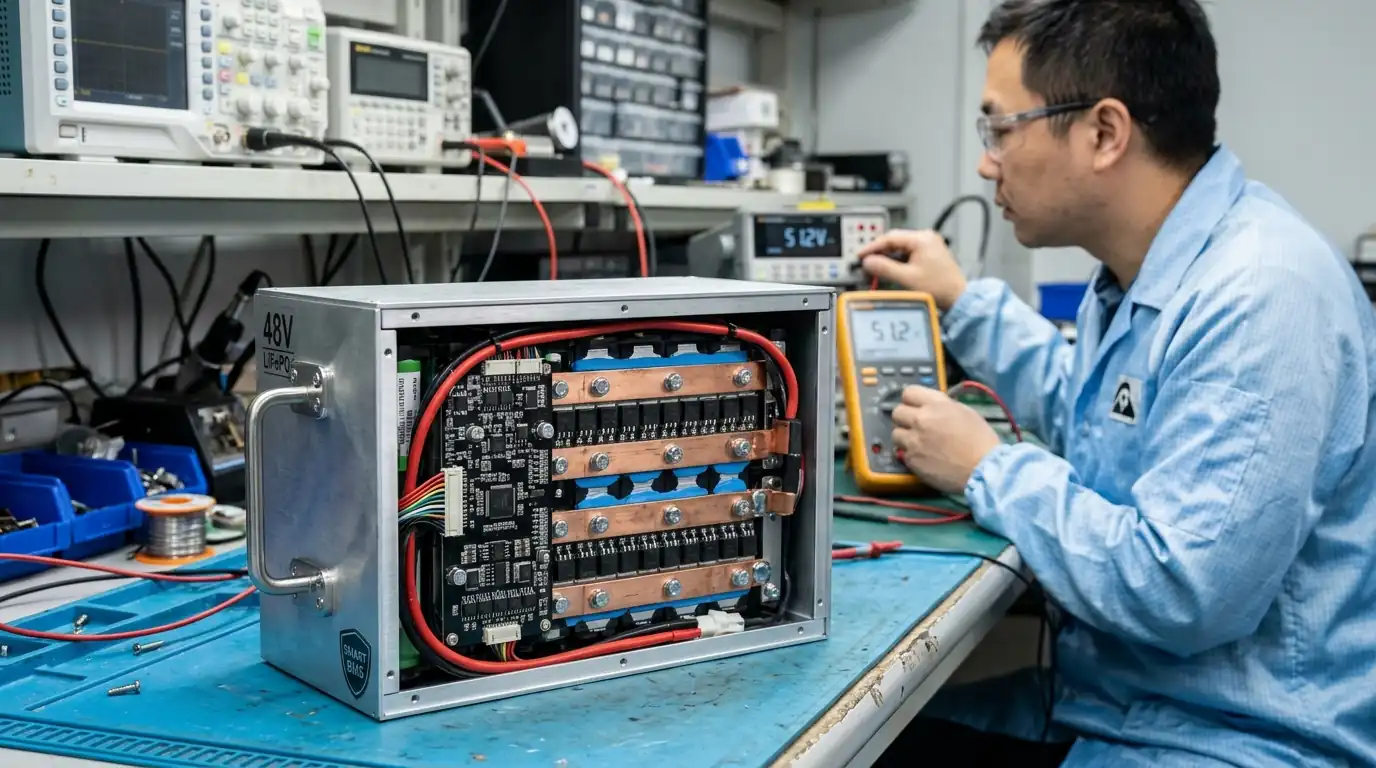
AYAA engineers optimize heat dissipation through the uniform placement of power MOSFETs and shunt resistors. The physical design incorporates high-conductivity thermal silicone pads and specialized gap-filling potting gels.
Under demanding commercial workloads, high-thermal-conductivity aluminum alloy enclosures channel heat away from sensitive control circuitry. This robust thermal engineering prevents premature component failure and costly field breakdowns.
Golf cart prices vary significantly based on powertrain engineering, chassis materials, and legal certifications. Budgeting requires balancing the purchase price against expected daily operational duty cycles and fleet lifespan.

Entry-level electric carts generally range from $6,000 to $9,000 across current retail markets. These basic units serve casual neighborhood cruising or occasional rounds on weekend golf courses.
They often feature stamped steel frames, basic DC brush motors, and simple analog battery gauges. While affordable initially, their performance degrades noticeably when carrying four adults up steep residential inclines.
Mid-tier consumer models typically range from $9,000 to $13,000 from established manufacturers. These carts include maintenance-free AC induction motors, lifted suspension systems, and intuitive digital dashboard displays.
They also feature premium marine-grade vinyl seating, automotive paint finishes, and integrated USB charging ports. Mid-tier carts provide excellent ride comfort and balanced reliability for everyday neighborhood transportation.
Commercial-grade utility vehicles and road-ready LSVs start around $13,000 and frequently exceed $20,000. These high-end platforms feature all-aluminum rustproof chassis and four-wheel hydraulic disc brakes.
Heavy-duty commercial models also incorporate high-capacity lithium battery packs, integrated telematics, and a dedicated industrial golf cart battery charger. They are purpose-built to withstand rigorous eight-hour daily shifts across rough industrial facilities.
Prospective buyers often focus entirely on the initial vehicle acquisition figure listed on the invoice. However, ongoing maintenance items require realistic operational reserve funds over a five-year horizon.
Lead-acid battery banks require complete replacement every three to four years of regular use. Replacing six deep-cycle batteries costs between $1,200 and $1,800, including disposal fees and labor.
Flooded batteries also demand continuous maintenance supplies, including distilled water and terminal protectants. Acid boil-overs frequently corrode steel battery hold-down rods, tray floors, and adjacent frame members.
Opting for lithium chemistry involves higher upfront capital investment but completely eliminates interim replacement cycles. Lithium packs operate virtually maintenance-free for eight to ten years under typical commercial cycles.
Factoring in zero watering labor, reduced tire wear, and lower charging electrical consumption reveals clear savings. Over a five-year operational window, lithium systems significantly reduce the total cost of ownership.
The used and grey-market golf cart space contains numerous technical pitfalls for unwary buyers. Uninformed purchasers risk acquiring vehicles with severe structural defects, obsolete controllers, or compromised electrical wiring.
Always inspect used vehicles for structural oxidation and cracking along the lower tubular frame rails. Stamped steel frames corrode quickly when exposed to boiled battery acid or coastal salt air.
Inspect the rear axle assembly, differential housing, and motor casing for weeping oil seals. Worn mechanical input splines or leaking seals indicate severe past abuse and impending transaxle failure.
Be extremely cautious of unbranded import carts sold through big-box discount retailers and online liquidators. These budget vehicles often utilize proprietary motor controllers and non-standard electrical wiring harnesses.
Sourcing replacement brake cables, steering gear racks, or suspension bushings frequently proves nearly impossible. When an unbranded motor controller fails, local service technicians cannot access proprietary diagnostic software.
Stick with established platform architectures that offer readily accessible, standardized replacement parts networks. Reliable supply chains ensure your cart remains fully operational for years to come.
Retrofitting older lead-acid carts with budget drop-in lithium batteries carries real electrical and fire hazards. Cheap drop-in lithium packs often utilize low-grade battery management boards lacking essential thermal sensors.
High-current draw during steep hill climbs can rapidly trip low-tier battery protection circuits. Inferior BMS boards shut down abruptly without warning, stranding the cart on dangerous inclines.
Furthermore, high discharge rates generate substantial internal heat across cheap terminal connections. Always verify that your lithium pack conforms to UL 2271 light electric vehicle battery safety standards, incorporating automotive-grade cells, flame-retardant structural enclosures, and continuous high-amp Smart BMS protection.
Choosing the ideal golf cart requires balancing powertrain mechanics, battery architecture, and operating environment. Electric drive systems paired with modern lithium storage deliver unmatched efficiency, minimal maintenance, and long service life.
Evaluating the total cost of ownership rather than initial purchase price ensures superior operational value. Integrating a reliable Smart BMS guarantees accurate range prediction and thermal safety across demanding commercial duties.
With proper battery selection and chassis engineering, your golf cart provides reliable, cost-effective mobility for years.
A brand-new consumer golf cart typically costs between $8,000 and $12,000. Commercial utility models and road-legal LSVs range from $13,000 to over $20,000. Quality refurbished carts with fresh batteries usually sell between $5,000 and $8,000.
Yes, electric golf carts deliver substantial long-term operating savings across multi-year cycles. Electric motors eliminate motor oil changes, spark plugs, drive belts, and volatile pump fuels. Over five years, lower electricity costs and zero engine servicing readily offset higher upfront purchase expenses.
Avoid discontinued brands and generic unbranded imports lacking domestic dealer support networks. These models suffer from poor replacement parts availability and inaccessible electronic diagnostics. Also avoid used carts showing heavy structural frame rust or severe battery tray acid corrosion.
A quality LiFePO4 lithium battery pack lasts between eight and twelve years under normal duty cycles. Most industrial-grade lithium packs deliver over 3,500 full charge cycles at 80% remaining capacity. In comparison, traditional lead-acid batteries require complete replacement every three to four years.
Standard golf carts are restricted to private property, golf courses, and dedicated neighborhood cart paths. To drive legally on public roads, a cart must be certified as a Low-Speed Vehicle (LSV). LSVs feature seat belts, turn signals, automotive mirrors, horn, and DOT-approved safety glass.
Electric carts require minimal routine mechanical upkeep compared to complex gas alternatives. Operators should inspect tire pressures, brake shoe wear, and steering linkage play periodically. For lithium-powered carts, no water additions, terminal scrubbing, or acid neutralizing tasks are ever necessary.
Extreme cold temporarily reduces battery discharge capacity and shortens driving range in winter conditions. High ambient heat accelerates cell degradation if thermal dissipation is inadequate. Advanced Smart BMS hardware uses temperature compensation algorithms to maintain accurate range tracking and protect cells.


