- Industries

Home Backup & Garden BMS
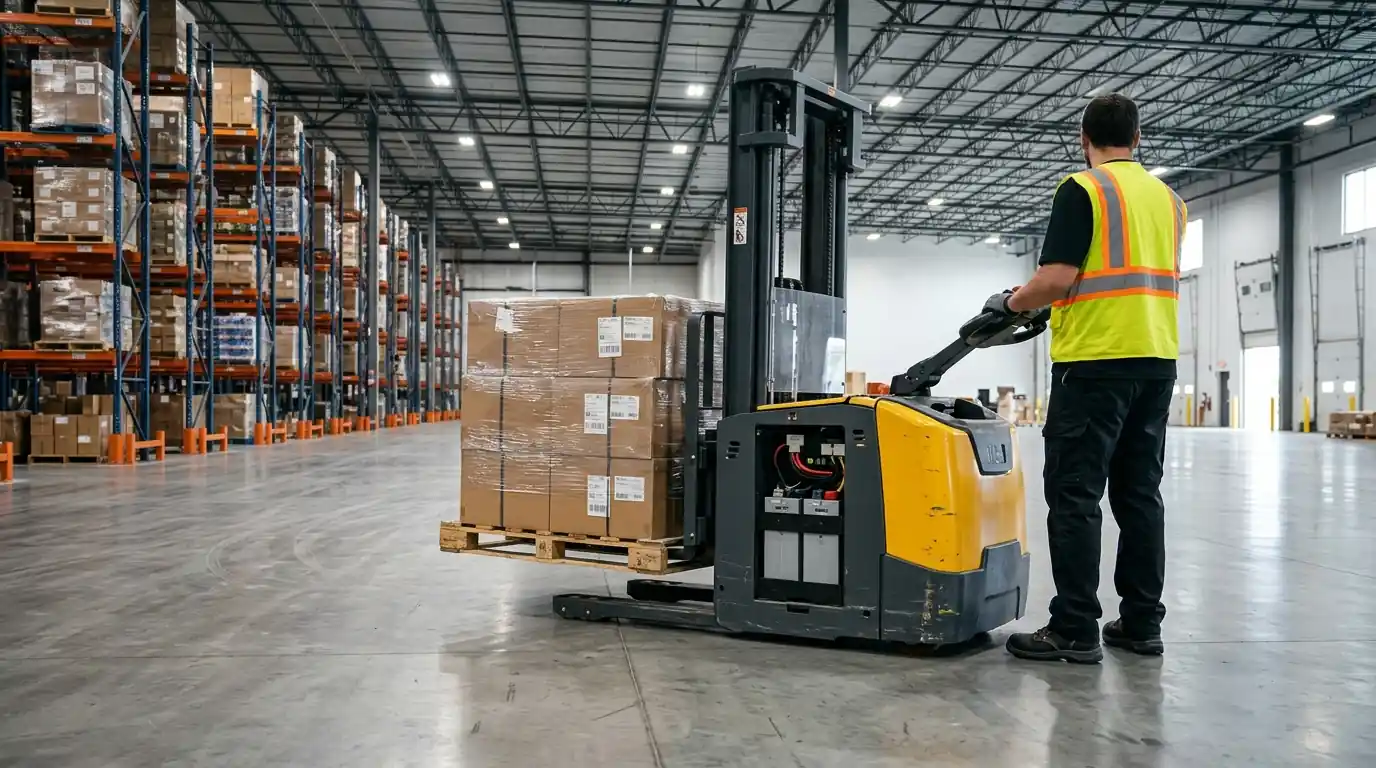
View More >Electric Forklift BMS
View More >Golf Cart BMS
View More >Electric Two-wheeler BMS
View More >Aviation & UAV BMS
View More >BMS For Power Tools
View More >Medical Equipment BMS
View More >






Home About Us EVENTS & NEWS Choosing the Best 12s lipo bms for Industrial UAV Power Systems
The power system is literally the mission’s lifeblood in the high-performance world of industrial UAVs.
A 44.4V nominal arrangement is frequently the norm for heavy-lift drones and long-endurance platforms, which calls for a premium 12s lipo bms.
In order to maintain steady high-voltage operation under the most demanding flying conditions.
This particular management system is in charge of controlling twelve lithium polymer cells in sequence.
Optimizing the efficiency and cycle life of your costly battery assets is just as important as protecting them when selecting a 12-second lipo BMS.
As we navigate the complex energy requirements of 2026, the bms system battery has become the defining factor in whether an industrial drone fleet is a reliable tool or a liability.

Twelve lithium polymer cells connected in a series string are monitored and protected by a specialized electronic regulator called a 12s lipo bms.
1. High-Voltage Architecture: Typically found in industrial-grade UAVs, it controls a nominal voltage of 44.4V and a peak voltage of 50.4V.
2. Multi-Cell Monitoring: To guarantee ideal synchronization, the system simultaneously monitors the voltages of twelve separate cells.
3. Current Regulation: It protects against short circuits while managing the high amperage needed to carry large burdens.
4. Telemetry Interface: Contemporary devices function as a smart battery lithium hub, sending critical health information to the flight controller instantly.
As the “brain” of the battery, the 12s lipo bms continuously assesses each cell’s condition and modifies the power flow in tiny ways.
●Real-Time Sampling: The twelve cells’ voltage and temperature are sampled thousands of times per second by the BMS.
●MOSFETSwitching: If the 12s lipo bms detects a safety threshold breach, it can immediately disconnect the connection using high-power transistors.
●ActiveBalancing: The BMS reroutes energy or bleeds off surplus to allow the others to catch up if one cell hits 4.2V before the others.
●DataTranslation: Pilots can view their precise remaining flying time by converting chemical energy states into digital protocols.
Without precision management, operating a high-voltage BMS for lipo battery poses a serious risk to the mission and the hardware.
1. Preventing CellDrift: Even a slight imbalance in a twelve-cell string can result in one cell failing, which would cut off power to the drone as a whole.
2. Thermal Runaway Defense: The 12s lipo bms makes sure that internal heat never reaches the threshold of combustion because LiPo chemistry is volatile.
3. Extending Asset Life: The BMS makes sure the battery can reach its full cycle potential by preventing over-discharge, or falling below 3.0V per cell.
4. Flight Safety Redundancy: Hardware cannot provide the level of digital protection that a professional BMS system battery does.
The standard power management solution for any application needing steady high-voltage output and high power-to-weight ratios is the 12s lipo bms.
●AgriculturalSpraying: Driving heavy-lift drones to precisely dust crops across hectares of farms with massive tanks of liquid.
●Cinematic Production: Giving large cinema cameras and stabilized gimbal systems the steady, high-current draw they require.
●SearchandRescue: Ensuring that long-range thermal imaging drones are dependable enough to function in distant areas and severe weather.
●Industrial Inspection: Controlling the electricity for unmanned aerial vehicles (UAVs) with LIDAR or ultrasonic sensors to inspect power lines and bridges.
When scaled up to the complexity of a 12s industrial setting, generic controllers or standard or low-end 24v BMS frequently malfunction.
1. VoltageResolutionLag: During a high-throttle ascent, conventional systems might not be quick enough to identify an abrupt voltage decrease in one of the twelve cells.
2. High Heat Accumulation: The continual 100A+ loads of industrial drones might cause a basic BMS for lipo batteries to overheat without sophisticated thermal design.
3. Inaccurate State of Charge: Pilots are unable to schedule their return home because several common systems give a “percentage” that varies greatly.
4. Passive Balancing Inefficiency: Passive balancing is frequently too slow in big 12-second packs to maintain cell alignment during fast field charging.
Custom Smart BMS 7S–24S 300A–500A | CAN, RS485, UART, BLE
In order to deliver the accuracy and durability needed for industrial UAV battery operations in 2026, modern management technology has developed.
●High-SpeedAFEChips: All twelve series strings are equipped with sophisticated Analog Front End chips that offer millivolt-level accuracy.
● Integration of an Active Balancer: This accelerates the balancing process by dynamically transferring energy between cells instead of wasting it as heat.
●SmartTelemetryIntegration: Enabling direct communication between the drone’s GCS (Ground Control Station) and the 12s lipo bms for comprehensive logging.
●EnhancedPowerDensity: To keep the BMS system batteries cool under high load, low-resistance parts and aluminum heat sinks are used.
A Middle Eastern logistics company used high-capacity 12s lipo bms modules to deploy a fleet of delivery drones in 2026.
Standard BMSs for lipo battery units were causing heat shutdowns in the middle of flight when ambient temperatures rose beyond 45°C.
The fleet attained a 100% mission success rate by switching to a BMS with a high-efficiency active balancer and sophisticated temperature mapping.
The operations team was able to monitor each pack’s internal temperature in real-time and modify flight paths to maximize cooling thanks to the smart battery lithium software.
This shown that having the appropriate BMS can mean the difference between a lucrative service and operational failure.
| Technical Feature | Standard 12S BMS | Professional 12s lipo bms |
|---|---|---|
| Balancing Current | 50mA (Passive) | 1A – 2A (Active) |
| Communication | None | CAN / SMBus / BT |
| Current Handling | 60A Continuous | 150A+ Continuous |
| Voltage Precision | ±50mV | ±1mV |
| Thermal Protection | Single Sensor | Multi-Point Mapping |
The technical requirements of the controller must be matched to the particular requirements of your UAV mission in order to choose the best 12s lipo BMS.
1. VerifyPeakAmperage: Make sure the BMS can manage your motors’ “burst” current during takeoff without setting off the safety circuit.
2. Verify Communication Protocols: To transmit battery data to the flight controller, industrial drones frequently need CAN or SMBus.
3. Evaluate Balancing Speed: To shorten charging times and preserve cell health, an active balancer is strongly advised for large-capacity packs.
4. Assess FormFactor: Since every gram matters in a drone, search for a BMS system battery that provides a high power density in a small compact.
Beyond 2026, artificial intelligence will be included into the 12s lipo bms more and more for predictive maintenance.
The weight of balance leads in a BMS 16s or 12s arrangement is expected to decrease as wireless cell monitoring becomes more widespread.
The objective is a “transparent” power system in which the pilot may fully concentrate on the flight task while the intelligent battery lithium takes care of all maintenance.
Q1:Do LiPo batteries need BMS?
A1:Without a BMS, a lithium battery is as dangerous and uncontrollable as a car without a driver.
As the “brain” and “bodyguard” of your battery pack, the Battery Management System (BMS) guarantees performance, longevity, and safety.
Q2:Is there a 12s LiPo battery?
A2:A 12-second LiPo battery is a high-voltage, rechargeable power source that is frequently utilized in a variety of applications, including in RC models, electric cars, and drones.
The battery is made up of 12 cells connected in series, as indicated by the “12s” designation.
Q3:What is 1S, 2S, and 3S in BMS?
A3:The S stands for series cells, which might be a single cell or several in tandem.
Voltage is increased (additively) when cells are connected in series.
For instance, 1S = 3.7V, 2S = 7.4V, 3S = 11.1V, and so on are nominal voltages.
Your battery pack’s series cell count and, consequently, voltage must be matched by a BMS.
Q4:How to choose BMS for LiFePO4?
A4:Compatibility: Verify that the BMS was created especially for LiFePO4 cells.
Voltage and Current Monitoring: Every cell in the LiFePO4 battery pack should have its voltage and current precisely monitored by the BMS.
Q5:Can I charge LiFePO4 without BMS?
A5:A LiFePO4 battery can be charged while in use, but it’s crucial to use a Battery Management System (BMS) to guarantee appropriate voltage and current management.
In order to avoid overcharging or depletion, the BMS assists in balancing charging and usage.
The foundation of dependability for contemporary industrial UAVs is the 12s lipo bms, which offers the security and intelligence required for high-voltage operations.
Your drone fleet will continue to be a reliable asset in the field if you invest in a system with precise cell monitoring, high-current handling, and smart telemetry.
The success of your mission is determined on the digital logic of your BMS, whether you are optimizing a heavy-lift platform or scaling up from a 24v BMS.
The high-precision power architectures from Ayaa Technology deliver the professional-grade stability and 2026-ready innovation your fleet needs to equip your industrial UAVs with the most robust and cutting-edge energy management technology currently available.
Email [email protected] to find out more about Ayaatech Smart Drone BMS (4S-32).
Please read these connected articles for further information.
High-performance smart BMS solutions for energy storage, EVs, robotics, and drones.
✔ High Efficiency & Active Balancing
✔ Smart Monitoring & Protection
✔ Global Certifications
✔ Customizable for Any Application
⚡ Engineers respond within 12 hours
🔒 Your information is safe and confidential