- Industries

Home Backup & Garden BMS
View More >Electric Forklift BMS
View More >Golf Cart BMS
View More >Electric Two-wheeler BMS
View More >Aviation & UAV BMS
View More >BMS For Power Tools
View More >Medical Equipment BMS
View More >




Home About Us EVENTS & NEWS Electric Stacker Battery Guide: Types, Costs, and Specs
An electric stacker battery powers the drive motors and hydraulic lifting pumps in warehouse stackers. Replacement prices range from $350 for 12V GEL units to $2,800 for lithium packs. High-voltage 48V industrial traction batteries can cost up to $3,800. Sizing the right battery requires balancing voltage, amp-hour capacity, chemistry, and physical counterweight requirements.
Material handling fleets rely on three main voltages: 12V, 24V, and 48V. Selecting between sealed lead-acid, GEL, and lithium iron phosphate (LiFePO4) directly impacts operating costs and uptime. This guide breaks down chemistry performance, transparent replacement pricing, total cost of ownership, and engineering replacement criteria.

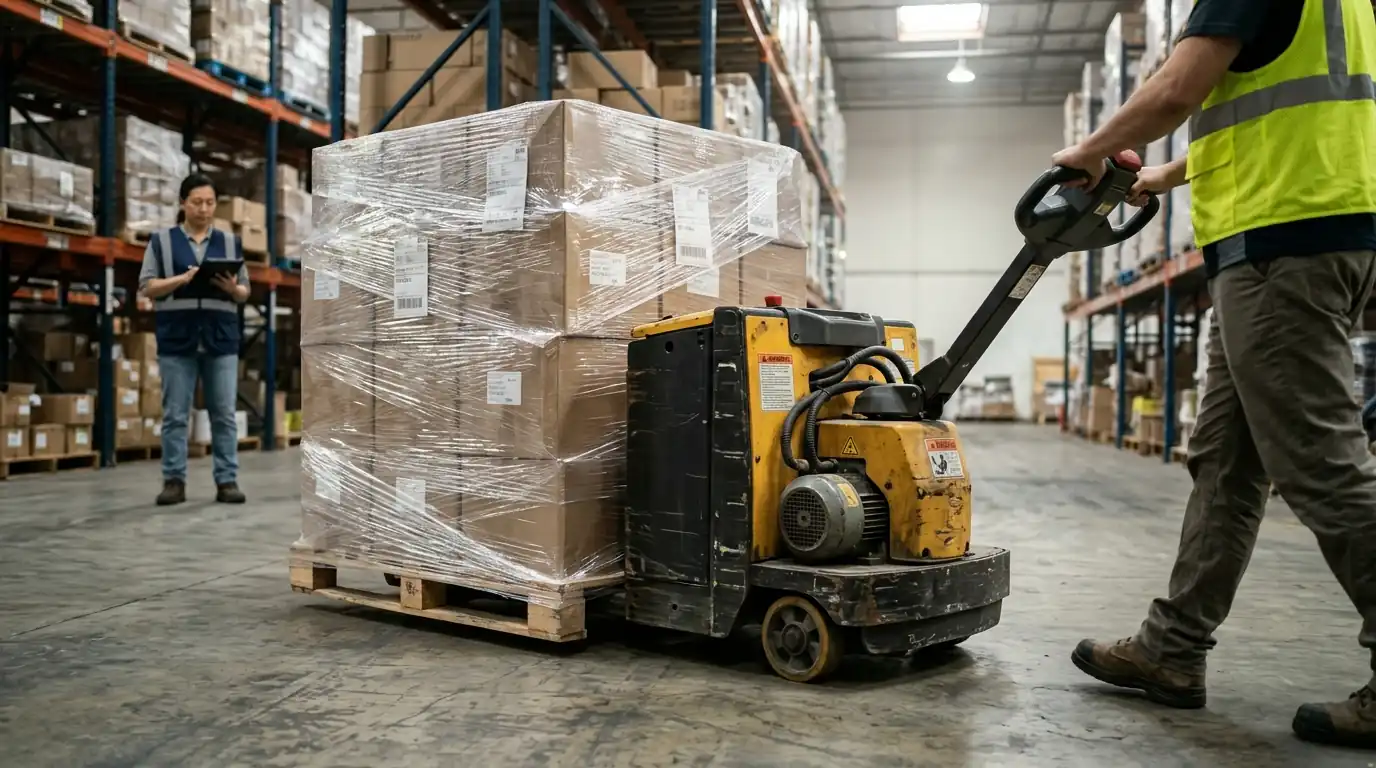
Heavy-duty electric stacker battery compartment inspection in a logistics warehouse
Electric stackers rely on dedicated direct-current battery systems built to rigorous industrial standards, such as ISO 3691-1 safety requirements. Semi-electric stackers generally operate on a 12V electrical architecture. These machines use manual propulsion while an electric motor powers the hydraulic lift mast.
Fully powered walkie stackers and ride-on straddle trucks demand 24V or 48V power systems. These larger platforms draw energy for both electric traction motors and heavy hydraulic lifting cylinders. Manufacturers configure these packs using series-connected 6V or 12V blocks. Alternatively, they install dedicated steel-encased industrial traction battery trays.
Industrial stackers create two distinct electrical load demands during normal warehouse shifts. The drive traction motor draws continuous current between 30A and 60A during travel. In contrast, the hydraulic lift pump creates extreme current spikes.
Lifting a two-ton pallet generates instantaneous surges between 150A and 300A. A quality stacker battery must maintain stable terminal voltage under high discharge rates. Severe voltage drops trigger motor controller faults and slow down warehouse cycle times.
Deep-cycle lead-acid remains a common choice in light-duty material handling equipment. Flooded lead-acid and sealed GEL batteries offer low initial purchase costs. They also provide natural counterweight ballast inside the stacker chassis.
However, lead-acid technology introduces substantial operational limitations. Flooded units require weekly distilled water replenishment and dedicated acid containment areas. Lead-acid batteries also suffer from a 50% maximum recommended depth of discharge.
Discharging beyond this threshold rapidly accelerates plate sulfation and shortens service life. Furthermore, recharging requires a rigid 8-hour charge cycle followed by an 8-hour cooling period.
Lithium Iron Phosphate (LiFePO4) certified under IEC 62619 industrial standards has emerged as the modern benchmark for electric stacker battery systems. LiFePO4 chemistry delivers over 3,500 full charge cycles at 80% depth of discharge. Operators can opportunity-charge lithium packs during 15-minute breaks without causing thermal degradation.
At AYAA TECH, we engineer custom industrial lithium battery packs and matching intelligent chargers. Our battery architectures integrate an advanced industrial Smart BMS. The system supports CAN bus and RS485 communication protocols for warehouse fleet telematics.
Our proprietary SOC algorithm calculates state of charge with an error rate below 5%. It dynamically compensates for ambient temperature variations from cold storage to warm loading docks. Furthermore, our thermal management architecture utilizes a uniform layout of power MOSFETs and current shunts. High-grade thermal silicone pads and aluminum heat sinks ensure rapid dissipation under continuous lifting duty.

Architectural engineering comparison between traditional lead-acid and advanced LiFePO4 stacker batteries
Stacker battery replacement prices vary significantly based on chemistry, voltage, and usable capacity. Procurement teams must evaluate initial acquisition costs against operational shift requirements. The table below outlines real-world market replacement prices for standard electric stacker battery configurations:
| Battery Voltage & Type | Typical Capacity (Ah) | Cycle Life (80% DoD) | Upfront Replacement Cost | Best Suited Equipment |
|---|---|---|---|---|
| 12V Sealed GEL / AGM | 100Ah – 125Ah | 400 – 600 cycles | $350 – $480 | Semi-electric manual stackers |
| 24V AGM Deep-Cycle Set | 100Ah – 150Ah (2x12V) | 500 – 700 cycles | $650 – $1,100 | Light-duty walkie stackers |
| 24V Industrial Flooded Pack | 180Ah – 240Ah (Steel Tray) | 1,000 – 1,200 cycles | $1,400 – $2,100 | Standard single-shift stackers |
| 24V LiFePO4 Lithium Pack | 100Ah – 205Ah | 3,500 – 4,500 cycles | $900 – $2,200 | Multi-shift warehouse stackers |
| 48V Heavy-Duty Lithium Tray | 150Ah – 280Ah | 3,500 – 4,500 cycles | $2,400 – $3,800 | High-lift straddle & reach stackers |
Basic 12V 100Ah GEL replacement units cost between $350 and $480 each. Dual-battery 24V setups using AGM technology typically sell for $650 to $1,100. Fully integrated 24V LiFePO4 packs equipped with internal Smart BMS range from $900 to $2,200. Heavy-duty 48V industrial steel-tray batteries range between $2,400 and $3,800 depending on integrated telematics.
Upfront price represents only a small portion of long-term battery expenditure. Over a 5-year operating window, lead-acid batteries incur substantial hidden costs. Fleet operators must replace lead-acid blocks every two years under moderate warehouse usage. Routine distilled water maintenance adds $600 to $1,000 per truck annually in technician labor.
Lead-acid batteries also lose approximately 25% of input energy as charging heat. In contrast, LiFePO4 lithium batteries achieve greater than 95% round-trip energy efficiency. Zero maintenance and high efficiency reduce overall utility bills.
A high-cycle multi-shift warehouse recoups the lithium price premium within 14 to 18 months. Eliminating midday battery swapping directly increases pallet handling productivity.

Five-year cumulative Total Cost of Ownership (TCO) comparison between lead-acid and lithium stacker batteries
Physical fit is critical when replacing an electric stacker battery. Warehouse technicians must measure the battery compartment length, width, and height with millimeter precision. Connector cables must route cleanly without pinching against steel chassis panels during mast tilt.
Engineering Note: Stacker stability depends heavily on battery weight. Industrial walkie stackers use heavy lead-acid batteries as engineered counterweights under OSHA standard 1910.178 guidelines. Replacing an 800-pound lead-acid tray with a 250-pound lithium pack creates a severe tipping hazard. Technicians must install certified steel ballast plates to match the minimum counterweight specified on the truck nameplate.

Industrial technician securing certified steel counterweight ballast plates alongside a 24V lithium battery pack
Amp-hour ratings determine how long a stacker operates between charges. Light operations run efficiently on 100Ah to 125Ah packs. Continuous multi-shift facilities require 200Ah or larger capacity banks.
Terminal connections must match standard warehouse industrial plugs. Most North American and European stackers utilize Anderson Power Products SB175 or SB350 connectors. European models frequently feature REMA DIN standard plugs with auxiliary pilot pins.
Connecting cables should utilize flexible 2/0 or 4/0 AWG copper welding cables. High-grade cabling minimizes resistive heating during maximum hydraulic lift relief pressure.
Charging discipline determines the ultimate operational lifespan of any stacker battery. Traditional flooded lead-acid batteries require strict adherence to the 8-8-8 operating rule. This protocol assigns 8 hours of run time, 8 hours of charging, and 8 hours of rest.
LiFePO4 lithium batteries eliminate this rigid routine through rapid opportunity charging. Lithium cells absorb high-current charging during 15-minute operator breaks and lunch hours. A 24V 200Ah lithium battery can recharge from 20% to 80% within one hour. Rapid charging keeps warehouse stackers active across two shifts on a single battery.
Deep discharge damages internal battery chemistry across all battery types. Dropping below 20% state of charge causes irreversible cell degradation. In lead-acid packs, over-discharging leads to dense lead sulfate crystallization on positive plates.
In lithium systems, excessive discharge can cause copper dissolution across cell anodes. AYAA Smart BMS modules prevent this by enforcing automatic low-voltage cutoffs.
Temperature monitoring is equally vital in cold storage logistics. Charging lithium cells below freezing without internal heating mats causes hazardous metallic lithium plating. Our custom packs feature integrated thermistors and self-heating elements. They ensure safe, efficient charging in freezers down to -20°C.
Selecting the right electric stacker battery requires balancing initial budget against multi-year warehouse productivity. Traditional AGM and GEL batteries deliver low upfront costs for single-shift facilities with modest duty cycles.
For high-throughput distribution hubs, LiFePO4 packs deliver decisive operating advantages. High cycle life, zero maintenance, and opportunity charging offset higher acquisition costs within two years. Always verify compartment dimensions, connector types, and manufacturer counterweight specifications before ordering replacements. AYAA TECH manufactures premium turnkey battery packs, Smart BMS controllers, and matched industrial chargers to modernize warehouse fleets.
A basic 12V GEL replacement battery costs between $350 and $480. Complete 24V AGM battery sets range from $650 to $1,100. High-performance 24V LiFePO4 lithium packs range from $900 to $2,200. Heavy-duty 48V industrial traction batteries typically cost $2,400 to $3,800.
Standard lead-acid and GEL batteries provide 500 to 1,200 cycles, lasting approximately 2 to 4 years. Premium LiFePO4 lithium battery systems deliver 3,500 to 5,000 cycles. With proper charging habits, lithium packs frequently operate for 7 to 10 years in warehouse service.
Yes, conversion is highly cost-effective for facilities operating multiple shifts daily. Lithium eliminates battery watering labor and midday battery swap downtime. High energy efficiency and rapid opportunity charging quickly recoup the initial investment within 14 to 18 months.
Lithium battery systems utilize advanced raw materials like battery-grade lithium iron phosphate. They also incorporate sophisticated electronic Smart BMS hardware and precision current sensors. Matched high-frequency chargers and durable steel enclosures also contribute to initial costs.
No, never use a traditional lead-acid charger on a lithium battery pack. Lead-acid chargers use desulfation and equalization voltage spikes that damage lithium cells. Lithium packs require constant-current/constant-voltage (CC/CV) profiles with precise BMS communication cutoffs.
Walkie stackers rely on battery mass as part of their counterbalance design. If a lightweight lithium battery replaces a heavy lead-acid pack, the truck loses balance. Operating without adequate counterweight creates a severe tipping hazard during high-elevation pallet lifting.
Flooded lead-acid batteries require distilled water inspection every 5 to 10 charging cycles. Never add tap water because mineral deposits poison electrolyte plates. Sealed GEL and LiFePO4 lithium batteries require zero fluid maintenance throughout their entire service life.