- Industries

Home Backup & Garden BMS
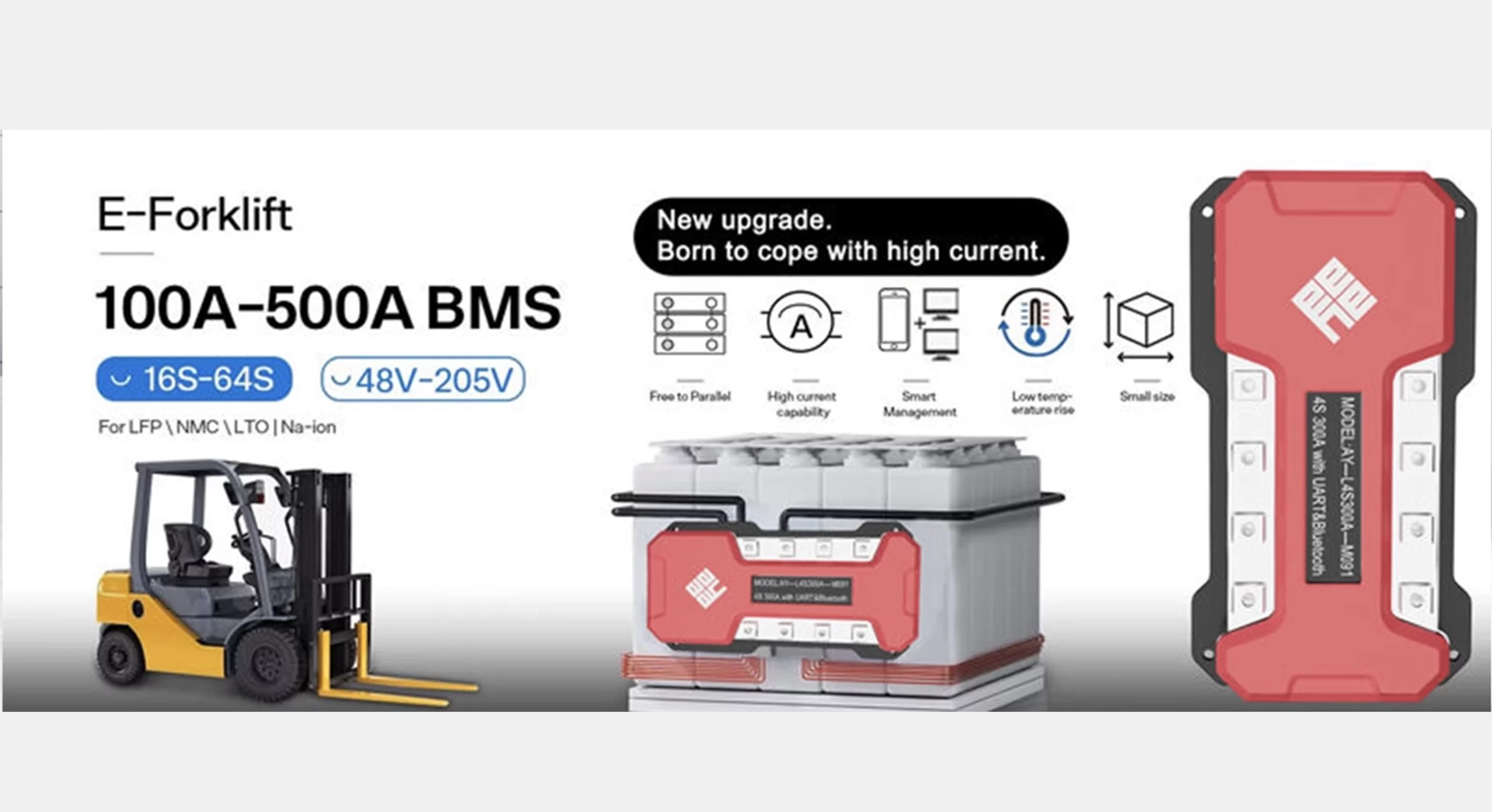
View More >Electric Forklift BMS
View More >Golf Cart BMS
View More >Electric Two-wheeler BMS
View More >Aviation & UAV BMS
View More >BMS For Power Tools
View More >Medical Equipment BMS
View More >








Home About Us EVENTS & NEWS How to Choose the Right 24V BMS for Your Lithium Battery Pack?
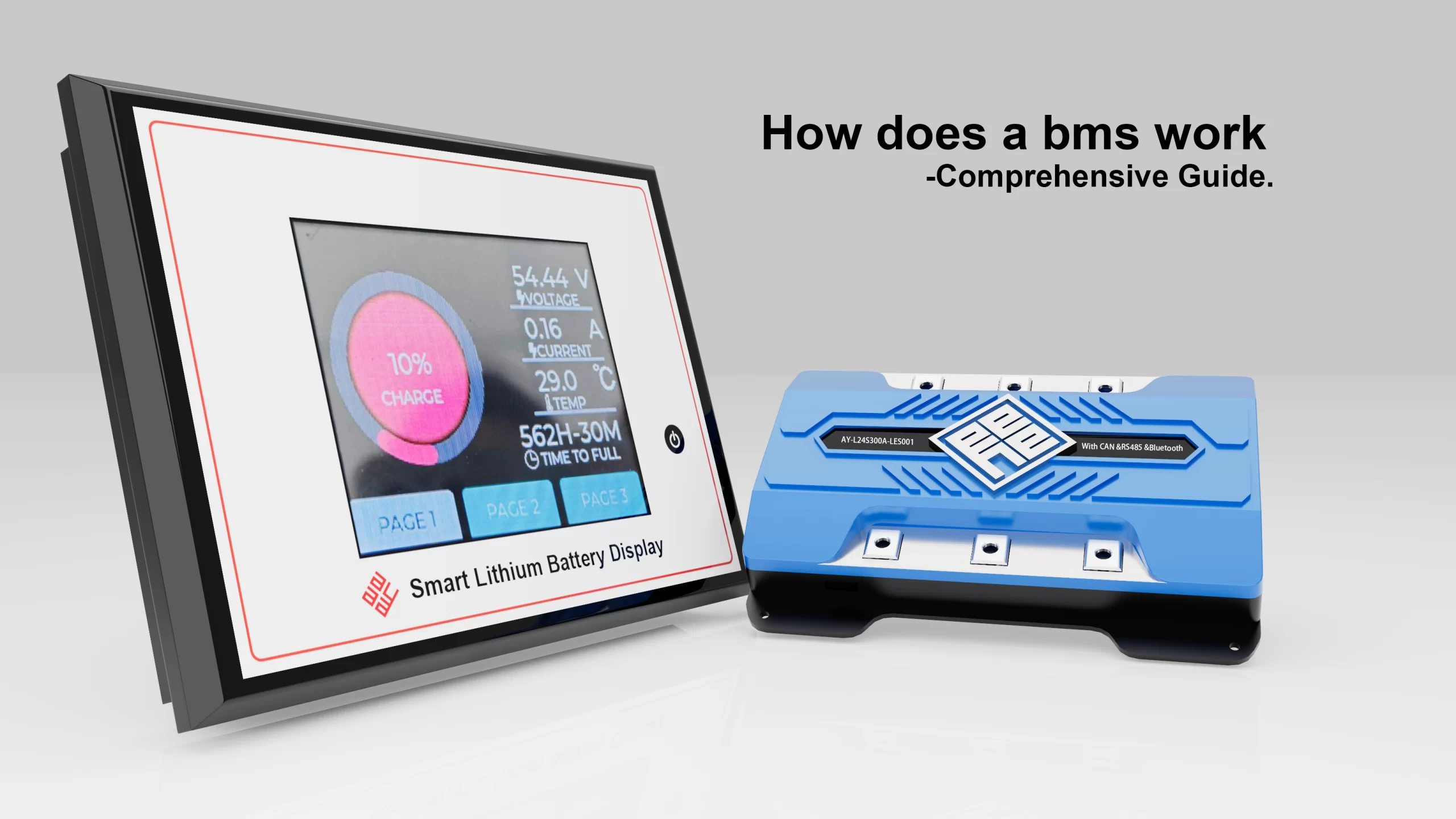
An essential electronic control device for 24-volt lithium battery packs is a 24v BMS (Battery Management System).
It guarantees battery systems for industrial equipment, renewable energy storage, electric cars, and marine applications are safe, effective, and dependable.
Cell voltages, currents, and temperatures are continuously monitored by the BMS.
It avoids short circuits, overheating, overcharging, and overdischarging, all of which can shorten battery life or present safety risks.
Furthermore, a 24V BMS maximizes usable capacity and prolongs the battery’s longevity by balancing cells and preserving a consistent voltage distribution.
Even premium lithium batteries may deteriorate more quickly or unexpectedly without a dependable BMS, which emphasizes how crucial it is to choose the best system for your pack.

When selecting a 24v BMS, it is essential to comprehend the product structure.
Typical systems consist of:
Voltage Monitoring Modules: These measure each cell’s voltage to prevent overvoltage or undervoltage conditions.
Current Sensors: They detect both charging and discharging currents, protecting against overcurrent events.
Temperature Sensors: Monitors battery temperature to prevent thermal runaway or freezing conditions.
Cell Balancing Circuit: Keeps cells at uniform voltage levels. Balancing can be passive (dissipating energy as heat) or active (transferring energy between cells).
MOSFET Switches or Relays: Disconnects the battery from the load or charger if unsafe conditions are detected.
Communication Interfaces: CAN, RS485, or Bluetooth ports allow real-time monitoring and integration with external systems.
Control Microprocessor: Processes sensor data, executes protective functions, and communicates battery status.
All of these elements are perfectly integrated by a top-notch 24V BMS to guarantee longevity, effectiveness, and safety.
Three primary functions form the basis of a 24v BMS operation:
Monitoring: continuously monitors each cell’s temperature, voltage, and current.
The technology can determine the battery’s state of charge (SOC) and state of health (SOH) with accurate measurements.
Protection: The BMS can disconnect the battery from the load or charger if any parameter surpasses safe thresholds.
Protections against overvoltage, undervoltage, short circuits, and overcurrent shield cells and linked equipment from harm.
Balancing: guarantees that the voltage is distributed uniformly throughout the cells.
The battery pack’s lifespan is increased and capacity loss is avoided with proper balance.
For all high-power and mission-critical applications to operate safely, monitoring, protection, and balancing must be combined.
When choosing a 24v BMS, it’s important to consider a number of important aspects:
Battery Chemistry Compatibility: Make that the BMS corresponds with the type of battery you have, such as LiFePO4, NMC, or Li-ion.
Cell damage or decreased performance can result from incompatibility.
Current Rating: Select a BMS that is rated for the highest charge and discharge currents needed for your application.
A BMS that is overloaded may frequently trigger protection or fail.
Cell Count and Voltage Range: Make sure the BMS can handle the amount of cells and nominal voltage range of your 24V pack.
Balancing Method: Passive balancing is simpler and cheaper, while active balancing is more efficient for high-capacity packs.
Communication and Monitoring: Modern BMS solutions often include Bluetooth or CAN support for real-time monitoring, logging, and diagnostics.
Environmental Considerations: Make that the BMS can manage variables pertinent to your application, such as dampness, vibration, and temperature fluctuations.
Safety Certifications: Look for CE, UL, or other relevant certifications to ensure reliability and compliance.
You can choose a BMS that meets your operating requirements and offers long-term dependability by carefully weighing these considerations.
There are several uses for a 24V BMS:
Electric Vehicles: E-bikes, scooters, and small EVs rely on 24V battery packs for efficient energy management.
Renewable Energy Storage: For safe and efficient operation, 24V battery banks with BMS are used in residential and small commercial solar or wind systems.
Marine Systems: Managed 24V lithium packs are used by boats and yachts for onboard electronics, auxiliary power, and trolling motors.
Industrial Equipment: BMS is necessary for the dependability and security of robots, automated guided vehicles, and material handling equipment.
Backup Power: Telecom, UPS, and emergency backup systems benefit from 24V packs managed by BMS for stable and dependable performance.
These uses demonstrate how adaptable a 24V BMS is for protecting expensive lithium battery systems.
Take into account the following essential characteristics while selecting a 24v BMS:
Overvoltage and Undervoltage Protection – Prevents damage to individual cells.
Overcurrent Protection – Protects wiring and cells from high current stress.
Short-Circuit Protection – Rapidly disconnects battery in dangerous conditions.
Temperature Monitoring – Avoids thermal runaway or freezing.
Cell Balancing – Ensures maximum capacity and extends battery life.
Communication Options – Enables remote monitoring and integration with BMS management software.
Compact and Modular Design – Easy installation and integration with various battery packs.
Selecting a BMS with these qualities guarantees optimal performance and safety.
For long-term dependability, maintenance is essential:
Regular Visual Inspection: Look for wear or corrosion on the BMS module, wiring, and connectors.
Temperature Check: Verify that the cooling system and sensors are operating properly.
Firmware Updates: Keep the BMS updated for improved protection features.
Cleaning: Remove dust or debris that may affect heat dissipation or electrical connections.
Function Testing: Periodically test overvoltage, undervoltage, and overcurrent protections.
Battery Health Monitoring: Track SOC and SOH to identify early signs of cell degradation.
By following these procedures, battery longevity is increased and dependable functioning is guaranteed.

A 24v BMS actively monitors, safeguards, and balances the battery pack to guarantee:
Longer Battery Lifespan: Balanced cells degrade more slowly.
Higher Efficiency: Stable voltages improve energy delivery to connected devices.
Enhanced Safety: Reduces risk of fires, explosions, or catastrophic failure.
Reduced Downtime: Fewer battery failures mean less operational disruption.
A 24V BMS is essential for high-power or mission-critical applications.
For safe, effective, and dependable battery operation, selecting the appropriate 24v BMS is crucial.
You can make sure your lithium battery pack operates at its best for the duration of its life by being aware of its structure, operating principles, applications, features, selection criteria, and maintenance needs.
A carefully selected BMS protects your investment, prolongs battery life, and facilitates system optimization and real-time monitoring.
Ayaa Technology offers dependable and effective 24V BMS solutions that are made to satisfy the exacting demands of contemporary energy storage, electric vehicles, maritime systems, and industrial equipment.
Q1:What are the three types of BMS?
A1:Centralized BMS: The entire pack is managed by a single control device.
Modular BMS: Perfect for larger systems, it is divided into pieces.
Distributed BMS: Maximum precision is possible because each cell has its own controller.
Q2:Can I run a lithium battery without BMS?
A2:Any lithium in series requires a BMS at the absolute least for charging; failing to use one is extremely unprofessional and a ticking time bomb.
Q3:What does 100a BMS mean?
A3:A battery management system with a 100-ampere (A) discharge current limit is referred to as a 100A BMS.
This circuit protects a battery pack from over-current damage by permitting a continuous load of up to 100 amps.
Q4:Why is a BMS needed for batteries?
A4:To maintain optimal performance, it keeps an eye on vital metrics like voltage, current, temperature, and state of charge.
Overcharging, deep discharging, overheating, and other conditions that might cause battery deterioration or failure are prevented by the BMS.
Q5:Which type of BMS is best?
A5:Communication protocols are used to link and coordinate the modules.
Because it can be designed to meet the requirements of various battery packs, this kind of BMS is appropriate for situations demanding a high degree of flexibility.
Scalability and maintainability are two benefits of modular BMS.
Contact Us