
- Industries

Home Backup & Garden BMS
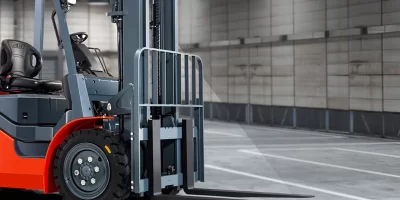
View More >Electric Forklift BMS
View More >Golf Cart BMS
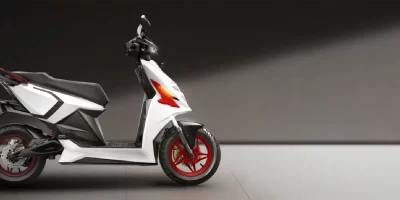
View More >Electric Two-wheeler BMS
View More >Aviation & UAV BMS
View More >BMS For Power Tools
View More >Medical Equipment BMS
View More >








| LF | LI | |||
| Model Number | AY-L24S300A-LES001 (7S-24S) | |||
| Communication Interface | RS485/CAN/UART | |||
| Charging voltage | DC:22.4V~76.8V CC/CV(3.2V/Cell) 7s~24s | DC:29.4V~84V CC/CV(4.2V/Cell) 7s~20s | ||
| Maximal continuous charging current | 300A | |||
| Maximal continuous discharging current | 300A | |||
| Current consume in normal operation | ≤15mA | |||
| Current consume in sleep operation | ≤150uA | |||
| Balance voltage for single cell | 3.5±0.05V | 4.0±0.05V | ||
| Over charge detection voltage | 3.65±0.05V | 4.25±0.05V | ||
| Charge Over current detection current | 320±3A | |||
| Discharge Over current detection current 1 | 600±3A | |||
| Discharge Over current detection current 2 | 800±3A | |||
| Short Protection | YES | |||
| SOC | 5%~8% | |||
 | |
| Size | L206 * W162 * T40 mm |
| NTC | 10K |
| Temperature switch | / ℃(the batteries temperature) |
| Weak current switch | YES |
| Active balance | / |
| Heater | YES |
| Braking Resistors | YES |
| Low temperature protection when charge | 0℃ | ||
| Release temperature( low temperature protection) | 5℃ | ||
| Over temperature protection when charge | 60℃ | ||
| Release temperature( over temperature protection) | 55℃ | ||
| Low temperature protection when discharge | 15℃ | ||
| Release temperature( low temperature protection) | 10℃ | ||
| Over temperature protection when discharge | 65℃ | ||
| Release temperature( over temperature protection) | 55℃ | ||
| Operating Temperature Range | 40~+85℃ | ||
| Storage Temperature Range | 40~+125℃ | ||
| LCD display screen | / |
| LED light board | / |
| Bluetooth mode | YES |
| 4G | YES |
| GPS | YES |
Product Introduction
High-capacity battery systems used in electric cars and energy storage applications are managed by the 7S–24S 300A–500A Smart BMS. It may be integrated with controllers, displays, and monitoring platforms because to its compatibility for a variety of communication interfaces, such as may, RS485, UART, and BLE. This technology allows for variable setup to meet various system requirements and offers real-time tracking of battery characteristics. AGVs, RVs, golf carts, electric forklifts, and maritime systems can all use it.
To accommodate various battery systems and usage scenarios, this intelligent BMS integrates monitoring, communication, and programmable control features.
For more information or technical support, feel free to contact us.

Forklifts, AGVs, and marine equipment are among the systems that can benefit from its continuous discharge capability, which ranges from 300A to 500A. Adaptation to various load situations and operational requirements is made possible by the changeable current range.
Control units, displays, and mobile devices can be connected via CAN, RS485, UART, and BLE interfaces. Users can now customize parameters, retrieve battery statistics, and incorporate the BMS into various system architectures.
Continually monitors temperature, voltage, current, and charge level. By providing real-time data output, the system enables users to comprehend battery behavior during operation and make necessary adjustments.
To suit the requirements of certain applications, firmware settings like voltage thresholds, current restrictions, and communication protocols can be changed. This makes it possible to use the same BMS platform for different kinds of vehicles.
The BLE feature makes it possible for mobile devices to wirelessly access battery data, facilitating easy parameter setup and monitoring without requiring a physical connection.
Helps control battery functioning within predetermined bounds by providing protection against overcharge, overdischarge, overcurrent, short circuit, and temperature conditions.
It is appropriate for tiny vehicle platforms like AGVs and golf carts because it is made to fit into battery packs with little space.
Keeps track of important battery information, such as charge cycles and operating history, which is useful for system assessment and maintenance scheduling.
For a variety of electric mobility and energy storage systems that need effective battery monitoring and control, the 7S–24S 300A Smart Active Balance BMS is appropriate.

Oversees the battery systems used in material handling machinery, enabling continuous usage cycles and high current functioning.

For short-distance electric vehicles used in homes, businesses, or leisure settings, it offers energy monitoring and control.

Supports the battery systems found in boats and other marine equipment, like as onboard electrical gadgets and propulsion systems.

Allows automated logistics and warehouse transport systems to monitor and communicate with batteries.

Uses controlled battery control to power onboard systems like lighting, appliances, and auxiliary equipment.


We are your dependable partner for scalable, intelligent, high-current BMS systems, regardless of whether your company manufactures electric cars, supplies battery packs, or integrates systems. We can power your next breakthrough.
With over 21 years of experience in battery management and power solutions, we are well-positioned to comprehend the needs of the expanding electric vehicle and energy storage markets.
Whether it’s through integrated software platforms or innovative BMS design, our dedicated R&D team never stops pushing the frontiers of technology to provide smarter, safer, and more effective products to the market.
Our BMS and power solutions are rigorously tested under challenging conditions to ensure longevity, stability, and optimal performance in real-world applications such as golf carts, motorbikes, forklifts, and energy storage systems.
We offer a variety of customization options to meet your specific needs, including form factors, wireless modules, communication protocols, and battery types.
From pre-sales advice to post-purchase assistance, our technical staff is available around-the-clock to help you with setup, integration, and troubleshooting.
Because we strictly adhere to international standards like CE, IEC62109, VDE, and CQC, every product we sell is of the highest quality and safety.
Our Certificates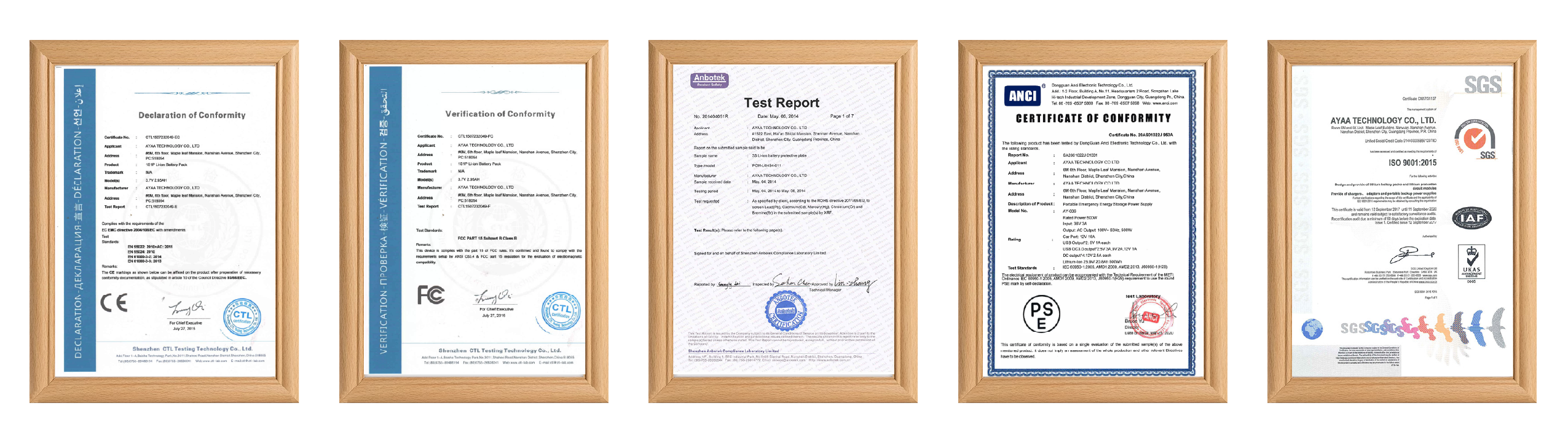
FAQ
Q: What does a smart BMS do?
A: Temperature impacts, lifetime aging, self-charge/discharge, and other variables are all within the control of the smart BMS. The usage of BMS is pointless without any of this. Therefore, BMS applications guarantee that your battery is constantly operating at its best capacity and range.
Q: What is the difference between smart BMS and BMS?
A: Features of smart active balance BMS: Smart active balance BMS performs better in terms of protection than standard BMS. By automatically regulating the battery pack’s voltage and current, it can provide more accurate protection.
Q: What are the three types of BMS?
A: In total, there are three common types of BMS architectures:
Small, single-board BMS
Distributed BMS
Large, centralized BMS
Q: What is the difference between smart BMS and dumb BMS?
A: The main objective of dumb BMS is simple voltage and current monitoring. It ensures battery safety by providing protection against overcharging and overdischarging, but it lacks the sophisticated capabilities of a Smart BMS.
Q: What does a smart management module do?
A: By managing power consumption and preventing overload, Generac’s Smart Management Modules (SMMs) enable PWRcellTM to maximize its leading backup power and capacity.
Q: Why do I need a BMS?
A: A BMS keeps an eye on the operating conditions and takes action to prevent dangerous situations by altering the charge/discharge rates or switching off the battery.


