
- Industries

Home Backup & Garden BMS
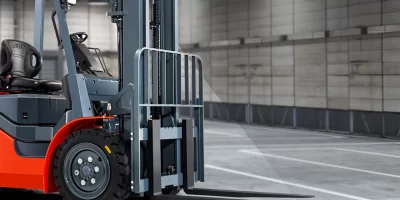
View More >Electric Forklift BMS
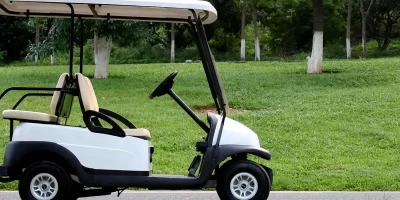
View More >Golf Cart BMS
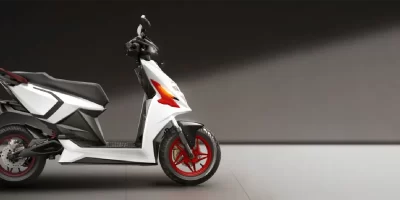
View More >Electric Two-wheeler BMS
View More >Aviation & UAV BMS
View More >BMS For Power Tools
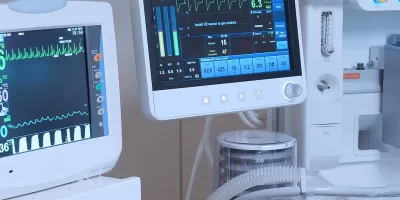
View More >Medical Equipment BMS
View More >




Home About Us EVENTS & NEWS Active Balancing BMS Lithium Battery Solution Guide for Golf Carts
The switch from lead-acid to lithium-ion has completely changed golf cart operations in the specialized field of 2026 fleet management.
However, the incorporation of an active balancing BMS is necessary to fully utilize the potential of these high-density batteries.
Active balancing technology transfers energy across cells to provide a precisely synchronized power stack, in contrast to conventional systems that waste energy as heat.
The main factor influencing steady torque and long-term battery health for golf course managers and individual owners is an active balancing BMS.
This sophisticated controller avoids the early failures that frequently afflict 48V mobility systems by instantly correcting cell imbalances.
The ability to control electrical symmetry becomes an essential necessity for professional equipment as demands for vehicle uptime and range rise.
Purchasing an active balancing BMS guarantees that your golf cart will continue to be a dependable asset, performing at its best from the first hole to the eighteenth.

Charge is transferred from higher-voltage cells to lower-voltage cells using an advanced management unit called an active balancing BMS.
1. Charge Redistribution: To equalize the battery string as a whole, inductive or capacitive energy transfer is used.
2. Safety Monitoring: The system offers a digital layer of defense against short circuits and overcurrent.
3. Operational Intelligence: It provides precise state-of-charge information by monitoring the condition of every single cell.
4. Loss Mitigation: The technology improves the pack’s overall efficiency by transferring energy rather than burning it.
During both the driving and charging phases, an active balancing BMS operates continuously.
●Differential Sensing: Throughout the 16-series lithium iron phosphate string, the controller continuously compares the millivolt levels.
●Active Migration: The bms initiates a high-frequency switch to transfer electrons to the weaker cells when a deviation is detected.
●Dynamic Correction: It reacts quickly to voltage decreases brought on by the motor’s high acceleration requirements.
●System Synchronization: During the recharge cycle, it guarantees that every cell reaches its maximum voltage simultaneously.
Golf cart batteries are developed for certain duty cycles that include prolonged vibration and rapid power bursts.
1. High-C Discharge: To move a large car and several people, these packs need to provide a lot of current.
2. Extended Voltage Platforms: The majority of carts run on a 48V or 72V system, necessitating the flawless series operation of several cells.
3. Deep Cycle Depth: They frequently release 20% of their capacity per day, necessitating strong chemistry and management.
Without an active balancing BMS, the golf course climate poses a number of technical challenges that can deteriorate a battery.
●High Current Start and Hill Climbing: Individual cells may sag as a result of the enormous current draw caused by taking off on a steep uphill.
●Cell Inconsistency and Range Loss: Even if the other cells are still energetic, the cart stops early if one cell is weaker.
●Uneven Aging from Long-Term Use: Some cells naturally deteriorate more quickly over hundreds of cycles, resulting in a long-term imbalance.
●Inadequate Thermal Management: Heat is frequently trapped in standard battery boxes, which speeds up the core cells’ chemical breakdown.
●Charging Efficiency and Longevity Conflicts: Rapid charging may cause uneven cell stress, reducing the pack’s total lifespan.
There are technological benefits to switching to an active balancing BMS that passive management solutions just cannot match.
1. Dynamic Power Optimization: The system maintains a high voltage under heavy loads, giving it additional “punch” when ascending slopes.
2. Energy Transfer Equilibrium: It recycles extra energy into the cells that use it most, rather than wasting it as heat.
3. Delaying Battery Senescence: It increases the overall cycle life by up to 40% by preventing any one cell from being overstressed.
4. Intelligent Thermal Synergy: By lowering the heat produced by passive resistors, the pack as a whole maintains a lower temperature.
5. Optimized Charging Windows: By maintaining the 16 cells precisely aligned until the end, active balancing enables quicker, safer charging.
Custom Smart BMS 7S–24S 300A–500A | CAN, RS485, UART, BLE
A hectic tournament day at a high-elevation golf resort is the ideal time to witness the superiority of an active balancing BMS.
A fleet of carts at 35°C transporting bulky equipment up steep mountain routes.
Cell drift under the high load would cause the batteries in multiple carts to prematurely reach their low-voltage cutoff in the absence of an active balancing BMS.
Players would become stuck as a result, slowing down the game.
Nevertheless, the smart BMS continuously moves energy to sustain the cells under the greatest stress since the carts have active balancing.
The cart’s pilot observes that the motor maintains its torque even on the toughest last rise.
Each cart returns to the clubhouse at the end of the day with a consistent cell variance of less than 0.01V, prepared for a speedy recharge.
This degree of dependability transforms a possible logistical nightmare into a smooth, upscale experience for the visitors.
There are quantifiable financial and operational benefits to integrating an active balancing BMS into your fleet.
| Operational Benefit | Technical Outcome | Financial Impact |
|---|---|---|
| Increased Uptime | Longer daily range and less mid-day charging | Higher vehicle utilization and revenue |
| Lower Maintenance | Automatic cell correction eliminates manual balancing | Reduced labor costs for technical staff |
| Zero Periodic Servicing | The BMS handles all equalization autonomously | No downtime for deep-cycle maintenance |
| Space Efficiency | High-power boards fit within existing battery footprints | No need for bulky external balancing hardware |
An operator’s interaction with their vehicle is fundamentally altered when they use an active balancing BMS.
●Smooth Acceleration: Because the voltage stays constant throughout the discharge curve, the car feels more responsive.
● Accurate Range Reporting: Since the SOC data is based on a balanced stack, a “dead” battery will never surprise you.
● Quiet Operation: The power system stays silent in the absence of the cooling fans needed for high-heat passive balancing.
●Long-Term Peace of Mind: You can concentrate on the game rather than the battery because you know the BMS is actively safeguarding your investment.
The sophistication of your management hardware becomes the key differentiator in operational success as the world moves faster toward high-performance electrification.
By substituting a proactive architecture of cell-level synchronization for reactive protection, Ayaa Technology offers a paradigm leap in power oversight.
Our engineering focus is on removing high-density battery packs’ hidden inefficiencies so that every cell is safeguarded and every watt is taken into consideration.
By using Ayaa Technology, you are incorporating a history of structural dependability and energy intelligence into your golf cart rather than merely buying a part.
With the support of a governance framework that places a high priority on thermal stability and long-term asset preservation, we enable business executives to push the limits of their equipment.
Your power infrastructure becomes a robust, self-optimizing growth engine with Ayaa Technology as your technical partner, prepared to meet the rigorous demands of the contemporary energy landscape.
Q1:Does BMS have an active balancer?
A1:The AYAA smart BMS features a built-in active balancer, eliminating the need for an additional balancer and eliminating concerns about voltage imbalances among the cells within the battery pack.
Q2:What is smart active balance BMS?
A2:Smart 1A Active balance BMS: This contributes to a longer battery life by balancing the condition of charge and discharge among battery cells.
Smart monitoring: BMS with built-in WiFi and Bluetooth.
which has the ability to track temperatures, cell voltages, and other variables.
Q3:What is the difference between active and passive balancing?
A3:Although it is complicated and expensive, active balancing improves efficiency and prolongs life by transferring energy from higher-voltage cells to lower-voltage cells.
For smaller systems, passive balancing provides an inexpensive, straightforward, but less effective approach by simply dissipating surplus energy from high-voltage cells as heat.
Q4:Do LiFePO4 batteries need a balancer?
A4:LiFePO4 cells discharge linearly, hence maintaining balanced voltages is essential for optimal performance and capacity.
By ensuring that every cell charges uniformly, a balancing circuit, or BMS, helps maintain the longevity and health of batteries.
Q5:When to use an active balancer?
A5:Applications that need quicker balancing, reduced thermal load, enhanced energy efficiency, and longer system runtime benefit from active balancing.
Contact Us