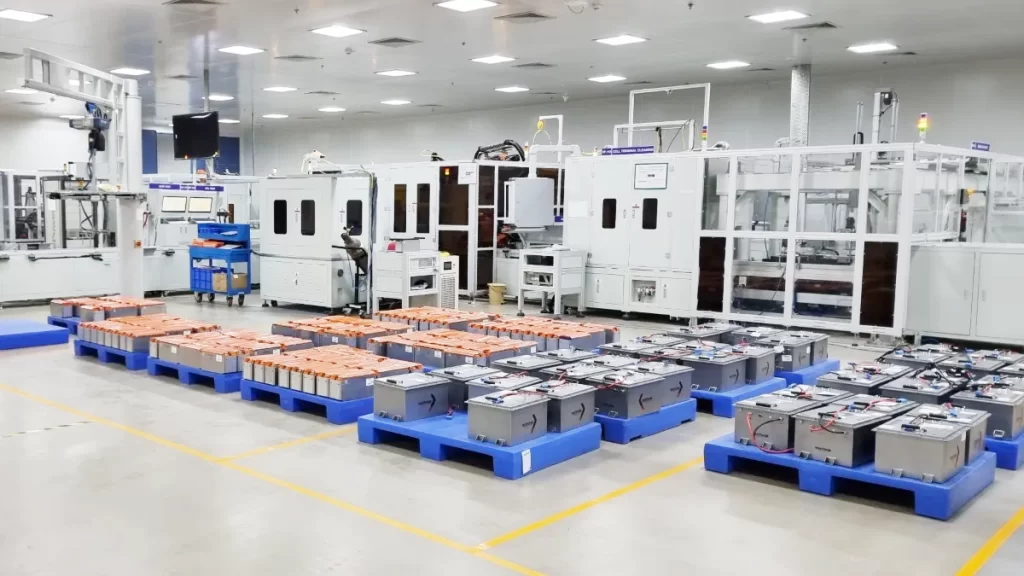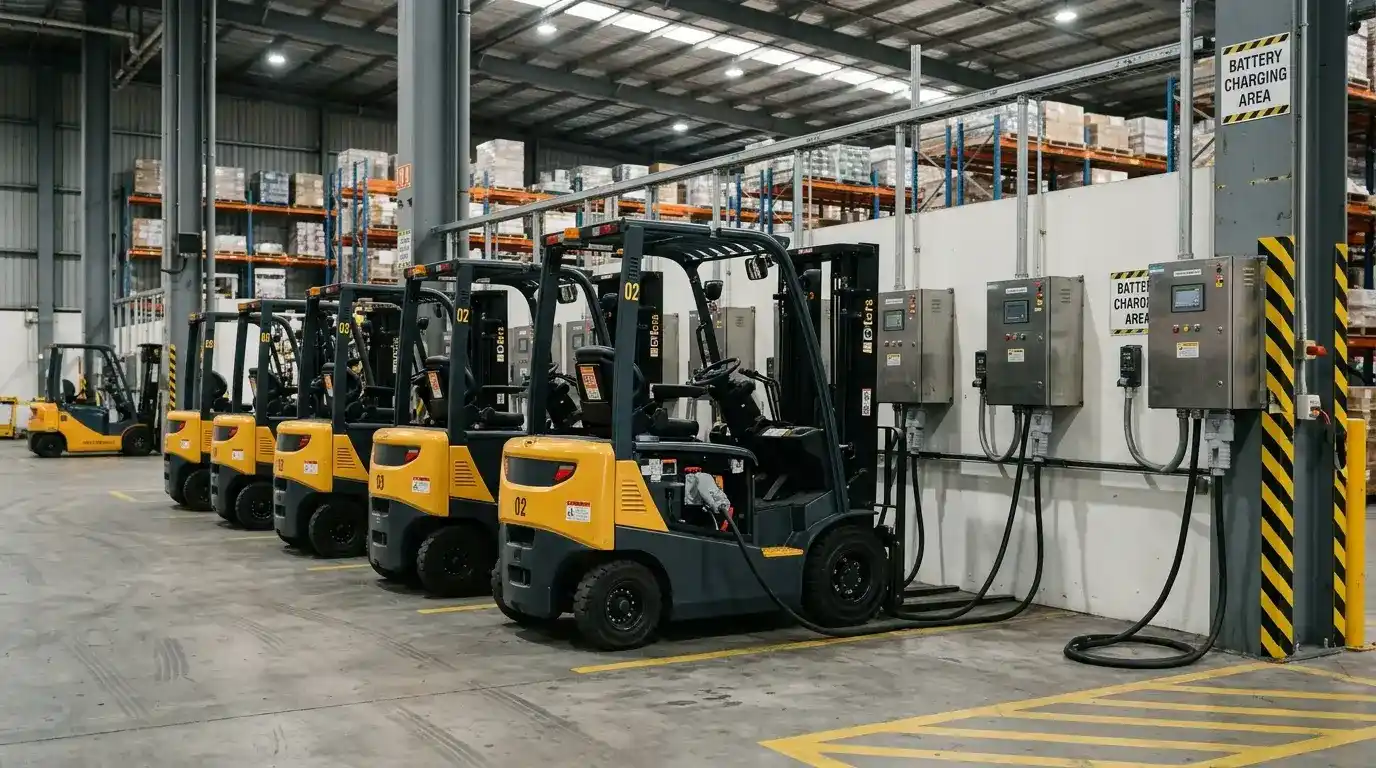










A pallet truck bms regulates lithium battery packs in electric pallet jacks and material handling equipment. It prevents catastrophic over-discharge, controls cell temperatures, and monitors pack voltages in real time. Modern distribution centers rely on these electronic management boards to replace legacy lead-acid batteries with high-efficiency lithium packs.
Standard warehouse operations subject traction batteries to severe mechanical shocks and heavy duty cycles. Without a dedicated pallet truck bms, lithium cells risk thermal runaway, premature capacity loss, or sudden voltage collapse. Modern solid-state management architectures protect the drivetrain while providing accurate telemetry to the vehicle dashboard.

Core Functional Requirements in Warehouse Logistics
Material handling fleets operate under demanding industrial schedules aligned with OSHA standard 1910.178 for powered industrial trucks. A robust battery management system protects equipment against electrical abuse while maintaining high throughput.
Real-Time Protection and Voltage Telemetry
Lithium iron phosphate cells require precise boundary supervision. An industrial management unit tracks every series cell voltage with millivolt resolution. It cuts off power if an over-voltage or under-voltage event occurs.
Current shunt resistors track discharge rates continuously. Rapid current monitoring detects external short circuits within microseconds. This fast isolation protects high-current copper wiring and contactors.
Heavy Duty Multi-Shift Operation
Warehouse pallet jacks run through continuous pick-and-pack schedules. Frequent start-stop routines create cyclical thermal loads inside the battery enclosure. High-frequency current pulses can degrade lower-grade electronic components.
Industrial electronic controls prevent nuisance tripping during peak demands. Configurable delay timers distinguish normal motor starting spikes from genuine short circuits. This filtering maintains uptime across high-throughput logistics shifts.
Electrical Architectures: 24V vs 48V Pallet Trucks
Material handling machinery uses distinct voltage classes depending on rated payload capacity. Battery architecture dictates overall management design and cell series counts.
24V Walkie Pallet Truck Configurations
Pedestrian walkie pallet jacks typically haul loads between 1.2 and 2.0 metric tons. These compact units operate on 24V electrical architectures. Most manufacturers build these packs using an 8S LiFePO4 cell arrangement.
Space constraints within removable battery cassettes demand ultra-compact board profiles. The control board must integrate power switching, cell balancing, and communication into a slim enclosure. Low standby current consumption prevents parasitic drain during overnight warehouse storage.
48V High-Capacity Rider Pallet Jacks
Rider pallet trucks and heavy end-controlled jacks handle payloads exceeding 3.0 metric tons. These heavy-duty machines use 48V battery systems with 15S or 16S cell configurations. Higher pack voltage lowers operational current for identical mechanical torque.
Reduced current flow decreases resistive I2R heating across wiring harnesses and motor windings. However, 48V architectures require higher dielectric isolation across control interfaces. Power semiconductors must support breakdown voltages well above 100V to handle inductive motor turn-off spikes.
Overcoming Inrush Currents and Inductive Kickback
Electric pallet jacks combine hydraulic pump motors with electric drive wheels. Both subsystems generate severe electrical stress during routine warehouse duty cycles.
Hydraulic Pump and Drive Motor Surge Profiles
Activating hydraulic lift levers creates an instantaneous current surge. A typical 24V hydraulic pump draws three to five times its nominal operating current. This surge can spike past 250A within milliseconds.
Releasing the lift switch collapses the pump motor magnetic field. This rapid collapse produces severe negative inductive voltage spikes. Management circuits must safely dissipate this stored magnetic energy without avalanche breakdown.
Solid-State MOSFET Switching and Clamping
Modern industrial boards replace electromechanical contactors with low RDS(on) power MOSFET arrays. Paralleled N-channel MOSFETs split heavy discharge currents evenly. This arrangement lowers overall conduction losses and thermal buildup.
Inductive energy from collapsing motor fields generates reverse voltage spikes exceeding 80V on 24V bus architectures. Paralleled TVS diodes and RC snubber circuits clamp these transients before they reach power MOSFET breakdown ratings.
High-energy transient voltage suppressor diodes clamp peak inductive voltage spikes. Snubber networks absorb high-frequency ring oscillations during sudden motor shut-offs. Fast gate drivers ensure rapid turn-off without leaving semiconductors in their linear resistance region.

Industrial Thermal Management and Cold Chain Resilience
Warehouse ambient temperatures swing drastically between outdoor loading docks and refrigerated distribution zones. Thermal stability directly dictates lithium pack longevity and electronic safety.
Thermal Dissipation Architecture
Continuous operation under maximum load generates localized heat on power boards. AYAA TECH addresses this challenge through balanced component layout. Engineers space high-current MOSFETs and current shunt resistors evenly across heavy copper layers.
Thermally conductive silicone pads and specialized gels bridge power components to protective casings. For heavy-duty industrial cycles, AYAA TECH encloses management electronics within high-conductivity aluminum alloy or purple copper housings. This construction pulls heat away from sensitive silicon logic chips rapidly.
Cold Storage Mitigation and Heating Logic
Cold storage food distribution facilities operate down to -20 degrees Celsius. Charging lithium iron phosphate cells below freezing causes irreversible lithium dendrite plating. Dendrites puncture internal separators and trigger catastrophic short circuits.
Smart electronic controllers read multiple integrated thermistors across the pack. If temperatures drop below 0 degrees Celsius, charging is locked out immediately. The control unit redirects charge current to internal silicone heating blankets first.
Once core cell temperatures reach safe operational thresholds, full charge acceptance resumes automatically. This logic protects battery investments in demanding cold-chain environments.

Industrial CANbus Communication and Vehicle Integration
Proprietary analog indicators fail to deliver adequate operational intelligence to modern fleet supervisors. Digital data networks integrate the battery pack directly into vehicle control systems.
Vehicle Controller Protocol Handshakes
Modern electric trucks rely on CANbus networks to connect traction systems. The onboard management board communicates continuously with controllers from Curtis, Zapi, or Inmotion. It broadcasts state of charge, real-time current, and error alerts.
Standard protocols include CANopen and J1939 broadcast profiles. If a cell reaches low-voltage cutoff limits, the control board sends a derating command. The vehicle controller engages “turtle mode,” allowing travel back to charging stations safely.
Smart Charger Integration and Opportunity Charging
Lithium packs thrive on frequent opportunity charging during scheduled operator breaks. Closed-loop CAN communication pairs the battery pack with high-frequency industrial chargers. The management unit dictates dynamic voltage and current limits to the charger.
This closed-loop control eliminates dangerous overcharging risks. The charger adjusts output current based on real-time cell temperatures and internal resistance. This synchronised process enables fast charging from 20% to 80% capacity within 60 minutes.

State of Charge Precision and Cell Balancing
Accurate fuel gauging prevents unexpected equipment shutdowns in narrow warehouse aisles. Lithium iron phosphate features an exceptionally flat discharge voltage curve between 20% and 80% capacity.
Adaptive Temperature-Compensated SOC Algorithms
Relying solely on open-circuit voltage creates massive state-of-charge calculation errors. Coulomb counting tracks net amp-hours entering and exiting the cells. However, sensor drift and temperature variations degrade accuracy over time.
AYAA TECH implements an advanced adaptive algorithm with integrated temperature compensation. This software dynamically recalculates internal cell resistance across fluctuating operational temperatures. It maintains state-of-charge estimation errors under 5%, preventing sudden operational stalls during transport shifts.
Balancing Strategies Under High Repetition
Uneven cell aging reduces usable pack capacity over repetitive charge cycles. Passive balancing bleeds excess charge through shunt resistors during the final constant-voltage stage. It provides a compact, cost-effective balancing solution for walkie trucks.
For multi-shift rider jacks, active balancing circuits transfer charge from stronger cells to weaker cells. This active method functions during both charge and discharge cycles without generating excess heat. Keeping cell voltage differences below 20mV preserves pack longevity.
Explore High-Reliability Industrial BMS Hardware
Discover AYAA TECH Smart BMS SeriesPallet Truck BMS Hardware Selection Matrix
Selecting the proper management electronics requires matching electrical ratings with mechanical operating constraints. Fleet builders must balance continuous current requirements against peak hydraulic starting surges.
Specification Comparison by Vehicle Class
The following technical matrix outlines key hardware parameters across common electric pallet truck categories:
| Parameter | Walkie Pallet Truck (1.5t – 2.0t) | Heavy Rider Pallet Jack (2.0t – 3.5t) |
|---|---|---|
| Nominal System Voltage | 24V (8S LiFePO4) | 48V (15S/16S LiFePO4) |
| Continuous Discharge Current | 60A – 100A | 150A – 250A |
| Peak Starting Current (3s) | 200A – 300A | 400A – 600A |
| Balancing Topology | Passive Resistor Bleed (50mA – 150mA) | Active Inductive / Capacitive (1A – 2A) |
| Ingress Protection | IP65 Conformal Coating | IP67 Sealed Aluminum Enclosure |
| Communication Bus | CANopen / RS485 / Bluetooth | Dual CANbus (J1939 / CANopen) |
| Thermal Sensing Points | 2 – 4 NTC Channels | 6 – 8 NTC Channels + Heater Drive |
Engineers must calculate continuous thermal load rather than relying solely on nominal motor power ratings.
Engineering Trade-offs and Selection Pitfalls
Specifying low-cost consumer electronics in industrial material handling causes field failures. Consumer boards lack robust potting to survive constant warehouse dock vibrations. Mechanical shocks loosen surface-mount components, causing intermittent telemetry faults.
Another common pitfall is undersizing transient suppression on the main power board. Hydraulic lift motors generate severe voltage spikes when valves snap shut. Inadequate clamping diodes destroy switching MOSFETs, resulting in a locked-closed circuit that prevents emergency disconnects.
Lifecycle Optimization and Fleet Reliability
Deploying intelligent management hardware transforms fleet economics. Real-time cycle tracking identifies degraded battery modules before they cause unplanned warehouse delays. Predictive maintenance alerts enable technicians to replace isolated weak cells instead of discarding entire packs.
Standardizing on smart electronic platforms simplifies fleet diagnostic procedures. Technicians read identical fault logs across diverse pallet truck models. This standardisation lowers overall maintenance expenditure and streamlines replacement parts inventory.
Conclusion
Material handling fleets require exceptional reliability from their energy storage systems. Selecting an industrial-grade pallet truck bms ensures balanced cell performance, dependable thermal safety, and robust communication. Matching electrical headroom with intelligent control algorithms maximizes battery service life across demanding logistics shifts.
Build Tailored Pallet Truck BMS Solutions
Request Custom Pallet Truck BMS DesignFAQ
Why does a pallet truck BMS trip during hydraulic lifting?
Hydraulic pump motors draw heavy inductive inrush currents during startup. If peak starting current exceeds the preset over-current limit, the protection switches trip immediately. Properly sized systems feature brief programmable delay times to tolerate normal motor starting surges safely.
Can a 24V pallet truck BMS work with existing lead-acid chargers?
Standard lead-acid chargers use unregulated charging curves that damage lithium cells. A smart management unit requires constant-current constant-voltage charging profiles. Closed-loop CAN communication ensures the charger stops precisely when cells reach full capacity.
How does cold storage affect pallet truck BMS charging safety?
Charging lithium cells below 0 degrees Celsius causes metallic lithium plating on anodes. This plating permanently degrades capacity and risks internal short circuits. Advanced industrial units disable charging at sub-zero temperatures until internal heating blankets warm the pack.
What communication protocol is standard for electric pallet jacks?
CANbus is the primary industrial communication standard across material handling machinery. Most vehicle controllers and smart chargers communicate using either CANopen or SAE J1939 protocols. These buses provide robust data transmission despite high electromagnetic motor noise.
Why is active balancing preferred over passive balancing in multi-shift fleets?
Passive balancing dissipates excess energy as heat through resistors, which works slowly during charging. Active balancing moves energy between cells dynamically during both charge and discharge cycles. This fast redistribution keeps cell capacities matched across rapid opportunity charging cycles.
How does regenerative braking impact the pallet truck BMS?
Decelerating an electric pallet truck drives the traction motor as a generator. This sends high regenerative current pulses back into the battery pack. The electronic control board must absorb these surges without tripping over-voltage protections prematurely.
What ingress protection rating is required for pallet truck BMS units?
Warehouse equipment encounters floor washdowns, condensation, and airborne dust particles. Control electronics should maintain at least an IP65 rating with conformal coating. Heavy cold-storage applications benefit from fully potted IP67 aluminum enclosures.
Consult an AYAA TECH Battery Systems Engineer
Contact Our Engineering TeamAuthoritative Regulatory Standards & References
Industrial battery systems for material handling equipment must comply with stringent international standards:
- OSHA 1910.178: Powered Industrial Trucks safety regulations governing electrical and fire protections.
- IEC 62619: Secondary cells and batteries for use in industrial applications, covering electrical and mechanical safety.
- UL 2580: Standard for Batteries for Use in Electric Vehicles, certifying severe drop, vibration, and short-circuit survivability.
- ISO 3691-1: Industrial trucks safety requirements and verification procedures for motorized hand and rider equipment.
- UN 38.3: United Nations transport testing criteria for lithium metal and lithium ion battery assemblies.