
- Industries

Home Backup & Garden BMS
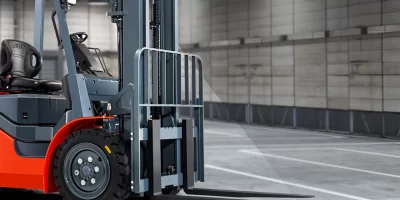
View More >Electric Forklift BMS
View More >Golf Cart BMS
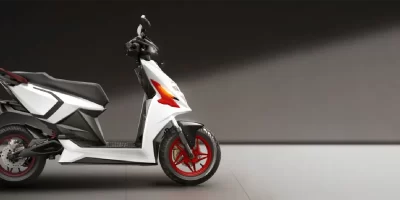
View More >Electric Two-wheeler BMS
View More >Aviation & UAV BMS
View More >BMS For Power Tools
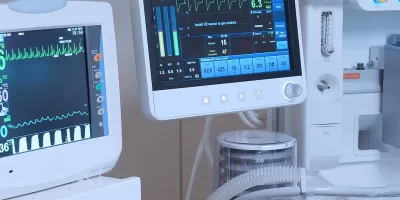
View More >Medical Equipment BMS
View More >





Home About Us EVENTS & NEWS Maximizing Lifespan: How to Optimize Your 48v lithium ion battery Investment
Durable energy storage systems are now highly valued due to the trend toward high-efficiency electrification.
The 48v lithium ion battery has become the main power architecture for everything from light electric vehicles to telecoms backup in today’s worldwide industrial scene.
But a battery is a long-term capital investment, not just a purchase.
Businesses must look past the initial specifications and comprehend the factors that determine lifetime if they want to fully reap the benefits of these systems.
Organizations can prevent their power systems from collapsing too soon owing to inadequate control and guarantee that they continue to function for ten years or more by mastering the synergy between chemical potential and digital management.

A 48v lithium ion battery is essentially an engineering assembly of individual lithium cells arranged in a 14S to 16S series configuration.
These cells are usually made of lithium iron phosphate (LiFePO4) or nickel manganese cobalt (NMC) chemistries.
This particular voltage level is preferred because it decreases heat and resistive losses in the wiring while delivering significant power with less current than 12V or 24V systems.
1.Anode and Cathode Stability: The quality of the materials used in the electrodes determines how many lithium ions can shuttle back and forth before the internal structure begins to degrade.
2.Electrolyte Conductivity: High-grade electrolytes facilitate smooth ion movement even under high-load conditions, preventing the “clogging” that leads to capacity fade.
3.Separator Integrity: A robust internal separator prevents short circuits while allowing for high-speed charging and discharging without compromising safety.
A 48v lithium ion battery capacity to deliver high energy density in a comparatively small form factor accounts for its adaptability.
Lithium ions flow from the negative anode to the positive cathode during discharge, producing an electrical current that drives delicate server racks or high-torque motors.
●Voltage Regulation: The system maintains a flat discharge curve, providing consistent power even as the battery nears empty, which is a major advantage over lead-acid technology.
●Energy Recovery: In mobile applications like AGVs or e-scooters, these batteries can efficiently accept regenerative braking energy, further extending the operational range per charge.
●Modular Scalability: Many 48V systems are designed to be connected in parallel, allowing businesses to increase their total energy reservoir without changing the system voltage.
The physical limitations of lower-voltage systems and the safety hazards of higher-voltage ones are what motivated the switch to 48V.
While staying below the 60V threshold, which normally calls for specific high-voltage safety certificates for technicians, a 48v lithium ion battery offers sufficient “push” to operate large industrial machinery.
When examined over a period of five to ten years, lithium-ion batteries are the most economical option since they have five times the cycle life and three times the energy density of conventional lead-acid batteries.
The widespread adoption of this voltage platform is evident in several key global sectors, each relying on the battery’s specific discharge and recharge characteristics.
| Application Sector | Typical Mission Profile | Primary Benefit |
|---|---|---|
| Telecommunications | Long-term standby backup | Minimal maintenance and 15-year shelf life |
| Renewable Energy | Daily solar cycling | High round-trip efficiency (>95%) |
| Material Handling | Rapid-charge forklift operations | Zero-emissions and 24/7 productivity |
| Data Centers | UPS and peak shaving | High power output in a small footprint |
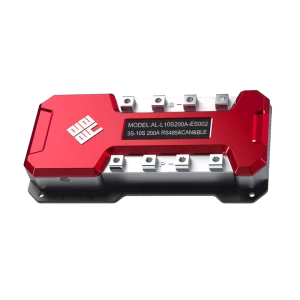
The electronic brain that keeps the battery from “killing itself” by overdoing it is called the Battery Management System (BMS).
The BMS serves as a 48v lithium ion battery main line of defense against the aforementioned aging factors.
●Active Cell Balancing: It ensures that no single cell in the series is worked harder than its neighbors, preventing a “weak link” from causing the entire pack to fail prematurely.
●Temperature Throttling: If the internal sensors detect rising heat, the BMS will reduce the charging or discharging speed to protect the chemical integrity of the cells.
●Voltage Cut-offs: It prevents the battery from entering the “danger zones” of over-voltage or under-voltage, which are the leading causes of instant cell death.
| Factor | Impact on Lifespan | Mitigation Strategy |
|---|---|---|
| Temperature >45°C | High Acceleration of Aging | Active cooling or climate-controlled housing |
| DOD (Depth of Discharge) | 100% DOD reduces cycles | Maintain a 20% to 80% state-of-charge window |
| High Charge Rates | Increased internal heat | Use “Slow/Normal” charging for daily operations |
| Cell Mismatch | Reduced usable capacity | Use a high-precision BMS for active balancing |
A proactive approach to combining electronic monitoring and physical maintenance is necessary for optimization.
A system’s lifespan can be extended by years by adhering to a rigorous maintenance schedule.
1.Regular Connection Audits: Ensure that all power cables are tightened to the correct torque; loose connections create heat, which the battery cells will eventually absorb.
2.Surface Cleanliness: Keep the battery casing and terminals free of dust and moisture to prevent “tracking” and micro-short circuits.
3.Optimal Storage: If the battery is taken out of service, it should be stored at approximately 50% charge in a cool, dry environment (20°C to 25°C) to minimize self-discharge.
4.Avoid Rapid Cycling: Whenever possible, avoid “opportunistic charging” multiple times per hour, as the constant chemical fluctuation can stress the internal lattice of the lithium cells.
Just as crucial as how a 48V lithium ion battery releases energy is how it receives it.
“Multi-stage” charging, which slows down the current when the battery reaches full capacity, is possible with smart chargers that interface with the BMS.
This greatly reduces the lifespan of unmanaged batteries by preventing the “plating” of lithium on the anode, a frequent problem that arises during high-speed charging.
Operators can frequently quadruple the number of useable cycles by maintaining the condition of charge within the ideal range of 20% to 80%.
The sophistication of the management layers will determine the victors in the industrial area as the need for dependable, long-cycle energy storage keeps growing.
Although a 48v lithium ion battery is a high-performance asset, its full potential can only be realized when the hardware is safeguarded by exceptional software intelligence.
The engineering of these imperceptible protections is our area of expertise at Ayaa Technology.
We think that the quality of your energy system’s management directly affects how long it lasts.
Our cutting-edge BMS solutions are made especially to reduce the strains of industrial use, guaranteeing that every system powered by Ayaa Technology runs as efficiently as possible for the duration of its anticipated lifespan.
Q1:How long will a 48V lithium battery last?
A1:Depending on the type (LiFePO4 vs. ternary lithium), usage, and maintenance, a 48V lithium-ion battery can last anywhere from 3 to 10+ years (or 800 to 5,000+ charge cycles).
High-quality deep-cycle (like LiFePO4) solar or golf cart batteries can last more than ten years, but e-bike batteries might only last three to five.
Q2:Which is better, lithium ion or LiFePO4?
A2:Lithium Ferro Phosphate (LiFePO4 or LFP), which offers up to 5,000+ cycles and great thermal stability, is typically superior in terms of safety, longevity, and high-drain efficiency.
For devices like laptops or smartphones that require high energy density and lightweight, compact designs, standard lithium-ion (such as NMC) is preferable.
Q3:What is the 80/20 rule for lithium batteries?
A3:Keep the battery above about 20% whenever you can to prevent deep discharges.
Store partially charged; 80% is great if you plan to store it for several weeks.
Maintain a moderate temperature; stay away from extremely hot or cold weather.
Q4:What is the problem with LiFePO4 batteries?
A4:The primary issue with LiFePO4 batteries is that they have a lower energy density than other lithium-ion chemistries, which restricts their use in some high-energy-demand situations.
Q5:How long will a 12V fridge run on a 100Ah lithium battery?
A5:On a single charge, a 100Ah lithium battery can normally power a 12V portable compressor refrigerator for two to four days, or around 48 to 96 hours.
A 30-40L refrigerator typically uses 30-40Ah per day; the precise runtime varies on insulation, fridge size, ambient temperature, and fixed temperature.
Contact Us


