
- Industries

Home Backup & Garden BMS
View More >Electric Forklift BMS
View More >Golf Cart BMS
View More >Electric Two-wheeler BMS
View More >Aviation & UAV BMS
View More >BMS For Power Tools
View More >Medical Equipment BMS
View More >







Home About Us EVENTS & NEWS 48V Battery Pack Performance Breakdown: From Cell Configuration to BMS Optimization
Mid-voltage battery systems have become the most feasible way to balance efficiency and performance as electrification picks up speed in transportation, energy storage, industrial automation, and mobile equipment.
For applications that require increased power density without the safety complexities of high-voltage systems, the 48v battery pack has emerged as the chosen standard.
However, what actually decides a 48V system’s performance in the real world?
Is it just cell chemistry?
Designed mechanically?
Or is the battery management system the unseen element that determines usable energy, longevity, and safety?
We must dissect the system, from cell configuration to BMS optimization, and look at how each layer affects dependable power delivery in order to provide answers to these problems.

A 48v battery pack is an integrated energy storage device that connects several battery cells in parallel and series to provide a nominal voltage of about 48 volts.
It is a coordinated system made up of several parts rather than just one:
1.Electrochemical cells
2.Structural housing
3.Electrical interconnections
4.Thermal pathways
5.A battery management system (BMS)
A 48V system improves efficiency while upholding reasonable safety standards since it uses less current for the same power output than lower-voltage batteries.
Why Does Series Configuration Matter?
Cells in lithium-based systems are connected in series to produce voltage.
The nominal operating voltage of a common lithium-ion or LiFePO4 cell is between 3.2 and 3.7 volts.
Typically, reaching 48V takes:
13S–15S configurations for lithium-ion
15S–16S configurations for LiFePO4
Voltage rises with each extra series cell, but complexity also rises. Without active monitoring, voltage imbalance at the cell level represents a serious problem.
At this point, the design of 48v battery packs starts to rely more on BMS intelligence than on pure chemistry.
Both capacity (Ah) and current capabilities are increased by parallel connections.
Nevertheless, they provide difficulties like:
1.Uneven current sharing
2.Thermal gradients between cells
3.Accelerated aging in weaker cells
Parallel cell groups may deteriorate unevenly in the absence of a BMS with accurate current and voltage detection, decreasing usable capacity far before the battery achieves its theoretical cycle life.
Why Is Mechanical Design Often Overlooked?
A 48V system needs to be resilient to shock, vibration, and environmental stress. Inadequate insulation or poor mechanical compression can result in:
Micro-movement of cells
Increased internal resistance
Connector fatigue
Weak structural engineering cannot be made up for by even the greatest cells.
In order to ensure that the BMS receives accurate data from stable components, a well-designed 48v battery pack combines mechanical stability with electrical safety.
At a system level, energy flows through the battery in three coordinated stages:
Charging phase – Energy enters the pack under controlled voltage and current limits
Standby phase – The BMS monitors state of charge (SOC), temperature, and balance
Discharge phase – Power is delivered while protecting against overload and deep discharge
The BMS makes all of the decisions, whether the battery runs, restricts power, or completely disconnects.
48v battery pack solutions are extensively used due to their scalability and efficiency in:
1.Energy storage systems (ESS)
2.Golf carts and low-speed vehicles
3.Industrial robots and AGVs
4.Telecom backup power
5.Solar and hybrid inverter systems
BMS customisation is crucial since every application puts the battery under various stress profiles, such as continuous discharge, peak power bursts, or cyclic charging.
Why Isn’t Capacity the Only Metric?
Buyers often focus on Ah or kWh ratings, but true performance depends on:
1.Voltage stability under load
2.Thermal control during fast charging
3.Accurate SOC estimation
4.Cell balancing effectiveness
In addition to having excellent specs on paper, a high-end 48v battery pack provides steady power throughout its operational range.
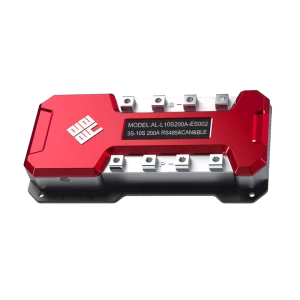
How Does BMS Prevent Overcharge and Overdischarge?
While overdischarge degrades electrode structure, overcharging speeds up gas generation and lithium plating.
The BMS consistently enforces safe voltage limits at:
Cell level
Module level
Pack level
Without this protection, even high-grade cells can fail prematurely.
Cell imbalance is unavoidable over time. The BMS corrects this by:
Passive balancing (dissipating excess energy)
Active balancing (redistributing charge)
Usable capacity is directly impacted by balancing efficiency in large or high-current systems.
This is a defining aspect for long-term reliability in a 48v battery pack.
Internal resistance, aging rate, and safety margins are all impacted by temperature. An intelligent BMS:
1.Monitors multiple temperature points
2.Limits charge/discharge in extreme conditions
3.Communicates with cooling systems when necessary
Thermal control is not optional—it is fundamental to system stability.
A well-designed BMS acts as an early-warning system, detecting:
Short circuits
Overcurrent events
Sensor anomalies
Communication faults
The BMS safeguards linked devices and users in addition to the battery by separating issues prior to escalation.
This degree of security is what turns a group of cells into a reliable 48V battery pack appropriate for use in commercial and industrial settings.
User behavior is important even with sophisticated technologies.
Deterioration in performance is frequently caused by:
1.Improper charging equipment
2.Continuous operation at extreme temperatures
3.Exceeding rated current limits
4.Ignoring system alerts
A BMS can mitigate—but not fully eliminate—poor usage practices.
What Maintenance Practices Extend Lifespan?
Recommended practices include:
1.Keeping operating temperatures within specification
2.Avoiding prolonged full-charge storage
3.Performing periodic system diagnostics
4.Responding promptly to BMS warnings
Modern BMS systems make maintenance easier by offering fault records and real-time data.
Cells alone do not define performance in practical applications.
It results from the interdependence of chemistry, structure, electronics, and software.
A properly engineered 48v battery pack delivers:
1.Predictable runtime
2.Consistent power output
3.Extended service life
4.Lower total cost of ownership
And at the center of all these outcomes is BMS optimization.
When a 48V system is considered holistically, its value is found in intelligent system control rather than headline characteristics.
Raw electrochemical potential is converted into secure, dependable, and economically feasible energy storage through advanced BMS architecture.
Long-term success in difficult applications is made possible by this systems-level methodology, which treats monitoring, protection, balancing, and communication as essential design components.
Experienced battery solution providers like Ayaa Technology, whose emphasis on BMS-driven optimization continues to influence the upcoming generation of dependable 48V energy systems, also adopt this strategy.
Q1:How long does a 48 V battery last?
A1:The longevity of a 48-volt battery varies significantly by type; depending on usage, maintenance, and environment, lithium-ion batteries last 8–10+ years, whereas lead-acid batteries last 3–6 years.
This is measured in charge cycles (e.g., 800–5000+) before significant capacity loss occurs.
A 48V e-bike may travel 25–70 miles on a single charge, whereas a 48V 100Ah battery can power appliances for hours, depending on efficiency and discharge rate.
Q2:How many hours does a 48 volt battery last?
A2:A 48V 200Ah battery can store 9.6kWh of electricity (200Ah × 48V ÷ 1000).
The runtime is computed as 9.6kWh ÷ 5kW = 1.92 hours, or roughly one hour and fifty-five minutes, when connected to a 5000W inverter operating at maximum capacity.
Q3:Why is 48V better than 12V?
A3:Interestingly, 48V batteries are far safer than 12V batteries. The lower current draw of 48V systems is the source of this safety benefit.
Reduced current needs reduce the possibility of overheating and ease the burden on all of the system’s electrical components.
Q4:How long will a 48V 25Ah battery last?
A4:Voltage, rider weight, terrain, and assist level all affect a 25Ah battery’s range.
In eco mode, a 48V 25Ah pack (1200Wh) typically provides 50–80 miles.
Q5:How long will 48V 100Ah last?
A5:Depending on the battery’s quality and usage habits, a 48V 100Ah lithium battery can last anywhere from 2,000 to 5,000 charge cycles.
For example, the battery may live for several years if you use 20% of its capacity every day and fully recharge it.
Contact Us


