




Know when to replace golf cart batteries: replace packs once runtime drops by 30% or cases swell. Sluggish hill climbing and recharge cycles exceeding 8 hours also signal failure. These symptoms indicate chemical fatigue and high internal resistance.
Flooded lead-acid deep cycle batteries usually last 4 to 6 years. That equals roughly 500 to 1,000 charge cycles under disciplined care. Lithium iron phosphate (LiFePO4) packs last 8 to 12 years. They easily exceed 3,000 cycles without routine maintenance.
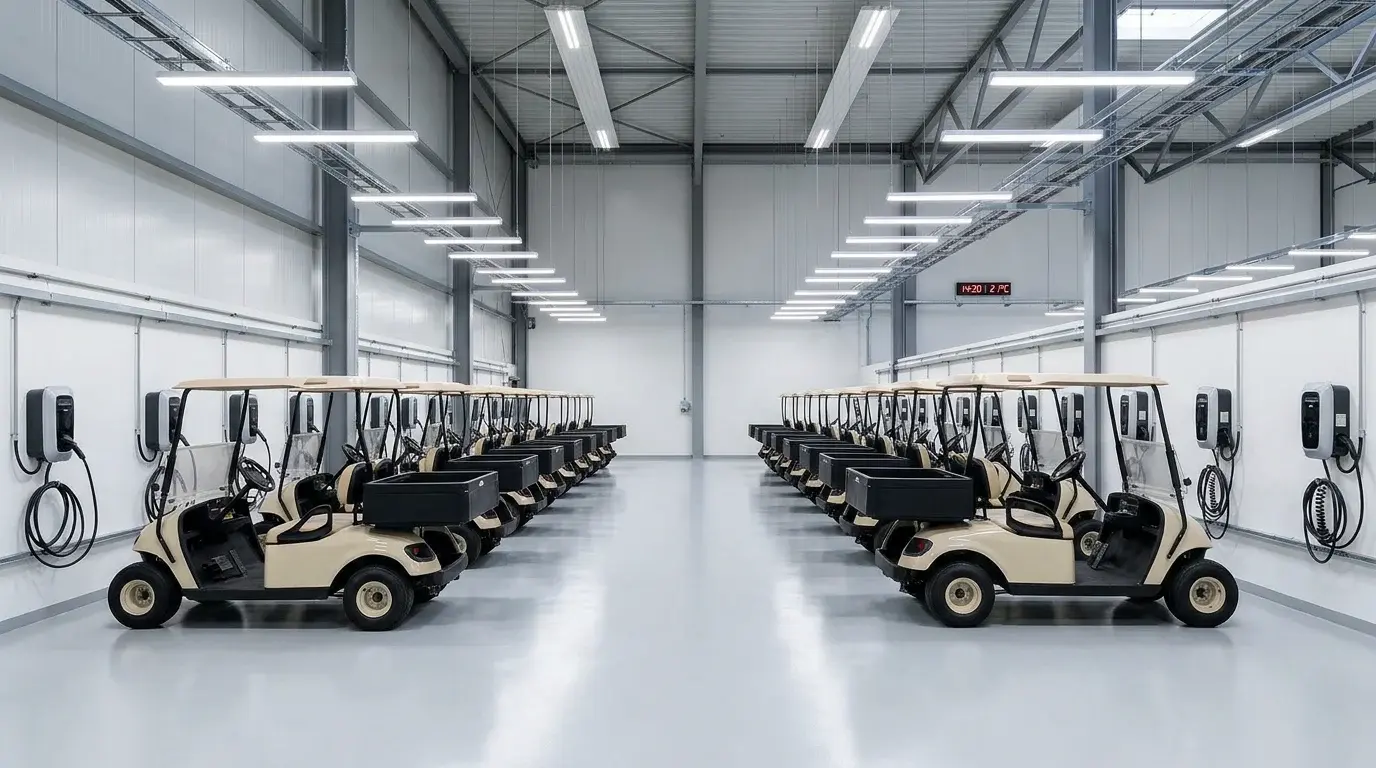
For fleet managers, running dying batteries leads to costly downtime. Degraded packs overwork chargers and strain electric drive motors. Spotting early chemical fatigue protects your commercial fleet budget.

When to Replace Golf Cart Batteries: Critical Warning Signs
Severe Loss of Driving Range
Lead-acid plates lose active material through normal charging cycles. A cart that once ran 36 holes might struggle to finish 18. Losing one-third of your normal range signals permanent capacity loss. At this stage, internal sulfation prevents the pack from holding an adequate charge.
Sluggish Acceleration and Weak Hill Climbing
Electric cart motors require high current when climbing steep hills. As cells age, their internal resistance steadily rises. This internal resistance causes a sharp voltage drop under throttle load. If your vehicle bogs down on mild inclines, the cells are exhausted.
Extended Charging Times and Excessive Heat
Standard chargers should complete a cycle within 3 to 7 hours. Failing batteries often cause chargers to run for 10 hours or longer. This happens because the charger cannot detect the proper cutoff voltage. Energy then turns into wasted heat instead of stored electrical power.
Noticeable heat during charging is an urgent warning sign. Battery tops should never feel uncomfortably hot to the touch. A strong sulfur smell also indicates severe overheating and electrolyte boiling.
Engineering Note: Degraded, high-resistance batteries can enter thermal runaway. Internal separator damage allows positive and negative plates to bridge. This boils the electrolyte and vents flammable hydrogen gas into your cart barn.
Casing Deformation and Terminal Corrosion
Routine visual inspections reveal problems that basic meters miss. Excessive heat causes plastic battery walls to bulge outward. Look for cracked casings, warped lids, or leaking liquid near the terminals. Bulged casings indicate internal structural failure and require immediate disposal.
How to Test Deep Cycle Battery Health
Resting Voltage Testing with a Multimeter
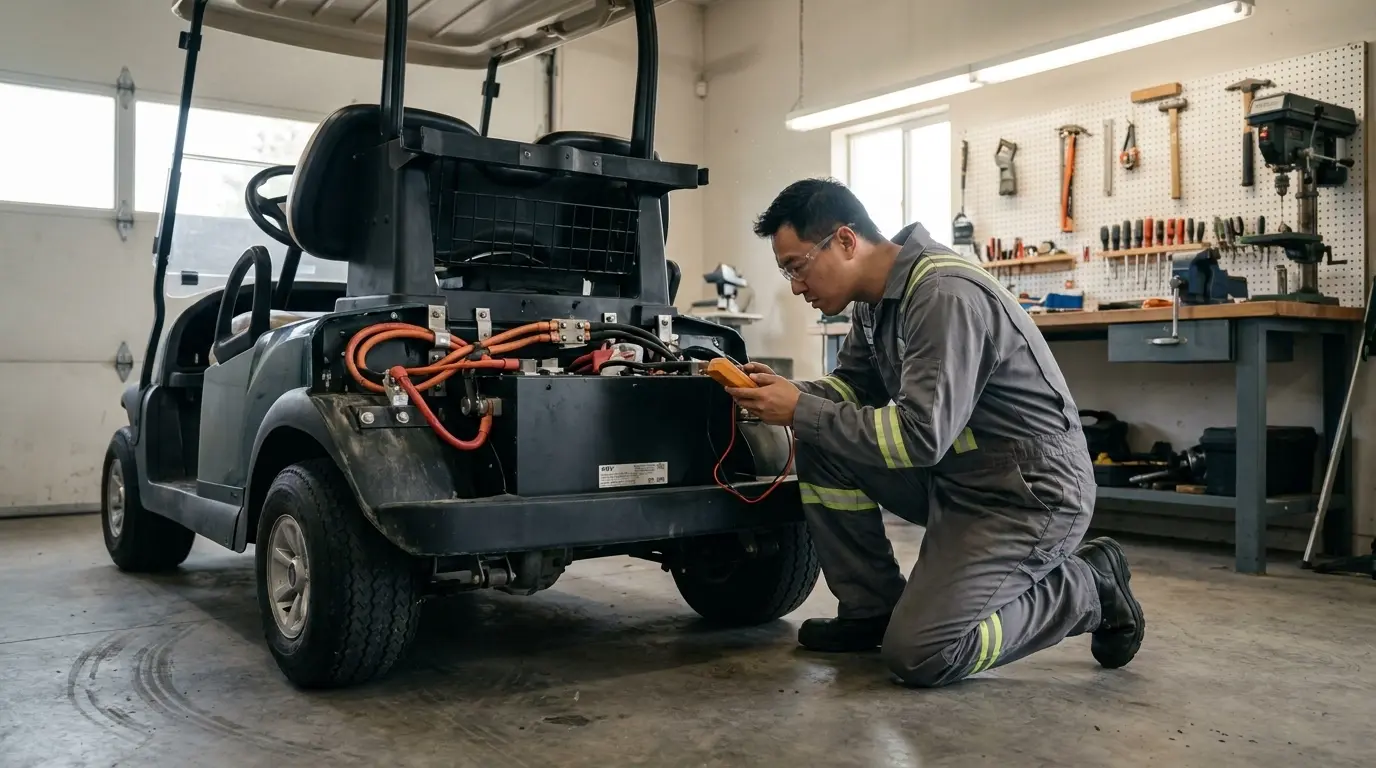
Do not test voltage right after unplugging the cart charger. Surface charge will distort your digital multimeter readings. Let the battery pack rest for at least 8 to 12 hours first. Resting voltage provides a clear picture of static capacity.
Check each battery block with a multimeter and compare the readings below:
| Configuration | 100% Charge (Healthy) | 50% State of Charge | Severely Degraded / Replace |
|---|---|---|---|
| 6V Deep Cycle | 6.37V – 6.42V | ~6.10V | < 6.00V |
| 8V Deep Cycle | 8.49V – 8.55V | ~8.13V | < 8.00V |
| 12V Deep Cycle | 12.70V – 12.80V | ~12.20V | < 12.00V |
| 36V Pack (6 × 6V) | 38.2V – 38.5V | ~36.6V | < 36.0V |
| 48V Pack (6 × 8V) | 50.9V – 51.3V | ~48.8V | < 48.0V |
Numbers in the right column indicate permanent chemical exhaustion. Individual blocks should not drift apart by more than 0.2V. Larger voltage splits indicate severe string imbalance across the pack.
Real-World Voltage Sag Under Load
A sulfated battery might display a normal resting voltage. However, that same battery can collapse under an active load. Connect your voltmeter across the pack while driving up a grade. If a 48V pack drops below 38.4V, replace the set.

Electrolyte Specific Gravity Check
Flooded lead-acid batteries allow direct testing using a hydrometer. Fully charged cells should measure between 1.277 and 1.280 specific gravity. Readings below 1.220 indicate permanent plate sulfation. A cell-to-cell variance above 0.030 signals a dead cell.
Standard voltage meters fail to reflect these dynamic operating changes. To solve this, AYAA TECH designs smart BMS units with advanced SOC algorithms. Our SOC algorithm factors in ambient temperature with an error rate ≤ 5%. This precision gives fleet operators dependable runtime and accurate return timing.
Frustrated by Constant Battery Downtime and Guesswork?
Explore AYAA TECH Drop-in Battery PacksCan You Replace Just One Bad Battery?
Procurement teams often want to replace a single failing unit. Spending $180 feels much easier than spending $1,200 on a full set. However, piecemeal replacement creates severe electrical imbalances in series circuits.
An older battery carries high internal resistance and lower capacity. A new battery features low internal resistance and maximum capacity. During discharge, old batteries empty first and suffer deep cell reversal. During charging, the charger boils old units while undercharging the new one.
The new battery degrades rapidly within two to four months. You end up paying for two replacements instead of one.
Engineering Note: Only replace a single unit if the pack is under six months old. In that case, the failure must be an isolated factory defect. Otherwise, always replace the entire series string together.
Choosing Your Replacement: Lead-Acid vs. LiFePO4
Fleet buyers must balance upfront purchase costs against long-term operating expenses. Flooded lead-acid deep cycle packs keep initial capital expenditures low. Yet lead-acid requires routine watering, terminal cleaning, and acid containment. Heavy lead packs also add roughly 350 pounds to the chassis.
Upgrading to LiFePO4 removes maintenance and sheds 200 to 250 pounds. Lithium also supports fast opportunity charging between work shifts. However, choosing cut-rate lithium packs introduces severe engineering risks.
Engineering Note: Never pair a 100A continuous BMS with a 350A motor controller. Rapid acceleration up hills creates massive inrush current spikes. If the BMS cannot handle the surge, it trips and cuts power instantly.
High current flow generates intense heat across switching components. AYAA optimizes heat dissipation through balanced layouts of MOSFETs and shunt resistors. We apply high-grade thermal silicone pads and specialized gap-filling gels. Where needed, our enclosures utilize high-conductivity aluminum alloys and copper spreaders.
Review this operational comparison to evaluate total ownership costs for your fleet:
| Operational Metric | Flooded Deep Cycle Lead-Acid | Commercial LiFePO4 Pack |
|---|---|---|
| Working Lifespan | 4 – 6 Years (500–1,000 cycles) | 8 – 12+ Years (3,000–5,000 cycles) |
| Routine Maintenance | Scheduled watering & cleaning | Zero maintenance required |
| Pack Weight (48V) | 320 – 380 lbs | 75 – 105 lbs |
| Charge Duration | 8 – 10 Hours (full cycle) | 2 – 3 Hours (opportunity charging) |
| Usable Capacity (DoD) | 50% recommended maximum | 90% – 95% continuous discharge |
| Total Ownership Cost | Low upfront, high labor costs | Lowest cost per operating hour |
Lead-acid suits operations with strict initial budget limits. However, commercial operations benefit far more from lithium conversions. Zero maintenance labor and longer lifespans quickly offset the higher initial price.

Planning a Fleet Upgrade or Need a Custom Power Setup?
Consult an AYAA Power Systems ArchitectFrequently Asked Questions
What is the average cost to replace golf cart batteries?
Replacing a deep cycle lead-acid pack costs between $900 and $1,600. Commercial drop-in lithium systems generally range from $1,800 to $3,200. That lithium price typically includes a dedicated high-efficiency charger. Fleets recover that initial price difference through reduced maintenance within three years.
Is it worth changing golf cart batteries to lithium?
Yes, especially for commercial facilities and high-use fleets. Shedding 200 pounds reduces brake wear and improves acceleration. Lithium delivers sustained voltage throughout the entire discharge cycle. Your carts will climb hills just as fast at 20% charge as at 100%.
What kills golf cart batteries prematurely?
Chronic undercharging is the leading cause of lead-acid battery failure. Leaving batteries partially discharged causes permanent plate sulfation. Neglecting distilled water levels also dries out internal lead plates. For lithium packs, cheap BMS units that cannot handle peak amperage cause early failure.
Looking for Reliable Fleet Battery Packs or Smart BMS Integration?
Contact the AYAA Engineering Team