- Industries

Home Backup & Garden BMS
View More >Electric Forklift BMS
View More >Golf Cart BMS
View More >Electric Two-wheeler BMS
View More >Aviation & UAV BMS
View More >BMS For Power Tools
View More >Medical Equipment BMS
View More >








Home About Us EVENTS & NEWS Choosing the Right Battery Management Systems: A Comprehensive Guide for Efficient Energy Use
Battery Management Systems are vital for maintaining the safe, efficient, and optimum operation of battery-powered systems.
A well-selected battery management system can improve battery life, performance, and safety in everything from electric cars (EVs) to renewable energy storage systems.
We’ll go over what a battery management system is, how it functions, why it’s essential for energy efficiency, and offer advice on how to choose the best system for your requirements.

A Battery Management System (BMS) is an electronic management system designed to manage a battery pack by ensuring it runs safely and effectively.
In order to safeguard the battery from potential risks like overcharging or overheating, it keeps an eye on important variables like voltage, current, temperature, and state of charge (SOC).
Battery Management Systems additionally improves the charging and discharging operations to maximize the battery’s lifespan.
Why is a BMS Critical for Efficient Energy Use
The Battery Management Systems serves a vital role in optimizing the energy efficiency of battery-powered products.
By regulating charging cycles and ensuring the battery functions within its safe limits, the Battery Management Systems contributes to:
Improved energy efficiency: Preventing energy waste and ensuring the battery uses power effectively.
Extended battery life: Properly managing charge cycles helps reduce wear and tear, prolonging battery life.
Enhanced safety: Battery Management Systems prevents circumstances that could lead to battery failure, including overheating, overcharging, and deep discharging.
Whether in an electric vehicle, a solar power storage system, or portable gadgets, the Battery Management System is vital to ensuring battery performance and durability.
Battery management systems combine software and hardware to track and control battery performance in real time.
Its functions ensure that the battery performs safely and efficiently under diverse conditions. Key functions include:
1. Battery Monitoring and Data Acquisition
The Battery Management Systems continuously monitors critical parameters such as:
Voltage: Each cell’s voltage is checked to ensure the battery pack operates within safe limits.
Current: The Battery Management Systems tracks the amount of current flowing into and out of the battery.
Temperature: Temperature sensors help avoid overheating or freezing, which can degrade the battery.
By acquiring and evaluating this data, the Battery Management Systems delivers vital information about the battery’s status and performance.
2. Protection and Safety Features
One of the main purposes of the Battery Management System is safety.
It shields the battery from numerous dangers, including:
Overcharging and overcurrent: In order to prevent short circuits, fires, or cell damage.
The battery management systems make sure that the battery doesn’t go over its voltage or current restrictions.
Temperature regulation: Freezing or overheating can seriously harm the battery.
The Battery Management Systems ensures the battery maintains within an optimal temperature range.
Cell balancing: The Battery Management Systems ensures that all cells in the pack are balanced, preventing issues like cell mismatch, which can impair performance and battery life.
3. Performance Optimization
By estimating the battery’s State of Charge (SOC) and State of Health (SOH), a battery management system also maximizes battery performance.
SOC delivers a real-time readout of the battery’s remaining charge, which aids in smart energy management.
SOH helps identify the health and lifespan of the battery, allowing you to estimate when maintenance or replacement is necessary.
Whether the battery is used in a car, a residential energy storage system, or an industrial application, these features guarantee that it runs at optimum efficiency and lifetime.
Compatibility, voltage range, communication capabilities, and safety features are all important considerations when choosing a battery management system.
Here’s what to search for:
1. Compatibility with Battery Type
Make sure the battery chemistry you are using is compatible with the Battery Management System.
Common types include lithium-ion (Li-ion), lithium-polymer (LiPo), and nickel-metal hydride (NiMH).
Each type of battery has various charging, protection, and performance requirements, so choose a Battery Management System suited for the exact chemistry you’re working with.
2. Number of Cells and Voltage Range
The Battery Management System must match the amount of cells in your battery pack (e.g., 7S, 10S, or 24S), as well as the required voltage range.
Mismatched layouts could lead to inefficiency, and in some situations, damage to the battery pack.
3. Real-Time Monitoring and Data Logging
A battery management system with remote monitoring and real-time data logging is crucial for improved performance and troubleshooting.
This enables users to monitor system performance and identify problems early, particularly for big systems or fleets.
4. Communication Protocols and Integration
Look for a Battery Management System that supports communication protocols like CAN bus, Bluetooth, or RS485.
This enables integration with IoT devices or cloud platforms, providing seamless data sharing and remote diagnostics.
5. Safety Features
Comprehensive safety features, including defense against overvoltage, overcurrent, short circuits, and overheating, must be provided by the battery management system.
These features are crucial to prevent costly battery failures and maintain the long-term safety of your system.
A variety of battery management systems are available from Ayaa Technology, each tailored to the requirements of various applications.
Let’s take a deeper look at three of our most popular models and their advantages:
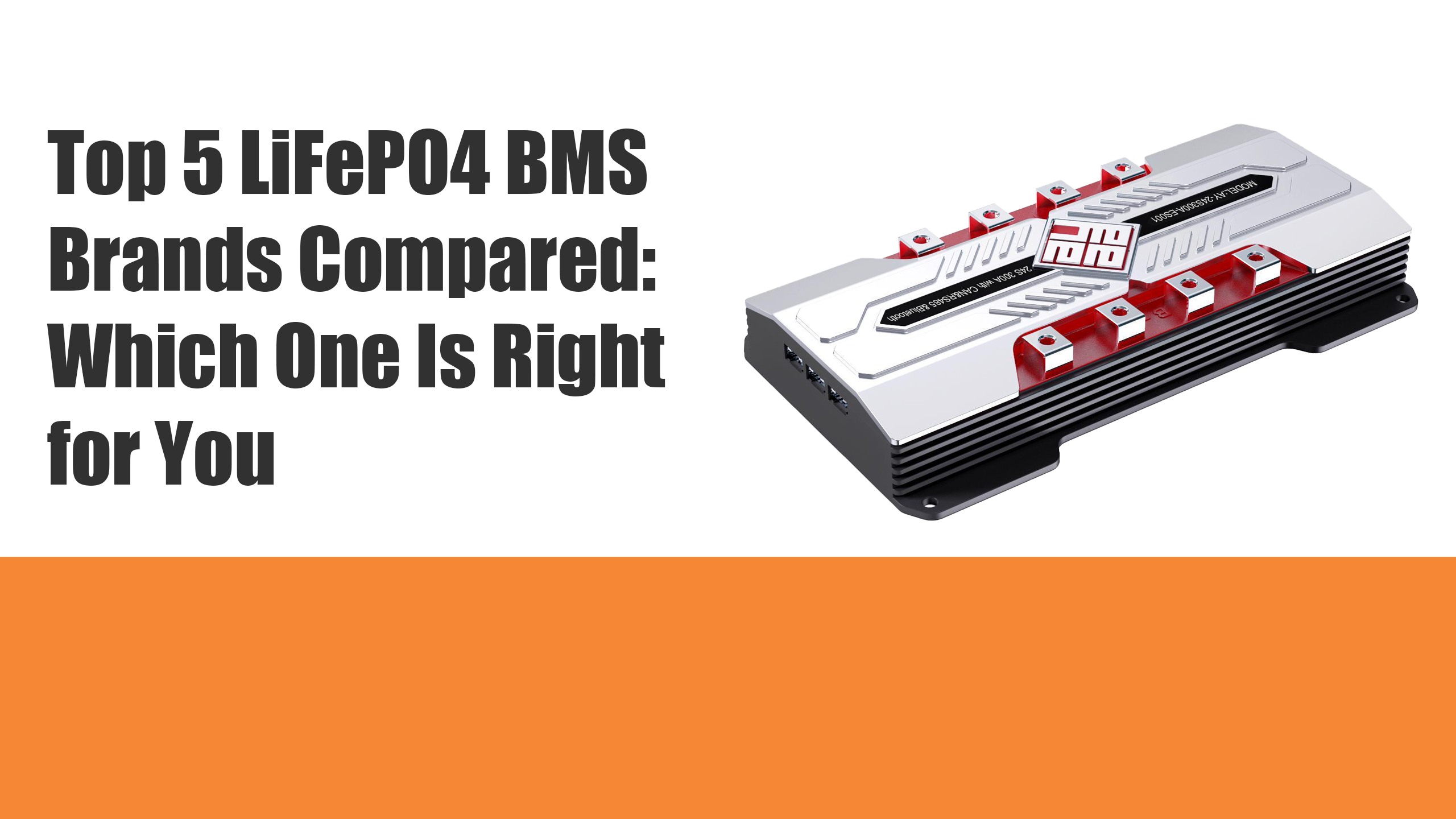
1. AY-L24S300A-ES001 (7S-24S)

Larger battery packs, such those seen in electric cars and extensive energy storage systems, are ideal for the AY-L24S300A-ES001. Here’s why:
Wide Voltage Range (7S-24S): Flexible for a variety of applications, compatible with a wide range of battery combinations.
Intelligent Monitoring: Includes sophisticated algorithms for early fault detection, battery performance optimization, and real-time monitoring.
Enhanced Safety: Provides strong defense against temperature changes, overcharging, and overcurrent.
High Precision: Guarantees precise data collection for improved SOC and SOH estimation, resulting in more effective battery use.
2. AY-L10S200A-ES002 (4S-10S)
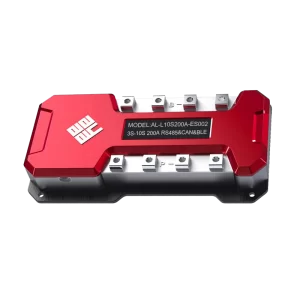
The AY-L10S200A-ES002 is targeted for medium-sized applications such as consumer electronics or smaller energy storage systems. This is what it provides:
Compact Design: Ideal for smaller devices with lower voltage requirements, ranging from 4S to 10S.
Communication Flexibility: Supports several communication protocols including CAN bus, providing easy interaction with other systems.
Cost-Effective: Offers great value for smaller systems, providing advanced features at an affordable price.
Temperature Protection: Includes temperature sensors that enable safe operation under a variety of environmental situations.
3. AY-LS10S200A-H200 (6S-10S)
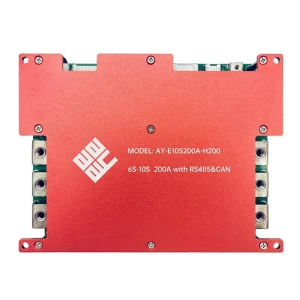
The AY-LS10S200A-H200 is a fantastic choice for home energy systems and DIY battery applications. Here’s why it stands out:
Parallel Connection Support: enables the parallel connection of several battery packs, making it ideal for larger, scalable systems.
Protocol Compatibility: Works flawlessly with numerous protocols including Modbus and I2C, making it easy to connect to other systems.
Flexible Voltage Range (6S-10S): Suitable for various applications, from energy storage to backup power systems.
User-Friendly: Features intuitive software for easy configuration and monitoring, even for non-expert users.
Once you’ve picked the best Battery Management System, it’s crucial to ensure proper installation and maintenance to maximize safety and performance:
Installation: Proper installation is critical to avoid issues like short circuits or improper balancing.
Environmental Factors: Both the battery and the battery management system may be impacted by extreme circumstances (such as high temperatures and humidity).
Always follow the manufacturer’s requirements for environmental compatibility.
Selecting the correct Battery Management System is crucial for maintaining the safe, efficient, and long-lasting performance of your battery-powered devices.
You can greatly increase the energy efficiency of your batteries, prolong their life, and lower the chance of system failures with the correct battery management system.
At Ayaa Technology, we provide a variety of Battery Management Systems suited to satisfy the needs of different applications—from electric vehicles to renewable energy storage.
You can be confident that your batteries will continue to function safely and effectively for many years to come thanks to our cutting-edge, dependable BMS.
Q1:What is a battery management system?
A1:A battery pack, which is an assembly of battery cells electrically arranged in a row x column matrix configuration to enable the delivery of a targeted range of voltage and current for a duration of time against expected load scenarios, is monitored by a battery management system (BMS).
Q2:What are the three types of BMS?
A2:Centralised BMS – One control device manages the entire pack.
Modular BMS – Split into parts, perfect for larger systems.
Distributed BMS: Maximum precision is possible because each cell has its own controller.
Q3:How do I get rid of battery management system malfunction?
A3:When you receive such a notice, you should usually charge your battery and take out any electrical items that are plugged into your car.
You can accomplish this by turning on the ignition, parking your car, and letting the altern ator charge your battery for at least 20 minutes.
Q4:Which type of BMS is best?
A4:Centralized BMS is currently the most prevalent type of battery management system.
In this system, all control and administration duties are done by a central control unit (BCU).
Q5:Do I need a battery management system?
A5:Indeed, one of the many ways a battery management system (BMS) safeguards your battery is by keeping it from overcharging, which in the case of Li-ion batteries actually means overheating.
Additionally, it guards against imbalances between battery cells, dangerous temperature swings, undercharging, and much more.
Contact Us