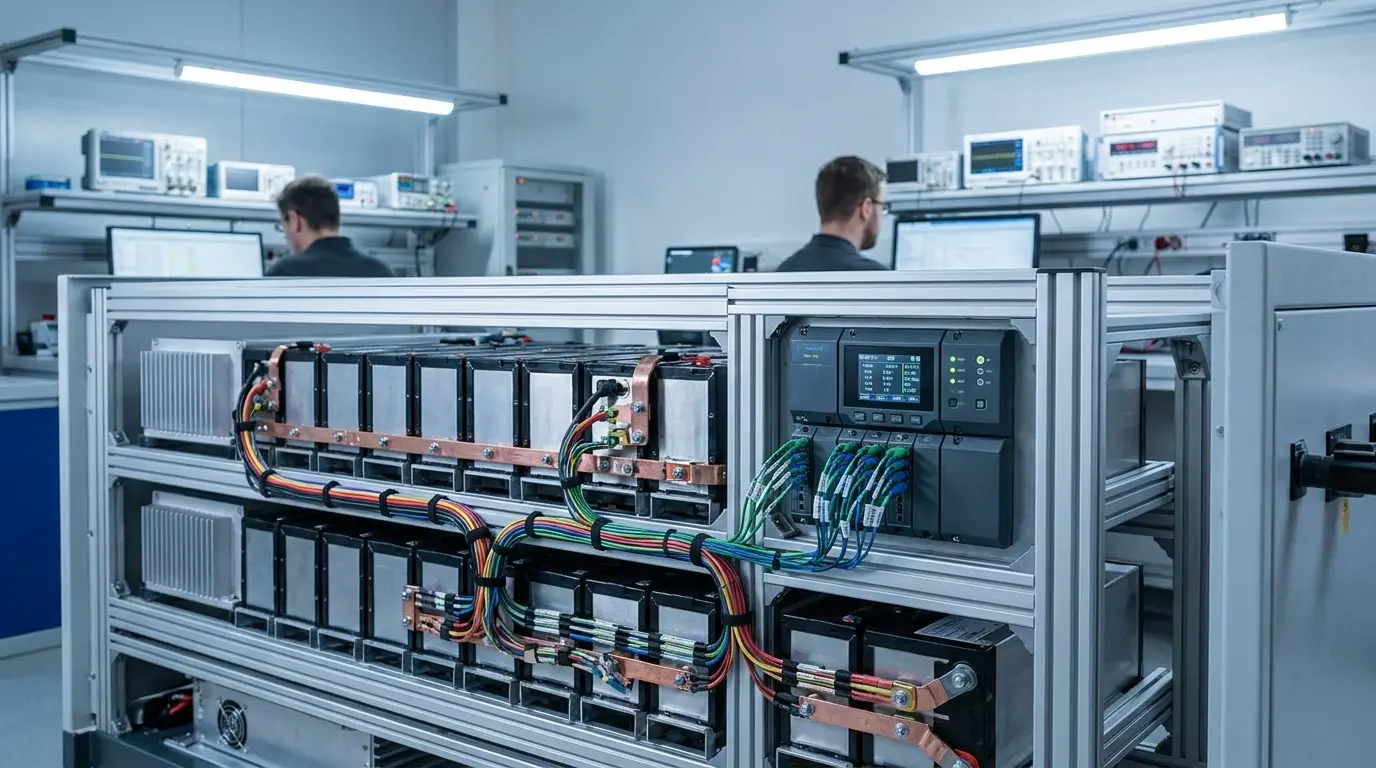
Selecting top LiFePO4 BMS brands like AYAA, Daly, JBD, ANT, and Seplos ensures battery safety, long cycle life, and prevents thermal runaway. In energy storage, EV mobility, and off-grid power, a solid protection board controls cycle life and prevents catastrophic failures. Choosing the right system determines whether your battery deployment runs reliably for ten years or fails within months. This guide breaks down technical specs, configuration rules, and hardware installation steps for procurement managers and design engineers.
Why Cell Protection Dictates System Performance
A lithium iron phosphate battery management system safeguards overall pack health. It manages active or passive cell balancing, monitors thermal limits, and cuts off voltage spikes. Without precise monitoring, single-cell drift causes premature capacity degradation. High-quality systems deliver live telemetry over Bluetooth, CANbus, or RS485. They turn raw cells into reliable industrial power assets.
Understanding LiFePO4 Battery Characteristics
LiFePO4 offers high inherent safety and exceptional cycle life. However, its flat discharge curve makes voltage-based State of Charge (SOC) estimation difficult. Accurate monitoring requires coulomb counting at the cell level.
Charging below 0°C causes lithium plating, permanently damaging the anode. Your hardware must feature low-temperature cutoff protection and integrated heating mat drivers. While NMC chemistry yields higher energy density, LiFePO4 remains the primary choice for stationary power and heavy commercial builds due to thermal stability.
Evaluating the Top 5 LiFePO4 BMS Brands
Comparing market leaders helps match specific hardware to your project’s voltage, current, and protocol needs.
| Brand | Voltage Range | Max Continuous Current | Smart Features & Connectivity | Primary Use Case |
|---|---|---|---|---|
| Ayaa Smart BMS | 12V / 24V / 48V | 150A | Cloud diagnostics, AI alerts, Multi-protocol support | Industrial Solar, EV, Marine, Commercial Storage |
| Daly Smart BMS | 12V / 24V / 48V | 100A | Passive balancing, Mobile app, Waterproof casing | E-bikes, Small Solar Banks, Light Mobility |
| JBD / Overkill Solar | 12V / 24V / 48V | 120A | PC programming interface, Detailed log export | RVs, Off-Grid DIY, Home Backup |
| ANT BMS | 12V / 24V | 100A | High-resolution screen support, Multi-temp NTCs | Battery Testing Labs, Custom Packs |
| Seplos Smart BMS | 12V / 24V / 48V | 150A | Inverter protocol matching, High configurability | Commercial Grid-Tied Solar, UPS Systems |

Evaluating these top LiFePO4 BMS brands highlights distinct engineering priorities. Hardware teams needing turnkey inverter compatibility often lean toward Seplos or Ayaa. DIY builders frequently select JBD for open parameter access.
Key Protection Parameters and Calibration
Incorrect firmware settings trigger false trips or destroy cells. Set these baseline thresholds on your configuration app or PC interface:
- Overcharge Protection: 3.55V – 3.65V per cell.
- Overdischarge Cutoff: 2.50V – 2.80V per cell.
- Cell Balance Threshold: 3.40V – 3.45V (start balancing during top-charge).
- Charge Temperature Limits: Cut off charging below 0°C and above 50°C.
- Discharge Temperature Cutoff: Stop discharge above 60°C.
Always test threshold responses under dummy loads before deploying packs into full operation.
Step-by-Step BMS Wiring and Installation
Faulty wiring burns protection circuits instantly. Follow this strict physical connection sequence:
- Turn off all charging sources and load breakers.
- Wire the main battery negative cable directly to the B- terminal on the board.
- Connect the individual cell balance harness starting from B0 (main negative) up to the final positive lead.
- Verify voltage steps on the balance connector with a multimeter before plugging into the board.
- Attach NTC temperature sensors directly to the center cells.
- Connect the system load negative to the P- terminal.
- Power up the board and verify sensor telemetry via the app or software interface.
Safety Note: Always install inline fuses on main positive lines and maintain proper ventilation clearance for cooling heat sinks.
Explore Advanced Smart BMS Solutions
Explore Smart BMS ProductsTroubleshooting Common Field Issues
- Bluetooth Disconnection: Power cycle the board and confirm OS location permissions are active.
- Persistent Cell Imbalance: Lower the balance start voltage and leave the pack on a top-balance float charge.
- Over-Temperature Alarms: Relocate NTC sensors away from high-current busbars or improve enclosure airflow.
- Zero Output Voltage: Inspect balance harness pin alignment. A single loose wire triggers protective shutoff.
Real-World Applications and Deployment Strategies
- Solar & Peak Shaving: Microgrid systems rely on robust BMS units to handle solar surges, supporting daily peak shaving cycles.
- Electric Vehicles (EVs): High-drain packs require rapid discharge protection to prevent cell stress during hard acceleration.
- Marine & Off-Grid: Sealed enclosures with Bluetooth telemetry allow remote health monitoring in humid environments.
- Grid-Tied Storage: Commercial battery banks use multi-pack BMS communication to balance parallel rack arrays safely.
What’s Driving Energy Management in 2025?
Hardware architectures are evolving from static protection boards into intelligent cloud nodes. Expect these advancements across major LiFePO4 BMS brands:
- Predictive Cloud Analytics: AI algorithms analyze internal resistance trends to forecast cell degradation before failures happen.
- Over-The-Air (OTA) Updates: Field engineers push firmware patches and protocol updates remotely.
- Smart Grid Integration: Systems communicate directly with hybrid inverters to optimize dynamic tariffs and dynamic solar forecasting.
Selecting the proper board protects your cell investment, extends operational uptime, and ensures maximum safety across all deployment tiers.
Need Custom Smart BMS Solutions for Your Projects?
Request Custom BMS CustomizationFrequently Asked Questions
Do I need a BMS with a LiFePO4 battery?
Yes. LiFePO4 cells require cell balancing and strict voltage cutoffs. Operating without a protective board causes permanent cell degradation or catastrophic failure.
Can I run a lithium battery without a protection board?
Never run lithium packs unprotected. Charging without cell-level oversight causes severe overcharging, cell imbalance, and potential thermal runaway.
What are the main trade-offs of LiFePO4 chemistry?
LiFePO4 features lower volumetric energy density compared to NMC. It also costs slightly more upfront and requires low-temperature charging protection. However, its safety and superior cycle life outweigh these constraints in heavy-duty applications.
What is the ideal low-voltage cutoff for LiFePO4 cells?
Set the low-voltage cutoff between 2.50V and 2.80V per cell. Discharging below 2.0V causes irreversible copper dissolution and ruins the cell.