
- Industries

Home Backup & Garden BMS
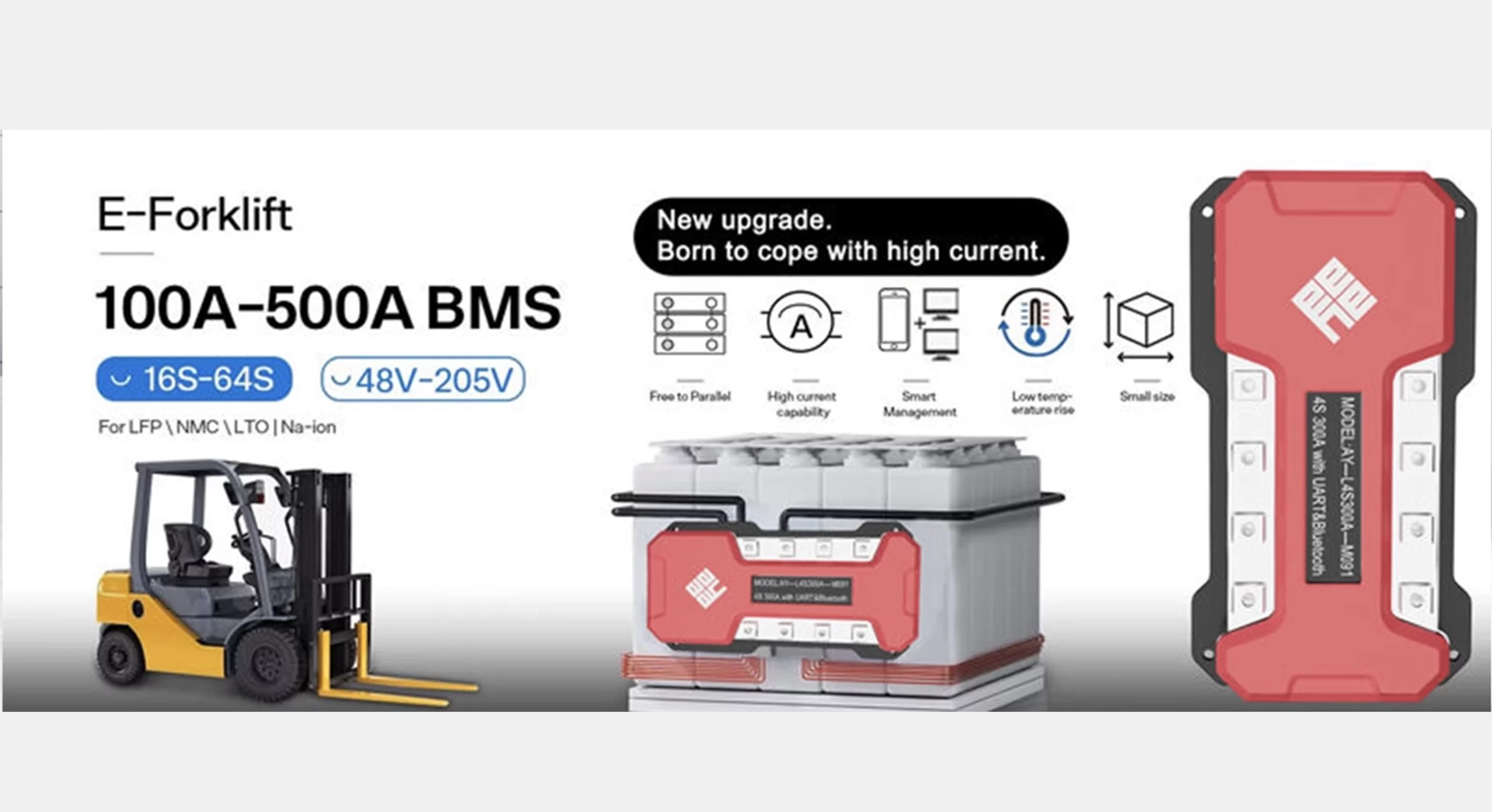
View More >Electric Forklift BMS
View More >Golf Cart BMS
View More >Electric Two-wheeler BMS
View More >Aviation & UAV BMS
View More >BMS For Power Tools
View More >Medical Equipment BMS
View More >








Home About Us EVENTS & NEWS What is a Lithium Ion BMS and How Does It Optimize Battery Performance
A Lithium Ion BMS is a vital technology developed to monitor, control, and safeguard the cells in a lithium-ion battery.
Everything from solar storage systems to electric cars is powered by these batteries, and extended battery life, safety, and optimal performance depend on their effective operation.
The job of a BMS is to regulate the charging and discharging cycles, maintain temperature control, and perform diagnostic duties that avoid failures and optimize the battery’s performance.

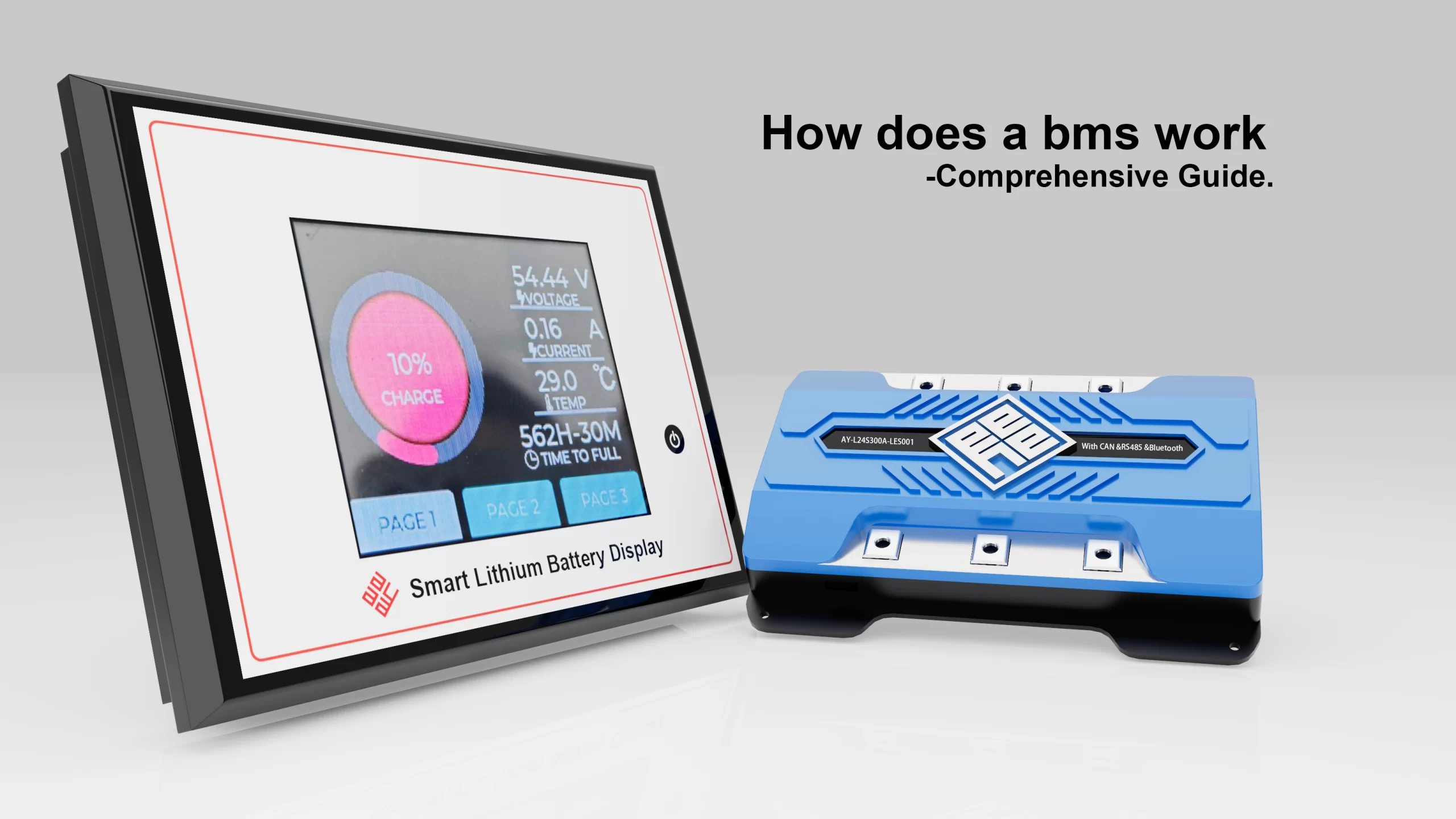
A Battery Management System (BMS) works as the control center for controlling the battery pack.
It monitors the state of charge (SoC), state of health (SoH), temperature, and general performance of the lithium-ion battery.
In doing so, the BMS guarantees that the battery works within its safe operating limits, preventing overcharging, over-discharging, and thermal runaway.
The key functions of the BMS are:
Battery Protection: Safeguards against overcharging, over-discharging, short circuits, and overheating.
State of Charge (SoC) Management: Calculates the amount of energy remaining in the battery.
Performance Optimization: Ensures each cell is balanced and operating at optimal conditions for performance.
Communication: Provides data on the battery’s status to external systems (such as the vehicle’s or solar system’s control unit).
A Lithium-Ion BMS plays a crucial role in enhancing battery performance in several critical aspects:
1. Cell Balancing
Lithium-ion batteries are often made up of many cells. Over time, these cells might develop minor variations in charge levels, leading to an imbalance.
A BMS actively balances the cells, dispersing energy to ensure they are charged and discharged equally.
This cell balancing optimizes battery performance by reducing the overworking of individual cells, which can lead to premature deterioration.
2. Temperature Management
Temperature is one of the most crucial aspects in a battery’s performance.
A BMS continuously checks the battery’s temperature to ensure it stays within a safe range.
If the temperature surpasses a specific threshold, the BMS can limit the charge or discharge rate, or even shut the system down to prevent overheating.
The BMS assists in preventing thermal runaway, which can result in battery failure or even fires, by controlling temperature.
3. Optimized Charging and Discharging
Managing the battery’s charging and discharging processes is one of the BMS’s main duties.
Overcharging or over-discharging can damage the battery, limiting its lifespan and efficiency.
The BMS ensures that the battery is charged within its optimal voltage range, while also controlling the discharge cycle to maximize useful capacity.
Longer battery life and improved energy efficiency follow from this.
4. State of Charge (SoC) and State of Health (SoH) Monitoring
The BMS constantly tracks the State of Charge (SoC), or how much energy is remaining in the battery.
By delivering precise assessments of the available energy, the BMS helps prevent the battery from being depleted too much, which can cause harm.
In addition, the BMS examines the State of Health (SoH) to monitor the overall state of the battery.
The BMS can anticipate battery failures before they happen by monitoring battery health, enabling preventive maintenance and guaranteeing continued optimal performance.
5. Improved Efficiency Through Communication
A BMS connects with the device or system powered by the battery, delivering real-time data on the battery’s state.
This enables external systems to modify power usage based on the battery’s remaining charge and performance data.
For example, in an electric car, the vehicle’s control system can modify driving modes based on battery capacity, ensuring that the vehicle runs at optimal efficiency and conserves battery life.
When we examine the uses of a lithium-ion BMS in different industries, its function becomes even more clear:
Electric Vehicles (EVs): By controlling charging cycles, keeping an eye on cell balance, and guarding against thermal problems, BMS guarantees the best possible battery performance, safety, and longevity in electric vehicles.
Solar Storage Systems: The BMS makes sure that solar energy is effectively regulated and stored for off-grid solar applications, maximizing both storage and power production for use at night or during cloudy conditions.
Marine Applications: Lithium-ion batteries are utilized in boats and other maritime equipment, where a BMS provides safety, performance, and longevity in harsh marine conditions.
RVs and Golf Carts: In RVs and golf carts, BMS technology helps preserve battery life, improve performance, and avoid safety hazards like overheating and overcharging.
When picking the optimal BMS for your application, consider the following factors:
Compatibility with Battery Configuration: Choose a BMS that is suitable with the quantity of cells in your battery pack, as well as the type of cells used.
Voltage Range: Make that your system’s voltage range is supported by the BMS.
While some BMS choices are made for more specialized applications, others can manage wider voltage ranges.
Communication Features: Communication protocols that facilitate simple interaction with external systems, like chargers or monitoring systems, should be a feature of a good BMS.
Protection Features: Choose a BMS with complete protection features, such as temperature, short-circuit, overcharge, and overdischarge protection.
To select the right BMS for your needs, consider the following options:
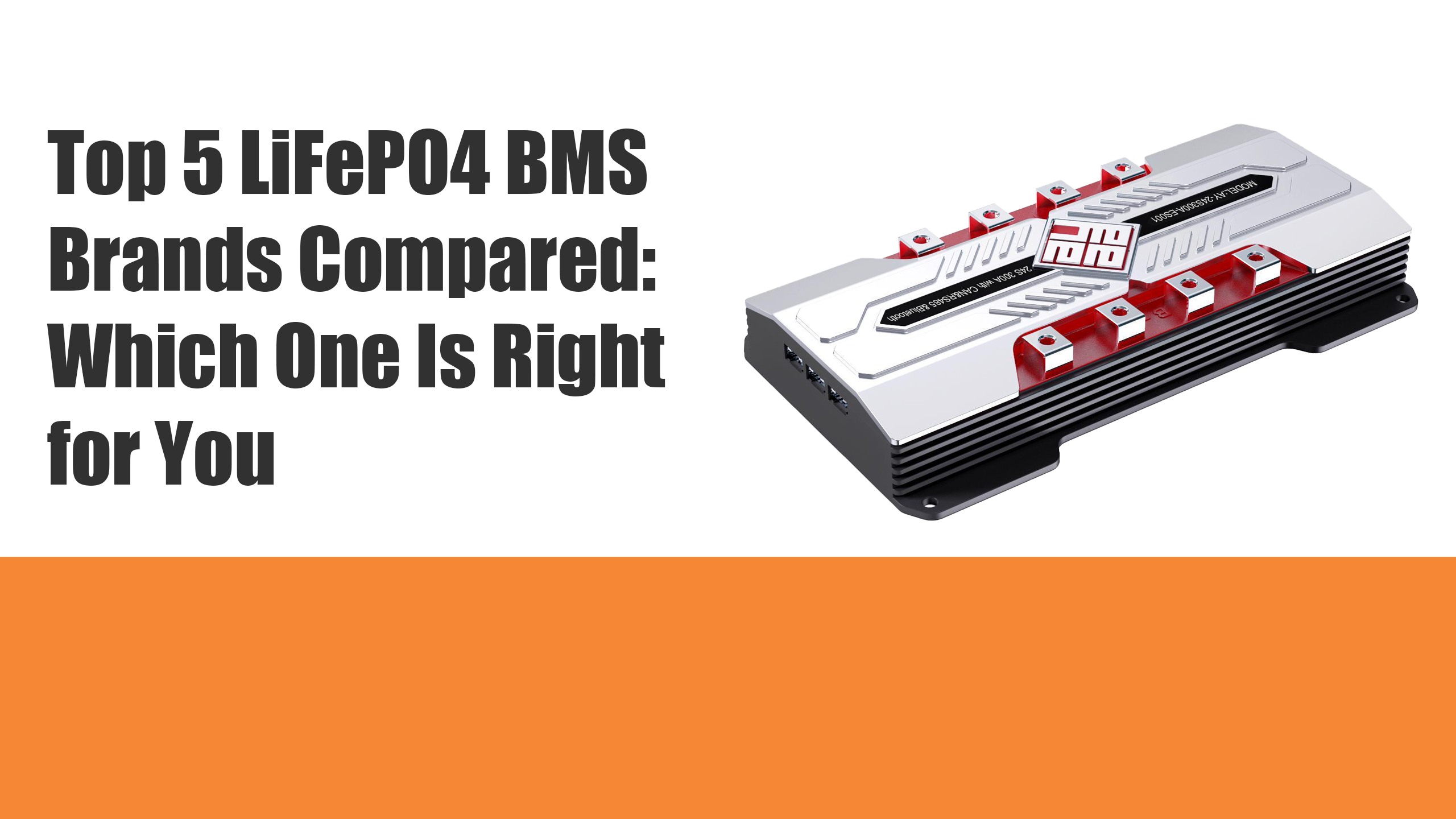
AY-L24S300A-ES001 (7S-24S):

Designed for 7S to 24S lithium-ion battery configurations, the AY-L24S300A-ES001 is a flexible BMS that may be used in a number of applications that call for a wider voltage range.
This BMS thrives in high-performance situations where dependable and efficient energy management is crucial.
Key Features:
Voltage Range: Supports a broad voltage range from 7S to 24S, enabling flexibility for varied battery combinations.
Intelligent Monitoring: Equipped with extensive monitoring capabilities, the BMS tracks the state of charge (SoC), state of health (SoH), temperature, and voltage of individual cells.
Cell Balancing: Ensures equal charge distribution across all cells, optimizing performance and increasing battery life.
Temperature Control: Monitors battery temperature to prevent overheating, ensuring safe operation in difficult settings.
Advantages of AY-L24S300A-ES001:
Wide Application Range: With support for a broad voltage range, this BMS is suited for usage in a wide range of industries, including electric vehicles, solar storage systems, and maritime applications.
Enhanced Efficiency:Intelligent monitoring and temperature management ensure that the battery functions within acceptable limits, optimizing energy efficiency.
Increased Battery Life: The cell balancing feature of the BMS reduces the possibility of individual cells falling out of balance, which lowers the likelihood of early battery deterioration.
Superior Protection: provides thorough defense against short circuits, overcharging, and overdischarging, guaranteeing dependable and safe operation.
AY-L10S200A-ES002 (4S-10S):
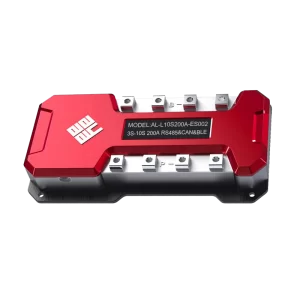
The AY-L10S200A-ES002 is perfect for smaller-scale applications because it is made for 4S to 10S battery systems.
It delivers powerful protection and performance management in a compact form factor.
Key Features:
Voltage Range: Supports 4S to 10S designs, perfect for smaller batteries used in devices like golf carts, RVs, and backup power systems.
BMS Material: Built with high-quality components for reliability and durability, even under harsh situations.
Communication Method: outfitted with cutting-edge communication protocols that enable smooth interaction with additional systems and devices for real-time monitoring.
Protection Features: includes temperature monitoring, overcharging, and overdischarging to protect the battery and any connected devices.
Advantages of AY-L10S200A-ES002:
Compact and Efficient:Because of its tiny size and outstanding performance and efficiency, the BMS is a great option for smaller batteries.
Reliable Communication: Users may remotely monitor battery performance and health thanks to its sophisticated connectivity features, which enable real-time data transmission.
Superior Battery Protection: With its extensive protection features, the BMS ensures that your battery remains safe under different load conditions, enhancing system reliability.
Cost-Effective Solution: The AY-L10S200A-ES002, which is intended for smaller-scale systems, provides a cost-effective option for a variety of uses.
AY-LS10S200A-H200 (6S-10S):
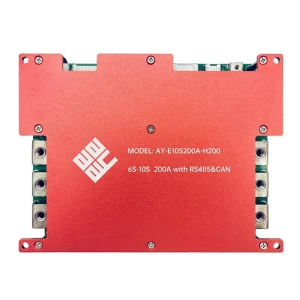
The AY-LS10S200A-H200 is a sophisticated BMS developed for 6S to 10S lithium-ion battery systems.
This variant is specifically tailored for applications that demand parallel connections and broader system compatibility.
Key Features:
Voltage Range: Supports 6S to 10S lithium-ion configurations, ideal for applications that demand flexible system integration.
Parallel Connection Support: By connecting numerous batteries in parallel, this BMS enables customers to expand battery systems, which is helpful for larger energy storage solutions.
Compatibility: Highly compatible with a wide range of lithium-ion batteries, allowing easy integration with different systems.
Communication Protocol: This BMS guarantees effective data transfer and system administration because it is outfitted with the most recent communication standards.
Advantages of AY-LS10S200A-H200:
Flexible System Integration: This BMS is a great option for scalable systems like solar energy storage and huge off-grid applications because it can manage parallel connections.
High Compatibility:A wider range of compatibility with various energy storage systems is ensured by this BMS’s ability to operate with a number of lithium-ion battery types.
Advanced Communication: The communication protocols improve overall system efficiency by giving users real-time data into battery health and performance.
Reliable and Safe: With built-in protections against overcharge, short circuits, and temperature extremes, this BMS offers powerful safety measures to ensure reliable and long-lasting battery performance.
A Lithium-Ion BMS is a vital technology for optimizing battery performance, boosting safety, and maintaining longevity.
Whether employed in electric vehicles, solar storage, or maritime applications.
The BMS guarantees that the battery performs at top efficiency, shielding it against potential concerns like overcharging, overheating, and performance degradation.
The BMS keeps the battery dependable, effective, and long-lasting by efficiently controlling temperature, charge/discharge cycles, and cell balance.
With the correct BMS in place, you can maximize the potential of your lithium-ion Battery Management System, achieving optimal energy management and performance across multiple applications.
Q1:What is BMS in lithium ion?
A1:A Battery Management System (BMS) is an intelligent component of a battery pack responsible for sophisticated monitoring and management.
It is the brain behind the battery and plays a key part in its levels of safety, performance, charge rates, and longevity.
Q2:How to reset BMS on lithium battery?
A2:To reset a lithium battery’s BMS, disconnect all power sources, let it sit for 30-60 minutes, then connect a compatible charger to “wake up” the BMS and allow it to resume charging.
While some batteries need pressing a physical reset button, others can be awakened by just connecting to a reliable 12V battery.
For further instructions, always refer to the battery’s handbook.
Q3:Can I use a lithium battery without a BMS?
A3:Any lithium in series requires a BMS at the absolute least for charging; failing to use one is extremely unprofessional and a ticking time bomb.
Q4:What does 100A BMS mean?
A4:A “100A BMS” denotes a Battery Management System that can handle a continuous discharge current of 100 amps.
The “100A” rating specifies the greatest amperage the BMS can safely manage, working as a key safety feature to safeguard the battery from overcurrent and other concerns like overcharging, over-discharging, and temperature extremes.
This rating is critical for matching the BMS to the battery’s capabilities, as the BMS will shut down the system if this limit is exceeded.
Q5:What happens when a BMS fails?
A5:When a Battery Management System (BMS) malfunctions, the battery loses its ability to prevent overcharging, overdischarging, and overheating, which can render it harmful, unusable, or both.
Abrupt power outages, decreased efficiency, or even the battery shutting down or overheating and perhaps catching fire are all possible outcomes of a BMS failure.
Contact Us


 English
  日本語
日本語  Deutsch
  한국어
한국어  Français
  Español
  Italiano
  Русский
  Português
  العربية