
What Are the Best Batteries for Robots in 2025?
Robotics is developing more quickly than before, and the energy systems that drive these devices are also changing at the same rate.
Selecting the appropriate batteries for robots has become one of the most crucial engineering choices for developers, manufacturers, and research teams as robots grow stronger, smarter, and more independent.
Every design, from humanoids to warehouse robots, from agricultural drones to tiny STEM bots, needs a battery system that strikes a balance between energy density, weight, longevity, safety, and real-time battery management.
Compact high-discharge packs, intelligent BMS (Battery Management System) technology, and advancements in lithium chemistry have redefined performance and reliability requirements in 2025.
This guide is one of the most thorough resources available for choosing batteries for robots today since it breaks down battery chemistries, robot applications, maintenance procedures, lifespan expectations, and future trends to assist engineers and decision-makers in making the right choice.

What Types of Batteries Are Used in Robots Today?
Three battery chemistries are the main ones used by modern robots:
Lithium-ion (Li-ion)
Lithium polymer (LiPo)
Nickel-metal hydride (NiMH)
Each has a distinct safety profile, weight concerns, discharge capabilities, voltage characteristics, and chemistry.
Prior to choosing the best batteries for robots, it is crucial to comprehend these variations.
Battery Chemistry Comparison
| Chemistry | 公称電圧 | 退院率 | Charging Method | 容量範囲 | Advantages | Disadvantages |
|---|---|---|---|---|---|---|
| リチウムイオン | 3.6–3.7V per cell | 高い | CC/CV | 高い | High energy density, long cycle life | Requires BMS, risk of thermal runaway |
| LiPo | 3.7V per cell | Very high | Balance charging | Medium–High | Lightweight, high discharge, flexible shape | Sensitive to damage, swelling risk |
| NiMH | 1.2V per cell | 中くらい | Delta-V | Low–Medium | Safe, inexpensive | Low energy density, heavy, outdated for high-power robots |
Today, 99% of batteries for robots used in consumer, industrial, agricultural, and educational robotics are composed of these chemicals.
How Do Lithium-Ion, Lithium Polymer, and NiMH Batteries Compare for Robot Use?
Different electrical properties are needed for different types of robots.
Let’s examine the form, flexibility, safety, and application applicability of the three major chemical families.
Shape and Packaging
リチウムイオン cells are typically cylindrical (18650/21700) or prismatic.
LiPo batteries use flat, soft pouches that fit compact robotic designs.
NiMH cells resemble AA/AAA tubes or large industrial blocks.
Drones, small robots, and robotic arms frequently like LiPo since it is the sole material that allows for extremely flexible sizing.
Specifications and Performance
LiPo offers the highest discharge rate, making it ideal for robotics like racing bots, RC robots, and quadcopters that need quick power bursts.
For endurance-based robotics (delivery robots, warehousing AMRs), Li-ion has the highest energy density.
NiMH is more affordable and stable, making it appropriate for low-power automation or instructional kits.
Usage and Environmental Suitability
リチウムイオン: Best overall for multi-hour robotic work cycles.
LiPo: Best for rapid acceleration and maneuverability.
NiMH: Best for simple, low-cost robotics.
Safety Levels
Of all the lithium chemistries, LiFePO4, a subcategory of Li-ion, is the safest.
The maximum level of protection and BMS oversight are necessary for standard LiPo packs.
Although NiMH is stable, it lacks the power required for sophisticated robotics.
Which Types of Batteries for Robots Are Best for Different Robot Categories?
Robot size, weight restrictions, voltage requirement, and current draw all play a major role in choosing the best batteries for robots.
The engineering suggestions are listed below, divided down by type of robot.
What Batteries Do Small Robots Need? (Mini Robots & Educational Bots)
Typical battery options:
NiMH AA/AAA packs
Small 1S–2S Li-ion packs
Compact 2S or 3S LiPo packs
Recommended battery features:
Low weight
Low voltage
Safe for beginner usage
Easily replaceable
Why BMS matters:
Li-ion/LiPo packs of any size run the risk of overcharging or deep discharging.
Safety is greatly increased by a basic PCB protection board.

What Batteries Do Mid-Sized Robots Need? (Service Robots, AMRs, Robotic Arms)
Typical battery options:
24V or 36V Li-ion packs (18650/21700 cells)
LiFePO4 packs for long-term industrial use
Recommended parameters:
5–30Ah capacity
Strong BMS with CANBUS support
Thermal monitoring for safety
High cycle life (2,000–4,000 cycles)
Why BMS matters:
These robots can manage moderate loads while operating for hours.
Industrial robots are kept steady and cell drift is prevented by a strong BMS with balancing.
What Batteries Do Large Robots Need? (Humanoids, Delivery Robots, Autonomous AGVs)
Typical battery options:
48V or 60V Li-ion systems
High-voltage LiFePO4 パック
Multiple battery modules connected in series
Recommended parameters:
50–200Ah
Smart BMS with:
CAN/RS485/SMBUS
High discharge capability
短絡保護
Why BMS matters:
Under heavy loads, large robots need reliable energy.
BMS maintains voltage stability, controls temperature, and stops thermal runaway over extended operations.
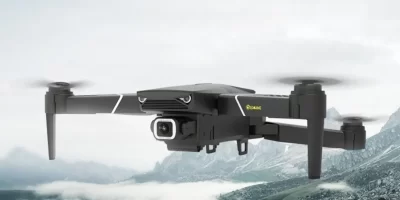
What Batteries Do Drones and Quadcopters Need?
Typical battery options:
3S, 4S, 6S LiPo
High discharge rate: 25C–150C
Key parameters:
ULTRA-high discharge
Low internal resistance
Lightweight design
Why BMS matters:
Agricultural drones have full BMS-equipped packs to prevent mid-flight failures, while the majority of drones rely on balancing circuits.
How Should Robot Lithium Batteries Be Safely Maintained and Stored?
Maintenance dramatically affects the lifespan of batteries for robots.
A high-quality pack can exceed 2,000–3,000 cycles if properly cared for.
Best Practices for Safe Maintenance
Keep battery between 20%–80% for daily use
Avoid overheating above 60°C (140°F)
Charge using manufacturer-approved chargers
Avoid physical pressure or bending (especially for LiPo)
Use a BMS or protection board for every lithium pack
Best Practices for Storage
Store at 40%–60% charge
Keep in a cool, dry environment
Remove from robot if unused for long periods
Perform a full cycle once every 3 months
Why a BMS Is Essential for Safe Maintenance
A BMS provides:
過充電保護
過放電保護
Thermal shutdown
Balancing of individual cells
短絡保護
For robots with unpredictable loads, BMS is not optional—it is a necessary engineering safety system.
How Long Do Robot Batteries Typically Last?
The lifespan of batteries for robots depends heavily on chemistry and usage:
| バッテリータイプ | Average Cycle Life | Lifespan Expectation |
|---|---|---|
| リチウムイオン | 800–1500 cycles | 2–4 years |
| LiFePO4 | 2000–4000 cycles | 5–10 years |
| LiPo | 300–500 cycles | 1–2 years |
| NiMH | 500–1000 cycles | 2–3 years |
Factors that shorten battery life:
High discharge currents
Overcharging
High temperature operation
No BMS or poor-quality BMS
Storing fully charged or empty
Particularly for Li-ion and LiFePO4 packs, a well-balanced BMS can increase longevity by 30–50%.
What Is the Future of Batteries for Robots?
Energy systems for robotics are developing quickly.
In 2025 and beyond, anticipate these trends:
1. Solid-State Batteries
Higher energy density
No liquid electrolyte
Improved fire resistance
Ideal for humanoids and autonomous robots
2. AI-Enhanced Smart BMS
Predictive health monitoring
Self-balancing algorithms
Real-time CANBUS diagnostics
Failure prediction
3. Swappable Battery Modules
Popular for delivery robots and industrial AGVs
Minimizes downtime
Uses modular BMS-controlled packs
4. Wireless Charging
Floor-embedded wireless pads for warehouse robots
Automatic alignment
No connector wear
5. High-Voltage Robotic Systems
72V and 96V becoming more common
Reduces current draw
Supports heavy-duty industrial robots
The future will combine advanced batteries for robots with intelligent energy management, enabling longer missions, smarter automation, and much safer operation.
Why Smart BMS Technology Is Central to All Robot Battery Systems
BMS is the brain that safeguards and maximizes the pack, regardless of chemistry or application. High-energy lithium packs would be dangerous and deteriorate rapidly without a dependable BMS.
A modern BMS enables:
細胞バランス
Real-time power delivery control
Safe charging
Thermal protection
Data communication with robot controllers
Load management during peak current draw
The finest batteries for robots in 2025 will be determined by their BMS intelligence as well as their chemistry.
How to Select the Best Batteries for Robots in 2025
Chemistry, voltage, capacity, safety features, discharge rate, and BMS capabilities must all be considered when selecting the finest batteries for robots.
NiMH is used in entry-level robots, but Li-ion and LiPo continue to be the most popular options because of their greater energy density and high discharge performance.
LiFePO4 combined with a スマートBMS offers unparalleled stability and durability for long-life industrial robot systems.
It is impossible to overestimate the significance of a dependable BMS across all categories, from small educational bots to large industrial AGVs.
A top-notch BMS increases productivity, prolongs life, keeps an eye on health, and guarantees safety under stress.
Ayaa Technology offers premium, adaptable lithium batteries and BMS systems that are reliable in electric cars, drones, industrial machinery, and robotic platforms if you’re looking for cutting-edge BMS-supported battery solutions for robotics applications.
よくある質問
Q1:What is the best battery for robots?
A1:Because of their high energy density and extended longevity, lithium ion batteries—including Li ion batteries—are a popular option for robotics and are frequently found in rechargeable batteries and battery packs.
Q2:Which is better, AAA Li Ion or NiMH?
A2:Your energy requirements, usage patterns, and performance standards will determine which lithium-ion or NiMH battery is best for you.
For straightforward, low-demand applications, NiMH batteries continue to be a reliable option.
When it comes to compact, higher-capacity, longer-lasting power, lithium-ion is unquestionably the best option.
Q3:リチウム電池における80対20の法則とは何ですか?
A3:Lithium batteries should be charged up to 80% for everyday usage, according to the 80/20 rule.
Only when necessary—for example, prior to a lengthy journey or a complete discharge cycle—charge to 100%.
Keep the battery from discharging below 20%.
Q4:Which is better, a Li-ion or LiPo battery?
A4:Although lithium-ion batteries are frequently more affordable and have a higher energy density, lithium-polymer batteries have advantages in terms of weight, flexibility, and charging speed.
The best option is determined by the particular needs of the device or application.
Select LiPo for the maximum voltage under load.
Q5:What batteries do AI robots use?
A5:First of all, lithium batteries are the perfect power source for smart robotics and mobile gadgets due to their high energy density and lightweight construction.
お問い合わせ
最新ニュース
- Why FPV Battery for World Cup-Level Outdoor Filming Still Needs Custom Smart BMS
- Final Guide for Order Picker Battery & Smart BMS Upgrade
- Smart BMS for Automated Forklift Batteries: Solving 6 Key Challenges
- How to Choose a Smart BMS for a Turret Truck Battery: Challenges & Solutions
- Smart BMS for Stacker Battery: How to Improve Runtime, Charging, and Safety
共有
ニュースおすすめ
-

BMS接続図の理解:MOSFET制御からセルバランシングまで
08/19/2025 -
リチウム鉄リン酸 BMS ブランド トップ 5 比較: あなたに最適なのはどれ?
05/16/2025 -
スマートBMSの仕組み-総合ガイド。
03/11/2025 -
なぜ従来の電力源ではなく太陽エネルギー・システムを選ぶのか?
03/31/2025 -