


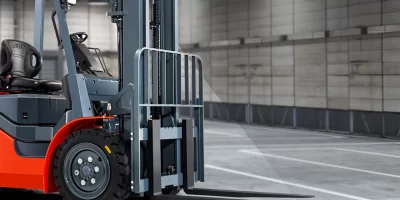








A reach truck battery charger converts commercial AC line power into regulated DC electricity. It supplies the precise voltage and current required by narrow-aisle reach truck batteries. Most industrial reach trucks operate on 24V, 36V, or 48V power packs. Selecting the right charger depends on pack voltage, battery chemistry, and fleet duty cycles. Matching your charger to your battery chemistry prevents premature cell failure and cuts warehouse downtime. Industrial facilities demand consistent material throughput across multiple operating shifts. Reach trucks lift heavy palletized freight into high-density storage racking. Their drive motors and hydraulic lifting systems create severe cyclic electrical loads. Consequently, an undersized or mismatched charger disrupts operations and degrades battery pack health. Modern high-frequency chargers resolve these operational hurdles through intelligent power conversion. Heavy-duty electric reach truck connected to a dedicated high-frequency industrial charging station in a warehouse distribution hub. Understanding Voltage, Current, and Power Supply Requirements Selecting an industrial charger begins with matching electrical ratings to your reach truck. Incorrect voltage causes severe hardware damage or failure to initiate a charge cycle. Matching Operating Voltages: 24V, 36V, and 48V Reach Trucks Reach trucks rely on standard industrial DC voltage platforms depending on chassis size. Light-duty walkie reach units …

A reach truck BMS is the specialized battery management system regulating the lithium-ion pack in an electric reach truck. It protects lithium cells against extreme warehouse operational stresses. These stresses include multi-stage hydraulic mast lift surges, dynamic regenerative braking, and sub-zero cold storage operations. Modern narrow-aisle logistics facilities demand maximum equipment uptime and round-the-clock shift efficiency. Electric reach trucks transport heavy pallets across narrow warehouse aisles and lift loads over ten meters high. These intensive operations place severe electrical demands on industrial battery systems governed under OSHA standard 1910.178 for powered industrial trucks. A standard lithium battery management board cannot survive these harsh operational profiles. A dedicated industrial reach truck BMS provides real-time cell telemetry, active cell balancing, and robust thermal protection. It links directly to the vehicle traction controller through industrial CAN bus networks. As an integrated engineering manufacturer, AYAA TECH designs and manufactures complete power ecosystems. Our vertical production spans custom PCB hardware, intelligent Smart BMS units, industrial battery packs, and matching chargers. We deliver standard off-the-shelf modules, semi-custom solutions, and full turnkey battery systems for modern warehouse fleets. Figure 1: Electric reach truck lifting heavy palletized cargo in high-bay narrow-aisle warehouse with active lithium battery telemetry. Distinct …
Finding a qualified reach truck battery supplier is critical for warehouse efficiency and operator safety. Reach trucks operate in narrow aisles and lift heavy pallets to extreme heights. These intense duty cycles demand consistent voltage, rapid opportunity charging, and balanced counterweights. Leading global suppliers in 2026 include EnerSys, AYAA TECH, and East Penn Manufacturing. Other prominent providers include Sunlight Group, HOPPECKE Batteries, and Crown Battery. While legacy brands dominate regional dealer contracts, flexible engineering manufacturers provide direct factory savings and custom dimensions. This guide breaks down the strengths, chemistries, and customization capabilities of each leading supplier. Electric reach truck lifting palletized freight in narrow aisle warehouse using heavy-duty lithium battery power What to Look for in a Reach Truck Battery Supplier Selecting a power partner requires evaluating more than just amp-hour ratings. Electric reach trucks operate under unique mechanical and electrical constraints compared to standard sit-down forklifts. Dimensional Precision and Counterweight Ballast Reach trucks rely on their battery pack as a structural counterweight. If a replacement lithium pack is too light, the truck loses mast stability at high lifts. A dependable reach truck battery supplier must engineer custom steel ballast into the battery tray. The pack must meet the exact …

A reach truck battery powers narrow-aisle forklifts that lift heavy pallets up to forty feet high. These motive power packs operate at 36V or 48V nominal voltages. They deliver high discharge currents to drive traction motors and hydraulic lift pumps. Choosing the right pack directly dictates your warehouse throughput and equipment uptime. Acquisition prices range from $3,500 for standard lead-acid packs to $18,000 for high-capacity lithium-ion systems. However, purchase price tells only part of the story. Modern material handling demands deep scrutiny of energy efficiency, maintenance labor, and cycle life. Fleet managers must evaluate both upfront capital expenditure and multi-year operating costs. This engineering guide breaks down technical specifications, real-world pricing structures, and total cost of ownership. Electric narrow-aisle reach truck retrieving high palletized freight in an industrial logistics facility. What Powers Modern Reach Trucks: Core Voltages and Capacities Reach trucks operate in tight warehouse aisles where space optimization is critical. The electrical powertrain requires consistent voltage to maintain full mast lifting speeds. Common Voltage Platforms: 24V, 36V, and 48V Most narrow-aisle reach trucks utilize a 36V or 48V electrical architecture. Smaller walkie reach units occasionally run on 24V systems. Heavy-duty pantograph trucks lifting over 4,500 pounds frequently mandate 48V …

A forklift is a powered industrial truck designed to lift, move, and stack palletized materials. It operates across busy manufacturing plants, logistics warehouses, and distribution facilities worldwide. Choosing the right machine demands understanding mechanical structures, hydraulic systems, and powertrain options. Battery architecture and electrical safety define the long-term operational efficiency of your fleet. This comprehensive guide examines core structural assemblies, operational mechanics, and common lift truck classes. We evaluate total ownership expenses and contrast lithium battery conversions against traditional fuel systems. Engineering safety principles and load center calculations help facility managers prevent costly warehouse accidents. An electric counterbalance forklift handling palletized freight in a high-efficiency logistics distribution warehouse. Core Structural Components of an Industrial Forklift Every industrial lift truck relies on a reinforced chassis designed to handle immense mechanical stress. The structural frame balances heavy payloads against rear counterweights during high-lift cycles. Mast, Carriage, and Fork Assemblies The vertical mast assembly provides mechanical guidance for lifting and lowering bulky pallet loads. Engineers utilize duplex, triplex, or quad mast configurations depending on required warehouse ceiling clearance. Heavy hydraulic lift chains connect the mast rails directly to the carriage assembly. The steel carriage supports forged forks and an integrated load backrest extension. …

Choosing the right golf cart battery charger requires matching your vehicle pack voltage, battery chemistry, and physical receptacle plug. Standard electric golf cart platforms operate on 36V or 48V direct current systems. Using an incompatible charger risks severe cell degradation, thermal runaway, or incomplete charging cycles. Modern high-frequency smart chargers replace heavy analog magnetic transformers. They provide multi-stage charging algorithms tailored for flooded lead-acid, AGM, or lithium LiFePO4 battery banks. Premium units also feature 0V wake-up capabilities to reactivate sleeping Smart BMS protection circuits. Selecting the ideal charging hardware ensures maximum operational range and extends total battery cycle life. Figure 1: Commercial smart golf cart battery charger connected to an electric utility cart in an equipment workshop. System Voltage and Battery Chemistry Matching Voltage rating is the primary technical parameter when selecting any battery charger. Electric golf carts standardly use either 36V or 48V electrical architectures. Higher-voltage utility and performance models occasionally utilize 72V configurations. Connecting a 36V charger to a 48V battery pack will result in zero charge transfer. Conversely, connecting a 48V charger to a 36V system causes catastrophic overvoltage damage. Voltage Identification: 36V, 48V, and 72V Systems Determining your system voltage requires calculating the cumulative voltage of …

A modern golf cart serves far beyond the manicured greens. Today, it powers gated residential neighborhoods, industrial logistics complexes, and large resort grounds. Choosing the right cart requires understanding chassis configurations, drivetrain platforms, and total operating expenses. Furthermore, battery chemistry and smart powertrain management define long-term vehicle reliability. This comprehensive guide breaks down modern vehicle classes, compares power sources, and analyzes commercial pricing tiers. We also examine essential safety requirements and advanced battery architectures to protect your fleet investment. Core Types of Golf Carts Across Modern Applications Selecting a vehicle starts with clearly defining your primary operating environment. Today, golf carts handle turf maintenance, personnel transport, and industrial cargo hauling across diverse facilities. Traditional Fleet Carts vs Street Legal LSVs Standard fleet carts operate primarily on private property, gated resorts, and dedicated golf courses. They reach top speeds between 12 and 15 miles per hour. These models feature simple mechanical drum brakes and basic forward headlamps. They rarely carry vehicle identification numbers or DOT-approved safety gear. Standard fleet units provide cost-effective, low-maintenance transport across private roads. In contrast, Low-Speed Vehicles (LSVs) are legally certified for public neighborhood streets. They achieve regulated maximum speeds of 25 miles per hour. Federal motor …

Choosing the right golf cart battery supplier determines fleet uptime, replacement cycles, and total operating expenses. Commercial operators now favor lithium iron phosphate over traditional lead-acid packs. Modern fleets require durable cells, integrated battery management systems, and reliable supply chains. Selecting a dependable golf cart battery supplier requires evaluating core manufacturing strength. Fleet managers must verify true factory capabilities, engineering expertise, and warranty support. This technical guide evaluates the top 10 global suppliers serving commercial and utility vehicle markets. Figure 1: Commercial golf cart fleet charging facility with dedicated DC power infrastructure at an upscale resort. Key Factors When Evaluating a Golf Cart Battery Supplier Industrial buyers must evaluate technical metrics before choosing a golf cart battery supplier. Surface claims rarely reflect long-term cell reliability in heavy field service. Facilities should also review OSHA standard 1910.178 guidelines governing safe electrical charging and vehicle maintenance. Cell Chemistry and Cycle Life Expectations Cell chemistry defines cycle life and field maintenance requirements. Flooded lead-acid batteries deliver roughly 500 to 800 cycles under disciplined watering schedules. They also require frequent equalization charges and terminal cleaning. In contrast, lithium iron phosphate (LiFePO4) chemistry delivers 3,500 to 5,000 cycles. It requires zero maintenance throughout its operating …