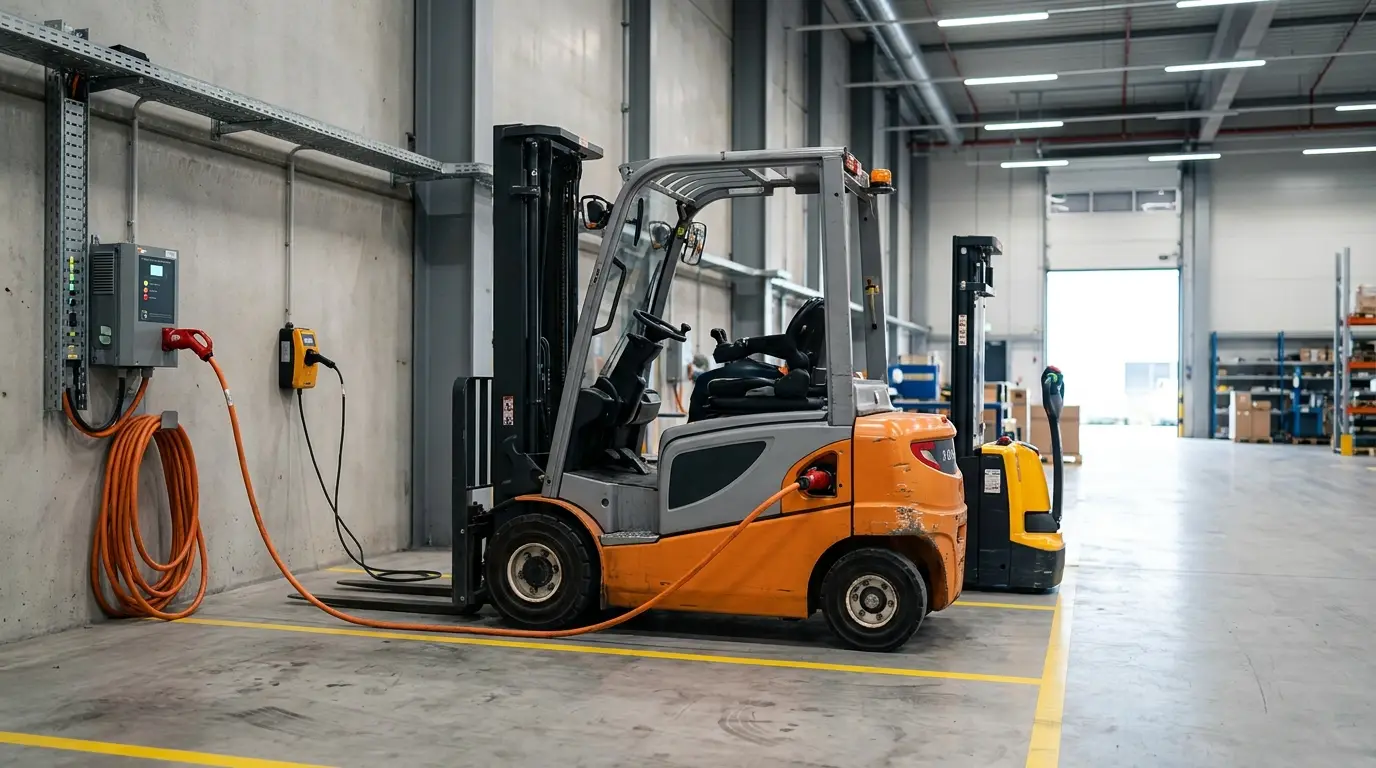
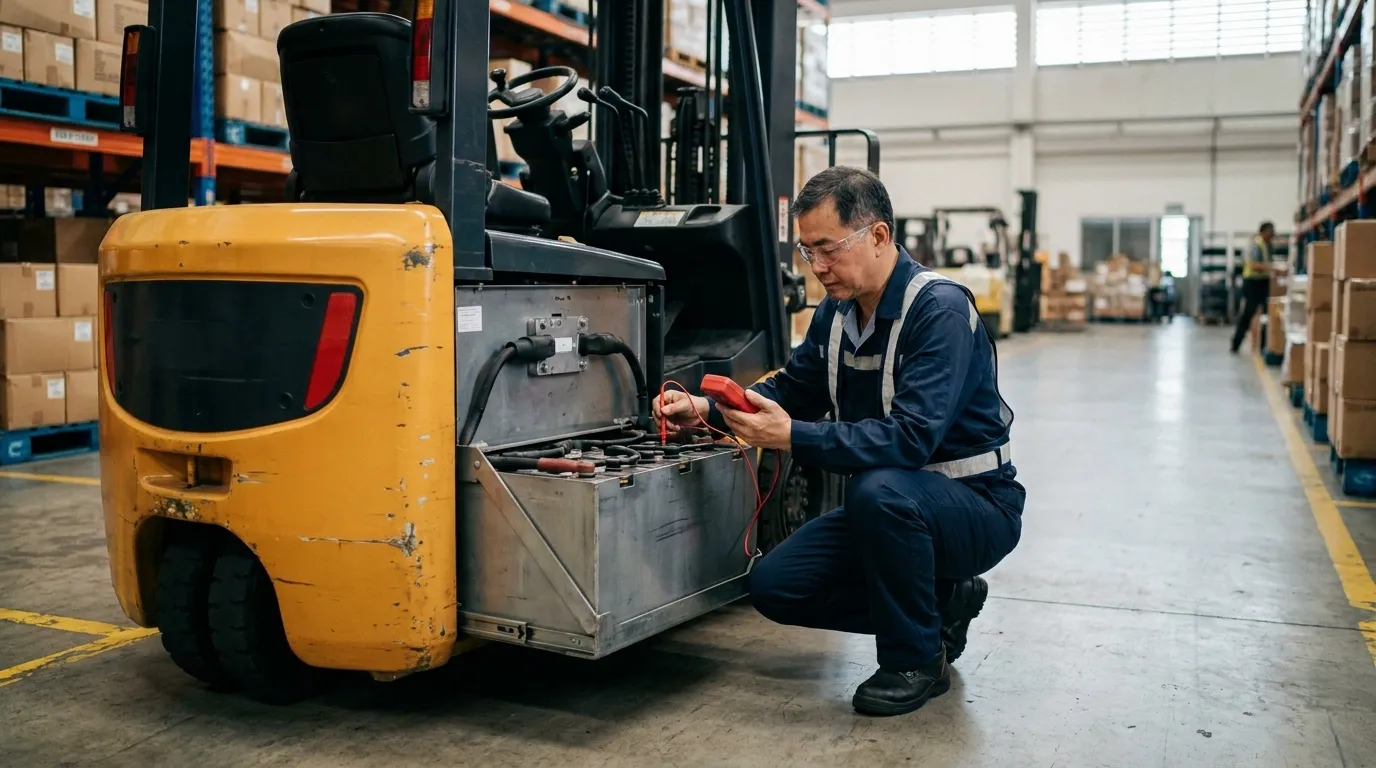
To set up a forklift battery charging station, designate a safe area, configure dedicated traffic routes, install chemistry-specific ventilation, add emergency wash and fire equipment, and protect chargers with physical barriers. Every site setup depends on battery chemistry, charging workflows, and maintenance requirements. While lead-acid systems require active hydrogen ventilation and acid neutralization provisions, lithium-ion packs demand strict thermal monitoring and matched battery management systems (BMS). This guide outlines the critical steps to design, operate, and maintain a fully compliant electric forklift charging facility. Step 01 Designate a Safe Area Step 02 Configure Traffic Routes Step 03 Install Chemistry Ventilation Step 04 Emergency Wash & Fire Gear Step 05 Physical Barrier Protection What Should You Assess Before Planning a Charging Area? Identify the Battery Chemistry and Charging Workflow Start with your battery chemistry. Lead-acid batteries release hydrogen while charging. They also contain corrosive liquid electrolyte. In contrast, lithium-ion battery packs function differently. Next, define where operators charge the trucks. Do batteries stay inside the forklift? Or do workers remove, swap, and service them? Each workflow shifts your ventilation, spill, and emergency requirements. Consider Fleet Size, Shifts, and Charging Patterns Count how many forklifts charge at the same time. Identify when …
The right forklift battery charging system fits your shifts, chemistry, and daily charging window. Conventional charging suits single-shift fleets with overnight downtime. Opportunity charging works best for multi-shift fleets with scheduled breaks. Fast charging powers high-throughput operations with minimal idle time. Selecting the ideal system balances upfront investment against daily operational uptime. Chemistry dictates your charging profile, cooling requirements, and safety protocols. This guide evaluates conventional, opportunity, and fast charging setups to help you maximize fleet productivity. What Does a Forklift Battery Charging System Include? The Battery, Charger, and Connection Components A charging setup is more than a charger plugged into a wall. The battery stores the electrical energy. Meanwhile, the industrial charger converts facility AC power into DC power. Cables and connectors deliver that power safely. On lithium systems, the battery management system (BMS) communicates directly with the charger. One mismatched component can undermine the entire setup. How the Charging Setup Supports Daily Operations Around those components sit a charging area, adequate electrical capacity, and battery handling equipment. Together, they dictate whether trucks are ready at shift start. Plan these components as an integrated system rather than isolated purchases. How Battery Chemistry Affects Forklift Charging Charging Requirements for Lead-Acid …
To ensure safe forklift battery charging operations, verify the battery type, use an approved charger, and follow standard steps. Next, confirm the charger is approved for that battery type. Park and prepare the truck in the designated charging area. Then, follow the manufacturer’s connection and charging instructions from start to finish. Flooded lead-acid, TPPL, and lithium-ion batteries charge differently. A flooded lead-acid battery needs proper ventilation, electrolyte care, and cool-down time. A lithium-ion battery depends on its BMS and a matched charger. This guide covers charging procedures, recharge timing, charging methods, maintenance, and safety. What to Check Before Charging a Forklift Battery Identify the Battery Type and Its Charging Requirements Read the nameplate on the battery first. Flooded lead-acid, TPPL, and lithium-ion batteries evaluated under industrial truck standards like UL 583 have distinct charging profiles. They also have different maintenance needs. A routine that suits one chemistry can easily damage another. Never carry lead-acid maintenance habits over to a different battery chemistry. Make Sure the Charger Matches the Battery Voltage is only the starting point. The charger must match the battery chemistry and approved charging profile. It must also stay within the permitted charging current limits. In addition, verify the …
Choose the right forklift battery charger by matching chemistry, voltage, Ah capacity, and BMS. Nominal voltage alone is never enough. Flooded lead-acid, AGM, gel, and lithium-ion batteries require dedicated charging profiles, voltage limits, and cut-off points. You must also verify maximum charging current, recharge shift windows, AC input power, connector pinouts, and digital BMS protocols. Mismatched chargers cause sluggish charging, premature cell degradation, or hazardous overcharging. This engineering guide walks you through every verification step. 1. Match the Forklift Battery Charger to Voltage and Chemistry Check the Battery’s Nominal Voltage and Required Charging Voltage Forklift batteries commonly come in 24V, 36V, 48V, 72V, and 80V classes. However, nominal voltage is only a label. The voltage needed to charge the battery is always higher. It depends on chemistry, cell count, and charging profiles. Always inspect the battery nameplate and data sheet. Never rely solely on the old charger label. Choose a Charger Designed for Your Battery Chemistry Flooded lead-acid, AGM, gel, and lithium batteries need different charging profiles. Voltage limits, charge stages, and termination points all vary according to industrial equipment standards like UL 1564 for industrial battery chargers. A 48V lead-acid unit differs completely from a 48V lithium unit. [Engineering …
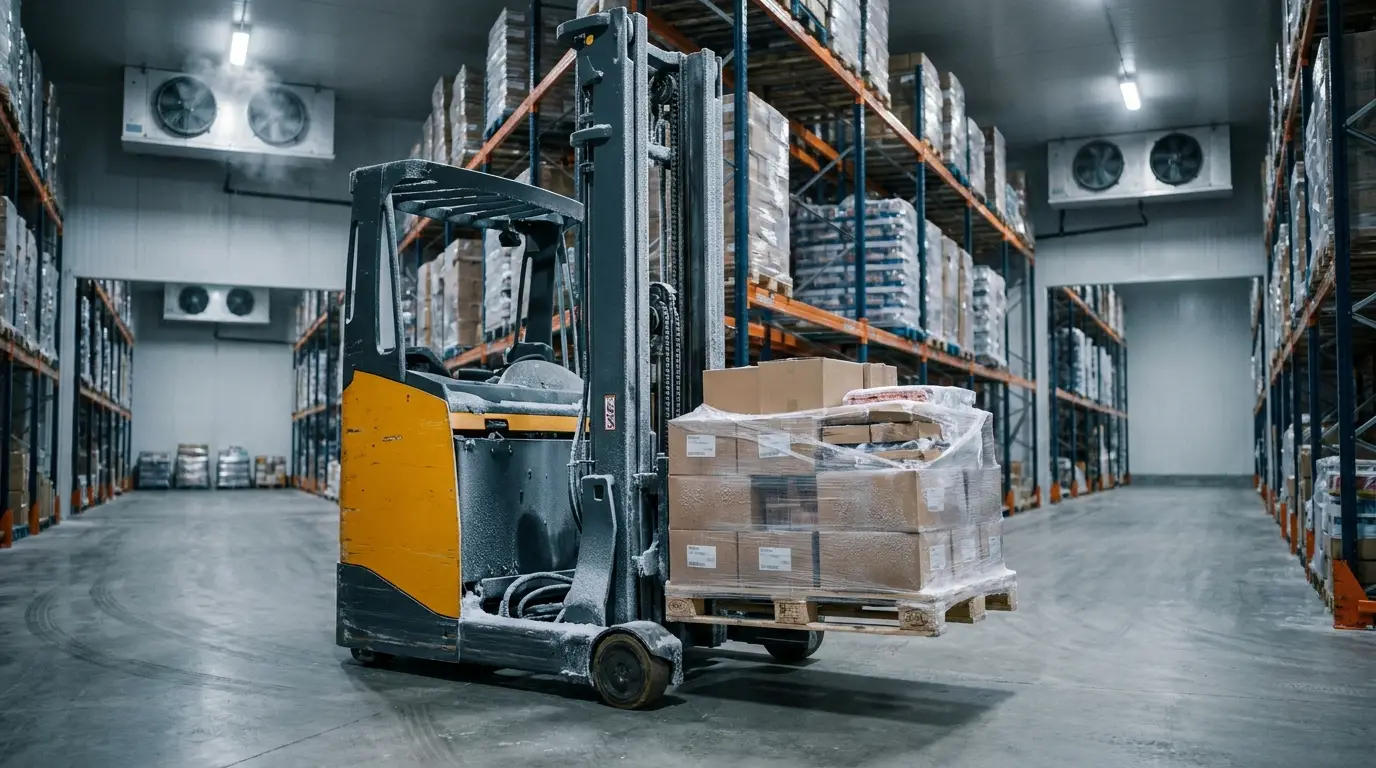
Choose a cold storage forklift battery by matching operating temperatures, validated charging limits, and integrated heating to your shifts. A reliable pack must deliver consistent power during heavy lifts and charge safely without causing lithium plating. Success requires the battery, BMS, heater, and charger to operate as one unified system. Always verify usable capacity at your lowest freezer temperatures before selecting a pack. How Does Cold Storage Affect Forklift Battery Performance? Why Low Temperatures Reduce Battery Performance Cold slows down internal chemical reactions. Ions move sluggishly, and internal cell resistance climbs rapidly. As a result, the pack drops voltage whenever the truck accelerates or lifts. Operators quickly notice reduced runtime and weaker lift capability. Heavy lifts suffer most because high current meets high internal resistance. Exact losses vary by cell chemistry, pack geometry, and workload. Why Charging Below Freezing Requires Special Attention Charging and discharging carry very different risks in the cold. Lithium cells often discharge safely where charging would destroy them. Charging below freezing prevents lithium ions from diffusing smoothly into graphite anodes. Instead, metallic lithium forms on the anode surface. This dangerous process is known as lithium plating. Plating permanently destroys capacity and creates severe short-circuit risks. Worse, …
To choose the right forklift battery cable, match wire gauge, length, and connector to current draw. Voltage alone is not enough. Two forklifts with identical voltages often need different cables. Their operating duty cycles and installation routes differ. Before ordering a replacement, identify the cable’s specific purpose. Check its required AWG size and overall length. Confirm connector series, contact ratings, and polarity. Then, verify these specifications against OEM requirements. Selecting proper forklift battery cables prevents dangerous overheating, voltage drops, and equipment downtime. This guide details practical checks for selecting a fully compatible replacement. What Do Forklift Battery Cables Connect? Different cables serve different parts of an industrial truck. Always identify the specific component before shopping for replacements. Main Battery Cables Main battery cables carry power between the battery and the forklift. Their conductor size, terminals, and connectors must suit the truck’s current demand. They must also match original factory configurations. Charging Cables and Extension Leads Charging cables connect a compatible charger to the industrial battery. Extension leads add reach when charging trucks. However, a longer cable increases electrical resistance and voltage drop. Never assume charging leads and truck battery cables are interchangeable. Intercell Links and Terminal Assemblies Intercell links connect …
Standard forklift battery voltage is typically 24V, 36V, 48V, or 80V, set by equipment duty class. Small pallet jacks sit at the low end. Heavy-duty counterbalance trucks sit at the high end. There is no single universal standard. The correct voltage matches what your forklift electrical system requires, as defined by the manufacturer. It also helps to separate three key terms. Voltage is the electrical potential of the system. Amp-hour (Ah) capacity measures stored electrical charge. Usable energy and actual workload determine total runtime. Lead-acid and lithium batteries can also be labeled differently on the same truck. For example, a 48V-class lithium pack often reads 51.2V. Below, we cover common voltage classes, cell configurations, voltage readings, and replacement fit. Common Forklift Battery Voltage Classes by Equipment Type The main voltage classes usually map directly to specific equipment categories. Treat this guide as a reference. Truck manufacturers frequently mix and match configurations based on chassis design. Nominal Voltage Typical Applications 24V Electric pallet jacks, walkie stackers, light warehouse equipment 36V Selected order pickers, reach trucks, light electric handling units 48V Standard counterbalance forklifts, mid-size reach trucks 72V Specialized industrial equipment 80V Heavy-duty electric counterbalance forklifts As the table shows, voltage generally …
For a lithium vs lead-acid forklift battery, neither wins every time—your duty cycle decides. Lithium-ion leads in busy, multi-shift warehouses, where fast charging and low upkeep save real money. Lead-acid still fits lightly used trucks, tight budgets, and sites with an existing battery room. So the real question is which battery fits your trucks, shifts, and charging setup. A battery price tag tells you very little on its own. What counts is the complete power system: the battery pack, BMS, charger, and forklift. This guide compares each part in plain terms so you can evaluate options fairly. How Lithium-Ion and Lead-Acid Forklift Batteries Work How Lead-Acid Batteries Store and Deliver Energy A lead-acid forklift battery holds lead plates in a bath of sulfuric acid and water. When you discharge it, a chemical reaction turns the plates and acid into lead sulfate and releases electricity. Charging reverses the reaction. The design is old, simple, and well understood. Most flooded lead-acid batteries need regular watering because charging splits water into hydrogen and oxygen. They also need a ventilated charging area for the same reason. The heavy lead plates are not only a drawback, either. On many trucks, that mass acts as the …