Why FPV Battery for World Cup-Level Outdoor Filming Still Needs Custom Smart BMS
100
FPV drones are no longer just hobby tools. They are now widely used in sports broadcasting and live stadium production, especially in fast-paced events like football matches and global tournaments.
The World Cup represents one of the most demanding benchmarks for FPV filming. It requires real-time tracking shots, smooth motion over crowded stadiums, and zero tolerance for failure during live broadcasts.
AYAA TECH develops UAV power system solutions for these high-stress scenarios, where stability matters more than peak performance. This raises a key question: why do FPV batteries that work well in normal filming still struggle at World Cup-level operations?
What Is an FPV Battery in Sports Filming?
FPV battery basics in FPV drones and FPV drone battery systems
In most FPV drone systems, the battery is usually the main energy source that defines flight behavior. The most common types include LiPo, LiHV, and Li-ion chemistries, each serving different mission profiles.
LiPo remains the mainstream choice for FPV racing and freestyle flying because of its high discharge capability. LiHV batteries offer slightly higher voltage headroom, which can improve response in aggressive maneuvers. Li-ion batteries, on the other hand, are often used in long-endurance cinematic FPV drones where flight time is more important than burst power.
FPV battery in different use scenarios
In hobby FSetup, batteries are mainly about fun and maneuverability. In commercial filming, such as real estate or advertising, consistency becomes more important. But in World Cup-level broadcasting, the requirement shifts again—everything becomes mission-critical.
At this stage, FPV battery performance is no longer just a specification sheet topic. It becomes part of a full FPV drone power system that must behave predictably under pressure.
Why World Cup-Level Filming Pushes FPV Batteries Beyond Limits
Stadium environment as a dynamic FPV drone battery stress test
A stadium is one of the most unpredictable environments for FPV drones. Pilots constantly adjust for rapid acceleration while tracking players, sudden altitude changes, and irregular flight paths that depend on live gameplay. These motion patterns create highly dynamic current demands on the battery, far beyond controlled test conditions.
Continuous mission cycles during World Cup FPV drone operations
During live sports broadcasting, drones often fly multiple back-to-back missions. There is very limited time for cooling, charging, or deep battery inspection between flights. This creates a practical issue: even if FPV batteries are technically identical, their real-world performance starts to diverge quickly under repeated use.
Real-world vs rated FPV battery performance gap
One of the most overlooked issues in FPV batteries is the difference between rated C values and actual output capability. Industry data and field testing consistently show that labeled C-ratings often do not match real discharge behavior under peak load conditions. In real FPV drone operations, voltage sag becomes a more reliable indicator of performance than the printed specification.
Common FPV Battery Problems in World Cup-Style Productions
Common Problems
Impact on Live Production
Voltage drop during critical shots
Affects camera stability and video transmission quality.
Inconsistent performance
Internal resistance shifts lead to variance across a battery fleet.
Thermal accumulation
Heat builds up during long event coverage, reducing efficiency.
Safety risks in stadiums
Dense crowds demand strict redundancy and active monitoring.
Why Battery Alone Is Not Enough for Professional FPV Broadcasting
At this level, FPV battery performance is no longer just a chemistry question. It becomes a system-level issue involving the drone, the flight controller, ESCs, and the energy source working together.
Most FPV batteries cannot provide real-time intelligence. They do not adapt to flight behavior, nor can they accurately predict usable energy under rapidly changing loads. Voltage-based estimation alone becomes unreliable during aggressive maneuvers. In World Cup-level production, the battery is no longer just a component—it is part of a system.
This is where Smart BMS changes the operational framework of FPV drone power systems:
Real-time cell monitoring under high dynamic load: A Smart BMS continuously monitors individual cell behavior during flight. This helps stabilize output when FPV drones perform sudden acceleration or directional changes.
Intelligent balancing across repeated flight cycles: In multi-battery operations, consistency matters more than peak performance. Smart balancing helps reduce drift between cells over time, improving long-term stability.
Dynamic protection instead of hard cutoff: Traditional systems often shut down abruptly when limits are reached. A Smart BMS allows more controlled behavior, helping avoid sudden power loss during live broadcast shots.
Accurate SOC estimation in real FPV conditions: This is where AYAA TECH provides a key advantage. The SOC estimation accuracy can reach ≤3%, while many standard systems remain around ≤5%. In real FPV missions, this difference improves planning reliability across multiple flights.
Thermal and safety control in dense operational environments: Heat management becomes critical during long events. A Smart BMS helps maintain safer operating conditions, especially in high-density broadcasting environments.
World Cup-Level FPV Broadcasting: Real-World Use Case Scenario
Why FPV drones are used in World Cup broadcasting
FPV drones are increasingly used to capture immersive movement shots, fast gameplay transitions, and dynamic crowd interactions that traditional camera rigs cannot replicate.
Operational constraints in live stadium production
Unlike cinematic filming, there is no option to reshoot. Every flight is time-limited, tightly coordinated with broadcast teams, and dependent on real-time decision-making.
Why reliability matters more than performance
In this environment, stability is more important than speed, and predictability matters more than peak output. A slightly slower but stable FPV drone system is preferred over a high-performance system with unpredictable behavior.
FPV Battery vs Power System Thinking
To succeed in professional stadium broadcasting, engineering thinking must shift across three layers:
The battery is only one layer of the FPV drone system: A common misunderstanding is treating the battery as the primary performance driver. In reality, energy delivery depends on system design, not just battery capacity.
Smart BMS as the control layer in FPV battery systems: Smart BMS acts as a control layer between the battery and the drone system. It handles monitoring, protection, and optimization of energy usage during flight.
Toward integrated FPV power architecture: FPV drone systems are moving toward integrated architectures that combine battery packs, Smart BMS, and system-level tuning strategies rather than treating components separately.
Where AYAA TECH Fits in World Cup-Level FPV Power Systems
AYAA TECH provides custom UAV and FPV power solutions designed for demanding applications such as industrial inspection, cinematic FPV, and live sports broadcasting.
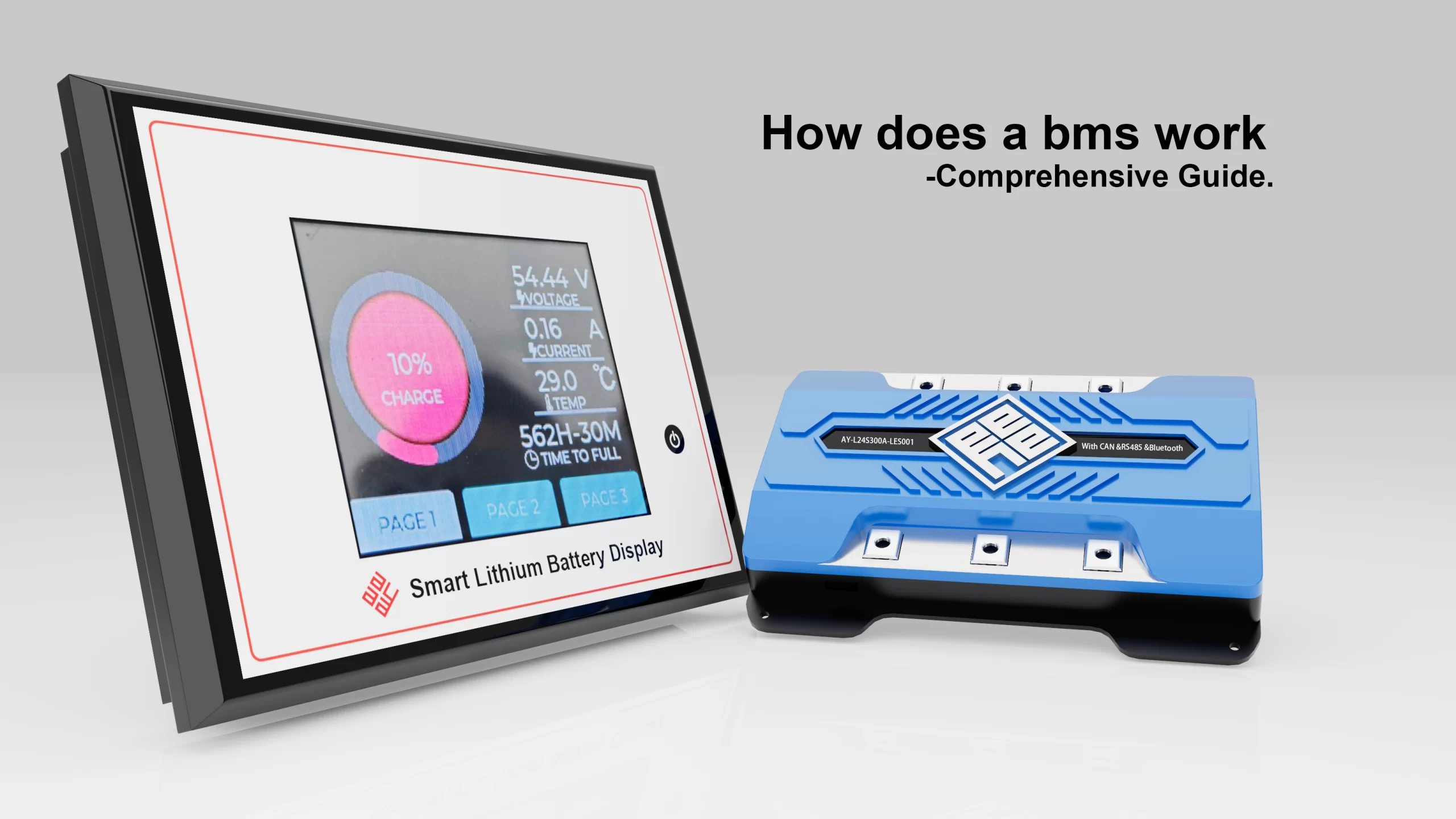
La AYAA TECH Custom UAV/Drone BMS 4S–10S 60A supports system-level integration for FPV drones, including compatibility with major open-source flight controller systems, so operators do not need to worry about integration constraints. This approach focuses on full power system reliability rather than isolated component performance.
Conclusion — World Cup-Level FPV Filming Reveals the Real Limit of Batteries
FPV battery performance is not only determined by chemistry or capacity. In World Cup-level environments, it becomes highly dependent on system behavior under stress.
Standard FPV batteries can perform well in controlled conditions, but real broadcasting environments expose limitations in voltage stability, thermal control, and energy prediction. This is why Smart BMS is becoming an essential part of FPV drone power systems, especially for professional sports filming where reliability cannot be compromised.