How to Design a High-Performance UAV Battery Pack for Maximum Safety and Efficiency?
740
How to Design a High-Performance UAV Battery Pack for Maximum Safety and Efficiency?
Une haute performance drone battery pack is becoming more and more important as drone technology advances toward greater endurance, more payload capacity, and more demanding industrial applications.
Battery design has a direct impact on flight stability, operational safety, and return on investment, regardless of whether it is utilized in mapping platforms, delivery systems, agricultural UAVs, or inspection drones.
Increasing capacity is only one aspect of designing a dependable batterie pour drone paquet.
It necessitates the thoughtful combination of mechanical engineering, chemistry selection, intelligent Battery Management System (BMS) architecture, and thorough testing validation.
What Factors Determine the Core Electrical Design of a UAV Battery Pack?
When designing a uav battery pack, electrical configuration is the foundation.
Engineers must carefully evaluate:
1. Capacity and Voltage
Flight endurance is defined by capacity (mAh or Ah), whereas motor performance and power delivery are determined by voltage.
Increased voltage packs minimize heat generation and improve efficiency by reducing current demand.
But higher voltage also need more sophisticated BMS integration.
2. Weight and Size
Aerodynamic performance is impacted by every gram.
To maintain the ideal thrust-to-weight ratio, a well-designed UAV battery pack must strike a balance between energy density and structural weight.
3. Charging Efficiency
For commercial operations, fast charging is ideal, but it needs to be carefully managed.
Effective charge cycles prolong battery life and minimize downtime.
By adjusting these variables, the battery system will be in compliance with the needs of the UAV mission.
How Does Mechanical Design Protect a UAV Battery Pack in Extreme Environments?
Industrial UAVs work in challenging conditions, including dust, wetness, vibration, freezing temperatures, and high temperatures.
Strong mechanical protection is essential for a professional UAV battery pack.
1. Reinforced Structural Housing
Shock-resistant enclosures protect cells from vibration and impact during aggressive maneuvers or hard landings.
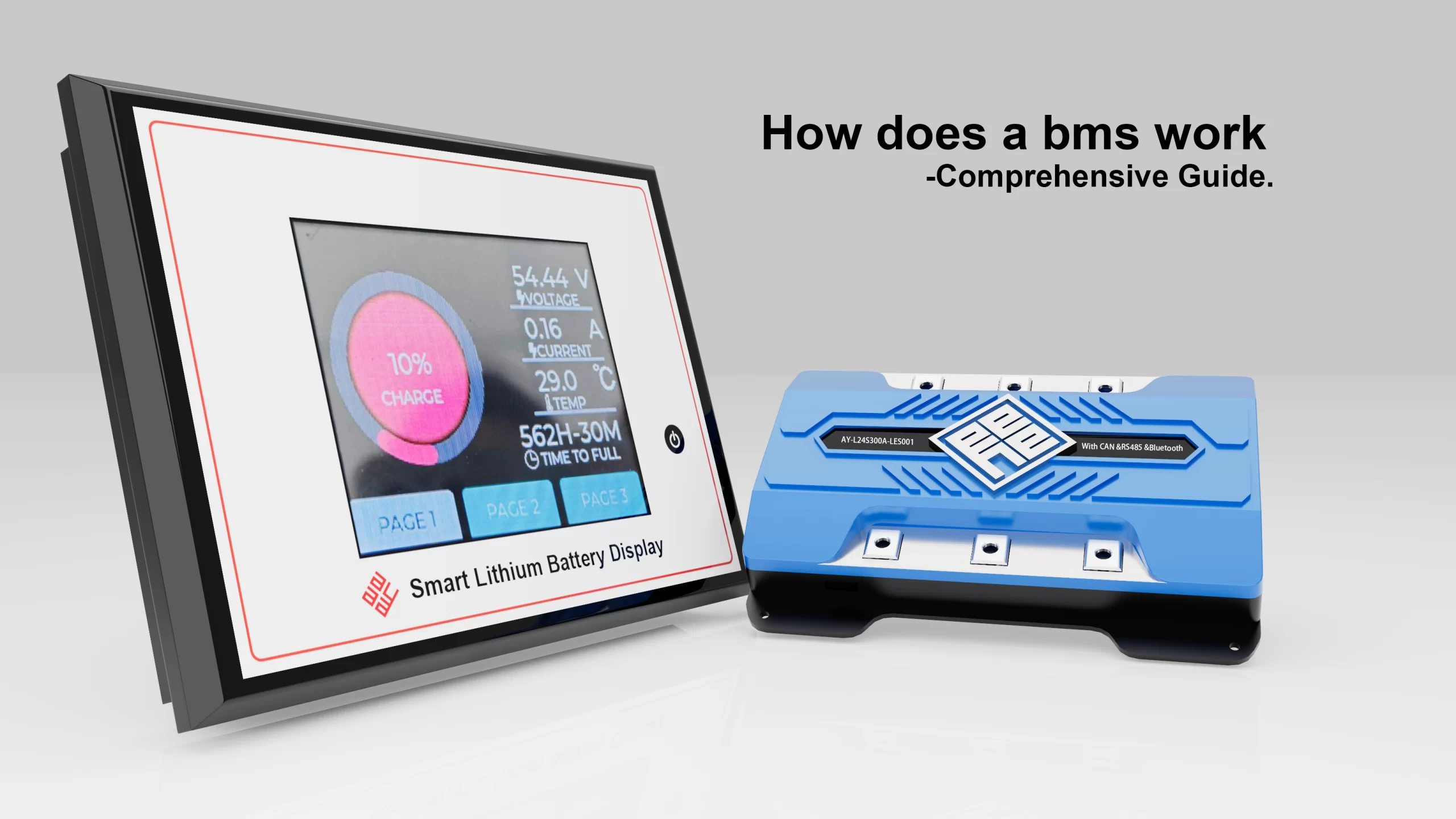
2. Charge Status Display
Integrated LED indicators or digital interfaces allow operators to monitor battery status quickly and accurately.
For high-performance drones, BMS is not optional—it is mandatory.
What Are the Key Components Inside a UAV Battery Pack BMS?
To understand how a uav battery pack achieves intelligent protection, we must examine the core BMS architecture.
1. ST Microcontroller (MCU)
The MCU processes real-time data and executes control algorithms.
It determines when to activate protection mechanisms or adjust balancing operations.
2. Battery Management Control Chip
This chip measures voltage, current, and other electrical parameters, providing precise monitoring capabilities.
3. MOSFET Switching Components
MOSFETs control charging and discharging circuits.
If abnormal conditions occur, they instantly disconnect power to prevent damage.
4. NTC Temperature Sensors
Temperature monitoring is critical.
NTC sensors detect overheating and allow the BMS to shut down the system before thermal runaway occurs.
5. Balancing Circuit
Unbalanced cells are less efficient and have a shorter lifespan.
Every cell has an equal voltage distribution thanks to the balancing circuit.
Together, these elements give the UAV battery pack its intelligence, security, and effectiveness.
What Functions Should a Professional UAV Battery Pack BMS Provide?
A high-quality BMS performs several critical functions:
Automatic Discharge Management
Prevents deep discharge, which can permanently damage lithium cells.
Real-Time Monitoring
Continuously tracks voltage, current, temperature, and SOC (State of Charge).
Safety Protection Mechanisms
Protects against overcharge, over-discharge, short circuit, overcurrent, and thermal overload.
Communication and Diagnostics
Advanced systems allow real-time data communication with the drone’s flight controller.
These features significantly reduce risk and ensure consistent operational performance.
How Do You Select the Right Chemistry and Cells for a UAV Battery Pack?
Battery chemistry determines energy density, discharge rate, and safety profile.
Common options include:
Lithium-ion (18650/21700) for high energy density
Lithium polymer for lightweight flexibility
Lithium iron phosphate for enhanced safety
The needs of the mission determine which chemistry is best.
Cell selection for high-discharge industrial drones needs to take BMS compatibility and power demand into account.
How Is BMS Integrated into a UAV Battery Pack?
Integration involves both hardware and firmware coordination.
Configure MCU firmware for accurate SOC estimation.
Calibrate voltage and temperature thresholds.
Integrate MOSFET switching with safety parameters.
Validate balancing performance under load conditions.
A properly integrated BMS transforms a standard battery assembly into a professional-grade uav battery pack.
What Testing and Validation Are Required Before Deployment?
Before deployment, every uav battery pack must undergo rigorous testing:
Charge/discharge cycle testing
Thermal stress testing
Vibration and mechanical impact tests
Overcurrent and short-circuit simulation
Long-term durability evaluation
Testing ensures that the battery system performs reliably under real-world operating conditions.
How Can Smart BMS Technology Improve Operational Efficiency?
Modern smart BMS systems introduce:
Predictive health analysis
Adaptive discharge control
Intelligent power optimization
Data logging for fleet management
These developments lower maintenance costs while increasing efficiency.
Smart BMS integration in the UAV battery pack directly increases ROI and operational uptime for business UAV fleets.
Why Advanced UAV Battery Pack Engineering Defines the Future of Drone Power Systems
A comprehensive strategy is needed to design a high-performance UAV battery pack, including intelligent BMS integration, improved thermal management, strong mechanical protection, and optimal electrical layout.
Even the most sophisticated lithium cells cannot ensure performance or safety in the absence of a dependable battery management system.
Battery systems need to provide higher voltage, longer endurance, and greater dependability as UAV applications spread into surveillance, logistics, agricultural, and industrial inspection.
Modern UAV battery pack solutions are guaranteed to satisfy these changing needs thanks to the incorporation of advanced BMS architecture, which includes ST microcontrollers, precision monitoring chips, MOSFET control, NTC sensors, and balancing circuits.
Ayaa Technology offers cutting-edge UAV battery solutions with intelligent BMS integration to drive the next wave of UAV innovation for companies looking for dependable, high-performance drone battery systems engineered for safety, stability, and long-term operational excellence.
FAQ
Q1:How to pack drone batteries?
A1:You have to have protection for the batteries.
Pack them in individual lipo-safe bags (click to purchase on Amazon) or a DJI camera backpack that has distinct battery compartments, etc.
You cannot leave them rattling around in your bag.
Q2:What is the best battery pack for robotics?
A2:Because of its extended lifespan and high energy density, lithium ion batteries are a popular option for powering robots in robotics.
Polymer lithium-ion batteries are more appealing for contemporary electronic products due to their solid electrolyte, slim, and thin design.
Q3:Is 128GB enough for a drone?
A3:Check your drone’s specifications before buying a card, as many have a maximum supported capacity of 128GB.
Q4:What battery do most drones use?
A4:An outline of the most popular drone batteries is provided below: Lithium polymer (LiPo): LiPo batteries are popular due to their energy density and lightweight design, which makes them perfect for applications requiring both power and agility.
Q5:What is the 80/20 battery rule?
A5:According to the 80/20 battery rule, lithium-ion batteries should be kept between 20% and 80% charged to prolong their life because higher charges (0% or 100%) lead to increased chemical stress and deterioration, which eventually lowers the battery’s overall health and capacity.