Smart BMS for Reach Truck Battery: Improve Runtime, Charging, and Battery Life
111
Reach trucks work in narrow aisles, high racks, cold rooms, and busy warehouses. Their batteries must support stable power, high lifting loads, frequent charging, and long daily operation.
A smart BMS is the control center of a lithium reach truck battery. It monitors voltage, current, temperature, SOC, SOH, charge records, discharge records, and fault data. It also protects the pack from unsafe use and gives engineers clearer battery information.
Older forklifts often used lead-acid batteries or very simple protection boards. Today, more users choose lithium batteries with smart BMS because they need faster charging, lower maintenance, and better battery visibility.
reach truck battery with smart BMS
What Is a Reach Truck and What Smart BMS Does It Need?
A reach truck is a warehouse forklift designed for narrow aisles and high lifting. Its mast can move forward to pick or place pallets while the truck body stays compact.
This working style puts pressure on the battery. The pack must handle lifting current, travel current, frequent stop-start use, and sometimes low-temperature operation.
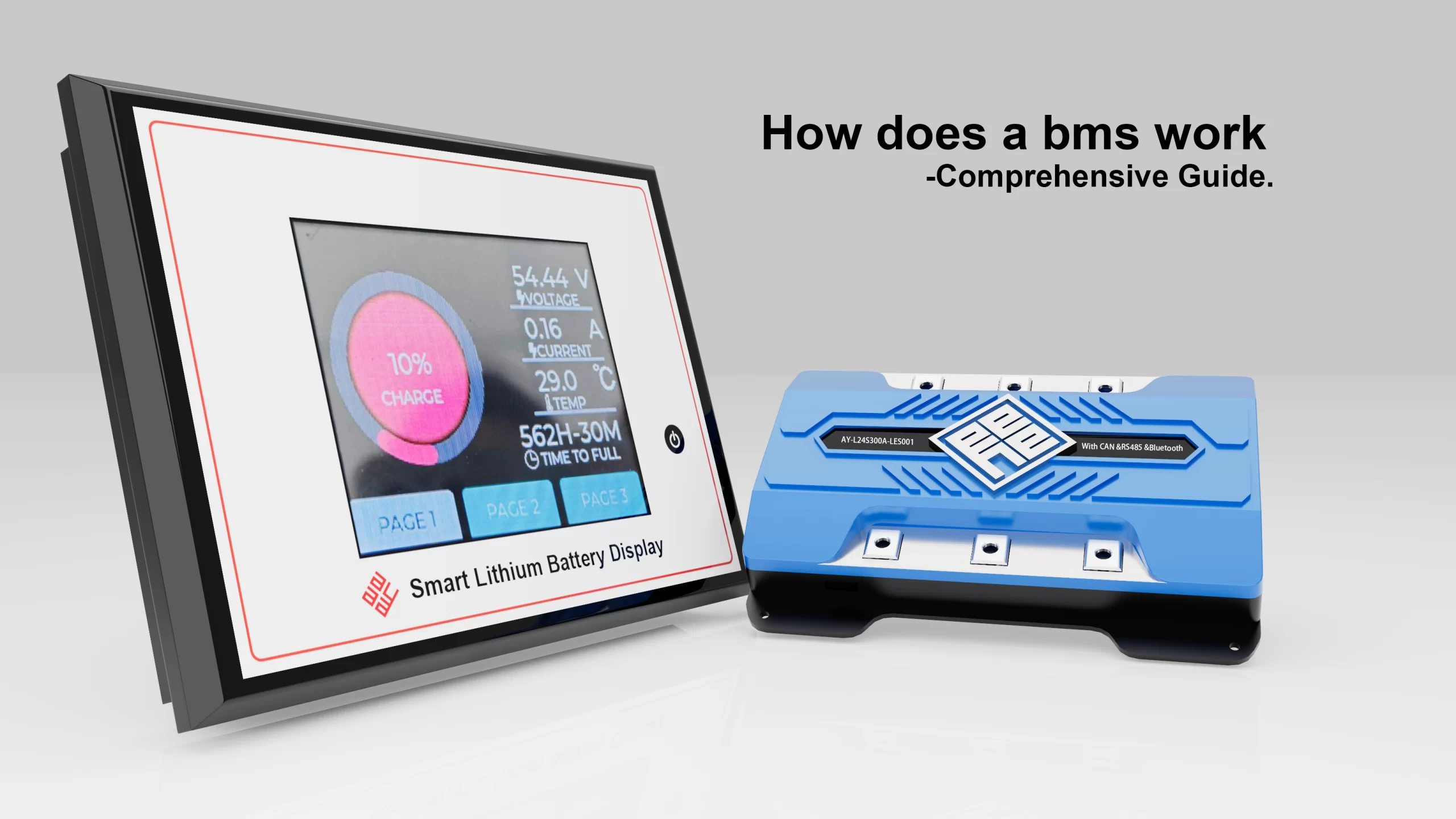
A smart BMS for reach truck battery packs should support accurate SOC estimation, SOH tracking, cell balancing, temperature protection, charger communication, and fault logging. CAN, RS485, UART, or Bluetooth communication may also be needed for chargers, displays, vehicle controllers, or service tools.
The BMS cannot change the energy density of the cells. It cannot make a small pack act like a larger one. Its real value is protecting usable capacity, improving data accuracy, reducing damage risk, and supporting safer charging.
Reach Truck Battery Trends and the Move Toward Smart BMS
2.1 From Lead-Acid to Lithium Reach Truck Battery
Lead-acid batteries are still used in many forklifts. They are proven, but they need watering, equalization, cleaning, ventilation, and careful charging.
Lithium batteries reduce many of these tasks. They can support opportunity charging during breaks and are easier to manage in multi-shift warehouses. This is why lithium reach truck battery projects are becoming more common in logistics, cold-chain, and e-commerce warehouses.
2.2 Why Basic BMS Is Not Enough
A basic BMS mainly protects the pack from over-voltage, under-voltage, over-current, and over-temperature. That is important, but modern fleets need more data.
Fleet managers want to know which battery is aging, which truck is overused, and whether charging habits are damaging the pack. A smart BMS provides monitoring, communication, history records, and diagnostic data for better battery decisions.
2.3 What Buyers Expect from a Smart BMS
Industrial buyers now expect a battery management system that can work with the charger, vehicle controller, display, and sometimes a cloud platform. Reliable communication is especially important in high-use warehouse fleets.
The BMS should also protect the battery without causing unnecessary shutdowns. Good BMS tuning balances safety, uptime, and battery life.
Common Reach Truck Battery Pain Points and Smart BMS Solutions
3.1 Unstable Runtime: SOC and SOH Improve Battery Visibility
Unstable runtime is a common problem in reach truck fleets. A truck may show enough power, then drop quickly during lifting or travel.
A smart BMS improves this through SOC estimation, SOH evaluation, current monitoring, voltage monitoring, and temperature sensing. Many suppliers target SOC accuracy around ≤5% under suitable conditions. AYAA can support ≤3% SOC accuracy in optimized projects, giving users more reliable remaining-power data.
This does not increase cell capacity. It reduces uncertainty, so operators can plan charging and avoid unexpected power loss.
3.2 Long Charging Time: Smarter Charging Control
Charging speed depends on charger power, pack voltage, temperature, SOC level, and current limits. Poor matching may slow charging or damage the pack.
A smart BMS can optimize charging current, support opportunity charging, and communicate with a compatible charger. It can also limit unsafe fast charging when the battery is too cold, too hot, or nearly full.
3.3 Battery Degradation: Protection and Balancing Matter
All batteries age, but poor use can make aging faster. Overcharge, overdischarge, high temperature, deep cycling, and cell imbalance all reduce battery life.
A smart BMS helps by using cell balancing, overcharge protection, overdischarge protection, temperature protection, and cycle data analysis. It cannot stop natural aging, but it can reduce avoidable damage.
3.4 Lead-Acid Maintenance: BMS Has Limits
If a reach truck still uses lead-acid batteries, a smart lithium BMS cannot solve watering, acid cleaning, or equalization work. These issues come from the battery chemistry itself.
When a fleet upgrades to lithium plus smart BMS, daily maintenance becomes much simpler. Operators can focus on charging, inspection, and battery data instead of acid and water management.
3.5 Cold Storage: Low-Temperature Protection Is Important
Cold rooms make battery performance less stable. Low temperature increases internal resistance and may cause faster power drop.
A smart BMS can limit low-temperature charging, control heating when the pack includes a heater, and adjust SOC estimation with temperature data. These functions reduce battery damage risk in cold-store reach truck applications.
3.6 Battery Status Management: From Guessing to Data
Many battery problems become worse because users cannot see the real battery condition. A smart BMS tracks SOC, SOH, voltage, temperature, cycle count, fault codes, and charge/discharge history.
This data helps engineers, service teams, and fleet managers find problems earlier and plan maintenance more accurately.
Pain Point
Smart BMS Optimization
Unstable runtime
Accurate SOC, SOH, current, and temperature monitoring
Long charging time
Charging strategy, opportunity charging, and charger communication
Battery degradation
Balancing, voltage protection, temperature protection, cycle data
Lead-acid maintenance
Limited effect on lead-acid; lithium + smart BMS reduces maintenance
SOC, SOH, faults, cycles, and charge/discharge records
Common Reach Truck Types and Battery Pack Parameters
Reach truck battery design depends on load, lift height, working temperature, voltage platform, and duty cycle. The table below gives common reference ranges. Final selection should follow the truck OEM, charger, battery space, and safety requirements.
Reach Truck Type
Typical Load
Typical Lift Height
Common Battery Voltage
Stand-on Reach Truck
1.2–2.0 t
6–12 m
36 V / 48 V
Sit-on Reach Truck
1.4–2.5 t
6–12 m
48 V
Double-deep Reach Truck
1.4–2.0 t
8–12 m
48 V / 80 V
Narrow Aisle Reach Truck
1.2–2.0 t
8–12 m
36 V / 48 V
High-lift / Heavy-duty Reach Truck
2.0–2.5 t
10–13 m
48 V / 80 V
Cold-store Reach Truck
1.4–2.0 t
6–12 m
48 V, low-temperature lithium or lead-acid
Matching AYAA ES-001 Smart BMS to a Reach Truck Battery
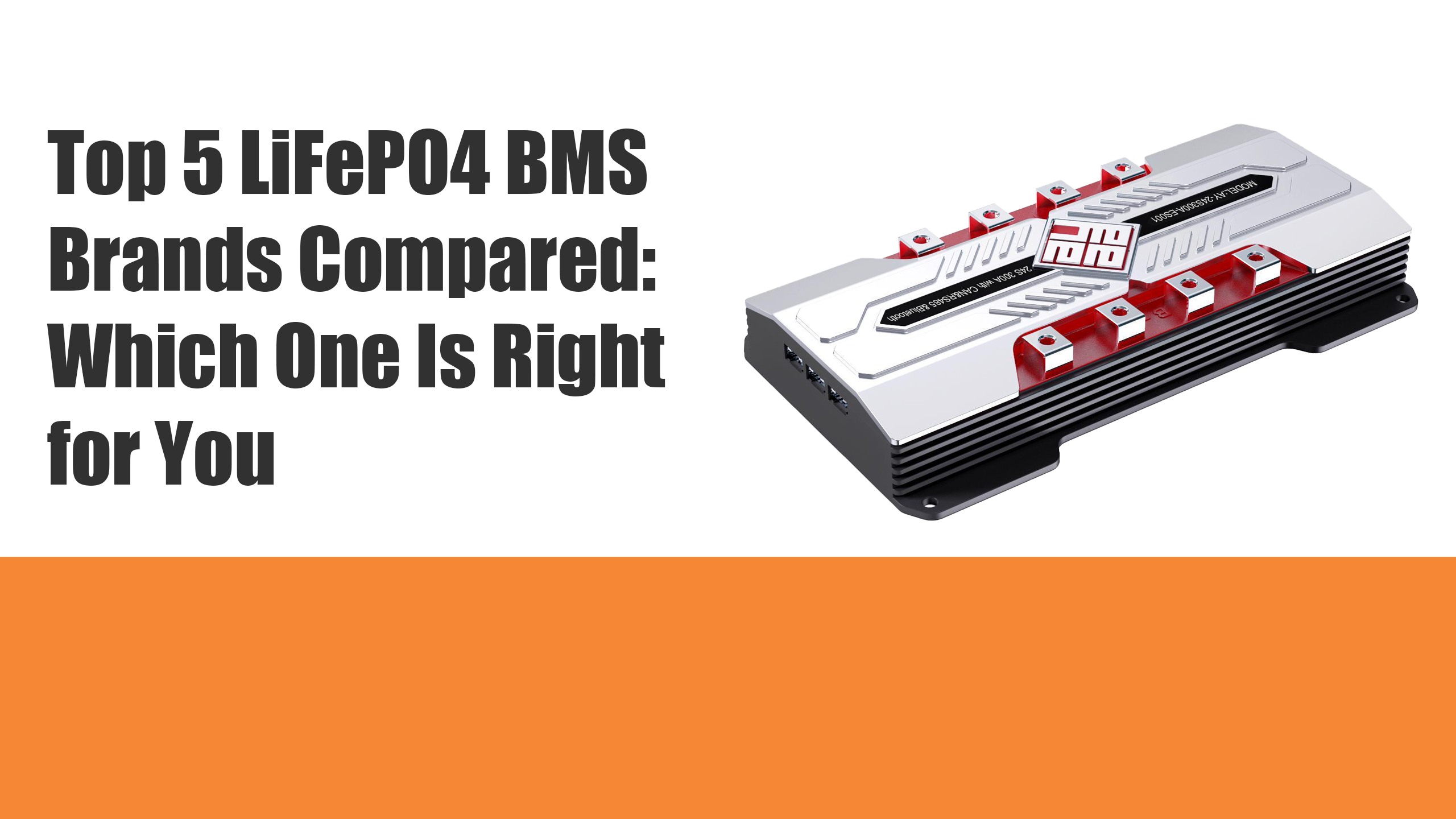
A stand-on or narrow aisle reach truck using a 48 V lithium battery pack is a good example for AYAA ES-001. This type of truck often needs stable runtime, safe charging, and clear battery data in daily warehouse operations.
AYAA ES-001 supports 7S–24S battery systems and common voltage platforms such as 24 V, 36 V, 48 V, 60 V, and 72 V. For a 48 V LiFePO4 reach truck battery, a 16S pack is a common direction and fits within the ES-001 range.
The ES-001 also supports high-current industrial use, with project options such as 200 A, 250 A, 300 A, 400 A, and 500 A continuous discharge current. CAN, RS485, UART, and BLE options make it easier to connect with chargers, displays, vehicle controllers, or maintenance tools.
Active balancing is also useful for reach truck packs. It cannot create extra energy, but it helps improve cell consistency and protects usable capacity when the pack is properly designed.
Conclusion
A reach truck battery must deliver stable power, safe charging, long service life, and clear operating data. A smart BMS supports these needs through SOC accuracy, SOH tracking, cell balancing, temperature protection, charging control, and fault records.
However, BMS performance must be matched with the right cells, pack design, charger, current rating, and working environment. The BMS protects and optimizes the battery system, but it does not change cell energy density.
AYAA ES-001 is suitable for many 24 V to 72 V industrial lithium battery projects, including 36 V and 48 V reach truck battery packs. AYAA also provides custom BMS service for communication, current settings, low-temperature control, display integration, and fleet data needs.
It depends on chemistry, cycle depth, charging habits, temperature, and maintenance. A well-designed lithium reach truck battery with smart BMS can last longer because the BMS reduces avoidable stress and records battery history.
How heavy is a reach truck battery?
Weight depends on voltage, capacity, chemistry, and truck design. Lead-acid batteries are usually heavier, while lithium batteries are often lighter for the same usable energy. Engineers should check whether the reach truck needs extra counterweight.
Which battery is used in a reach truck?
Reach trucks commonly use lead-acid or lithium-ion batteries. LiFePO4 lithium batteries are popular in newer fleets because they support low maintenance, long cycle life, and opportunity charging.