
- Industries

Home Backup & Garden BMS
View More >Electric Forklift BMS
View More >Golf Cart BMS
View More >Electric Two-wheeler BMS
View More >Aviation & UAV BMS
View More >BMS For Power Tools
View More >Medical Equipment BMS
View More >







| LF | LI | |||
| Model Number | AY-L24S300A-ES001 (7S-24S) | |||
| Communication Interface | RS485/CAN/UART | |||
| Charging voltage | DC:22.4V~76.8V CC/CV(3.2V/Cell) 7s~24s | DC:29.4V~84V CC/CV(4.2V/Cell) 7s~20s | ||
| Maximal continuous charging current | 300A | |||
| Maximal continuous discharging current | 300A | |||
| Current consume in normal operation | ≤15mA | |||
| Current consume in sleep operation | ≤150uA | |||
| Balance voltage for single cell | 3.5±0.05V | 4.0±0.05V | ||
| Over charge detection voltage | 3.65±0.05V | 4.25±0.05V | ||
| Charge Over current detection current | 320±3A | |||
| Discharge Over current detection current 1 | 600±3A | |||
| Discharge Over current detection current 2 | 800±3A | |||
| Short Protection | YES | |||
| SOC | 5%~8% | |||
 | |
| Size | L206 * W162 * T40 mm |
| NTC | 10K |
| Temperature switch | / ℃(the batteries temperature) |
| Weak current switch | YES |
| Active balance | YES |
| Heater | YES |
| Braking Resistors | YES |
| Low temperature protection when charge | 0℃ | ||
| Release temperature( low temperature protection) | 5℃ | ||
| Over temperature protection when charge | 60℃ | ||
| Release temperature( over temperature protection) | 55℃ | ||
| Low temperature protection when discharge | 15℃ | ||
| Release temperature( low temperature protection) | 10℃ | ||
| Over temperature protection when discharge | 65℃ | ||
| Release temperature( over temperature protection) | 55℃ | ||
| Operating Temperature Range | 40~+85℃ | ||
| Storage Temperature Range | 40~+125℃ | ||
| LCD display screen | YES |
| LED light board | TES |
| Bluetooth mode | YES |
| 4G | YES |
| GPS | YES |
Product Introduction
The 7S–24S 300A Smart Active Balance BMS is intended to control high-capacity battery systems in a variety of energy storage and electric mobility applications. It enables smooth integration with various control systems by supporting a variety of communication interfaces, such as CAN, RS485, UART, and BLE. This BMS maintains constant voltage levels and increases overall battery efficiency by redistributing energy among cells using active balancing technology. Electric tricycles, golf carts, RVs, maritime systems, and electric forklifts can all use it.
To accommodate various battery systems and usage circumstances, this intelligent BMS integrates active balancing, multi-interface communication, and adaptable setup.
For more information or technical support, feel free to contact us.

Helps keep the voltage across the battery pack constant during operation by transferring energy across cells rather than dissipating it.
Enables data access connections with controllers, displays, and mobile devices by supporting CAN, RS485, UART, and BLE.
Suitable for high-power battery systems and electric vehicles, it can handle up to 300A of continuous current.
Adaptable to various voltage platforms and system designs, it works with battery packs ranging from 7S to 24S.
Provides constant updates for system management by monitoring voltage, current, temperature, and status of charge.
Permits modifying communication protocols, protection levels, and balancing behavior in accordance with application requirements.
Permits wireless setting and monitoring of battery data via mobile devices.
Has several safety measures to regulate the conditions of charging and discharging.
Designed to be installed in battery systems with minimal space in a variety of vehicle types.
For a variety of electric mobility and energy storage systems that need effective battery monitoring and control, the 7S–24S 300A Smart Active Balance BMS is appropriate.

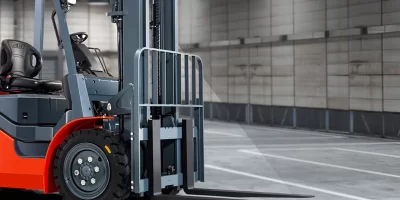
Oversees the enormous battery packs used in material handling machinery, enabling heavy load consumption and extended working cycles.

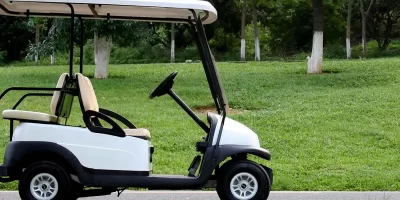
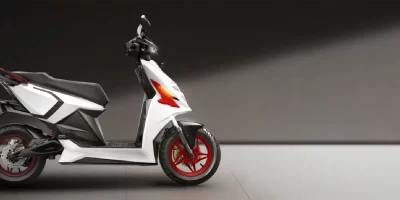
Enables energy monitoring and balancing for short-distance mobility systems and daily trips.

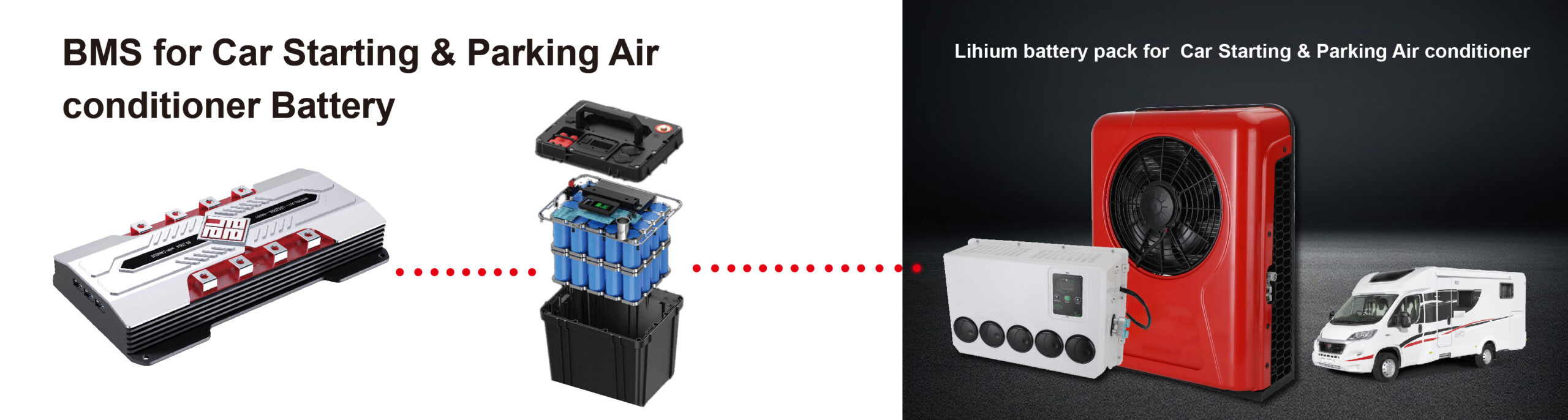
Supports onboard battery systems for auxiliary power supplies, appliances, and illumination.

Oversees the battery systems for boats and other maritime equipment, including the onboard electronics and propulsion.

Provides battery control for cars used for cargo and urban transportation that undergo repeated cycles of charging and discharging.


Whether your business produces electric vehicles, provides battery packs, or integrates systems, we are your reliable partner for scalable, intelligent, high-current BMS systems. Your next breakthrough can be powered by us.
We are well-positioned to understand the demands of the growing electric vehicle and energy storage markets because to our more than 21 years of experience in battery management and power solutions.
Our committed R&D team never ceases pushing the boundaries of technology to deliver smarter, safer, and more effective products to the market, whether it’s through integrated software platforms or creative BMS design.
To guarantee longevity, stability, and optimal performance in real-world applications like golf carts, motorbikes, forklifts, and energy storage systems, our BMS and power solutions are put through rigorous testing under demanding situations.
Form factors, wireless modules, communication protocols, and battery kinds are just a few of the customization possibilities we provide to suit your unique requirements.
Our technical staff is ready around-the-clock to assist you with setup, integration, and troubleshooting, from pre-sales guidance to post-purchase support.
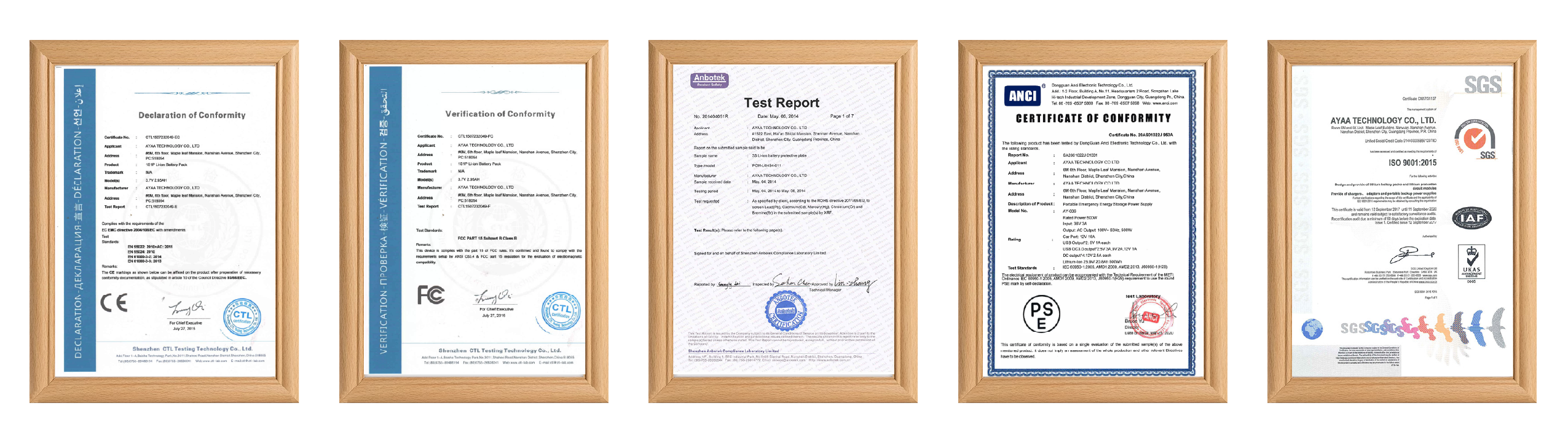
Every product we sell is of the best quality and safety since we closely follow international standards like CE, IEC62109, VDE, and CQC.
Our Certificates
FAQ:
Q:What is the difference between BMS and smart BMS?
A: The main difference lies in how the remaining battery capacity is determined and displayed on the bike’s display. Batteries equipped with an intelligent BMS are able to accurately record the energy absorbed and released and use this to determine the remaining battery capacity, while also taking into account factors such as temperature.
Q:What is a smart BMS?
A: A battery management system for Victron lithium-iron-phosphate (LiFePO4) smart batteries is called the Smart BMS CL 12/100. It was created especially for 12V systems that use a 12V alternator.
Q:What is BMS in EV battery?
A: A battery management system (BMS) keeps track of a battery’s condition and removes individual battery cell performance variances so that the cells operate consistently. It is a crucial system that enables the battery to operate at its best.
Q:What are the three types of BMS?
A: In actuality, there are numerous varieties of BMSs, each with unique characteristics and configurations. Three main categories of BMS architectures exist in total: little BMS with only one board. BMS that is distributed.
Q:Which type of BMS is best?
A: High-capacity battery packs benefit from distributed BMS’s improved scalability and dependability. It can better handle high-demand situations like electric cars and massive energy storage systems, despite having a more complicated structure and costing more.
Q:How do battery BMS work?
A: The power flow to and from a battery pack is monitored and managed by a battery management system. The BMS guards against overvoltage and overcurrent during charging. In a battery management system, the constant-current, constant-voltage (CC-CV) algorithm is a popular method for charging batteries.


