Maximizing Battery Efficiency and Lifespan With a Smart Li-Po BMS Strategy
849
Maximizing Battery Efficiency and Lifespan With a Smart Li-Po BMS Strategy
One fact is becoming more and more apparent to system designers and end users as lithium polymer batteries continue to dominate applications like solar energy storage, voiturettes de golf, RV power systems, and marin electronics: battery performance is no longer only dependent on cells.
Rather, the battery’s intelligence—more especially, the li-po bms—is crucial to its long-term ROI, efficiency, and safety.
Even the best lithium polymer cells may have imbalance, early aging, or catastrophic failure in the absence of an efficient li-po bms.
A battery can be converted from a passive energy container into an actively managed power system using a clever BMS technique.
What Is a Li-Po BMS and How Does It Work?
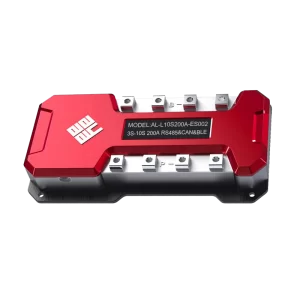
A lithium polymer battery management system, or li-po bms, is an electronic control system made to keep an eye on, safeguard, and maximize lithium polymer battery packs over the course of their whole life.
Moderne Li-Po BMS continually measure temperature, voltage, and current at the cell and pack levels, in contrast to simple protective circuits.
The BMS maximizes the battery’s useable capacity and lifespan while making sure it stays strictly within its safe operating limits by evaluating this data in real time.
Practically speaking, the bms functions as the battery system’s brain, making choices more quickly and precisely than any human intervention could.
How Does Voltage Monitoring Improve Battery Efficiency?
One of the most frequent reasons why lithium polymer batteries lose performance is voltage imbalance.
Degradation can be accelerated and useful capacity reduced by even small voltage differences across cells.
A smart li-po bms performs continuous voltage monitoring on each cell, enabling:
Accurate overvoltage protection during charging
Reliable undervoltage cutoff during discharge
Early detection of weak or aging cells
The bms makes sure that no single cell becomes the battery pack’s limiting factor by preventing cells from surpassing safe voltage thresholds.
This maintains long-term energy output and directly increases efficiency.
Why Is Current Management Critical in a Li-Po BMS?
High currents can be delivered by lithium polymer batteries, however unchecked current flow can cause internal damage, excessive heat, and safety hazards.
In both the charging and discharging stages, a well-designed li-po bms controls current by:
Limiting charge current to protect cell chemistry
Preventing over-discharge during high-load operation
Cutting off the circuit in short-circuit or overload events
When necessary, this clever current regulation enables the battery to operate at its best while preventing stressful situations that reduce battery life.
How Does Temperature Monitoring Protect Li-Po Batteries?
Lithium polymer batteries are silently killed by temperature.
Thermal runaway or irreversible cell damage might result from operating outside of the advised temperature range.
Un moderne li-po bms integrates multiple temperature sensors to provide:
Over-temperature protection during high-load discharge
Low-temperature charging prevention
Adaptive cooling or shutdown mechanisms
The bms greatly increases cycle life and boosts system dependability in a variety of settings, including outdoor solar storage and marine installations, by preserving ideal thermal conditions.
What Are the Key Components Inside a Li-Po BMS?
It is easier to understand why system quality differs so much between manufacturers when one is aware of the internal structure of a lithium polymer bms.
Cell monitoring board for individual voltage and temperature sensing
Main control board with embedded algorithms
MOSFETs for switching and protection control
Current shunt or Hall sensors for accurate current measurement
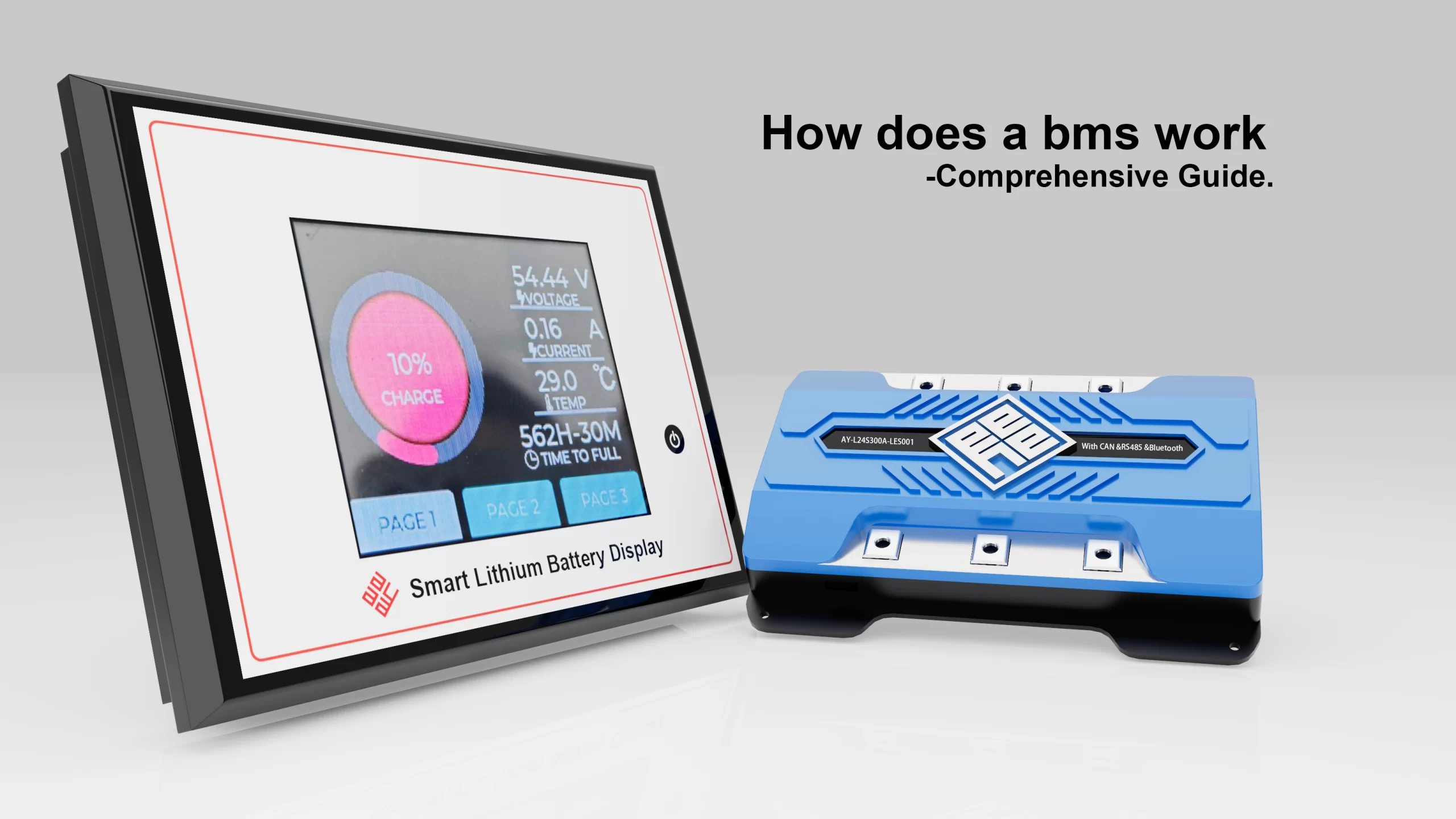
Communication modules such as Bluetooth, CAN, or SMBus
Every element helps provide accurate monitoring, prompt protection reaction, and smooth interaction with other systems.
How Is Li-Po BMS Used Across Different Applications?
Because of its adaptability, a li-po bms can be used in a variety of applications, each with its own set of performance and safety requirements.
RV and Camper Systems
The bms in RV power systems guarantees a steady energy supply, guards against overdischarge during prolonged off-grid use, and permits user Bluetooth monitoring.
Golf Carts and Low-Speed Vehicles
A bms extends battery replacement intervals, enhances acceleration consistency, and controls high current loads for electric mobility applications.
Applications marines
The BMS guards against vibration, temperature fluctuations, and unstable charging brought on by shore power systems or alternators in maritime conditions.
Solar Energy Storage
BMS technology is used by solar systems to improve depth of discharge, control variable charge rates, and synchronize battery performance with inverters.
Why Is a Li-Po BMS Essential for Safety?
The strongest argument for purchasing a top-notch li-po bms is safety.
Significant energy density is stored in lithium polymer batteries, and this energy can prove dangerous if improperly managed.
Key safety protections provided by a li-po bms include:
Protection contre la surcharge et la décharge excessive
Short-circuit and overcurrent shutdown
Thermal protection under extreme conditions
These safeguards guarantee that the battery system maintains its stability and predictability even in the event of a malfunction.
How Does Cell Balancing Improve Battery Lifespan?
Over time, cell imbalance cannot be prevented, but its consequences can be managed.
To balance cell voltages, a smart li-po bms uses either passive or active balancing approaches.
Passive balancing dissipates excess energy as heat
Active balancing redistributes energy between cells
The bms reduces capacity loss, boosts efficiency, and greatly expands the total number of useable cycles by preserving consistent cell states.
What Role Does State Estimation Play in Smart BMS Design?
Beyond protection, advanced li-po bms solutions offer precise state estimate, such as:
État de charge (SoC) for real-time energy awareness
État de santé (SoH) to assess battery aging
Users and system integrators may schedule maintenance, improve usage patterns, and prevent unplanned downtime with the help of these KPIs.
How Can You Maximize Efficiency With the Right Li-Po BMS Strategy?
Users should implement a comprehensive management approach in order to get the most out of a Li-Po BMS:
Select a BMS matched to voltage, current, and application requirements
Respond promptly to system alerts or fault codes
Perform periodic inspections and firmware updates
Avoid mismatched chargers or incompatible system components
The BMS can be an effective tool for optimizing battery longevity and performance when utilized properly.
What Makes a Smart Li-Po BMS a Long-Term Investment?
A smart li-po bms may raise the system’s initial cost, but it offers significant long-term financial advantages:
Reduced battery replacement frequency
Lower maintenance and downtime costs
Improved energy utilization efficiency
These benefits directly result in increased ROI and operational dependability in commercial and industrial systems.
Maximizing Battery Efficiency and Lifespan With a Smart Li-Po BMS Strategy
The intelligence that controls a lithium polymer battery determines its dependability.
Users can precisely manage temperature, voltage, current, and cell balance by incorporating a strong Li-po BMS, transforming complicated battery systems into long-lasting, safe, and effective energy sources.
A smart BMS strategy is now required for everything from solar storage and electric mobility to RVs and marine systems.
Businesses like Ayaa Technology keep improving the design of bms, allowing for safer energy storage and more intelligent power management for contemporary applications.
FAQ
Q1:What is BMS in a Li-ion battery?
A1:A battery management system (BMS) is any electrical system that allows a rechargeable battery (cell or battery pack) to be used safely and last longer in real-world scenarios while monitoring and estimating its various states (such as condition of health and state of charge).
Q2:What does li po battery mean?
A2:A lithium polymer battery, or more precisely, lithium-ion polymer battery (abbreviated as LiPo, LIP, Li-poly, lithium-poly, and others), is a rechargeable battery created from lithium-ion and lithium-metal battery technologies.
Q3:How long does a 3.7 V battery last in a drone?
A3:If you’re lucky, this battery might barely last ten minutes or so.
Even with a 3.7V, 1,200mAh battery, it will likely barely last for 20 minutes.
Q4:Can I run a lithium battery without BMS?
A4:Any lithium in series requires a BMS at the absolute least for charging; failing to use one is extremely unprofessional and a ticking time bomb.
Q5:What happens if BMS fails?
A5:When a Battery Management System (BMS) malfunctions, the battery loses its “brain” for controlling voltage, current, and temperature, leading to overcharging, overdischarging, and cell imbalance.
This can result in anything from poor performance (won’t charge, abrupt shutdowns) to serious safety risks like thermal runaway, which can cause fires or explosions.
The battery loses capacity rapidly, becomes unreliable, and runs the risk of burning out or suffering irreversible damage.