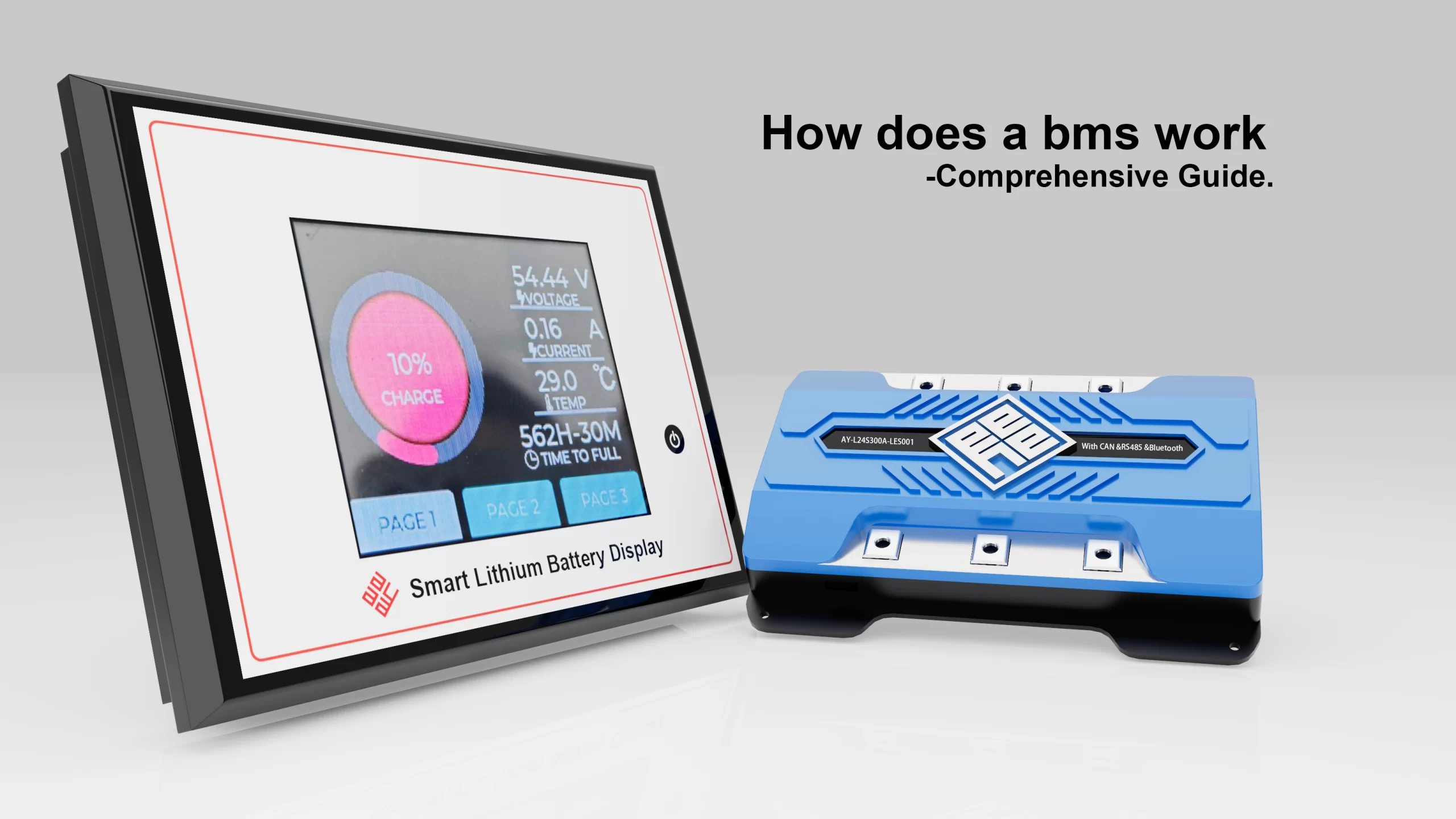
Measuring a 12V Li Ion Pack Correctly: Voltage Testing and BMS Protection
852
Measuring a 12V Li Ion Pack Correctly: Voltage Testing and BMS Protection
Accurately measuring voltage is not only a technical task in modern energy systems, but it also serves as the basis for decision-making.
Whether a 12V Li ion pack is utilized in industrial equipment, camping-cars, solar storage, or backup power systems, it must provide consistent performance, stable voltage, and long-term dependability.
However, inaccurate voltage interpretation is the root cause of many system malfunctions, early battery aging problems, and safety occurrences.
Users frequently place the blame on loads, chargers, or even battery chemistry, but the true problem is inaccurate voltage measurement or a misinterpretation of how a BMS controls voltage behavior.
What Is a 12V Li Ion Pack and Where Is It Commonly Used?
Designed to replace conventional 12V lead-acid batteries, a 12V li ion pack is a battery system made up of several lithium-ion cells connected in series, usually in a 3S or 4S arrangement.
Les applications courantes comprennent :
RV and camper electrical systems
Marine electronics and trolling motors
Solar energy storage and off-grid power
Backup power supplies
Industrial and mobility equipment
A 12V li ion pack has a far longer cycle life, a larger useful capacity, a lighter weight, and faster charging than lead-acid systems.
These benefits, however, only apply when voltage is appropriately controlled by a trustworthy BMS.
What Is the Full Voltage Range of a 12V Li Ion Pack?
The idea that “12V” is a fixed value is among the most prevalent misconceptions.
A 12V Li ion pack actually runs across a voltage range based on the charge and chemistry.
Typical voltage ranges include:
Fully charged: 12.6V–16.8V (depending on chemistry)
Nominal operating voltage: ~11.1V–14.8V
Low-voltage cutoff: ~9.0V–10.0V
For this reason, uncontextualized raw voltage readings might be deceptive.
In order to assess the true health of a battery, a smart Li-ion BMS analyzes voltage, current, temperature, and load conditions.
Why Do Voltage Readings Change Under Load?
When values abruptly drop, many people who measure voltage become alarmed.
However, voltage sag is not always a problem.
Voltage changes in a 12V li ion pack are influenced by:
Load current
Internal resistance of cells
Température
State of charge (SOC)
Cell balance status
By monitoring trends, filtering noise, and preventing dangerous voltage thresholds from being passed, a well-designed li-po bms accounts for these factors.
How Do You Measure a 12V Li Ion Pack Correctly?
Correct voltage measurement requires procedure discipline, not just tools.
Step 1: Why Should All Loads Be Disconnected First?
By adding current flow and internal resistance effects, loads skew voltage readings.
In order to measure open-circuit voltage, which represents genuine SOC, disconnect loads.
Step 2: How Should a Multimeter Be Configured?
With a suitable range above 20V, switch the multimeter to DC voltage mode.
Low-range settings may result in overload issues or erroneous readings.
Step 3: Where Should the Probes Be Placed?
Never use downstream wiring or connectors that cause voltage drops while measuring across the 12V Li ion pack’s primary terminals.
Step 4: How Should the Reading Be Interpreted?
Voltage should be interpreted alongside:
Recent charging activity
Ambient temperature
BMS cutoff history
This is where li ion bms data becomes more valuable than raw voltage alone.
Why Does Chemistry Affect Voltage Behavior in a 12V Li Ion Pack?
Not all lithium batteries behave the same.
Chemistry
Tension nominale
Stabilité de la tension
Safety Profile
Li-ion (NMC)
~3.6V/cell
Modéré
Moyen
LiFePO4
~3.2V/cell
Very stable
Haut
LCO
~3.7V/cell
High energy
Inférieur
A particular BMS voltage method is needed for every chemical.
A generic BMS frequently results in safety hazards or early cutoffs.
How Does a Li Ion BMS Protect Voltage Limits?
Instead of depending just on the total pack voltage, a Li-ion BMS continuously measures the voltages of individual cells.
Key protections include:
Overcharge cutoff
Over-discharge cutoff
Cell imbalance detection
Voltage-based fault isolation
Even one overcharged cell can jeopardize the entire 12V Li ion pack if BMS does not step in.
What Role Does Cell Balancing Play in Voltage Accuracy?
Cell imbalance is one of the hidden reasons voltage readings become unreliable.
A li-po bms utilisations :
Passive balancing to bleed excess energy
Active balancing to redistribute charge
Instead of hiding weak cells, balanced cells make sure that the overall voltage represents actual capacity.
Why Can a Fully Charged 12V Li Ion Pack Still Show Low Voltage?
This often happens due to:
Charger incompatibility
BMS current limits
Protection thermique
Aging cells
Basic voltage testing cannot tell whether a smart Li-ion battery management system purposefully stops charging early to save longevity.
How Does Temperature Affect Voltage Measurement?
Temperature affects lithium batteries.
High temperatures hasten deterioration, whereas cold conditions lower voltage.
Temperature-based voltage adjustment is incorporated into advanced li-po bms designs to avoid misunderstandings and dangerous operation.
Why Is BMS Data More Reliable Than Voltage Alone?
Voltage is just one parameter. A li ion bms calculates:
État de charge (SOC)
État de santé (ES)
Remaining usable capacity
Fault history
BMS telemetry is crucial for procurement teams and system designers to provide predictable ROI and lifetime planning.
How Does BMS Extend the Service Life of a 12V Li Ion Pack?
By preventing:
Deep discharge damage
Overcharge stress
Thermal runaway
Chronic imbalance
Compared to unmanaged systems, a well-configured 12V Li ion pack with a top-notch BMS can live several times longer.
What Are Common Voltage Measurement Mistakes to Avoid?
Measuring under load
Ignoring temperature effects
Using lead-acid voltage assumptions
Bypassing BMS protections
These errors often lead to unnecessary battery replacement costs.
How Should Buyers Evaluate BMS Quality When Selecting a 12V Li Ion Pack?
Key evaluation criteria include:
Per-cell voltage monitoring accuracy
Balancing current capability
Temperature sensor redundancy
Communication interfaces
Protection response speed
A battery is only as reliable as the BMS controlling it.
A Smarter Way to Measure, Protect, and Invest in a 12V Li Ion Pack
Understanding the meaning of a voltage measurement in a BMS-controlled system is more important than simply seeing a number.
Traditional systems cannot offer the safety, dependability, and long-term economic value that a 12V Li Ion pack and a well-designed Li Ion BMS provide.
Companies like Ayaa Technology concentrate on BMS intelligent architecture to guarantee voltage accuracy, system safety, and maximum lifecycle return as lithium battery systems continue to replace lead-acid technologies across industries, transforming battery measurement from a guessing game into a tactical advantage.
FAQ
Q1 : Qu'est-ce que la règle des 80/20 pour les batteries au lithium ?
A1:The 80/20 rule for lithium batteries is a best practice that advises avoiding full 100% charges and deep discharges below 20% in order to minimize stress, slow degradation, and increase overall battery life.
It’s like keeping a sponge damp but not soggy or wrung out.
Q2:Which is better LiPo or li-ion battery pack?
A2:Li-ion batteries have outperformed LiPo batteries in terms of longevity and durability.
You can rely on them to achieve the promised cycle life and provide the promised performance because of the extremely well-sorted batches and the robust structure of the cells.
Q3:How long does a 12V lithium-ion battery last?
A3:Although calendar aging affects all batteries over time, a 12V lithium battery (particularly LiFePO4) usually lasts 8–12 years or 3,000–5,000+ cycles, far longer than a lead-acid battery.
The lifespan is affected by usage (depth of discharge), temperature, charging habits, and quality.
Its long life is maximized by proper care, such as avoiding deep discharges and extremely high or low temperatures (below freezing or above 45°C).
Q4:Does a 12 volt lithium battery need a special charger?
A4:In order to prevent damage, ensure a full charge, and activate built-in safety features like cell balancing, 12V lithium batteries typically require a special charger or one with specific settings (like AGM mode) due to their higher voltage profile (around 14.4V) and Constant Current/Constant Voltage (CC/CV) requirements that differ from lead-acid batteries.
There is a risk of overcharging, overheating, fire, or shortened battery life when using an improper charger, particularly one with a desulfation mode that spikes voltage to 16V+.
Q5:What is the biggest cause of lithium-ion batteries exploding?
A5:Thermal runaway, a chain reaction from overheating, is the main cause of lithium-ion battery explosions.
It is frequently brought on by manufacturing flaws (such as small metal particles causing internal shorts), physical damage (such as punctures or crushing), overcharging, or extremely high or low temperatures.
These conditions destabilize the battery, which ignites the flammable electrolyte and causes a fire or explosion.
Physical damage and overcharging are significant user-contributed dangers, even though flaws are frequent triggers.