- Industries

Home Backup & Garden BMS
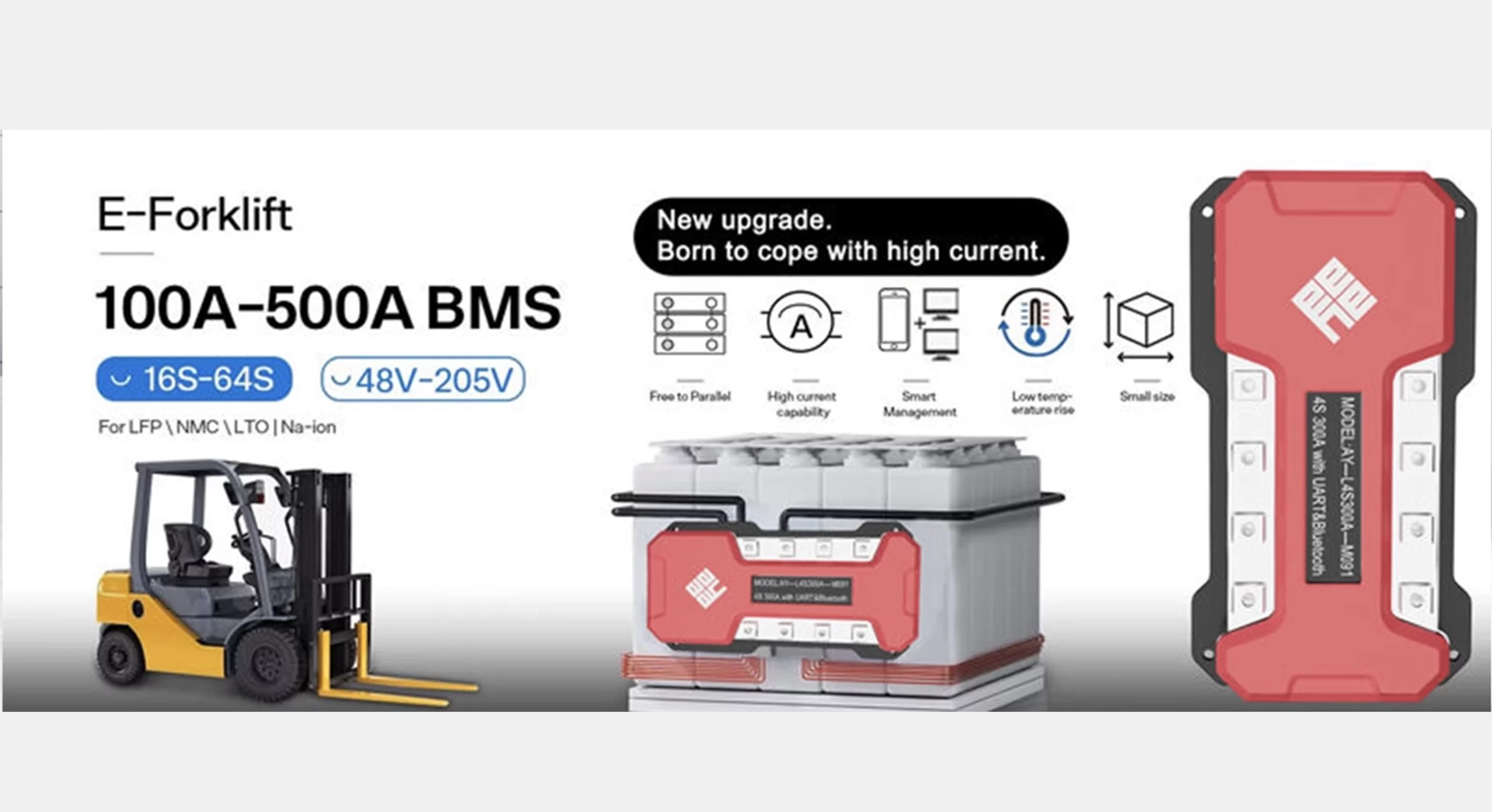
View More >Electric Forklift BMS
View More >Golf Cart BMS
View More >Electric Two-wheeler BMS
View More >Aviation & UAV BMS
View More >BMS For Power Tools
View More >Medical Equipment BMS
View More >








Home About Us EVENTS & NEWS The 2026 Professional Guide: Selecting an active balancer for Golf Carts
Golf carts have evolved from basic recreational vehicles to vital utility assets in resorts, gated communities, and industrial complexes in the ever-changing world of electric mobility.
Due to this change, high-performance Lithium Iron Phosphate (LiFePO4) batteries have replaced hefty lead-acid batteries.
However, the sophistication of the active balancer included into the Battery Management System (BMS) determines the actual performance of these lithium packs rather than just the cells.
Professional fleet managers are placing a greater emphasis on active equalization technology as 2026 progresses in order to guarantee that their energy expenditures provide optimal range and durability.

An sophisticated energy governance system called an active balancer BMS actively shifts power from high-voltage to low-voltage cells in a battery pack.
1. Energy Transfer Logic: Active balancing transfers charge across cells to preserve balance, in contrast to passive systems that squander extra energy as heat.
2. High-Current Capability: Compared to conventional dissipative techniques, modern systems in 2026 can transfer currents between 1A and 5A much more quickly.
3. Dynamic Equalization: To avoid voltage drift, the system functions throughout charging, discharging, and even idle times.
4. Cell Longevity: The method avoids the “weakest link” effect, which causes battery packs to die too soon, by maintaining all cells under a strict voltage tolerance.
An active balancer’s operation in a golf cart battery setting involves constant monitoring and energy relocation.
●Voltage Detection: With millivolt accuracy, the system continuously measures the voltage of each individual cell (typically 16 cells in a 48V/51.2V pack).
●Inductive/Capacitive Transfer: The BMS “bucket” energy from a higher potential cell and dump it into a lower potential cell using inductors or capacitors.
●Real-Time Correction: The balancer makes sure that no single cell falls into a hazardous low-voltage zone while the golf cart climbs a steep incline while drawing significant current.
●Efficiency Optimization: The battery pack’s total useful capacity is raised by 5% to 10% since energy is recycled instead of burned off.
Lithium batteries used in golf carts nowadays are designed to withstand high torque requirements while offering a maintenance-free user experience.
1. Stable Chemistry: LiFePO4 is used in the majority of 2026 models because of its intrinsic thermal stability and capacity to withstand more than 3,500 cycles.
2. Compact Energy Density: The cart’s acceleration and braking are greatly enhanced by the lithium packs, which weigh about one-third of a similar lead-acid set.
3. Quick Charging: These batteries allow for “opportunity charging” during lunch breaks or in between rounds because they can be fully recharged in two to three hours.
4. Modular Scalability: The design enables the parallel connection of several 48V packs to boost the overall ampere-hour (Ah) capacity.
Even while lithium has many benefits, golf carts put batteries under a lot of stress, which might cause them to malfunction in the absence of an active balancer.
●Voltage Imbalance: When cells diverge due to frequent high-current pulls during acceleration, the smart BMS may prematurely shut down the pack.
●Thermal Stress: Passive balancing may produce too much heat inside the battery shell in warmer conditions, hastening chemical aging.
●Capacity Loss: Unmanaged cells eventually become “unbalanced,” making it unable to properly charge or discharge the entire pack.
●Sudden Cut-offs: In the absence of accurate balancing, a cart may display 20% power but abruptly die when a single cell reaches the “under-voltage” limit.
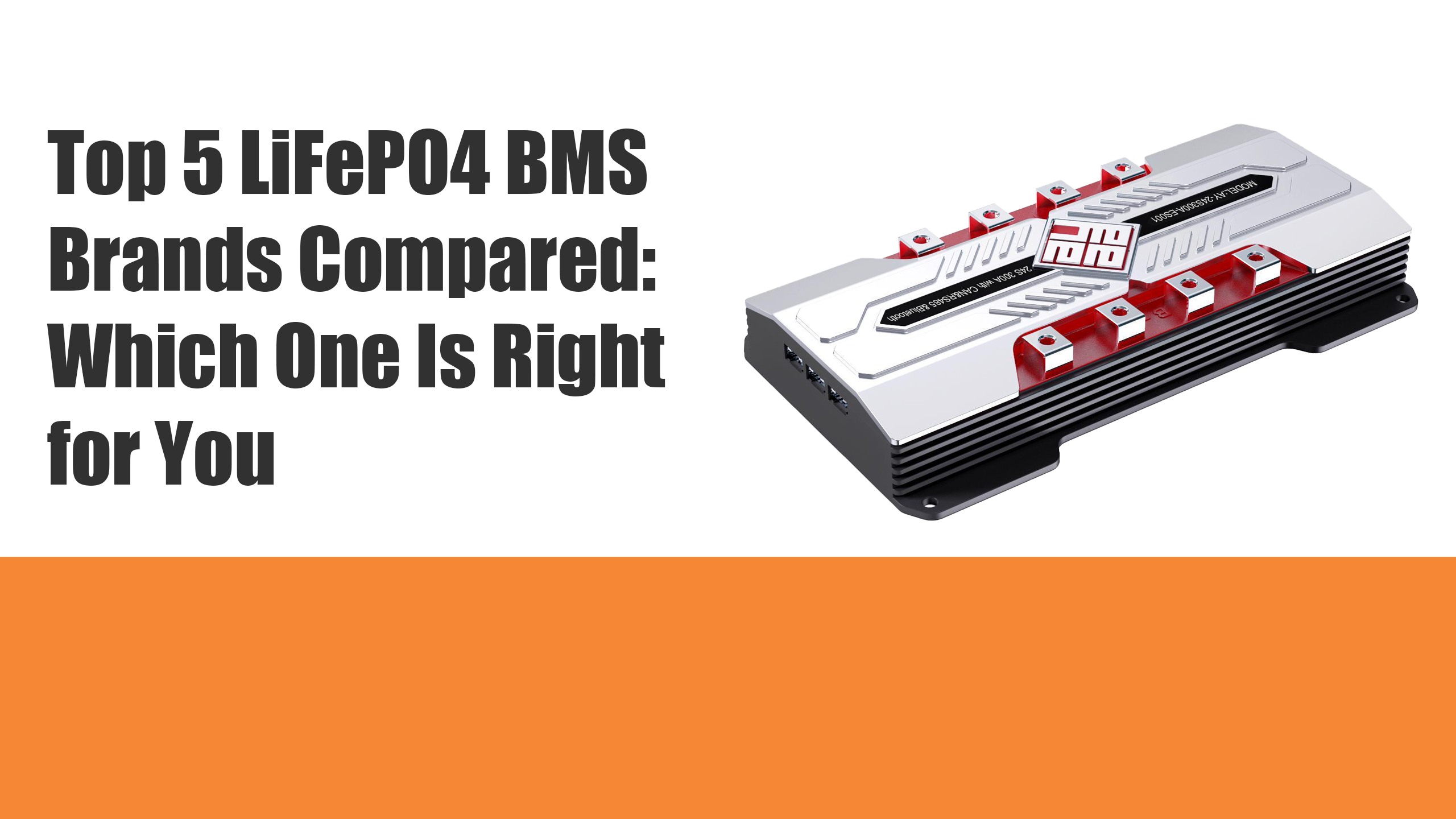
Custom Smart Active Balance BMS 7S–24S 300A | CAN, RS485, UART, BLE
A “basic” lithium battery and a professional-grade energy solution are connected through the use of an active balancer.
1. Total Capacity Utilization: This guarantees that each cell enters the “full” state at the same time, enabling the pilot to utilize the entire claimed runtime.
2. Heat Reduction: The battery’s interior temperature is kept much lower by doing away with the resistors required in passive balancing.
3. Extended operation Life: Cells that are properly balanced deteriorate at a consistent rate, frequently doubling the total number of years of operation that a fleet can anticipate.
4. Consistency: Because every cell is kept in sync, the cart retains its maximum speed and torque even when the battery is low on charge.
2026 will see the opening of a sizable resort with a fleet of fifty golf carts for visitor transportation.
The carts are constantly loaded because the resort is situated in a mountainous coastal location.
The fleet’s initial batteries had passive balancing, which led to “limp mode” issues in the sweltering afternoon.
The maintenance crew saw an instant improvement after switching to packs with an active balancer.
The cell voltages stayed within 0.005V of one another even throughout consecutive guest transfers in 35°C heat.
The carts may perform two more rounds a day without requiring a recharge thanks to the dynamic redistribution of energy.
Their fleet was transformed from a logistical challenge into a dependable, high-uptime asset by this technical perfection.
The Economic Value of Choosing Active Balancing Smart BMS
| Benefit Metric | Impact of Passive Balancing | Impact of Active Balancer BMS |
|---|---|---|
| Daily Runtime | Standard | Up to 15% increase |
| Maintenance Frequency | Periodic manual balancing required | Zero manual intervention needed |
| Battery Life (Years) | 5 – 7 Years | 10 – 15 Years |
| System Heat | Significant during balancing | Negligible / Near ambient |
| Replacement Costs | High due to premature cell failure | Lowest TCO (Total Cost of Ownership) |
Selecting an active balancer-driven system is a wise financial choice that lowers overhead and streamlines fleet administration.
1. Extended Runtime: Active redistribution keeps carts on the path longer by preventing the pack from shutting down while the majority of cells still have energy.
2. Lower Maintenance Costs: By automating battery health checks, the technology eliminates the need for personnel to manually balance cells.
3. Space Efficiency: The battery footprint is stable due to the cells’ continued health and lack of swelling, making installation in conventional bays simple.
4. Zero Periodic Maintenance: Hundreds of work hours are saved because there are no “equalization charges” or water topping required, unlike lead-acid or basic lithium.
The intelligence behind the power becomes the most important factor as the need for high-efficiency and autonomous utility cars increases.
Any firm that needs its golf carts to be available around-the-clock needs an active balancer.
By using active energy transfer to maintain cell-level homeostasis, you shield your hardware from the most frequent reasons why lithium fails.
This proactive energy management strategy makes the fleet more profitable and robust.
Industry leaders rely on Ayaa Technology’s cutting-edge management solutions because of its dedication to technical excellence and long-term dependability, guaranteeing that your mission-critical energy assets are managed with complete accuracy and stability.
Q1:What does an active balancer do?
A1:An active balancer acts like a tiny, intelligent power-shuttling system.
It moves energy from the most charged cells to the least charged ones.
Q2:What is the difference between a BMS and an active balancer?
A2:For safety, a Battery Management System (BMS) is necessary to shield cells from temperature problems, overvoltage, and undervoltage.
By shifting energy from high-voltage cells to low-voltage ones, an active balancer increases usable capacity, prolongs battery life, and increases efficiency.
Active balancers are optional improvements, but BMS is required for safety.
Q3:What is the 20 to 80 battery rule?
A3:For lithium batteries, the 80/20 rule suggests: Up to 80% of the battery can be used every day.
Only when necessary—for example, prior to a lengthy journey or a complete discharge cycle—charge to 100%.
Keep the battery from discharging below 20%.
Q4:What is active balancing?
A4:By redistributing charge between battery cells during the charge and discharge cycles, active cell balancing—a more sophisticated balancing technique—increases the total useable charge in the battery stack, shortens the charge time compared to passive balancing, and reduces heat.
Q5:How long should I equalize my batteries?
A5:For six to eight hours, our batteries should be equalized at 15.5 to 16.3 volts.
You might need to do this procedure two or three times, depending on the degree of sulfation.
Once the batteries have reached float charge and you have completed a regular charge, you need to execute an equalizing charge.
High-performance smart BMS solutions for energy storage, EVs, robotics, and drones.
✔ High Efficiency & Active Balancing
✔ Smart Monitoring & Protection
✔ Global Certifications
✔ Customizable for Any Application
⚡ Engineers respond within 12 hours
🔒 Your information is safe and confidential