UAV Meaning Explained: What Modern Drones Really Are and How They Work
2553
UAV Meaning Explained: What Modern Drones Really Are and How They Work
Understanding uav meaning has become increasingly important as drones evolve from hobbyist toys into highly advanced systems used across industries.
In order to accomplish tasks that were previously thought to be impossible, modern unmanned aerial vehicles integrate advanced electronics, real-time communication, accurate battery management systems (BMS), and clever software.
This article explains what unmanned aerial vehicles (UAVs) are, how they work, what parts they utilize, what kinds are now accessible, and how UAV technology is changing industries by integrating with IoT, AI, and next-generation power systems.
What Is the True UAV Meaning?
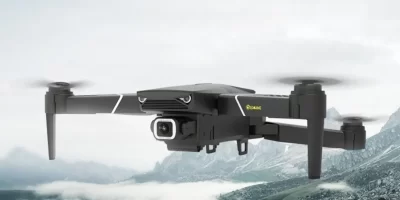
The term UAV meaning refers to Unmanned Aerial Vehicle—an aircraft that flies without an onboard human pilot.
A UAV can be operated independently using onboard sensors, computers, GPS navigation, and pre-programmed flight patterns, or it can be remotely controlled by a ground operator.
Although “drone” has become a ubiquitous consumer phrase, UAV is the more technical and professional term used in the commercial, defense, engineering, and aviation industries.
For safe, effective, and dependable operation, modern UAVs mostly rely on electric propulsion and sophisticated lithium battery systems backed by a BMS.
How Do UAVs Actually Work?
Understanding uav meaning also requires understanding the engineering behind drone flight.
UAVs function by integrating multiple systems that run concurrently:
1. Propulsion System
Lift and thrust are produced by propellers and brushless motors.
Based on flight commands, Electronic Speed Controllers (ESCs) modify motor speed in milliseconds.
2. Power System
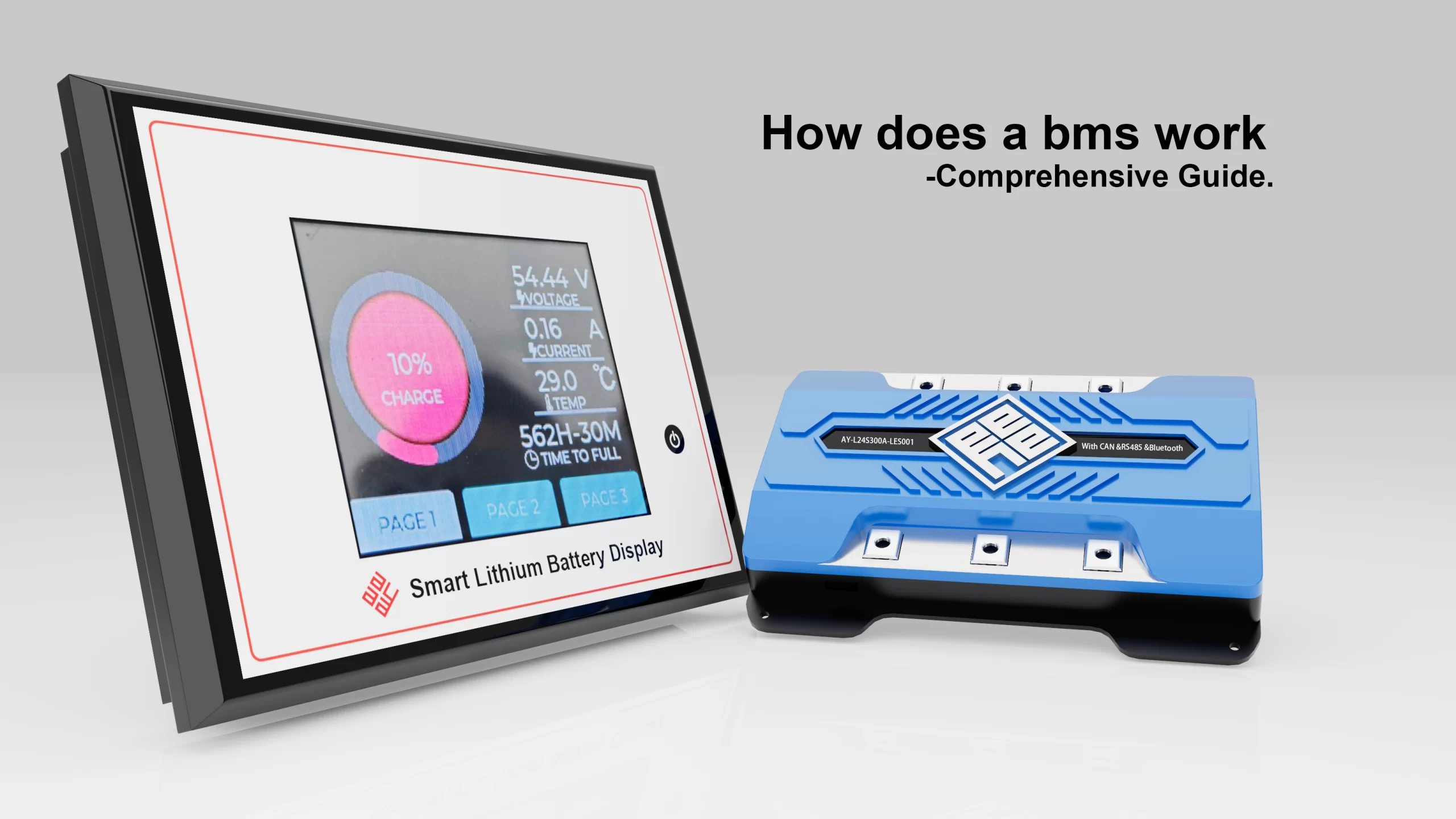
All of the electricity used by motors, sensors, and communication modules comes from lithium-ion or lithium-polymer batteries. A BMS controls:
Voltage balance
Proteção atual
Gestão de temperatura
Short-circuit and over-discharge prevention
UAV batteries could overheat, deteriorate rapidly, or fail in midair without a BMS, which could cause crashes.
3. Flight Controller
The UAV’s “brain” processes:
Gyroscope and accelerometer data
GPS signals
Pilot commands
Obstacle-avoidance sensors
Stability algorithms
It constantly modifies motor speeds to preserve orientation and balance.
The efficiency and flight capabilities of UAVs vary depending on their structure.
Exploring these types helps deepen understanding of uav meaning in aerospace engineering.
1. Multirotor UAVs (Rotary-Wing Drones)
This is the most prevalent kind and comprises octocopters, hexacopters, and quadcopters.
Vantagens
Vertical takeoff and landing (VTOL)
Excellent stability and control
Ideal for photography, inspection, and mapping
Hover capability
Disadvantages
Shorter flight time
Lower energy efficiency
High dependence on battery quality and BMS accuracy
2. Fixed-Wing UAVs
These resemble airplanes and rely on forward motion for lift.
Vantagens
Long endurance (up to hours)
Higher flight efficiency
Large coverage area
Ideal for surveying, mapping, environmental monitoring
Disadvantages
Cannot hover
Requires space for takeoff/landing
Higher pilot skill requirement
How Are UAVs Used in Commercial and Enterprise Applications?
The most accurate uav meaning today extends far beyond simple flight—it includes integration with industry workflows, IoT systems, and smart automation.
1. Aerial Photography & Cinematography
Used for:
Film production
Real estate
Advertisement
Event coverage
2. Logistics & Delivery
Companies explore UAVs for:
Last-mile delivery
Medical supply transport
Emergency equipment drops
3. Infrastructure Inspection
Used for:
Power lines
Wind turbines
Bridges
Oil & gas pipelines
Solar farms
Real-time data reduces inspection costs and improves safety.
4. IoT-Driven Enterprise Solutions
When combined with IoT platforms, UAVs can:
Send sensor data to cloud servers
Enable automated air-to-ground communication
Perform predictive maintenance
Work with AI to detect anomalies in real time
What Other Emerging Fields Use UAV Technology?
Agriculture
Precision spraying
Crop health monitoring
Soil analysis
Yield prediction
Biological and Wildlife Monitoring
Animal tracking
Habitat assessment
Illegal poaching detection
Wildfire Detection and Monitoring
fitted with sensors and thermal cameras to provide real-time mapping and identify early ignition sites.
Sports Broadcasting
Aerial broadcasting has transformed:
Racing events
Extreme sports
Outdoor competitions
What Does the Future Look Like for UAV Technology?
The next decade will redefine uav meaning through major advancements such as:
1. Advanced Battery Systems with Smarter BMS
Higher energy density
Faster charging
Longer cycle life
Real-time intelligent battery analytics
2. 5G and 6G Integration
This enables:
Ultra-low latency control
Remote teleoperation
Cloud-based AI processing
3. AI-Driven Autonomy
Fully automated missions
Self-healing networks
Intelligent obstacle prediction
4. Swarm Robotics
Coordinated multi-drone operations for:
Search and rescue
Surveying
Agriculture
5. Urban Air Mobility (UAM)
Electric air taxis and cargo drones will redefine transportation.
Understanding UAV Meaning and the Future of Drone Technology
O uav meaning goes far beyond a simple flying device—it represents an entire ecosystem of propulsion systems, intelligent electronics, advanced sensors, and, most critically, safe and efficient battery power supported by BMS technology.
Power systems and battery management play an even more crucial role as UAV adoption spreads throughout agriculture, logistics, filmmaking, inspection, and environmental science.
Ayaa Technology provides expert BMS development and manufacturing support for drone applications for businesses seeking to construct high-performance UAVs with dependable battery protection, cutting-edge communication modules, and safety-certified BMS technology.
Perguntas frequentes
Q1:What is the difference between a drone and a UAV?
A1:The primary distinction is that “UAV” (Unmanned Aerial Vehicle) is the more technical and professional term for the aircraft itself, whereas “drone” is the colloquial, everyday phrase for an unmanned aircraft.
Although the names are frequently used interchangeably in practice, “UAV” particularly refers to an aircraft, while “drone” can also apply to unmanned vehicles on land or in the water.
The aircraft, ground control station, and communication links make up the “Unmanned Aircraft System” (UAS), of which UAV is the central part.
Q2:What did UAV stand for?
A2:Unmanned aerial vehicles (UAVs) are military aircraft carrying sensors, target designators, offensive munitions, or electronic transmitters intended to interfere with or destroy enemy objectives.
They can be guided autonomously, remotely, or both.
Q3:What is the UAV used for?
A3:Aerial photography, area coverage, precision agriculture, monitoring of forest fires, rivers, the environment, weather, policing and surveillance, infrastructure inspections, smuggling, product delivery, entertainment, and drone racing are some of these.
Q4:What are the 4 types of drones?
A4:Single-rotor, multi-rotor, fixed-wing, and hybrid VTOL drones are the four primary categories of drones.
Regarding endurance, cargo capacity, and operational efficiency, each category has special benefits.
Q5:Can an UAV fly without GPS?
A5:Unmanned aerial vehicles (UAVs) can fly in coordinated swarms without using GPS, inter-drone communication, or centralized control systems thanks to a new control scheme created by Professor Dwaipayan Mukherjee and research scholar Chinmay Garanayak at the Indian Institute of Technology (IIT) Bombay.