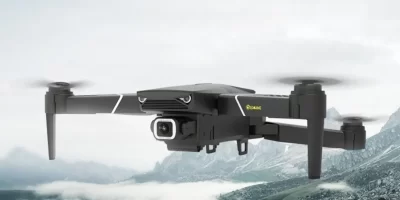
The Complete Guide to UAV and Drones: Definitions, Applications, and Technologies
2601
The Complete Guide to UAV and Drones: Definitions, Applications, and Technologies
Few phrases emerge more frequently—and are more commonly misinterpreted—than uav and drones in the rapidly developing field of aerial robotics.
Engineers, purchasers, and decision-makers must comprehend these systems’ technical definitions, distinctions, similarities, and capabilities as they grow more prevalent in commercial, industrial, and consumer markets.
Any thorough study of UAV and drones must take into account the advanced propulsion systems, energy storage, and intelligent battery management systems (BMS) that modern aerial vehicles rely significantly on to ensure safe and efficient operation.
The information provided here will help you gain a deeper understanding of this quickly developing industry, whether you are choosing an aerial platform or creating one from start.
What Are UAV and Drones?
Although the terms UAV and drones are sometimes used synonymously, they have separate origins.
Any aircraft that is operated without a human pilot on board is referred to as an unmanned aerial vehicle, or UAV.
However, the term “drone” was first used to refer to autonomous military target aircraft.
It is now a widely used, consumer-friendly word that encompasses a variety of autonomous or remotely driven flying gadgets.
“Drone” predominates in commercial, media, and consumer discourse, whereas “UAV” is more common in engineering, defense, and regulatory contexts.
Both depict flying systems that can carry out duties including surveying, inspection, entertainment, logistics, and environmental monitoring, despite the linguistic variations.
What Is the Difference Between UAV and Drones?
UAV and drones refer to comparable systems, yet there are important differences:
1. Technical vs. Consumer Terminology
UAV: Used in aerospace engineering, aviation regulation, defense, and manufacturing.
Drone: Commonly used in everyday language, marketing, filmmaking, and hobbyist communities.
2. System Scope
UAV typically refers only to the aircraft itself.
Drone often implies the entire ecosystem, including controllers, cameras, sensors, and communication modules.
3. Autonomy Level
Although both can be automated, consumer-level semi-autonomous systems with GPS, optical sensors, and collision avoidance functions are commonly referred to as “drones.”
UAVs may need specialized ground control stations, redundant sensors, and sophisticated flight software, particularly in industrial environments.
Despite these distinctions, the two names are practically interchangeable in 2025; nevertheless, UAVs typically refer to technology of a higher caliber.
What Does “Drones” Represent?
We must examine the definitions and technical ramifications of each phrase in order to comprehend UAV and drones completely.
A drone is an example of a flying gadget that could:
1. Core Meaning
Drones are aerial robots with onboard sensors and navigation systems that enable remote control, semi-autonomous flight, or complete autonomy.
2. Use Cases
Aerial filming and photography
Industrial inspection
Agriculture and crop health monitoring
Defense and tactical operations
Logistics and package delivery
Search and rescue
Environmental surveying
3. Functional Capabilities
Drones commonly support:
Real-time video transmission
GPS-based navigation
Obstacle detection
Hovering and position-hold
Object tracking
Payload transport
Return-to-home safety functions
4. Scope of Application
While professional drones may offer large payloads, longer endurance, and integration with AI-based systems, consumer drones are usually lightweight and portable.
The capacity of UAV and drones to function without an onboard pilot is their primary resemblance.
Context and perceived complexity are the main areas of difference.
What Does “UAV” Represent?
Unmanned aerial vehicles, or UAVs for short, are mostly utilized in technical and regulatory settings.
UAVs prioritize mission dependability, propulsion, aerodynamics, and structure.
1. Core Meaning
A unmanned aerial vehicle (UAV) is a type of aircraft that can be operated remotely or autonomously.
UAVs frequently handle greater payloads, longer flight periods, and more advanced communication systems than consumer drones.
What Types of Drones Exist?
We must dissect the various aerial vehicle types according to their structure and aerodynamics in order to comprehend UAV and drones.
In general, drones can be divided into three groups:
1. Fixed-Wing UAVs
Structure
Airplane-like wings
Require forward motion for lift
Typically use a single propeller or dual-prop configuration
Vantagens
Extremely long flight endurance
Energy-efficient
Can cover large distances
Ideal for mapping and surveillance
Disadvantages
Cannot hover
Requires runway or catapult for takeoff
Limited maneuverability compared to multirotors
2. Rotary-Wing Drones (Multirotors)
Structure
Use multiple rotors (quadcopters, hexacopters, octocopters)
Hover-capable
Most common type today
Vantagens
Precise positioning
Vertical takeoff and landing (VTOL)
Compact design
Superb maneuverability
Disadvantages
Shorter flight time than fixed-wing
Less efficient at long-distance missions
3. Powered-Lift Drones (Hybrid VTOL)
Structure
Blend fixed-wing and multirotor mechanisms
Transition between hovering and forward flight
Vantagens
Combine endurance with vertical lift
Suitable for advanced industrial tasks
Disadvantages
Higher mechanical complexity
Higher manufacturing cost
What Factors Affect UAV and Drone Flight Endurance?
One of the most important components of UAV and drones performance is flight endurance.
The overall flight duration is influenced by several factors:
1. Battery Capacity and Chemistry
Drones can operate differently thanks to Li-ion, LiPo, and semi-solid-state batteries.
For optimal efficiency, a top-notch BMS guarantees balanced cells, heat protection, and steady discharge.
2. Motor Efficiency
While low-KV motors are utilized for heavy-lift platforms, motors with higher KV ratings drain batteries more quickly.
3. Weight
Every gram counts. Flight duration is directly influenced by payload, frame material, and battery size.
4. Environmental Conditions
Temperature, humidity, and wind significantly influence performance.
5. Flight Behavior
Usable capacity is decreased by quick altitude changes or aggressive acceleration.
By shielding cells from overdischarge, overheating, and imbalance, a dependable BMS increases battery longevity and flying time.
What Is the Market Outlook for UAV and Drones?
By 2030, the global market for uav and drones is expected to surpass USD 75 billion. Growth is fueled by:
1. Agriculture Automation
Precision agriculture relies on UAVs for crop surveying and spraying.
2. Logistics and Delivery
Companies like Amazon and UPS are testing large-scale drone delivery networks.
3. Infrastructure Inspection
Bridges, pipelines, and solar farms increasingly rely on drone-based automated inspections.
4. Smart Cities and IoT Integration
UAVs are being incorporated into interconnected ecosystems for infrastructure diagnostics, public safety, and traffic monitoring.
5. Defense and Security
High-endurance platforms and intelligent UAV swarms offer strategic benefits in real time.
UAV endurance is predicted to increase by 30% to 60% over the next ten years as battery technology develops and solid-state and semi-solid cell chemistries become more widely used.
How BMS Enhances the Safety and Performance of UAV and Drones
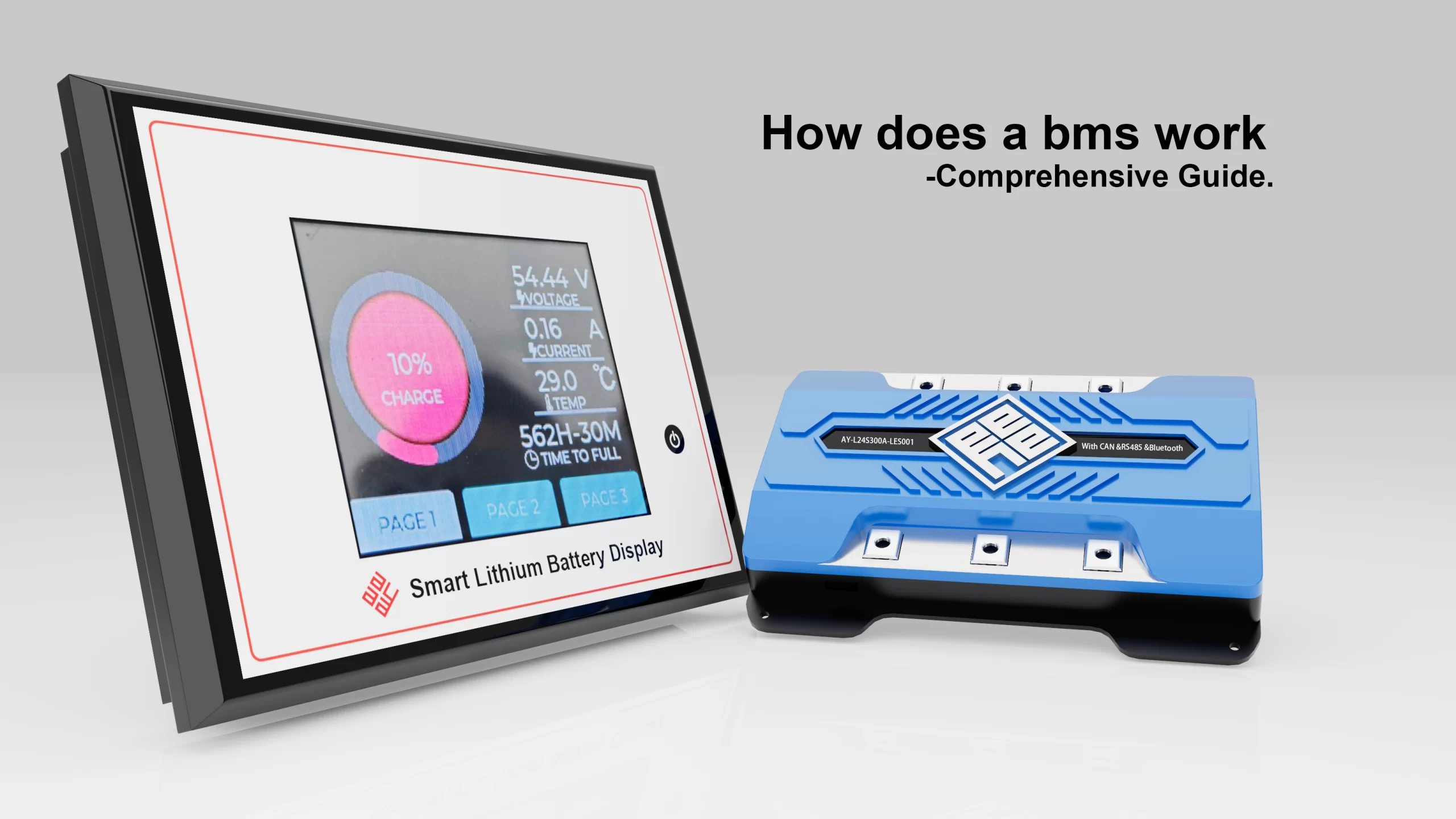
Without recognizing the crucial function of the Battery Management System, no discussion of UAV and drones would be complete.
A high-quality BMS provides:
1. Cell Balancing
Ensures every cell discharges and charges uniformly for maximum efficiency.
2. Thermal Protection
Prevents overheating during high-current discharge.
3. Short-Circuit and Overcurrent Protection
Avoids catastrophic failures that could cause mid-air loss of control.
4. Voltage and Current Monitoring
Supports accurate real-time telemetry to ground control systems.
5. Extended Battery Lifespan
minimizes deterioration and guarantees consistent performance over hundreds of cycles.
Without a strong BMS, modern professional drones cannot function dependably.
A Comprehensive View of UAV and Drones Technologies in the Modern Era
Aerodynamics, electronics, engineering, and sophisticated battery systems are all part of the realm of uav and drones.
Understanding these systems is crucial for planning industrial deployment or choosing the best airframe for your project, from definitions and structural variations to types, applications, flight endurance, and market trends.
Choosing dependable parts—particularly high-performance BMS-equipped batteries—becomes increasingly important as UAV technology develops and drones are incorporated into commercial ecosystems.
Businesses like Ayaa Technology offer cutting-edge BMS solutions to enable safer and more durable drone operations across global sectors.
Perguntas frequentes
Q1:Are UAV and drone the same?
A1:Although the phrases have varied levels of formality, a UAV is a drone.
The precise, official term for any aircraft without a human pilot is “UAV” (Unmanned Aerial Vehicle).
But the media and general public use the term “drone” more frequently.
Q2:What does UAV stand for?
A2:Unmanned aerial vehicles, or UAVs for short, are aircraft that fly without a human pilot.
These aircraft are also referred to as “drones” and can be operated remotely or autonomously.
Q3:What are the four types of drones?
A3:Each of the four primary categories of drones—single-rotor, multi-rotor, fixed-wing, and fixed-wing hybrid VTOL drones—has a distinct structure and set of flight capabilities.
Fixed-wing drones resemble airplanes, single-rotor drones resemble helicopters, multi-rotor drones utilize multiple propellers, and hybrid VTOLs combine aspects of both fixed-wing and multi-rotor kinds.
Q4:Why is an UAV called a drone?
A4:Drones were male honeybees before the term “drone” was used to refer to UAVs.
The Old English word dran or draen is where the word originates.
It comes from the proto-German word dran, just like many other English terms.
UAVs have been referred to as “drones” since at least 1946.
Q5:How high can a UAV fly?
A5:The majority of US drones can fly about 400 feet above the earth, whereas high-altitude military or research drones can reach heights of over 60,000 feet.
Regulations, the drone’s technological capabilities, and ambient conditions all affect the maximum altitude.