




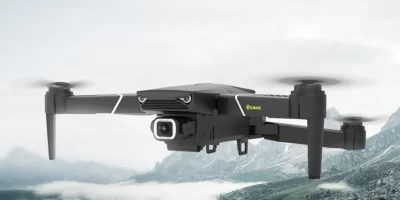




A UAV (Unmanned Aerial Vehicle) is an aircraft engineered to fly without an onboard human pilot, operating autonomously or via remote ground control. In modern engineering, the UAV acronym refers strictly to the airborne platform within a broader Unmanned Aerial System (UAS).
While colloquially called a “drone,” understanding what a UAV is requires looking at the flying node that executes commands from a Ground Control Station (GCS). Industrial electric UAVs rely on high-energy-density lithium batteries paired with smart BMS hardware to handle current spikes and prevent thermal runaway.

UAV Meaning in Modern Engineering: Core Technical Definition
Mechanical Boundaries and Avionics Stack
What is the official UAV definition? An aircraft qualifies as a UAV when it generates aerodynamic lift without an onboard human operator. It must maintain total flight stability. Three physical traits mark this class: self-sustained power, onboard flight guidance, and multi-mission reusability.
The primary avionics stack coordinates critical hardware. It links the flight controller, Inertial Measurement Unit (IMU), Electronic Speed Controllers (ESCs), and RTK-enabled GPS modules. These modules process telemetry hundreds of times per second. Stable flight depends on it.
Autonomous Control vs. Remote Operations
When evaluating what UAVs mean for flight control, operations fall into two main modes. Autonomous UAVs run on onboard microprocessors executing predefined routines. Manual platforms rely on real-time pilot inputs over radio frequencies.
Beyond Visual Line of Sight (BVLOS) missions use encrypted cellular or satellite links. In both architectures, the flight controller communicates via low-latency protocols like Mavlink. Fast transmission keeps the aircraft safe.
Terminology Breakdown: UAV vs. Drone vs. UAS
UAV (The Airborne Platform)
Understanding what a UAV is starts with isolating the physical aircraft from ground stations. It includes the airframe, motors, flight electronics, and power pack. Engineers evaluate the UAV by payload capacity, aerodynamic drag, and watt-hour consumption.
Drone vs. UAVs Meaning in Commercial Industry
What are UAVs meaning compared to consumer drones? “Drone” is an informal term for any uncrewed vehicle on land, sea, or air. It lacks regulatory precision. Aerospace specifications use “UAV” to define strict airworthiness and structural standards.
UAS and UAV Support Meaning
A UAS represents the complete system infrastructure. Beyond the aircraft, UAV support meaning covers the full operational architecture. This includes Ground Control Stations, data links, launching hardware, and ground power units. Sourcing teams review the whole UAS to guarantee seamless deployment.
Industrial UAV Classifications and Propulsion Architecture
Airframe Selection: Fixed-Wing, Multi-Rotor, and Hybrid VTOL
Choosing an airframe forces clear trade-offs. Multi-rotors offer precise hovering but drain power fast. Fixed-wing designs yield high aerodynamic efficiency for long missions, but they require launch runways. Hybrid VTOLs combine vertical takeoff with winged cruise.
The table below breaks down key operational metrics across these three main airframe types:
| Metric | Multi-Rotor | Fixed-Wing | Hybrid VTOL |
|---|---|---|---|
| Primary Energy Drain | Continuous high thrust | Forward flight cruise | Dual-peak hover & transition |
| Typical Endurance | 20 – 60 minutes | 2 – 6+ hours | 1 – 3 hours |
| Payload Capacity | High (gimbals, LIDAR) | Moderate (internal bays) | Moderate to High |
| Power Discharge Profile | Constant high baseline | Steady cruise, low spikes | Extreme multi-peak spikes |

These aerodynamic characteristics dictate the battery discharge load. Heavy multi-rotors demand continuous cooling. VTOLs require massive surge current during vertical ascent.
Power Trade-Offs: Pure Electric vs. Fuel Systems
Electric motors provide instant torque, zero direct emissions, and low noise profiles. Small and medium industrial platforms rely almost exclusively on lithium packs.
However, heavy payloads test the limits of battery energy density. High-capacity UAVs require low internal resistance (IR) cells. These cells must sustain continuous discharge rates up to 30C without dropping terminal voltage.
Need Industrial-Grade Battery Hardware for Your UAV Platform?
Explore Product CatalogCritical Battery and BMS Engineering for UAV Platforms
Stopping Voltage Sag and Thermal Runaway
Sudden throttle bursts draw massive current from the power pack. High cell resistance causes immediate voltage sag. This drops terminal voltage, triggering false low-voltage cutoffs that crash aircraft.

Engineering Note:
Voltage sag ruins missions. Never set low-voltage warnings using open-circuit voltage (Voc). Always calculate load voltage using peak current (Ipeak) and internal pack resistance (IRpack):
Vload = Voc – (Ipeak × IRpack)
Heavy current draw generates severe internal heat. Left unmanaged, it causes thermal runaway and degrades overall cycle life.
AYAA TECH solves this thermal burden at the hardware level. We space out power MOSFETs and current-sampling resistors across the board. We combine this layout with high-grade thermally conductive silicone sheets and precision-machined aluminum or copper heat sinks. This design keeps heat uniform across all custom PCM, BMS, and complete Battery Pack assemblies.
Smart BMS Integration and Telemetry Accuracy
Analog voltage lines pick up motor noise. Industrial platforms require digital communication. AYAA TECH SmartBMS modules integrate native CANbus (supporting DroneCAN/UAVCAN) and SMBus interfaces.
AYAA TECH battery systems feature plug-and-play compatibility with open-source flight controllers like PX4 and ArduPilot. Integration is effortless. Furthermore, standard battery suppliers suffer from State-of-Charge (SoC) errors around 5%. AYAA TECH uses precision Coulomb-counting algorithms to keep SoC error ≤ 3%. This gives flight computers accurate battery status for safe Return-to-Launch decisions.
Environmental Protection and Transport Compliance
Field operations expose gear to rain, dust, and salt spray. Moisture causes short circuits. AYAA TECH builds battery pack enclosures sealed up to IP67.
Unlike stationary grid-tied storage systems built for peak shaving, flight batteries demand lightweight ruggedness. Shipping lithium power internationally can be a headache for procurement managers. AYAA TECH certifies every battery pack configuration under UN 38.3 standards. Our packs pass altitude, thermal, vibration, and short-circuit testing. We supply full Material Safety Data Sheets (MSDS) to clear customs fast.
Facing Complex Power System Integration Challenges?
Consult a Battery ArchitectTechnical FAQ: UAV Meaning and Power Systems
What does UAV stand for, and what is its basic definition?
O UAV acronym stands for Unmanned Aerial Vehicle. The standard UAV definition refers to any powered aircraft designed to navigate without an onboard human pilot, using autonomous computers or ground-based remote control.
What is the main difference between a UAV and a UAS?
A UAV is the single airborne platform. A UAS (Unmanned Aerial System) is the complete system. It includes the UAV, Ground Control Station, wireless data links, sensors, and ground charging hubs.
Why is CANbus telemetry necessary for UAV batteries?
Analog voltage lines pick up noise from high-current motor lines. CANbus telemetry sends digital data packets directly to the flight controller. It delivers clean readings for cell voltages, pack temperature, and SoC metrics.
How do low operating temperatures impact UAV battery performance?
Cold air increases internal cell resistance (IR). This causes terminal voltage sag, limits peak discharge, and lowers overall capacity. Smart BMS hardware uses self-heating elements to warm cells before takeoff.
What certifications are mandatory for shipping commercial UAV battery packs?
International transport requires UN 38.3 certification and an active Material Safety Data Sheet (MSDS). The UN 38.3 standard subjects battery packs to altitude, impact, vibration, thermal, and short-circuit tests.
How does battery C-rate affect maximum takeoff weight (MTOW)?
The C-rate defines maximum safe discharge current. Flying at MTOW demands massive current during takeoff and hover. High C-rate cells prevent voltage drop, keeping motors powered under full load.
Accelerate Your UAV Development Program
Contact Our Engineering TeamTechnical References
- FAA (Federal Aviation Administration): 14 CFR Part 107 – Small Unmanned Aircraft Systems Regulations.
- ISO Standard: ISO/TC 20/SC 16 – Unmanned Aircraft Systems Standardization Framework.
- EASA (European Union Aviation Safety Agency): Easy Access Rules for Unmanned Aircraft Systems (Commission Implementing Regulation (EU) 2019/947).
- United Nations Manual of Tests and Criteria: Section 38.3 – Transport of Lithium Metal and Lithium Ion Batteries.
- IEEE Standards Association: IEEE 1625 / IEEE 1725 – Standards for Rechargeable Batteries in Mobile and Robotic Computing Devices.
- DroneCAN Protocol Specification: Open Digital Communication Bus Standard for Avionics and Smart Battery Subsystems.