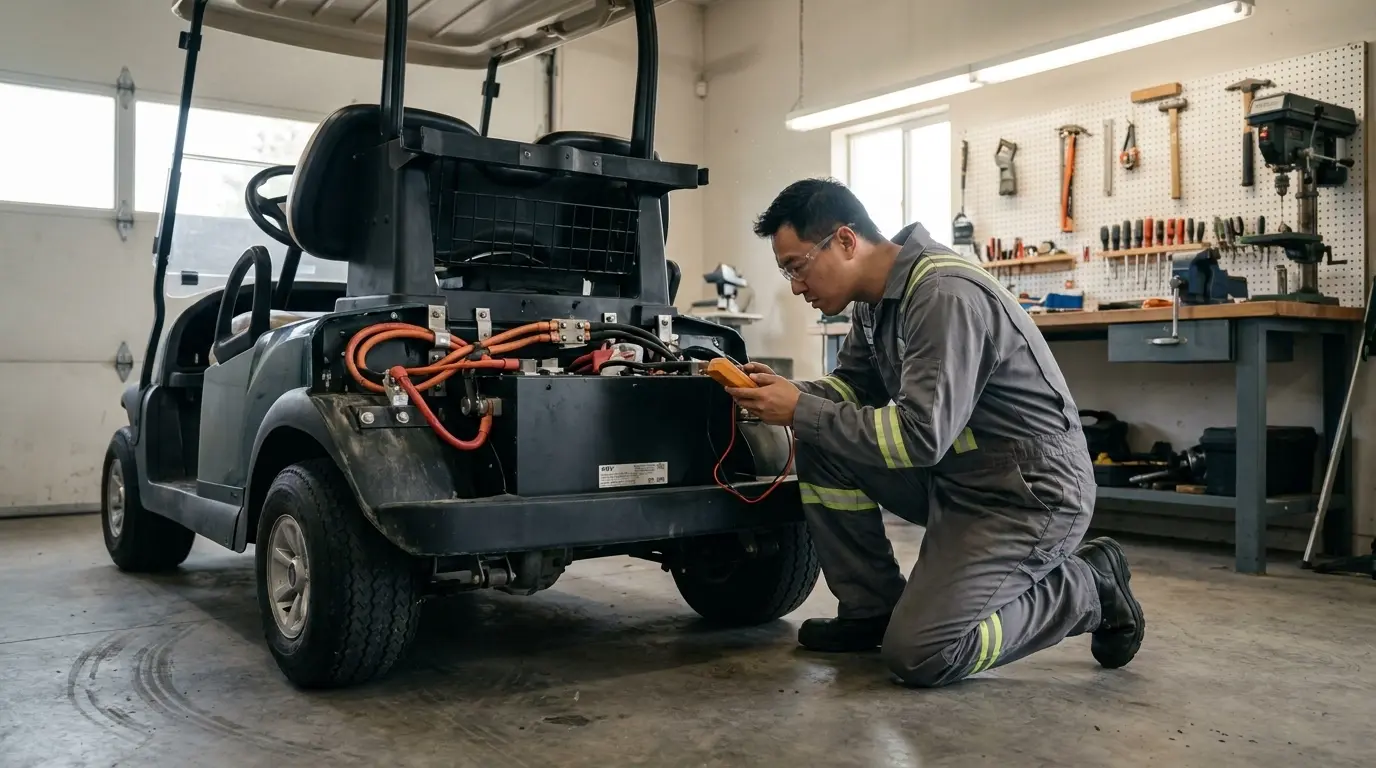
Deconstructing BMS Meaning Across Core Hardware Layers
Analog Front End (AFE) Voltage, Current, and Thermal Sensing
The Analog Front End converts physical battery parameters into digital data. High-precision analog-to-digital converters (ADCs) monitor every series cell voltage. Precision matters here. Sampling accuracy must stay between ±2 mV and ±5 mV. Low-side shunt resistors track continuous system current. For high-voltage packs, Hall-effect sensors deliver isolated readings. Multi-point NTC thermistors scan for thermal spikes across cell terminals and busbars.
Engineering Note: Thermal flaws ruin sensing accuracy. AYAA TECH engineers balance heat-generating components—such as power MOSFETs and sensing shunts—evenly across the circuit board. We apply high-grade thermal silicone pads, conductive gels, and thick copper planes. When handling heavy continuous current, we integrate aluminum or copper heat sinks to keep ICs cool.
Microcontroller Unit (MCU) and Embedded Firmware Logic
The MCU ingests raw ADC data from the AFE. It runs safety loops and executes state algorithms in real time. An embedded Real-Time Operating System (RTOS) processes limits within 10 milliseconds. Speed is critical. If cell voltage or temperature spikes past safe bounds, the firmware acts instantly. It commands gate drivers to trip power switches.
Power Switching Topologies: High-Side MOSFETs vs. DC Contactors
Power switches isolate the battery pack during electrical faults. Systems under 60V use high-side N-channel MOSFET arrays. They switch fast. They also keep gate-drive circuits simple. High-voltage energy storage systems (≥400V) require heavy-duty DC contactors and pre-charge paths. Pre-charge resistors control inrush currents into capacitive inverter loads, preventing contact welding.
Core Functions That Define What a BMS Does in Energy Storage
Multi-Tier Thermal and Electrical Protection Loops
Layered protection pairs hardware comparators with software checks. Hardware comparators handle short circuits in under 200 microseconds. Software manages thermal limits, under-voltage cutoffs, and cell drift.
Engineering Note: Sub-zero charging destroys cells. Charging below 0°C forces metallic lithium onto graphite anodes instead of intercalating safely. Microscopic lithium dendrites form quickly. They pierce separators and cause violent internal shorts. An industrial unit must enforce a total charging lockout when temperature sensors hit 0°C or lower.
State of Charge (SOC) and State of Health (SOH) Precision
State of Charge (SOC) shows remaining runtime. State of Health (SOH) tracks capacity loss over time. Basic Coulomb counting sums current over time, but sensor drift causes error rates of 5% to 10%. Advanced firmware uses Extended Kalman Filtering (EKF). EKF pairs current integration with electrochemical battery models and real-time open-circuit voltage curves.
Most commercial units settle for a 5% error margin. AYAA TECH algorithm firmware holds SOC calculation error to ≤ 3%, even under dynamic discharge profiles.
Passive vs. Active Cell Balancing Methodologies
Cell balancing corrects capacity variations between series cells. Manufacturing variances and heat differences cause these shifts. Passive balancing bleeds extra energy off high cells through resistor networks. It discards excess energy as heat at low currents (30 mA – 150 mA). Active balancing uses inductive or capacitive charge pumps to shift energy from strong cells to weak cells. It delivers 1 A to 5 A of balancing current for large battery packs (>100 Ah).
Need Off-the-Shelf or Custom BMS Boards for Your Build?
Explore AYAA TECH Product Catalog
Critical BMS Selection Metrics for Engineers and Procurement Teams
Industrial Communication Protocols and API Openness
System controllers and grid inverters need reliable digital telemetry. CANbus (using CANopen or SAE J1939) is the top choice for robotics, heavy machinery, and defense gear due to strong noise immunity. RS485 with Modbus RTU leads in commercial solar storage and peak shaving setups.
For drone engineers, firmware integration can be painful. AYAA TECH Smart BMS boards natively support custom CAN dictionary files. They work seamlessly with major open-source flight controllers like ArduPilot and PX4, saving engineers weeks of driver tuning.
Sleep Mode Quiescent Current and Long-Term Storage Safeguards
High quiescent current ruins stored batteries. A standard circuit drawing hundreds of microamps will drain cells to dead levels over several months. Advanced hardware uses multi-stage sleep modes. Deep sleep drops power consumption below 10 μA. This keeps stored equipment safe for up to 18 months.
Safety Certifications and Regulatory Compliance Checklist
Procurement leads must verify safety certifications to clear customs and eliminate liability. Evaluating compliance requires checking regional standards against factory test reports.
The following table breaks down essential international standards:
| Certification Standard |
Primary Application Scope |
Key Technical Testing Focus |
| UL 1973 |
Stationary & Auxiliary Energy Storage |
Structural integrity, thermal runaway containment, functional safety evaluation. |
| IEC 62619 |
Industrial Lithium Batteries |
Class B/C embedded software evaluation, single fault tolerance, fault insertion testing. |
| UN 38.3 |
Global Air/Sea Transport Safety |
Altitude simulation, thermal shock, vibration, impact, and external short-circuit testing. |
Checking these certifications before design freeze prevents supply chain delays. AYAA TECH supplies pre-certified PCM and Smart BMS hardware to keep global shipments moving smoothly.
Facing Complex Power Integration or Custom Form-Factor Challenges?
Consult an AYAA TECH Battery Architect
Frequently Asked Questions
What does BMS stand for, and what is BMS in battery systems?
BMS stands for Battery Management System. In battery technology, what is BMS refers to the master electronic board that monitors cell voltage, manages temperature, balances capacity, and prevents electrical damage across rechargeable lithium packs.
How does an EKF algorithm improve SOC precision over Coulomb Counting?
Coulomb counting integrates measured current over time (SOC(t) = SOC0 – (1 / Cn) ∫ I dt). Sensor bias and current noise cause measurement errors that accumulate over long runs. Extended Kalman Filtering (EKF) combines current integration with an electrochemical battery model and real-time open-circuit voltage curves. By comparing predicted voltage against actual voltage, EKF corrects calculation drift, holding accuracy within ≤ 3%.
When should engineers choose active balancing over passive balancing?
Passive balancing suits small packs (<30 Ah) where cell imbalance is minor and heat dissipation (30 mA – 150 mA) is manageable. Active balancing is necessary for large systems (>100 Ah) like stationary grid storage or heavy industrial vehicles. Active systems shift energy between cells using capacitive or inductive charge transfers at up to 5 A, cutting heat loss and maximizing usable capacity.
Why is low-temperature charge protection non-negotiable?
Charging lithium cells below 0°C slows down ion movement into graphite anodes. Lithium metal deposits onto anode surfaces instead, creating lithium plating. This causes rapid capacity drops and forms needle-like dendrites that pierce separators. Internal shorts follow. A reliable control system must enforce a hard charging cutoff at ≤ 0°C.
What is the target short-circuit protection speed for an industrial unit?
Industrial hardware requires hardware-level short-circuit detection in ≤ 200 μs. Software loops are too slow. They cannot stop current spikes before MOSFETs blow or busbars melt. Hardware protection loops bypass the MCU, using high-speed analog comparators to trip control switches instantly.
How does a system handle parallel pack circulating currents?
Connecting packs with different charge states in parallel creates voltage differences (ΔV). This drives massive circulating currents between packs. Advanced units use active current-limiting circuits—such as pre-charge resistors, bi-directional DC-DC controllers, or managed MOSFET switches—to limit cross-charging current until pack voltages equalize (≤ 0.5V).
Ready to Prototype Your Custom Smart Battery System?
Contact AYAA TECH Engineering Team
References
- IEEE Std 2686-2022: IEEE Recommended Practice for Battery Management Systems in Energy Storage Systems.
- UL 1973: Standard for Batteries for Use in Stationary, Vehicle Auxiliary Power and Light Electric Rail (LER) Applications.
- IEC 62619:2022: Secondary cells and batteries containing alkaline or other non-acid electrolytes – Safety requirements for secondary lithium cells and batteries, for use in industrial applications.
- UN Manual of Tests and Criteria, Section 38.3: Transport of Lithium Metal and Lithium Ion Batteries.
- ISO 26262-10: Road vehicles — Functional safety — Part 10: Guidelines on ISO 26262 (Applicable for automotive BMS functional safety).