- Industries

Home Backup & Garden BMS
View More >Electric Forklift BMS
View More >Golf Cart BMS
View More >Electric Two-wheeler BMS
View More >Aviation & UAV BMS
View More >BMS For Power Tools
View More >Medical Equipment BMS
View More >








Home About Us EVENTS & NEWS Top 5 Battery Management System Li-ion Brands Comparison: Choosing the Right Li-ion BMS for You
It is impossible to overestimate the importance of the battery management system li-ion given the ongoing spike in demand for high-performance lithium-ion (Li-ion) batteries across industries like DIY power solutions, electric vehicles (EVs), maritime systems, and renewable energy storage. The brains behind every lithium-ion battery pack are a high-quality BMS, which is in charge of guaranteeing longevity, safety, and efficiency. Without it, even the most sophisticated Li-ion cells may fail to operate as promised, decay rapidly, or present safety risks.
This article offers a thorough explanation of the importance of a dependable Li-ion BMS, the fundamental characteristics of Li-ion batteries, the top 5 BMS companies for 2025, helpful installation and troubleshooting guidance, and the most recent developments influencing battery management technology. Of these, Ayaa Smart BMS is notable for being a pioneer in providing scalability, innovation, and strong safety features.

Li-ion batteries are praised for their reliable power delivery, lightweight construction, and high energy density. They are susceptible to temperature changes, cell imbalances, overcharging, and overdischarging, though. The battery management system Li-ion is crucial in this situation.
A BMS ensures:
Safety – Prevents thermal runaway, fires, and explosions by monitoring voltage, current, and temperature.
Longevity – Extends battery lifespan by balancing cells and avoiding conditions that degrade chemistry.
Performance – Optimizes charge/discharge cycles to deliver consistent power output.
Efficiency – Reduces energy waste and ensures each cell contributes evenly.
To put it simply, a Li-ion battery without a BMS is risky for everyday usage and prone to failure, much like a car without an engine control unit (ECU).
Understanding the characteristics of Li-ion cells is useful in order to recognize the significance of a battery management system Li-ion:
High Energy Density – Li-ion batteries store more power per unit weight, making them ideal for portable and mobile applications.
Voltage Range – Nominal voltage typically sits around 3.6–3.7V per cell, with maximum charging voltage around 4.2V.
Sensitivity to Conditions – Li-ion cells must stay within narrow operating windows for voltage, current, and temperature.
Cycle Life – With proper BMS protection, Li-ion batteries can deliver thousands of cycles.
Cells may wander in charge level without adequate monitoring, which could result in decreased efficiency or even catastrophic failures.
A few brands continuously stand out in the congested Li-ion BMS industry. The top 5 battery management system Li-ion brands for 2025 are contrasted below:
| Brand | Voltage Range | Max Current | Bluetooth/App | Smart Features | Applications |
|---|---|---|---|---|---|
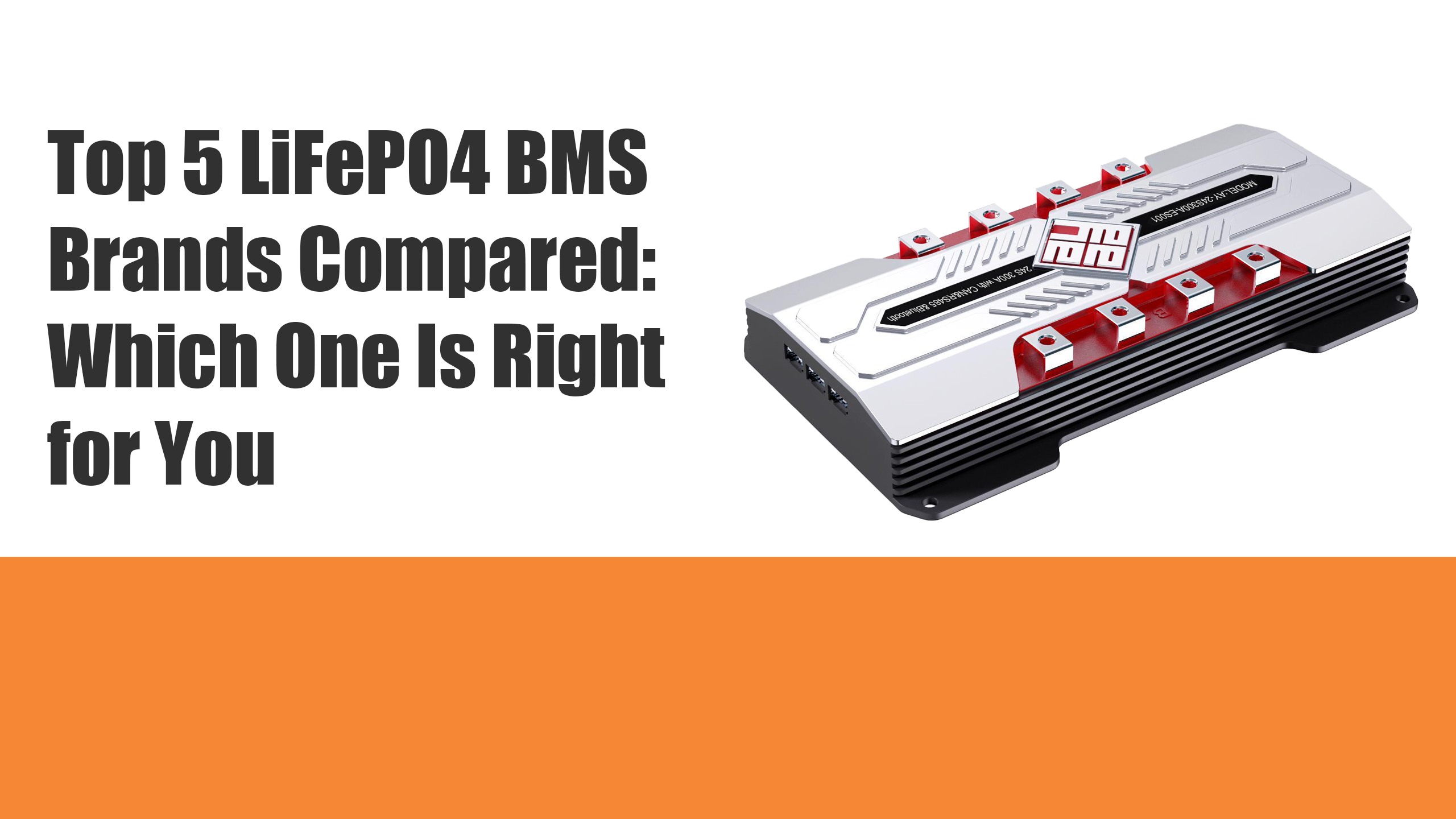
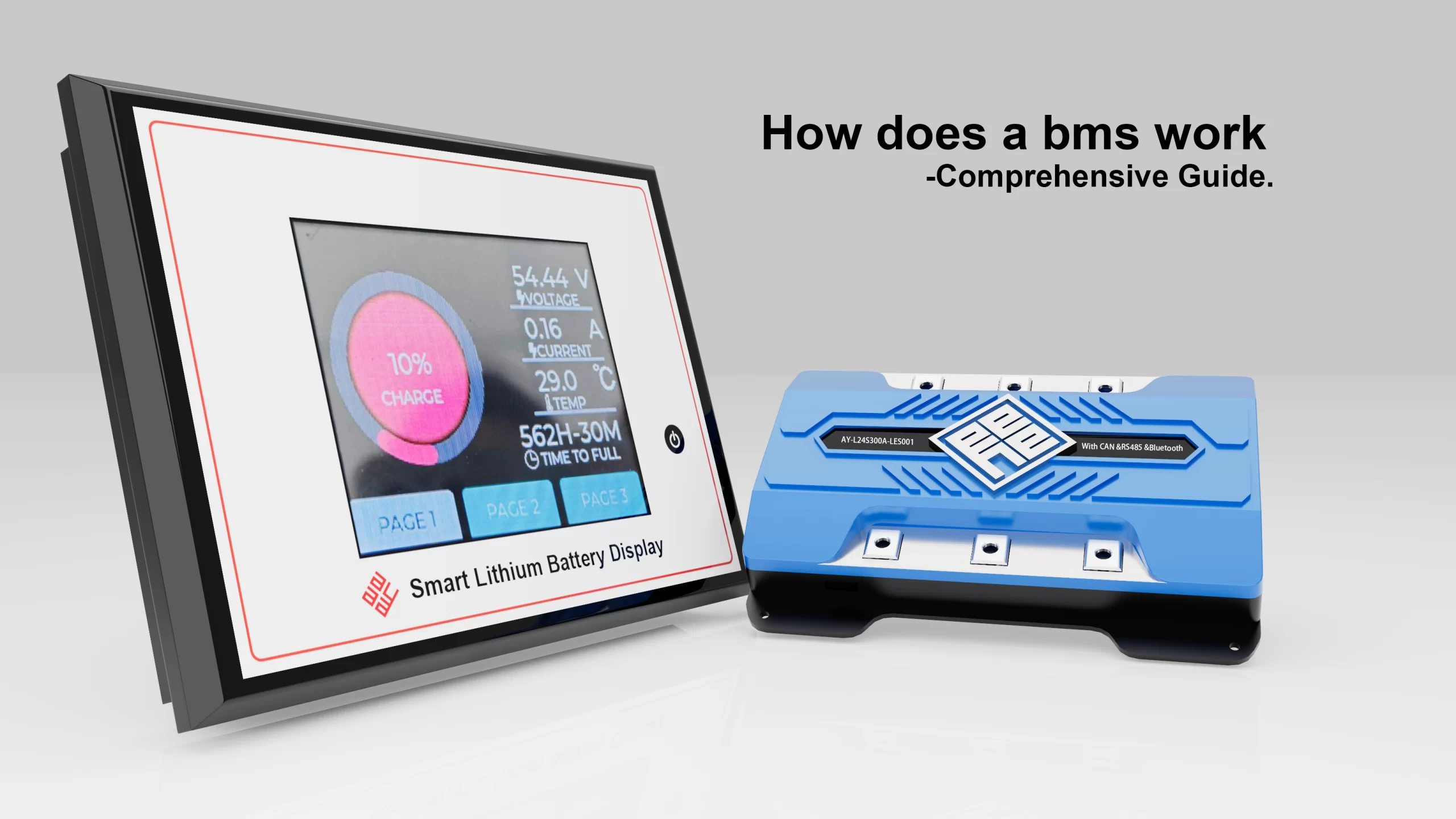
| Ayaa Smart BMS ⭐ | 1S–35S (wide range) | Up to 320A | Yes | CAN, SMBUS, Bluetooth, advanced balancing | EVs, energy storage, robotics, industrial use |
| Daly Smart BMS | 3S–20S | Up to 150A | Limited | Basic protection, optional Bluetooth | E-bikes, scooters, light power storage |
| JBD/Overkill | 3S–24S | Up to 200A | Yes | Customizable parameters, Bluetooth | Solar, DIY packs, small EVs |
| ANT BMS | 4S–32S | Up to 250A | Yes | High-current support, flexible designs | Electric cars, motorcycles, heavy-duty storage |
| Seplos Smart BMS | 8S–16S | Up to 150A | Yes | Compact, integration with packs | Residential energy storage, DIY applications |
Key Takeaway: Ayaa Smart BMS stands out because to its improved communication protocols, better current capacity, and wider voltage range, even if all five vendors provide dependable solutions. Because of its adaptability, it’s a great option for consumer-grade and industrial energy solutions.
After selecting the appropriate battery management system Li-ion, safe functioning is ensured by proper configuration:
Overcharge Protection Voltage – Typically set around 4.2V per cell.
Over-discharge Cutoff Voltage – Around 2.5–2.7V per cell to prevent deep discharge.
Balancing Threshold – Ensure cells remain within ±0.01–0.05V.
Temperature Cutoff – Protect against overheating, usually around 60°C.
Discharge Protection – Prevents overcurrent damage and ensures stability during high loads.
When your BMS is configured correctly, it functions inside the safe window, safeguarding your equipment and battery.
Just as crucial as selecting the appropriate BMS is proper installation. Here is a step-by-step, safe procedure:
Shut Down All Battery Inputs – Begin installation with all power sources disconnected.
Identify Terminals – Locate B- (battery negative) and P- (power negative) terminals.
Connect Balance Leads – Attach each cell’s balancing wire to the BMS carefully in sequence.
Attach Temperature Sensors – Secure sensors to the battery pack body for real-time monitoring.
Include Fuses or Breakers – Protect circuits from overloads and accidental shorts.
Power On and Verify – Activate the system and check readings via the app or BMS display.
Safety Tips:
Always avoid short circuiting terminals.
Make that the wiring gauge corresponds to the current ratings.
To avoid overheating, place the BMS in an area with ventilation.

Sometimes problems might arise with even the greatest battery management system Li-ion. Here’s how to solve them:
Bluetooth Not Connecting – Reset the app or ensure the device is within range.
Battery Imbalance – Trigger manual balancing or increase balance current.
Over-temperature Warnings – Improve cooling or lower discharge rate.
No Output Voltage – Check connections and fuses.
Firmware Bugs – Update software through the app or manufacturer’s tools.
Li-ion BMS is essential in various industries due to its adaptability:
Solar Energy Storage – Ensures batteries cycle efficiently during daily charging/discharging.
Electric Vehicles (EVs) – Provides safety and long-range reliability.
Marine and Boating Systems – Manages harsh temperature and vibration environments.
DIY Off-grid Projects – Offers hobbyists a reliable and customizable way to manage power.
Growing need for smarter, more connected solutions is seen in the development of the battery management system Li-ion market:
IoT Integration – Cloud-based monitoring for remote diagnostics.
Higher Current Ratings – To support fast charging and powerful EVs.
AI-driven Predictive Maintenance – BMS that predicts failures before they occur.
Modular and Scalable Designs – Allowing expansion as power needs grow.
Ayaa Smart BMS excels in this situation as a proactive solution. It is in a strong position to steer the industry into the upcoming ten years because to its support for high-current applications, CANBUS connectivity, and interaction with both industrial and consumer platforms.
Q:What is the Battery Management System for lithium-ion batteries?
A:A lithium-ion battery system requires a battery management system, or BMS. This gadget controls each battery cell in real time, connects with other devices, calculates the state of charge, measures voltage and temperature, and more.
Q:Is BMS necessary for a lithium-ion battery?
A:It is an essential part of modern battery technology, particularly when it comes to lithium-ion battery applications. Monitoring the temperature, voltage, state of health (SOH), and state of charge (SOC) of every cell in a battery pack is one of the many responsibilities of the BMS.
Q:How do you reset the BMS on a Li ion battery?
A:This entails draining the battery completely and then fully charging it again. Occasionally, this procedure might reset the BMS and return it to optimal operation. Another choice is to see if there are any software patches or firmware updates available for your particular BMS model.
Q:Does a BMS stop charging when full?
A:For instance, a BMS may ask that the charging current be gradually reduced as it approaches the high voltage limit, or it may ask that the charging current be stopped completely if the limit is reached.
Q:Does BMS prevent overcharging?
A:Indeed, the purpose of a battery management system (BMS) is to stop batteries from becoming overcharged. It accomplishes this by keeping an eye on the voltage of each battery cell and physically cutting the charging circuit or sending a signal to the charger to stop when a cell reaches its maximum safe voltage. This prolongs the battery’s life and guards against damage.
Battery management system Li-ion is the foundation of long-lasting, effective, and safe lithium-ion energy systems. The correct BMS turns a typical battery pack into a dependable power system by preventing overcharge and facilitating remote monitoring.
Ayaa Smart BMS stands out among the top five brands in 2025 due to its unparalleled scalability, communication possibilities, and strong safety measures. Ayaa offers the dependability and creativity you can rely on whether you’re creating an industrial storage system, upgrading an EV, or developing a solar power bank.
Selecting Ayaa Smart BMS is the best course of action going forward for anyone looking to optimize battery performance while maintaining safety and longevity.
Contact Us