- Industries

Home Backup & Garden BMS
View More >Electric Forklift BMS
View More >Golf Cart BMS
View More >Electric Two-wheeler BMS
View More >Aviation & UAV BMS
View More >BMS For Power Tools
View More >Medical Equipment BMS
View More >
Why a 37V 1800mAh Battery Drone Is Essential for Modern UAV Demands Growing demand in aerial photography, surveillance, mapping, agriculture, industrial inspection, and logistics is propelling the unmanned aerial vehicle (UAV) industry’s rapid evolution. Stable, lightweight, and effective power systems are more important than ever as drone applications grow more specialized and performance-driven. The 37V 1800mAh battery drone configuration, a small but potent energy solution made to balance weight efficiency, flying duration, and voltage stability, lies at the heart of this innovation. However, performance is not guaranteed by raw parameters alone. Safety, dependability, and lifecycle value are ultimately determined by the integration of an intelligent battery management system (BMS). Why Is the UAV Industry Demanding More Advanced Battery Solutions? Modern drones are no longer simple recreational devices. Today’s UAVs must: Carry high-resolution cameras and sensors Perform longer missions Operate in varying environmental conditions Deliver consistent power under dynamic loads Maintain strict safety standards Stable voltage delivery is necessary for larger payloads and more sophisticated onboard electronics. The required output for mid-to-high-performance systems is provided by a 37V 1800mAh battery drone arrangement, which ... - AYAA TECHNOLOGY CO., LTD

Home About Us EVENTS & NEWS Why a 37V 1800mAh Battery Drone Is Essential for Modern UAV Demands
Growing demand in aerial photography, surveillance, mapping, agriculture, industrial inspection, and logistics is propelling the unmanned aerial vehicle (UAV) industry’s rapid evolution.
Stable, lightweight, and effective power systems are more important than ever as drone applications grow more specialized and performance-driven.
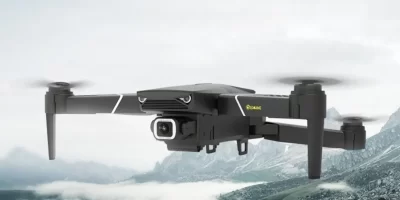
The 37V 1800mAh battery drone configuration, a small but potent energy solution made to balance weight efficiency, flying duration, and voltage stability, lies at the heart of this innovation.
However, performance is not guaranteed by raw parameters alone.
Safety, dependability, and lifecycle value are ultimately determined by the integration of an intelligent battery management system (BMS).

Modern drones are no longer simple recreational devices. Today’s UAVs must:
Carry high-resolution cameras and sensors
Perform longer missions
Operate in varying environmental conditions
Deliver consistent power under dynamic loads
Maintain strict safety standards
Stable voltage delivery is necessary for larger payloads and more sophisticated onboard electronics.
The required output for mid-to-high-performance systems is provided by a 37V 1800mAh battery drone arrangement, which also keeps the size and weight profile manageable.
As the demands of UAV operations increase, battery architecture must also change.
Why Does 37V Voltage Matter?
Motor efficiency is increased by the greater voltage output provided by a 37V system, which is often set up as 10S lithium-based cells.
Motors can run at lower current draws when the voltage is higher, which lowers heat production and increases system stability.
How Does 1800mAh Capacity Balance Weight and Endurance?
Flight time is determined by capacity.
The 1800mAh standard balances adequate energy storage with a small form factor.
Excessive capacity makes performance-focused UAVs heavier and less maneuverable.
The 37V 1800mAh battery drone configuration is optimized for missions requiring agility combined with stable endurance.
Why Is Compact Power Architecture Important?
There aren’t many battery chambers in modern drone frames.
Precisely engineered, streamlined lithium battery packs guarantee effective space use without sacrificing performance.
The 37V 1800mAh battery drone is suitable for various applications, including:
Aerial photography and cinematography
Infrastructure inspections
Environmental monitoring
Security patrol missions
Mapping and surveying operations
Drones in these applications need to support communication modules and camera systems while maintaining steady propulsion.
For precise data collection and safe flight operation, voltage stability becomes crucial.
Is Voltage Compatibility Critical?
Yes. The 37V rating must align with motor and electronic speed controller specifications.
Mismatched voltage may lead to inefficiency or hardware damage.
Does Capacity Determine Flight Time?
While 1800mAh directly impacts endurance, real-world flight time also depends on payload weight, environmental factors, and discharge efficiency.
Why Does Discharge Rate (C-Rating) Matter?
High C-rating ensures stable power during rapid acceleration or vertical climbing.
Without sufficient discharge capability, voltage sag may reduce flight stability.
Are Weight and Dimensions Important?
Absolutely. The design of a 37V 1800mAh battery drone must align with aerodynamic balance.
Excess weight reduces efficiency and increases motor strain.

Even a precisely engineered lithium battery pack requires intelligent control.
This is where the Battery Management System becomes indispensable.
How Does BMS Prevent Overcharging and Over-Discharging?
Lithium cells are sensitive to voltage extremes.
BMS continuously monitors cell voltage and disconnects charging or load circuits when limits are reached.
Why Is Cell Balancing Essential?
Over time, cells may drift in capacity and voltage.
BMS equalizes cell levels, ensuring uniform charge distribution and preventing premature degradation.
How Does Temperature Monitoring Improve Safety?
High-power drone operations generate heat.
BMS tracks temperature in real time and prevents overheating that could lead to swelling or thermal runaway.
How Does BMS Improve Lifecycle Value?
By maintaining safe operating conditions, BMS extends cycle life and reduces replacement frequency.
In a 37V 1800mAh battery drone, this translates into long-term operational cost savings.
Without intelligent BMS integration, performance advantages are significantly reduced.
Charging practices directly influence battery health.
Should You Use a Dedicated Compatible Charger?
Yes. Always use chargers designed specifically for the voltage and chemistry of the 37V 1800mAh battery drone.
Incorrect charging profiles can damage cells.
Why Avoid Overcharging?
Overcharging increases internal pressure and accelerates chemical degradation.
BMS plays a critical role in preventing voltage overflow.
Is Monitoring During Charging Necessary?
Supervised charging reduces risk.
Even with BMS protection, safe charging environments are recommended.
Battery lifespan depends on:
Depth of discharge
Charging habits
Environmental exposure
Quality of BMS integration
A good 37V 1800mAh battery drone may last for hundreds of steady cycles with balanced charging cycles and regular maintenance.
In comparison to unmanaged battery packs, intelligent management greatly increases lifetime.
Proper storage and maintenance maximize safety and lifespan.
Why Avoid Deep Discharge?
Never drain the battery to 0%.
Maintaining residual charge protects cell chemistry.
Should Storage Charge Be Maintained at 40–60%?
Yes. Mid-level charge reduces stress during long-term storage.
Why Store in a Cool, Dry Environment?
Humidity and heat accelerate degradation.
Temperature-controlled storage extends service life.
Is Periodic Charging Necessary?
Recharge every three months to maintain voltage stability and BMS calibration.
Should You Inspect Before Every Flight?
Always check for swelling, connector damage, or abnormal heat signs before deploying the 37V 1800mAh battery drone.
A well-balanced answer to contemporary UAV applications that require consistent voltage, lightweight design, and dependable endurance is the 37V 1800mAh battery drone configuration.
However, efficient battery management is just as important to actual performance as voltage and capacity.
BMS integration balances cell performance, increases operational longevity, and guarantees protection against electrical problems.
Investing in cutting-edge battery architecture is a wise choice for professional UAV operators looking for long-term ROI, efficiency, and safety.
Competitive advantage will be defined by intelligent power solutions as drone applications continue to spread across industries.
High-reliability BMS solutions are being developed by companies such as Ayaa Technology to handle demanding UAV energy systems globally.
Q1:How long will a 1800mAh battery last?
A1:Depending on the device’s power draw (measured in mAh/Amp-hours) and the battery’s voltage (V).
1800mAh battery can last anywhere from a few hours for moderate use or less than an hour for power-hungry devices.
It can last anywhere from 30 to 60 minutes for RC cars and possibly 8 to 10 hours for a low-drain radio.
Divide 1800 by the milliamperes (mA) of current draw of the device to get an estimate; for instance, a 300mA device would last roughly 6 hours (1800/300).
Q2:How long will a 3.7 V battery last?
A2:A 3.7V battery’s lifespan (charge cycles) is 300-1000 cycles, or 2-3 years, depending largely on usage, charging habits (keeping charge between 20-80% is best), and chemistry.
Its runtime varies depending on its capacity (mAh) and the power draw of the device, but typically lasts from a few hours to a full day.
Depending on usage and discharge rate, a 1000mAh battery may have a runtime of 60+ hours at 16mA drain.
Q3:What is the price of 3.7 V 18000mAh battery?
A3:₹ 590 per piece for a 3.7v 18000mAh Li-ion battery pack.
Q4:How many volts is a 1800 mAh battery?
A4:Voltage 3.7v. Capacity:1800mAh.
Q5:What is the difference between 2000mAh and 1800mah?
A5:1800 milliampere-hours would be the difference.
With the 2000 mAh, your gadget should survive 20 minutes, even if it only lasts 18 with the 1800 mAh.
Both the battery type and voltage affect the charge.
Every NiMH battery has a voltage of 1.2 volts.
Contact Us