- Industries

Home Backup & Garden BMS
View More >Electric Forklift BMS
View More >Golf Cart BMS
View More >Electric Two-wheeler BMS
View More >Aviation & UAV BMS
View More >BMS For Power Tools
View More >Medical Equipment BMS
View More >








Home About Us EVENTS & NEWS Choosing the Right Battery Management System for Your Solar Energy Needs
Solar energy systems are becoming a more and more popular option for both residential and business customers as the demand for renewable energy rises.
However, to optimize the advantages of solar electricity, effective energy storage is essential.
One crucial element is at the heart of any dependable solar energy storage system: the battery management system for solar energy applications.
Your solar battery system’s durability, performance, and safety are guaranteed when you choose the appropriate BMS.
We’ll go over the definition of a BMS, its significance, and how to pick the best one for your particular solar energy requirements.
An intelligent electronic device that keeps an eye on, controls, and safeguards battery packs used to store solar energy is called a battery management system for solar energy applications.
By controlling voltage, current, and temperature, it guarantees that the battery runs within safe bounds and avoids problems like overcharging, overdischarging, and overheating.
The absence of advanced monitoring tools in conventional solar storage systems resulted in inefficiencies and even battery failures.
Advanced algorithms and real-time diagnostics are features of today’s battery management systems for solar energy applications, which assist solar users increase energy efficiency, prolong battery life, and improve safety.
A well-designed battery management system for solar energy applications typically consists of several essential modules:
Voltage Monitoring Module: Continuously checks the voltage of individual cells to ensure they remain balanced and within a safe range.
Current Monitoring Module: Measures charge and discharge current through precision sampling circuits, helping detect abnormalities.
Temperature Monitoring Module: Includes multiple temperature sensors placed throughout the battery pack to prevent thermal runaway.
Communication Module: Enables real-time data exchange with other system components like inverters, solar controllers, and cloud-based platforms.
Together, these elements preserve the energy storage system’s health and safety while maximizing performance in response to usage and environmental factors.
To ensure safe and effective operation, the battery management system for solar energy applications adheres to a defined and organized workflow:
Data Acquisition: Sensors gather real-time data on voltage, current, and temperature from every cell and module.
Data Processing: The BMS processes this data using built-in algorithms to estimate key metrics like State of Charge (SOC) and State of Health (SOH).
Thermal Control: Through active or passive cooling strategies, the system maintains an optimal temperature range for all cells.
Protection Mechanisms: If the system detects anomalies such as overheating, short-circuits, or over-voltage, it initiates protective actions like shutting down the charger or disconnecting the load.
The battery management system for solar energy applications is a fundamental component of contemporary solar power storage because of its degree of intelligence and control.
A battery management system is essential for solar energy applications in many different fields:
1. Home Energy Storage
In order to lessen their dependency on the grid, homeowners that have solar panels use BMS-equipped lithium battery systems to store extra energy during the day and use it at night.
2. Commercial and Industrial Storage
BMS systems assist in controlling peak load demands in factories and office buildings, allowing businesses to save energy expenses and prevent blackouts.
3. Off-Grid and Remote Installations
A battery management system for solar energy applications guarantees that power is stored effectively and safely for use at night or on overcast days in rural locations without dependable grid connection.
4. Microgrids and Smart Grids
Solar storage systems with BMSs are essential for controlling microgrid energy flow and smoothly integrating with smart grid infrastructure.
The battery management system’s capabilities for solar energy applications have been greatly enhanced by recent developments:
Modular Design: Modern BMS platforms can be easily scaled based on the battery pack size, making them flexible and adaptable.
Wireless Monitoring: Cloud-connected BMS units now allow remote diagnostics, real-time alerts, and firmware updates.
AI and Predictive Analytics: Some advanced systems use artificial intelligence to predict battery behavior and optimize performance.
Enhanced Safety Protocols: Updated industry standards have led to the development of more robust fail-safe mechanisms.
These developments improve the safety, effectiveness, and use of solar storage, especially for long-term off-grid applications.
Choosing the most suitable battery management system for solar energy applications depends on several critical factors:
1. Battery Chemistry Compatibility
Verify that the BMS is compatible with the type of battery you have, including lead-acid, lithium-ion, LiFePO₄, and other chemistries.
Monitoring and protection requirements for lithium-based batteries are higher.
2. Scalability and Voltage Range
Choose a BMS based on the size of your system.
Small off-grid systems, for example, would require a 4S–10S design, whereas industrial systems might need 24S or more.
3. Communication Protocols
For smooth interaction with solar charge controllers and inverters, make sure the BMS supports common protocols like CAN, RS485, or UART.
4. Balance Method
Select active balancing or passive balancing.
Active balancing increases battery longevity and efficiency, whereas passive systems are easier to use and less expensive.
5. Environmental Durability
A reliable BMS that can function in a variety of temperature ranges is crucial for outdoor solar systems.
Ayaa Technology provides high-performance and scalable battery management systems for solar energy applications to clients searching for a reliable partner in solar battery management.
Among our flagship models are:
AY-L24S300A-ES001 (7S–24S)

This model’s CAN/RS485 connection, intelligent monitoring, and support for high current loads make it perfect for large-scale solar storage.
AY-L10S200A-ES002 (3S–10S)
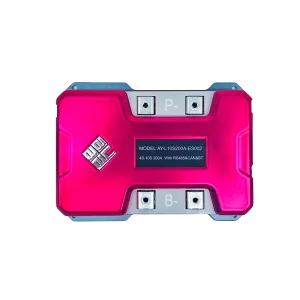
It provides dependable protection and communication compatibility in a smaller form factor and is suited for tiny solar systems.
AY-L16S200A-ES003 (8S–16S)
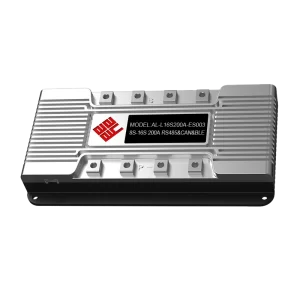
For solar storage systems of moderate scale, this type offers outstanding performance.
With its broad voltage range, effective balancing capabilities, and support for numerous communication protocols, it satisfies the various needs of contemporary solar installations.
Ayaa Technology offers customized solutions that satisfy global safety and performance standards thanks to its more than 20 years of experience in BMS R&D and global deployment spanning EVs, energy storage, and industrial systems.
Q:What is a BMS for solar?
A:One essential tool for keeping an eye on, controlling, and protecting rechargeable battery packs is a Battery Management System (BMS).
It carefully controls each battery cell to guarantee optimum performance and longevity.
There are two types of BMS: external, which is independent of the battery pack, and internal, which is embedded inside the pack.
Q:What is the difference between BMS and battery protection?
A:Protection boards are frequently utilized in applications requiring only little battery protection since they are reasonably easy to use and reasonably priced.
A BMS, on the other hand, is a more advanced system that controls and safeguards a battery pack in its entirety.
Q:How much energy does a BMS save?
A:Energy bills can be lowered by up to 15–35% with a well maintained BMS.
To guarantee the best possible control of building services, an effective and regular maintenance schedule is essential.
Purchasing the appropriate battery management system for solar energy applications is becoming essential rather than optional as solar adoption rises.
It is the secret to enabling energy storage that is secure, dependable, and effective while maximizing return on investment and advancing sustainability.
Solar users may make sure their energy system operates at its peak efficiency by being aware of how a BMS operates, its advantages, and what to look for when selecting one.
Contact Ayaa Technologies right now for reliable and creative BMS solutions that are suited to your solar energy requirements, and allow our knowledgeable staff to assist you in igniting a more environmentally friendly future.
Contact Us
Latest News
Share