- Industries

Home Backup & Garden BMS
View More >Electric Forklift BMS
View More >Golf Cart BMS
View More >Electric Two-wheeler BMS
View More >Aviation & UAV BMS
View More >BMS For Power Tools
View More >Medical Equipment BMS
View More >







Home About Us EVENTS & NEWS The Engineering Guide to bms lifepo4 48v: Securing Industrial Power
The 48V architecture has established itself as the industry standard for residential solar arrays, data centers, and telecoms in the quickly changing field of 2026 energy storage.
However, the bms lifepo4 48v that controls these systems is much more powerful than the cells themselves.
Lithium Iron Phosphate (LiFePO4) is praised for its extended cycle life and thermal stability, however these benefits are unrealized in the absence of a specialized management system.
As the digital command center, a high-tier BMS makes sure that 15 or 16 series cells function flawlessly while shielding the hardware from the electrical strains of industrial operation.

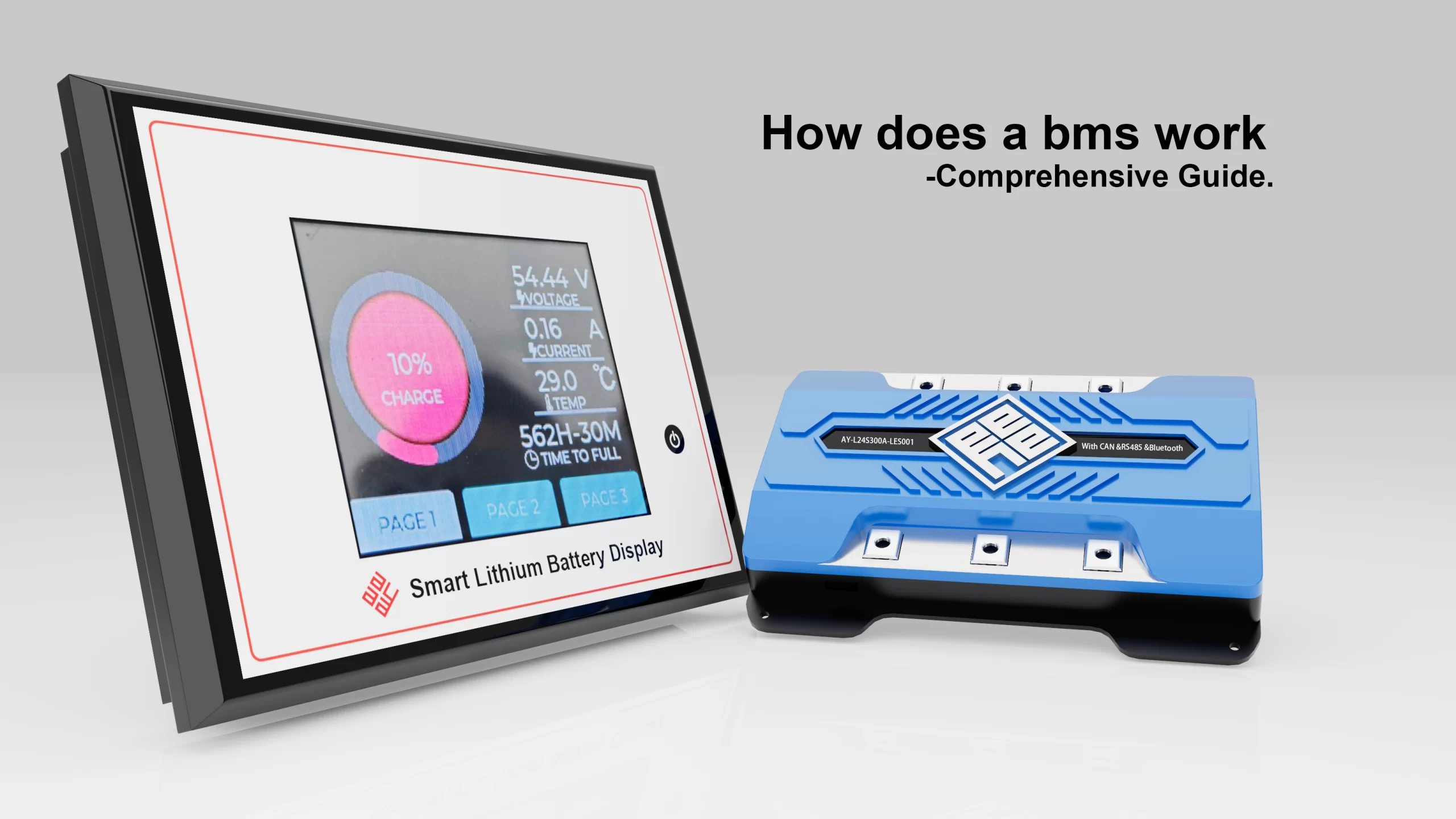
A sophisticated electronic controller called a BMS lifepo4 48v is made to handle the precise voltage and current characteristics of a 48V lithium iron phosphate battery pack.
Maintaining the battery within its “Safe Operating Area” (SOA) is its principal goal.
1.Voltage Monitoring: It tracks each of the 15-16 cells, ensuring none exceed the typical 3.65V charge ceiling or fall below the 2.5V discharge floor.
2.Current Regulation: The system manages the flow of electricity during both high-rate charging and peak discharge to prevent copper dissolution or electrolyte breakdown.
3.Thermal Oversight: Multiple temperature sensors relay data to the BMS, allowing it to throttle performance if the internal rack temperature becomes unsafe.
A BMS Lifepo4 48v operates in a continuous, real-time loop of protective action and data collection.
It acts as an intelligent conduit between the external electrical load and the chemical energy stored in the cells.
●Cell Balancing: If one cell reaches a full state of charge before others, the BMS bleeds off the excess energy through resistors, allowing the entire string to reach 100% capacity.
●MOSFET Protection: High-speed electronic switches can disconnect the battery in microseconds if a short circuit or extreme over-current is detected.
●Communication Bridging: Modern units utilize CANbus or RS485 protocols to talk to solar inverters, ensuring the entire power system is synchronized.

Although LiFePO4 is intrinsically safer than other lithium chemistries, improper handling can still occur.
The “electronic cage” that stops the most frequent reasons for system failure is provided by the BMS Lifepo4 48v.
A breakdown can cause significant financial or operational loss because 48V systems frequently power mission-critical infrastructure, such as server racks or medical backup systems.
The BMS stops deep-discharging, which can irreversibly “brick” a lithium pack, and overcharging, which can lead to the battery swelling.
The BMS guarantees that performance is never sacrificed for safety by serving as a continual sentinel.
The 48V standard is a versatile power platform, and the management system adapts its logic to meet the specific demands of various sectors.
| Industry Sector | Primary Objective | Critical BMS Feature |
|---|---|---|
| Telecommunications | Zero-downtime backup | Remote SNMP monitoring and long-life algorithms |
| Data Centers | Reliable UPS power | High-discharge precision and SOC accuracy |
| Off-Grid Solar | Energy independence | Seamless inverter communication and peak shaving |
| Electric Forklifts | Industrial torque | High-vibration resistance and rapid charge support |
To fully utilize a bms lifepo4 48v, operators must adopt a proactive management strategy that goes beyond simple installation.
1.Respond to Alerts: Never ignore warning alarms; most BMS units provide early indicators of cell drift or loose connections before they become fatal faults.
2.Regular Maintenance: Periodically check that communication cables are secure and clean, as data packet loss can lead to inefficient inverter synchronization.
3.Environmental Control: Ensure the battery rack is kept in a dry, ventilated area.
While the BMS manages heat, external temperature control reduces the work the system must do.
4.Firmware Updates: Keep the BMS software current to benefit from the latest improvements in balancing algorithms and safety protocols.
The main factor influencing LiFePO4 technology’s ROI is longevity.
By preventing tiny chemical degradation, a BMS Lifepo4 48v guarantees that a battery accomplishes its specified 4,000 to 6,000 cycles.
●Cycle Optimization: By keeping cells balanced, the BMS prevents “unbalanced wear” where a few cells age faster than the rest of the pack.
●State of Health (SOH) Tracking: It provides a metric for the battery’s remaining life, allowing managers to plan for replacements years in advance rather than reacting to a sudden failure.
The intelligence that controls each cell is the key to sustainable power in the future.
Every successful electrification project has a BMS Lifepo4 48v as its silent partner, guaranteeing safe, effective, and long-lasting energy delivery.
The “invisible engineering” that makes high-density storage dependable for contemporary businesses is our area of expertise at Ayaa Technology.
We are aware that uptime is the only important statistic in the global industrial market.
You may rely on Ayaa Technology to be your energy future’s protector and the brains behind your power.
Q1:What is the best BMS for LiFePO4 batteries?
A1:The best BMS for lithium iron phosphate (LiFePO4) batteries depends on the particular application.
AYAA intelligent BMS (active balancing type) is a market leader in the high-capacity battery pack industry.
Q2:How to reset BMS on 48v lithium battery?
A2:There are three BMS reset techniques: OBD2 scanner reset (best for contemporary ICE vehicles made after 2010), power cycle disconnect (best for LiFePO4 and solar systems), and charge-discharge cycle (best for EVs and lithium systems).
Q3:What happens if you don’t reset BMS?
A3:The automobile will presume that the old, deteriorated battery is still fitted if the Battery Management System (BMS) is not reset following a battery replacement.
This can result in overcharging, a drastically shortened new battery life (perhaps only six months), and auto stop-start system failure.
Additionally, the system could activate needless warning lights (ABS, Check Engine).
Q4:Does the LiFePO4 battery need BMS?
A4:LiFePO4 batteries do, in fact, need a battery management system (BMS).
It acts as the battery’s “brain,” preventing overcharging, overdischarging, overheating, and cell imbalance.
Without a BMS, you run the danger of permanent battery damage, a lower battery life, or serious safety hazards like fire.
Q5:How to choose a BMS for LiFePO4 cells?
A5:Based on the current rating, this is your power highway.
Cell Count (e.g., 4S, 8S): Your BMS must match your series configuration, which is 8S for 24V and 4S for 12V.
When it comes to temperature sensors, LiFePO4 cells hate extremes.
The low-voltage cutoff is your safety net.
Contact Us