- Industries

Home Backup & Garden BMS
View More >Electric Forklift BMS
View More >Golf Cart BMS
View More >Electric Two-wheeler BMS
View More >Aviation & UAV BMS
View More >BMS For Power Tools
View More >Medical Equipment BMS
View More >





Home About Us EVENTS & NEWS How to Choose the Right Lipo Battery for Drone for Maximum Flight Performance
For drone enthusiasts and professionals alike, the choice of battery can make or break flight performance.
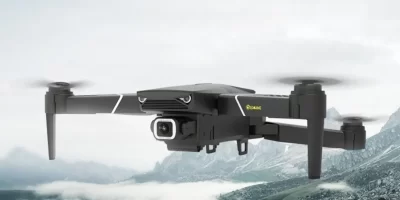
Among all options, a lipo battery for drone has emerged as the preferred solution for high-performance UAVs.
LiPo batteries, which are well-known for their high energy density, lightweight construction, and quick discharge characteristics, offer the power and efficiency required for both commercial and recreational drone applications.
But not every LiPo battery is made equally.
Understanding the chemistry, capacity, and management mechanisms underlying these batteries is crucial to achieving optimal flight time, dependability, and safety.

A lipo battery—short for lithium polymer battery—is a type of rechargeable battery that uses a polymer electrolyte instead of a liquid solution.
Because LiPo batteries are lighter and more flexible than conventional lithium-ion cells, drone makers can create small, aerodynamic UAVs.
The battery’s core features include:
High energy density – stores more power per unit weight.
Flexible design – available in different shapes and sizes.
Fast discharge rate – supports high-performance motors.
These characteristics make LiPo batteries ideal for drones that require both endurance and agility.
When choosing a lipo battery for drone, it’s helpful to compare it with other types of batteries:
| Feature | LiPo Battery | Lithium-Ion Battery | NiMH Battery |
|---|---|---|---|
| Energy Density | High | Medium | Low |
| Weight | Light | Medium | Heavy |
| Safety | Moderate (with BMS) | High | High |
| Cost | Moderate | High | Low |
| Discharge Rate | Very High | Medium | Low |
LiPo batteries, particularly for high-speed or long-range drones, offer the finest combination of weight, energy, and high-current output, according to this analysis.
Understanding a lipo battery involves knowing its key specifications:
Capacity (mAh or Ah) – Determines flight time. Higher capacity means longer flights but increased weight.
Voltage (V) – Typically expressed as the number of cells in series (e.g., 3S = 11.1V nominal). Voltage impacts motor speed and power output.
C-Rating – Indicates how quickly the battery can safely discharge. A higher C-rating allows for more aggressive maneuvers.
Internal Resistance – Lower internal resistance improves efficiency and reduces heat buildup.
By understanding these specifications, you can match a battery to your drone’s size, motor, and intended flight style.
Selecting the ideal lipo battery involves several factors:
1. Size and Weight
How much weight can your drone safely carry without compromising its ability to fly?
If you are too light, you might underpower the motors; if you are too heavy, your flying time will be reduced.
2. Drone Type and Power Requirements
Are you flying a racing drone, photography drone, or delivery drone?
Each requires a specific voltage and C-rating to maintain stability and efficiency.
3. Connector Compatibility
Make sure the battery connector matches your drone’s power input.
Common connectors include XT60, XT90, and Deans.
4. BMS Integration
To guard against overcharging, overdischarging, and thermal hazards, a high-quality lipo battery for drone should be compatible with a battery management system (BMS).
Additionally, a BMS guarantees cell balance, extending the battery’s lifespan.
Proper charging and storage are essential to get the most out of a lipo battery for drone:
Use a balance charger – Ensures each cell charges evenly.
Charge at room temperature – Avoid charging in hot or cold environments.
Store at safe voltage – Ideally 3.8V per cell for storage.
Regular inspections – Check for swelling, leaks, or damage.
Fire safety – Charge and store batteries in fireproof containers.
Following these practices significantly reduces the risk of accidents and extends battery life.

A battery management system (BMS) is critical for any high-performance LiPo battery. It:
Monitors each cell’s voltage and temperature.
Prevents overcharging or deep discharging.
Balances cells to maintain consistent power output.
Alerts the operator to potential safety issues.
With an integrated BMS, a lipo battery can safely deliver peak performance for hundreds of flight cycles.
Choosing the right lipo battery for drone is essential for flight performance, efficiency, and safety.
Pilots can have longer flying hours, better responsiveness, and increased operational safety by comprehending battery specs, using a dependable BMS, and adhering to appropriate charging and maintenance procedures.
High-quality LiPo batteries are expertly designed and manufactured by Ayaa Technology for anyone looking for unique UAV battery solutions that combine performance with intelligent BMS protection.
With more than 18 years of experience, Ayaa Technology guarantees that your drones are fueled effectively, securely, and consistently for both leisure and business uses.
Q1:Do drones use LiPo batteries?
A1:Drone technology relies heavily on LiPO batteries.
They supply the energy required for flying, maneuvering, and other tasks.
It’s crucial to take capacity, voltage, discharge rate, size, and weight into account when selecting a LiPO battery for your drone.
Q2:Which is better, LiPo or LiFePO4?
A2:LiFePO4 is the best option if long-term value, dependability, and safety are your top priorities.
LiPo batteries are a superior option if you prioritize lightweight construction and maximum power output.
Q3:How to choose LiPo battery for drone?
A3:Drone LiPo batteries are available in a range of voltages, usually from 3.7V (1S) to 22.2V (6S) or more.
Your drone’s power needs will determine the precise voltage you need; larger drones typically require greater volts for sufficient power.
Q4:Which is better, Li-ion or LiPo?
A4:In general, lithium-ion (Li-ion) batteries are more durable, less expensive, and have a high energy density, which makes them perfect for computers and e-bikes.
Because of its flexibility, lithium-polymer (LiPo) works better for lightweight, ultra-thin, and custom-shaped products like smartphones and drones.
Q5:Can I charge a LiFePO4 battery with a LiPo charger?
A5:LiFePO4 batteries can be utilized with lithium-ion chargers as long as the charger can be configured to satisfy the specifications of particular battery types.
The battery performance will be stable but safe if it is regularly monitored and the optimal charging and storage procedures are followed.
Contact Us