
- Industries

Home Backup & Garden BMS
View More >Electric Forklift BMS
View More >Golf Cart BMS
View More >Electric Two-wheeler BMS
View More >Aviation & UAV BMS
View More >BMS For Power Tools
View More >Medical Equipment BMS
View More >










| LF | LI | |||
| Model Number | AY-ZX14S120A (LI-14S120A) | |||
| Communication Interface | CAN&UART&BLE | |||
| Charging Voltage | DC: 58.8VCC/CV(4.2v/Cell)14S | |||
| Maximal continuous charging current | 120A | |||
| Maximal continuous discharging current | 120A | |||
| Current consume in normal operation | ≤10mA | |||
| Current consume in sleep operation | ≤350uA | |||
| Over charge detection voltage | 4.25±0.05V(Adjustable) | |||
| Over charge detection delay time | 1.0S(Adjustable) | |||
| Over charge release voltage | 4.20±0.05V(Adjustable) | |||
| Over discharge detection voltage | 3.0±0.05V(Adjustable) | |||
| Over discharge detection delay time | 1.0S(Adjustable) | |||
| Over discharge release voltage | 3.2±0.05V(Adjustable) | |||
| Charge over current detection current | 23A±3%(Adjustable) | |||
| Detection delay time | 2.0S(Adjustable) | |||
| Release conditions | Removingthechargerrelease | |||
| Discharge over current detection current | 80A±3%(Adjustable) | |||
| Detection condition | BatteryB+Short CircuitforP-ConnectionHead | |||
| Detection delay time | 400uS | |||
| Release condition | Removeload | |||
| SOC | 3%~5% | |||
 |
|
| Size | L70 × W45 × T15 mm |
| NTC | 10KΩ |
| Temperature switch | / ℃(the batteries temperature) |
| Weak current switch | YES |
| Active balance | / |
| Heater | YES |
| Braking Resistors | YES |
| Low temperature protection when charge | 0℃ | ||
| Release temperature( low temperature protection) | 5℃ | ||
| Over temperature protection when charge | 45℃ | ||
| Release temperature( over temperature protection) | 43℃ | ||
| Low temperature protection when discharge | -20℃ | ||
| Release temperature( low temperature protection) | -15℃ | ||
| Over temperature protection when discharge | 55℃ | ||
| Release temperature( over temperature protection) | 50℃ | ||
| Operating Temperature Range | -20~+70℃ | ||
| Storage Temperature Range | -40~+85℃ | ||
| LCD display screen | / |
| LED light board | / |
| Bluetooth mode | YES |
| 4G | YES |
| GPS | YES |
Product Introduction
The 12S–14S 120A Smart Battery Monitoring Board is made to precisely control and monitor UAV power systems. In order to maintain consistent energy performance throughout drone operations, it continuously checks voltage, current, temperature, and cell balance. Flexible setup and communication via UAV CAN or UART interfaces are supported by this board, which is designed for agricultural, heavy-duty lifting, rescue, inspection, and mapping drones. Because of its modular design, it can be integrated into a variety of battery systems seen in professional drone platforms.
This monitoring board improves efficiency and flight management by offering full measurement and control functionality for UAV battery systems.
For more information or technical support, feel free to contact us.

allows for flexible interoperability with various drone energy systems by supporting battery configurations ranging from 12S to 14S.
Improves power analysis during operation by continuously providing voltage, current, and temperature information via a CAN or UART interface.
Maintains steady output and battery health by balancing the voltage between cells during cycles of charge and discharge.
It is possible to establish CAN, UART, and RS485 settings for integration with ground stations and drone flight controllers.
Easy integration without adding extra weight is made possible by the streamlined PCB design, which fits inside constrained drone compartments.
In order to avoid unusual heat accumulation during extended flights, built-in sensors track cell temperature in real time.
Records important performance information for operational analysis, such as cycle counts, voltage range, and power status.
It is possible to configure warning settings, voltage thresholds, and current restrictions in accordance with various UAV regulations.
Accurate data for power system optimization are guaranteed by precision sensing components.
Professional UAV platforms that need accurate energy tracking and system communication can use the 12S–14S 120Ah Smart Battery Monitoring Board.

Used to assist longer working hours by controlling power during jobs like spraying, spreading, and field inspections.

Gives drones operating under high current loads or carrying large payloads real-time energy data.

Maintains stable flight throughout delivery and emergency missions by monitoring voltage and performance data.

Provides thorough monitoring assistance for drones used for environmental, utility, or infrastructure inspections.

Guarantees accurate energy management for drones used for terrain surveying, 3D modeling, and long-range mapping.


We are your trusted partner for scalable, intelligent, high-current BMS systems, regardless of whether your company manufactures electric cars, supplies battery packs, or integrates systems. We can power your next breakthrough.
Whether your business produces electric vehicles, provides battery packs, or integrates systems, we are your reliable partner for scalable, intelligent, high-current BMS systems. Your next breakthrough can be powered by us.
Whether it’s through integrated software platforms or innovative BMS design, our dedicated R&D team never stops pushing the boundaries of technology to provide smarter, safer, and more effective products to the market.
Our BMS and power solutions are rigorously tested under challenging conditions to ensure longevity, stability, and optimal performance in real-world applications such as golf carts, motorcycles, forklifts, and energy storage systems.
We offer a variety of customization options to meet your specific needs, including form factors, wireless modules, communication protocols, and battery types.
From pre-sales advice to post-purchase assistance, our technical staff is available around-the-clock to help you with setup, integration, and troubleshooting.
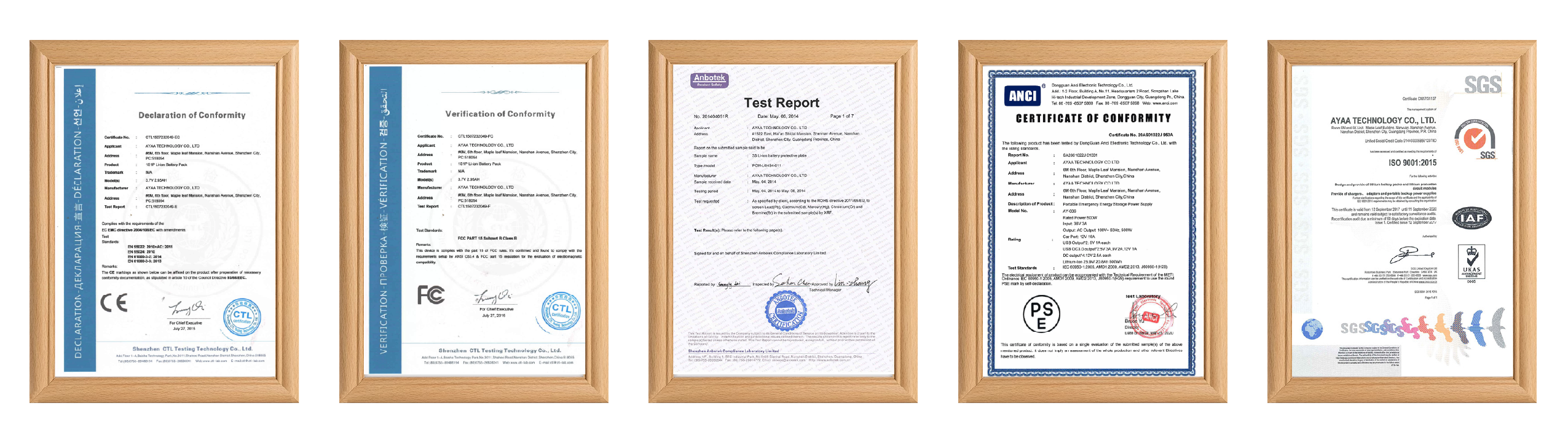
Because we strictly adhere to international standards like CE, IEC62109, VDE, and CQC, every product we sell is of the highest quality and safety.
Our Certificates
FAQ:Battery Monitoring Board
Q1:What is a BMS used for?
A1:A BMS system: what is it? Building management systems, also known as BMS control systems or building monitoring systems, are a group of automated devices used to regulate, evaluate, and keep an eye on the performance of vital electrical equipment like HVAC units, lighting, and access control.
Q2:What are the three types of BMS?
A2:The Field Level (sensors/actuators), Automation/Control Level (controllers/DDC), and Management/Supervisory Level (software/user interface) are the three hierarchical levels on which a Building Management System (BMS) normally operates. Together, these levels monitor, control, and optimize building systems like HVAC, lighting, and security for comfort and efficiency.
Q3:What are common BMS problems?
A3:One of the main problems is the BMS’s inability to effectively handle extreme situations including overcharging, overheating, and quick discharging.
Q4:What is a battery BMS board?
A4:A battery pack, which is an assembly of battery cells electrically arranged in a row x column matrix configuration to enable the delivery of a targeted range of voltage and current for a duration of time against expected load scenarios, is monitored by a battery management system (BMS).
Q5:What does 100A BMS mean?
A5:So, a 100 amp BMS will be capable of supplying at least 100 amps of current continuously. The rating is a significant amount less than a BMS’s burst or peak capability. Generally speaking, a BMS that can do 100A continuously can do up to 150 to 200 amps for a short amount of time.
Q6:How long do BMS last?
A6:BMS is an excruciating illness. The tongue is typically impacted, however the lips, roof of the mouth, or entire mouth may also experience pain. Pain from BMS can persist for months or even years. Some people experience daily, unrelenting pain.