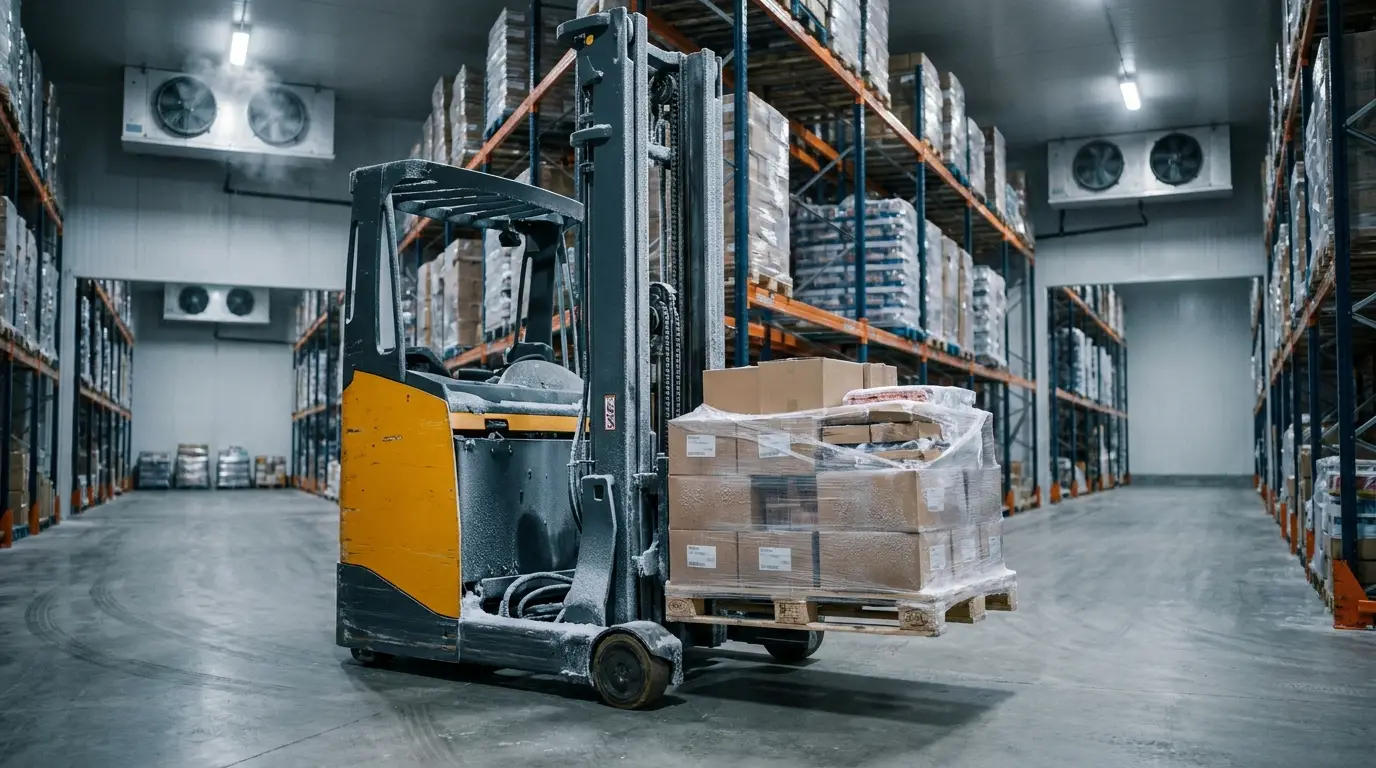








To ensure safe forklift battery charging operations, verify the battery type, use an approved charger, and follow standard steps. Next, confirm the charger is approved for that battery type. Park and prepare the truck in the designated charging area. Then, follow the manufacturer’s connection and charging instructions from start to finish.
Flooded lead-acid, TPPL, and lithium-ion batteries charge differently. A flooded lead-acid battery needs proper ventilation, electrolyte care, and cool-down time. A lithium-ion battery depends on its BMS and a matched charger. This guide covers charging procedures, recharge timing, charging methods, maintenance, and safety.

What to Check Before Charging a Forklift Battery
Identify the Battery Type and Its Charging Requirements
Read the nameplate on the battery first. Flooded lead-acid, TPPL, and lithium-ion batteries evaluated under industrial truck standards like UL 583 have distinct charging profiles. They also have different maintenance needs. A routine that suits one chemistry can easily damage another.
Never carry lead-acid maintenance habits over to a different battery chemistry.
Make Sure the Charger Matches the Battery
Voltage is only the starting point. The charger must match the battery chemistry and approved charging profile. It must also stay within the permitted charging current limits. In addition, verify the correct connector type and polarity.
Many lithium-ion packs need a charger that communicates directly with the BMS through standardized industrial protocols like CiA 418. Some systems require a dedicated BMS enable signal. A connector plug that physically fits proves nothing about electrical compatibility.
[Engineering Note]
Matching only voltage and connector is the most common shortcut. The wrong profile can cause undercharging, severe overcharging, or excessive current.
For more details, see our guide on [how to choose the right forklift battery charger]. [Internal link placeholder: forklift battery charger selection article. URL to be added.]
Proper Procedure for Charging Forklift Battery Systems Step by Step
Park the Forklift and Prepare the Charging Area
Drive the vehicle to the designated charging location in accordance with facility safety standards such as NFPA 505. Set the parking brake firmly. Turn the truck off as required by your facility procedure. Keep all sparks, open flames, and smoking materials away.
Inspect the Battery, Cables, and Connectors
Inspect the battery thoroughly before every single charge. Check for cracked cases, fluid leaks, and acid corrosion. Look for frayed wire insulation and loose or burned pins. Take damaged equipment out of service until a qualified technician inspects it.
Connect the Battery to the Charger Correctly
The approved connection sequence depends entirely on equipment design. Follow specific instructions for your truck model rather than generic steps. Most systems require the charger to sit idle before plugging in. Seat the connector firmly, and never force a stubborn plug.
Start Charging and Monitor the Battery
Turn on the charger. Verify that it displays a normal charging status indicator. Watch for system alarms, error codes, and unusual connector heat. Check for BMS warnings on lithium-ion units. If an issue occurs, stop immediately and isolate the equipment.
Finish Charging and Return the Forklift to Service
Disconnect the plug safely when the charger signals completion. Check that the battery is fully ready for operation. Flooded lead-acid batteries often need time to cool down. Finally, stow all charging cables neatly and safely.
When Should You Recharge a Forklift Battery?
Follow Recommended Discharge Limits for Lead-Acid Batteries
Two key technical terms matter here. State of charge (SOC) measures remaining energy. Depth of discharge (DoD) measures consumed capacity.
Conventional flooded lead-acid batteries should be recharged before reaching 80% DoD. This equals approximately 20% to 30% remaining SOC. Treat this limit as general advice, not an absolute rule. Always follow the specific manufacturer guidelines first.
[Engineering Note]
Treat the discharge limit as a hard stop, not a target. Deeply draining lead-acid packs causes permanent battery degradation.
Use the Approved Charging Strategy for Lithium-Ion and TPPL Batteries
Lithium-ion and TPPL batteries support partial charging routines. Many models permit opportunity charging throughout shifts. Confirm that your specific equipment supports this practice before changing routines. Never assume all lithium-ion packs share identical capabilities.
Accurate SOC readings simplify charge management significantly. The Smart BMS from AYAA TECH features a high-precision SOC calculation algorithm. It compensates automatically for ambient temperatures with an error margin under 5%. This keeps remaining runtime completely predictable.
Match Charging Schedules to the Workload
Single-shift facilities with overnight downtime can schedule one full charge daily. Multi-shift operations face minimal fleet downtime. They require approved fast charging windows during planned breaks. Choose charging schedules that your battery chemistry actually supports.
How Long Does It Take to Charge a Forklift Battery?
There is no single universal charging duration. Some lead-acid systems require full overnight charging. Certain lithium-ion batteries recharge much faster. Exact battery and charger specifications determine actual turnaround time.
Main Factors That Determine Charging Time
Battery capacity and starting SOC determine required energy input. Charger output rating, chemistry, and charging profile set the delivery speed. Ambient temperature and battery age also affect charging acceptance rates.
Allow for Cooling and Practical Operational Delays
Actual charging time differs from true return-to-service time. Flooded lead-acid batteries require mandatory cool-down periods after charging. You must factor cooling times into daily operating schedules. Plan fleet availability around when batteries are completely usable.
Which Forklift Battery Charging Method Fits Your Operation?

Conventional Charging for Planned Charging Cycles
Conventional charging involves planned charging cycles during extended idle periods. It works reliably when trucks sit unused between shifts. The primary drawback is extended vehicle downtime. Continuous multi-shift facilities require extra battery packs for this method.
Opportunity Charging During Breaks and Shift Changes
Opportunity charging replenishes batteries during breaks and lunch hours. It keeps trucks productive throughout long operational periods. Use this method only on approved battery systems. Avoid opportunity charging on flooded lead-acid batteries unless explicitly permitted.
Fast Charging for High-Utilization Applications
Fast charging delivers high electrical current to shorten charge cycles. This term describes charging speed rather than scheduled timing. It requires strictly enforced thermal and current safeguards. The vehicle and charging system must be purpose-built for it.
Consider Downtime, Battery Life, and Infrastructure Together
No single charging approach fits every warehouse environment. Evaluate fleet shift patterns, available dwell time, and battery chemistry together. Consider necessary electrical infrastructure upgrades before buying new equipment. Balance upfront capital expenses against operational gains.
Not Sure Which Battery and Charging Setup Fits Your Fleet?
Explore Product CatalogHow to Maintain Forklift Battery Health Through Proper Charging
Follow the Correct Charging and Cool-Down Routine
Run the approved charge cycle every single time. Avoid deep over-discharging and unapproved charge interruptions. Respect cool-down requirements after every charge. Skipping steps complicates diagnosing future technical faults.
Maintain Flooded Lead-Acid Batteries Correctly
Check electrolyte levels after charging completes. Add pure distilled water strictly following manufacturer directions. Apply equalization charging only when authorized by maintenance protocols aligned with IEEE 450 recommendations. Equalization schedules vary by battery model.
[Engineering Note]
Water refilling and equalization apply only to flooded lead-acid systems. Never perform these procedures on lithium-ion batteries.
Monitor Lithium-Ion Battery Condition and BMS Warnings
Check BMS diagnostic data regularly for abnormal trends against industrial safety benchmarks like IEC 62619. Address recurring alarms and high-temperature alerts promptly. BMS data points vary depending on pack architecture.
Thermal management requires rigorous engineering attention. In our Smart BMS, we distribute power MOSFETs and sense resistors evenly. We pair heat-generating components with quality thermal pads and gel. High-conductivity aluminum or copper heat sinks further optimize heat dissipation.

Record Charging Problems and Inspect Equipment Regularly
Keep detailed logs of repeated alarms and connector wear. Track unusual heat spikes and declining runtime between charges. Recurring patterns reveal developing faults early. Consult our [forklift battery maintenance guide] for schedule templates. [Internal link placeholder: URL to be added.]
Forklift Battery Charging Safety and Common Mistakes
Control Ventilation, Ignition Sources, and Electrolyte Risks
Flooded lead-acid batteries generate explosive hydrogen gas during charge cycles. Provide adequate ventilation and eliminate all ignition sources. Wear proper personal protective equipment (PPE) during handling.
In the U.S., OSHA 29 CFR 1910.178(g) sets mandatory warehouse safety rules. It governs charging locations, ventilation, fire protection, and spill containment. Other jurisdictions enforce local safety standards. Review our comprehensive [forklift charging station safety guide]. [Internal link placeholder: URL to be added.]
Avoid Charger Mismatches and Improvised Procedures
Never connect an incompatible charging unit to your equipment. Do not bypass battery protective circuits or interlocks. Avoid using homemade adapters or modified extension cables. Bypassing safety safeguards creates severe fire and explosion risks.
[Engineering Note]
Bypassing a BMS to force-charge a depleted battery merely masks underlying faults. It never fixes the root cause.
Know When to Stop Charging
Stop charging immediately if you observe leaks, physical swelling, or strong odors. Terminate charging if temperatures spike or error codes repeat. Disconnect power using approved facility isolation procedures. Call trained service personnel rather than attempting improvised repairs.
What to Do When a Forklift Battery Will Not Charge Normally
Check the Charging Setup Before Assuming the Battery Has Failed
Check simple potential causes first. Verify that power cables are fully seated in the connectors. Inspect the main power supply and building circuit breakers. Review charger status lamps for error notifications.
Know When Professional Inspection Is Needed
Contact qualified technicians when charging faults persist. Request professional service for swollen enclosures or severe voltage drops. Never attempt unapproved deep-discharge recovery methods yourself.
Conclusión
Safe battery management requires following four fundamental principles: use manufacturer-approved steps, matched chargers, proper charging schedules, and constant monitoring. Mastering these practices protects battery health and optimizes warehouse productivity.
Need a Forklift Power System Built Around Your Charging Routine?
Request a Custom Battery SolutionPreguntas frecuentes
1. When should you recharge a forklift battery?
Recharge flooded lead-acid batteries before the depth of discharge passes 80%. This corresponds to roughly 20% to 30% remaining capacity. Lithium-ion batteries support flexible partial charging schedules based on manufacturer guidelines.
2. How long does charging forklift battery packs take?
Charging duration depends on pack capacity, charger output, chemistry, and starting SOC. Cool-down requirements also extend total turnaround time for flooded lead-acid cells.
3. Can you charge a forklift battery during lunch breaks?
Yes, but only if the battery system officially supports opportunity charging. Most lithium-ion and TPPL batteries allow it. Avoid partial break charging on conventional flooded lead-acid packs.
4. Can you use any charger with a forklift battery?
No. Voltage rating, chemistry, maximum charging current, and communication profiles must match precisely. Physical connector compatibility does not ensure electrical compatibility.
5. Is it safe to operate a forklift with a low battery?
No. Running a battery until power completely fails damages internal cells. It strains drive motors and risks stranding the vehicle during operations.
6. Can a dead or deeply discharged forklift battery be brought back to life?
Sometimes recovery is possible, depending on chemistry and internal physical condition. Qualified technicians must assess the battery using specialized recovery equipment. Never bypass protective BMS logic.
7. What are the OSHA requirements for charging forklift battery installations?
In the U.S., 29 CFR 1910.178(g) sets strict guidelines. It mandates adequate room ventilation, eye-wash stations, fire protection, and strict no-smoking policies.