





To choose the right forklift battery cable, match wire gauge, length, and connector to current draw. Voltage alone is not enough. Two forklifts with identical voltages often need different cables. Their operating duty cycles and installation routes differ.
Before ordering a replacement, identify the cable’s specific purpose. Check its required AWG size and overall length. Confirm connector series, contact ratings, and polarity. Then, verify these specifications against OEM requirements.
Selecting proper forklift battery cables prevents dangerous overheating, voltage drops, and equipment downtime. This guide details practical checks for selecting a fully compatible replacement.

What Do Forklift Battery Cables Connect?
Different cables serve different parts of an industrial truck. Always identify the specific component before shopping for replacements.
Main Battery Cables
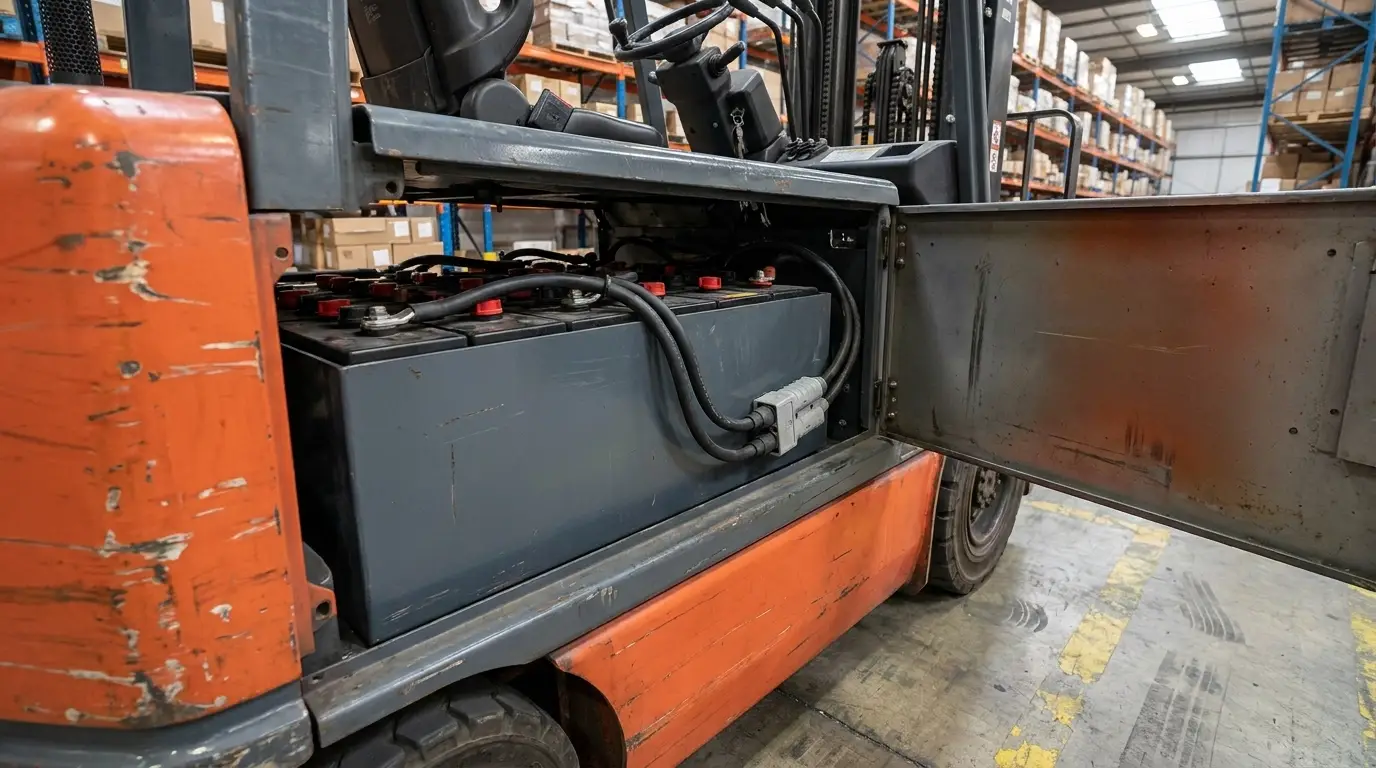
Main battery cables carry power between the battery and the forklift. Their conductor size, terminals, and connectors must suit the truck’s current demand. They must also match original factory configurations.
Charging Cables and Extension Leads
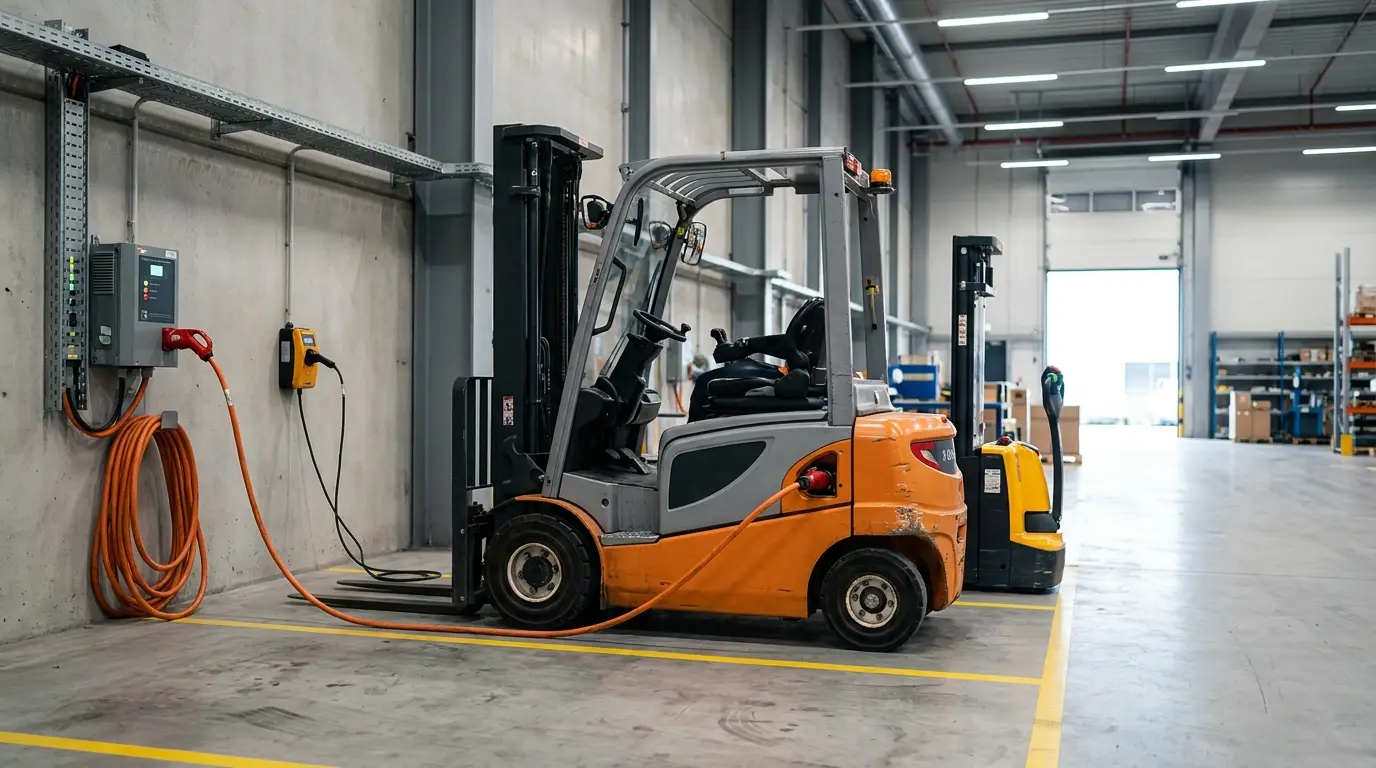
Charging cables connect a compatible charger to the industrial battery. Extension leads add reach when charging trucks. However, a longer cable increases electrical resistance and voltage drop. Never assume charging leads and truck battery cables are interchangeable.
Intercell Links and Terminal Assemblies
Intercell links connect individual cells within a battery assembly. Terminal assemblies and leadheads connect battery posts to outgoing cables. These are distinct, highly specialized components. Replacement must follow procedures specified by the battery manufacturer.
What Types of Forklift Battery Cables and Connectors Are Available?
Pre-Terminated Cables and Replacement Leads
A pre-terminated forklift battery cable comes with terminals and connectors already attached. This setup simplifies maintenance and reduces installation errors. It must match original conductor size, length, and connector style.
Bulk cable sold by length offers routing flexibility. However, crimping and termination require proper tooling. Only qualified technicians should assemble raw high-current cables.
Common Forklift Battery Connectors
SB-style and DIN European-style connectors are common industry standards. Each family includes distinct series, sizes, and amperage ratings. Therefore, the family name alone does not confirm compatibility.
Housing colors often signify specific operating voltages within one product line. However, color alone does not guarantee electrical compatibility across brands. Always verify the exact model series, internal contacts, and polarity. Consult manufacturer documentation before mating unfamiliar plugs.
Cable Lugs and Leadheads
Lugs and leadheads connect the cable to battery posts or busbars. Always inspect the barrel size and bolt-hole dimensions. Ensure the terminal mounting direction matches the existing battery layout. A poorly matched lug creates high resistance, even with thick wire.
Explore Smart Battery Management Solutions
Explore Smart BMS ProductsHow Do You Choose the Right Forklift Battery Cable Gauge and Length?

Cable sizing is the most critical technical step in the selection process. Never pick a cable based solely on appearance or battery voltage.
Understand AWG and Metric Cable Sizes
El American Wire Gauge (AWG) system uses inverse numbering. A smaller gauge number indicates a thicker copper conductor. For example, 2/0 AWG is significantly larger than #2 AWG. Common forklift sizes include 1/0, 2/0, 3/0, and 4/0 AWG.
Metric industrial cables are measured by cross-sectional area in square millimeters (mm2). These standard sizes are reference points, not universal recommendations. No single ampacity rating applies across all operating environments.
Match Cable Size to Current and Operating Conditions
Current carrying capacity depends on continuous load and peak motor demand. Consider lift duty cycles, conductor materials, and insulation temperature ratings. Enclosed battery compartments trap heat and lower safe ampacity limits. Bundling multiple cables together also impedes heat dissipation.
Voltage and battery amp-hour capacity alone cannot determine wire gauge. Always review the truck manufacturer’s engineering specifications. Ensure the selected forklift battery cable withstands your daily workload.
Consider Cable Length and Voltage Drop
Longer cables introduce higher electrical resistance. Two fundamental electrical formulas govern this performance loss:
- Voltage drop: V = I × R
- Resistive power loss: P = I2 × R
In these equations, I represents current and R represents resistance. Because power loss scales quadratically (I2), heavy lifting spikes heat rapidly. A cable fine under light loads can quickly overheat during peak lifting.
Route cables efficiently without adding unnecessary slack. Never shorten factory assemblies without verifying manufacturer guidelines. Always measure the full circuit path, including both positive and negative leads.
Account for Temperature, Routing, and Bundling
Evaluate environmental conditions along the entire cable run. Vibration, tight bends, and sharp edges accelerate physical wear. Check the jacket’s temperature rating and chemical resistance. Never assume a thick outer jacket guarantees adequate electrical performance.
How Do You Match a Forklift Battery Cable to Your Truck and Charger?
A replacement lead must integrate seamlessly into the complete electrical circuit.
Check Voltage and Electrical Requirements
Inspect the nameplates on both the truck and battery. Common industrial forklift configurations include 24V, 36V, 48V, and 80V systems. System voltage categorizes the equipment but does not determine cable thickness. Verify operating amperage before selecting a replacement cable.
Verify Ratings Across the Connection
Every connection component must safely handle the forklift’s electrical draw. This includes copper conductors, crimped terminals, and contact pins. Ratings like 175A or 350A apply only to connectors under specific conditions. Never assume connector ratings equal the continuous rating of the entire assembly.
Review official documentation for the cable and plug. Compare those ratings against the battery, charger, and truck requirements.
Confirm Connector Series, Polarity, and Mechanical Fit
A connector that fits mechanically may still fail electrically. Verify connector series, contact pin arrangement, and mechanical keying. Always double-check positive and negative polarity alignments. Reverse polarity can destroy expensive forklift controllers instantly.
| What to check | Why it matters |
|---|---|
| Conductor size and length | Affect current capacity, voltage drop, and heating |
| Terminal type and mounting | Ensure a tight, low-resistance mechanical joint |
| Connector series and rating | Confirm proper physical fit and electrical capacity |
| Polarity and keying | Prevent catastrophic reverse-polarity short circuits |
| Insulation rating | Resists ambient heat, battery acid, and mechanical abrasion |
Check the Original Part Number
The original OEM part number offers the fastest replacement route. Cross-reference this number with service manuals or authorized parts dealers. If tags are missing, record gauge, length, terminal type, and connector series.
Just because a plug fits does not make it safe. Universal claims often overlook critical duty cycle requirements. Always confirm full electrical specifications before placing an order.
Customizable BMS & Heavy-Duty Power Solutions
Explore Custom BMS SolutionsWhich Cable Materials and Insulation Features Matter?
Industrial cables must endure harsh mechanical and chemical warehouse environments.
Conductor Flexibility and Insulation
Flexible forklift battery cables use finely stranded copper conductors. High strand counts withstand constant vibration and tight compartment bends. Check jacket ratings for resistance to battery acid, hydraulic oil, and heat. Never infer chemical resistance from jacket thickness or appearance alone.
Routing, Bend Radius, and Strain Relief
Cables deteriorate rapidly when bent too tightly or pinched by battery covers. Avoid dragging cables across sharp chassis edges during battery swaps. Observe the manufacturer’s minimum bend radius at all times. Install proper strain relief clamps so cable weight never pulls on terminals.
How Can You Identify Damaged or Undersized Forklift Battery Cables?

Regular inspection prevents electrical fires, component damage, and unplanned downtime.
Common Warning Signs
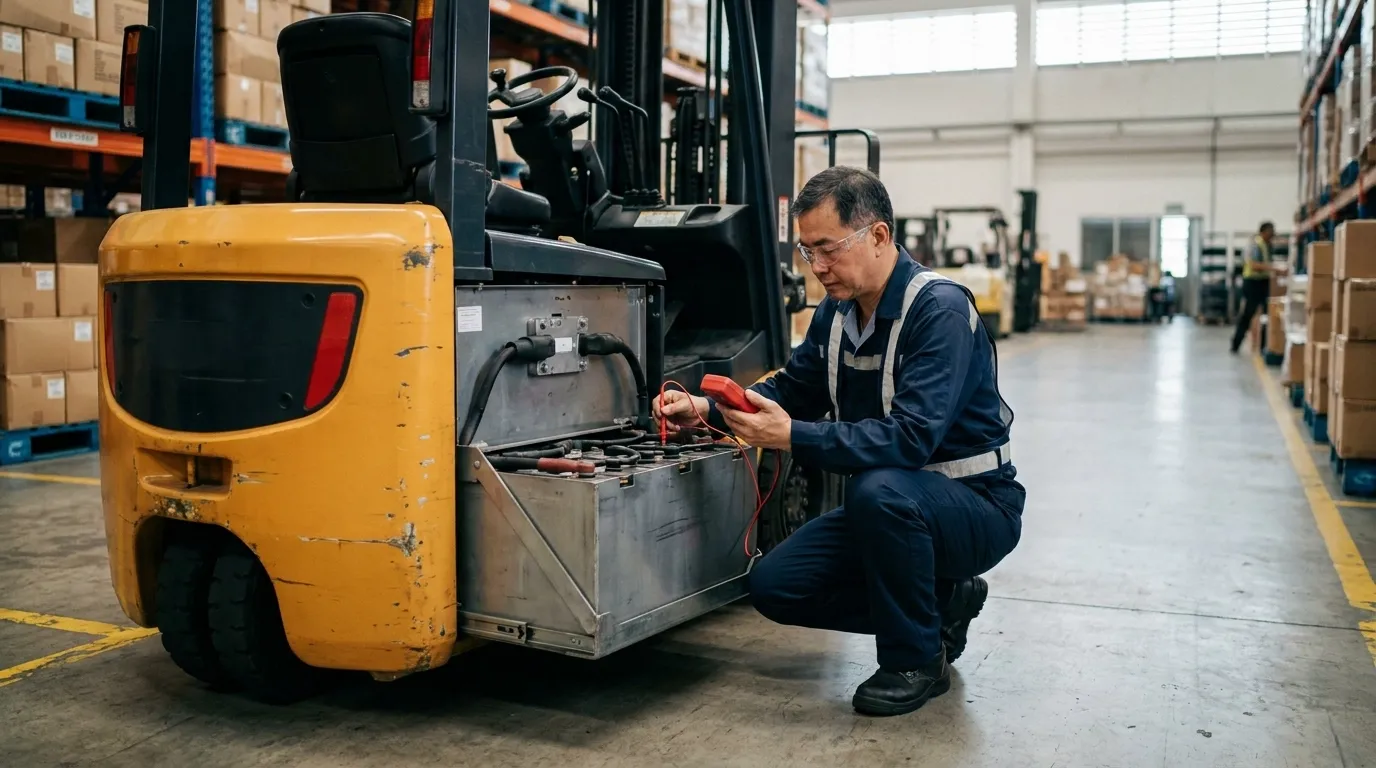
Routinely inspect cables for cracked jackets, cut insulation, or exposed wire. Watch for corroded lugs, discolored contact pins, or warped connector housings. Intermittent power loss or sluggish lifting signals potential connection failure. Treat any hot-running electrical joint as an immediate maintenance priority.
Why Cables Overheat
Overheating results from undersized conductors, loose lugs, or corroded contacts. Defective crimps and worn connector terminals also generate intense localized heat. Upgrading to thicker wire will not solve a loose or corroded joint.
If a forklift battery cable overheats or smells scorched, park the truck immediately. Never attempt makeshift repairs on high-current DC cables. Have qualified technicians test and replace damaged battery leads. Always adhere to site safety rules and manufacturer service guidelines.
What Should You Check Before Ordering a Replacement Forklift Battery Cable?
Review this verification checklist before placing an order:
- Forklift model data: Confirm truck model, serial number, and electrical configuration.
- Battery specifications: Check operating voltage and battery capacity tags.
- Cable dimensions: Measure required wire gauge (AWG/mm2) and total length.
- Connector specifications: Confirm connector series, amp rating, contact size, and polarity.
- Terminal hardware: Verify lug hole diameter, barrel size, and leadhead style.
- Operating environment: Note exposure to extreme temperatures, oils, moisture, and flexing.
- OEM part number: Locate original part numbers from service manuals.
- Charger matching: Ensure charger cables and truck connectors pair correctly.
Contact the equipment manufacturer if any specification remains unclear. Verifying technical details in advance prevents costly return shipping and downtime. Never select industrial power cables based on guesswork or visual resemblance alone.
Preguntas frecuentes
What Are the Cables That Connect a Forklift Battery to the Truck Called?
They are commonly called main battery cables, battery leads, or battery harnesses. Terminology varies among suppliers and equipment manufacturers. Identify parts by wire gauge, length, connector model, and OEM part number.
What Gauge Wire Is Commonly Used for Forklift Battery Cables?
Most industrial trucks use 1/0, 2/0, 3/0, or 4/0 AWG cables. Some smaller or light-duty units utilize #2 or #1 AWG wire. Exact sizing depends on continuous current draw, cable length, and duty cycle. Always consult the manufacturer manual for certified minimum wire gauges.
Are Forklift Battery Cables Interchangeable Between 24V and 48V Systems?
No, they are rarely interchangeable. Lower-voltage systems often carry higher current to produce equivalent motor power. Consequently, a 24V truck may require thicker cables than a 48V model. Connector keying and polarity configurations also frequently differ.
What Types of Connectors Are Used on a Forklift Battery Cable?
Anderson SB/SBX-style and DIN European-style connectors are industry standards. Each family features distinct voltage keys, amperage ratings, and pin designs. Never rely on housing color alone to confirm connector compatibility.
Can I Use a Universal Cable to Replace a Forklift Battery Cable?
Only use aftermarket leads if they fully match OEM technical specifications. A generic cable might fit mechanically but lack proper current ampacity. Incorrect terminal lugs or thin insulation present severe fire hazards. Certified OEM replacements or engineered equivalents remain the safest choice.
Why Do Forklift Battery Cables Get Hot?
Excessive heat indicates high electrical resistance or overload conditions. Common culprits include loose terminal bolts, damaged crimps, and undersized wire. Worn connector contacts and internal conductor corrosion also generate dangerous heat. Shut down hot equipment immediately to prevent electrical fires and melting.
What Safety Precautions Apply When Connecting or Disconnecting a Forklift Battery Charger?
Always turn the charger off before disconnecting the battery cable. Pull on the connector housing, never on the flexible cable itself. In the United States, follow OSHA 29 CFR 1910.178(g) battery charging regulations. Wear personal protective equipment and never handle damaged, sparking leads.