- Industries

Home Backup & Garden BMS
View More >Electric Forklift BMS
View More >Golf Cart BMS
View More >Electric Two-wheeler BMS
View More >Aviation & UAV BMS
View More >BMS For Power Tools
View More >Medical Equipment BMS
View More >





Home About Us EVENTS & NEWS What Makes LiPo Drone Battery Technology Ideal for Drones?
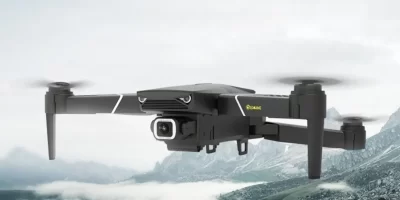
The foundation of contemporary quadcopters and unmanned aerial vehicles (UAVs) is a LiPo drone battery, short for Lithium Polymer battery.
Although its chemistry is based on lithium-ion technology, LiPo uses a polymer composite electrolyte rather than a liquid one, which makes the battery lighter, more portable, and capable of delivering larger discharge currents.
Professional drone pilots, cinematographers, industrial survey teams, and racing enthusiasts who require quick power supply, long flight times, and a steady voltage curve choose the LiPo drone battery because of these features.
For high-thrust applications where every gram and every amp matter, LiPo cells have a greater energy-to-weight ratio and can withstand high current draws compared to earlier battery chemistries like nickel-cadmium (NiCd) or nickel-metal hydride (NiMH).

Several cells connected in series (to boost voltage) and occasionally in parallel (to boost capacity) make up a LiPo drone battery.
Each LiPo cell has a nominal voltage of 3.7V, a safe discharge limit of about 3.0V per cell, and a full charge of 4.2V.
A 4S LiPo drone battery, for instance, has four cells connected in series and a nominal voltage of 14.8V, making it suitable for mid-sized drones.
For longer flight times and quicker throttle response, high-performance drones may employ 6S (22.2V) or even 12S (44.4V) packs.
During charge and discharge, lithium ions travel through the polymer electrolyte between the anode and cathode inside the battery.
Because of the steady voltage and high discharge rates produced by this electrochemical process, drones are able to execute tasks like precision hovering, quick ascents, and lifting large payloads.
LiPo batteries are well-liked because they strike a balance between efficiency, weight, and power. The salient characteristics consist of:
High Energy Density: LiPo batteries are crucial for aerial platforms where payload weight is crucial since they can store a substantial amount of energy in a small, light construction.
High Discharge Rate (C-Rating): Because LiPo batteries can store a significant quantity of energy in a tiny, light structure, they are essential for aerial platforms where payload weight is critical.
Flexible Shape and Size: LiPo cells can be produced in thin, flat pouches, which allows for more effective use of space in drone frames than cylindrical Li-ion cells.
Stable Power Delivery: LiPo batteries guarantee consistent flying control and responsiveness by maintaining a constant voltage under load.
Quick Recharge: LiPo batteries retain a steady voltage under load, ensuring reliable flying control and response.
To protect the sensitive chemistry of LiPo batteries, a Battery Management System (BMS) is necessary.
Without a BMS, even minor charging mistakes can result in thermal runaway, overheating, or cell imbalance, all of which jeopardize safety and performance.
The battery’s vital properties are continuously monitored and controlled by the BMS, including:
Voltage per cell: Ensures each cell stays within the safe operating range (typically 3.0V–4.2V).
Temperature: Prevents overheating during charge or discharge.
Current flow: Protects against short circuits and overcurrent events.
State of Charge (SOC) and Health (SOH): Tracks energy usage and remaining life.
Cell balancing: Equalizes cell voltages for longer lifespan and consistent performance.
By integrating with the flight controller of drones, the BMS provides real-time battery telemetry through communication protocols including CANBUS, SMBUS, or UART.
This guarantees stability and avoids mid-flight power loss by enabling the drone’s control system to dynamically modify power consumption.
When a BMS is incorporated into a LiPo drone battery, it becomes an intelligent power module instead of just a basic energy source. This is how:
Overcharge Protection: Prevents cells from exceeding their maximum voltage, which could otherwise cause swelling or fire.
Overdischarge Protection: Stops the battery from draining below the safe threshold, avoiding permanent damage to lithium cells.
Short Circuit Prevention: Immediately shuts down current flow in case of faults, protecting both the battery and the drone electronics.
Thermal Management: Sensors detect high temperatures during intense flights or charging, reducing power output to prevent damage.
Cell Balancing: Ensures all cells maintain equal voltage levels, improving flight consistency and extending overall battery lifespan.
Data Logging: Stores charge cycles, voltage history, and health metrics — crucial for predictive maintenance.
LiPo drone batteries are significantly more prone to malfunctions that could cause crashes, unplanned shutdowns, or safety risks in the absence of an appropriate BMS.
Although LiPo is the most popular kind of drone battery, there are other options as well. Here is a summary of the main kinds:
| Battery Type | Chemistry | Voltage per Cell | Advantages | Limitations |
|---|---|---|---|---|
| LiPo (Lithium Polymer) | Li-ion polymer electrolyte | 3.7V | Lightweight, high discharge rate, flexible shapes | Sensitive to overcharge/heat |
| Li-ion (Cylindrical 18650/21700) | LiCoO₂ or NMC | 3.6V | High energy density, longer life | Lower discharge rate |
| NiMH (Nickel-Metal Hydride) | NiMH | 1.2V | Durable, safe | Heavy, low energy density |
| NiCd (Nickel-Cadmium) | NiCd | 1.2V | Reliable, works in cold temps | Memory effect, toxic materials |
LiPo batteries are the industry standard for UAVs, particularly those that need high-thrust propulsion, because they perform better than other batteries in terms of power-to-weight ratio.
A LiPo drone battery’s lifespan and power delivery efficiency are determined by a number of factors:
Temperature: Extreme cold reduces capacity, while excessive heat accelerates chemical degradation.
Discharge Depth: Regularly discharging below 20% capacity shortens battery life.
Charging Rate: Using improper chargers or charging too quickly may cause imbalance or damage.
Storage Voltage: Storing fully charged or fully depleted LiPo batteries leads to faster aging.
Usage Intensity: Aggressive flight patterns and heavy payloads draw higher current, reducing cycle life.
BMS Calibration: A well-calibrated BMS ensures all cells remain synchronized and prevents performance drift.

A LiPo drone battery can typically last 200 to 500 charge cycles, depending on the cell quality, flight conditions, and charging procedures.
This number can be greatly increased—up to 800 cycles with adequate maintenance—when a smart BMS actively manages charge and discharge.
The drone’s weight, motor efficiency, and surrounding circumstances all affect how long a flight lasts.
Under ideal circumstances, a professional 4S or 6S LiPo drone battery may last 20 to 40 minutes between charges.
Longevity and safety are guaranteed with proper maintenance.
Observe these recommended practices:
Avoid Overcharging or Deep Discharge: Keep cell voltage between 3.3V and 4.1V for everyday use.
Use a Balance Charger: Always charge through a BMS or smart charger that monitors each cell.
Store at 40–60% Charge: Ideal for long-term storage to prevent chemical stress.
Keep in a Cool, Dry Place: Avoid direct sunlight or freezing temperatures.
Clean Terminals Regularly: Prevent corrosion that can affect voltage transmission.
Perform Regular BMS Diagnostics: Check for irregular voltages or temperature spikes.
By taking these precautions, battery performance is maintained and potential risks like swelling or leaking are avoided.
LiPo drone batteries are used in many different applications:
Consumer Drones: For hobbyists and photographers seeking stable flight and responsive control.
Industrial UAVs: Used for mapping, inspection, and agriculture where endurance and payload are crucial.
FPV Racing Drones: Require ultra-high discharge LiPo packs (up to 100C) for instantaneous thrust.
Cinematic Drones: Depend on LiPo’s steady voltage curve for smooth flight footage.
Military and Surveillance UAVs: Need reliable, lightweight power sources with real-time BMS telemetry.
Delivery Drones: Combine LiPo batteries with advanced BMS algorithms to optimize flight range and load management.
Intelligent BMS integration and hybrid LiPo chemistries will revolutionize UAV power systems as drone technology advances.
Developments in graphene layers, solid-state electrolytes, and AI-based power analytics promise:
Safer operation with reduced fire risk.
Extended energy density beyond 300 Wh/kg.
Real-time flight energy optimization through adaptive BMS algorithms.
Predictive maintenance using cloud-based diagnostics.
The next generation of LiPo drone battery systems will be significantly lighter, safer, and more energy-efficient thanks to these advancements, opening the door for autonomous drones with longer endurance and range.
Reliable UAV power performance is made possible by the combination of an intelligent Battery Management System and a LiPo drone battery.
When combined, they provide unparalleled endurance, safety, and energy economy, which makes them essential for high-performance drones in both commercial and industrial settings.
Ayaa Technology offers cutting-edge BMS designs that guarantee peak performance, accurate monitoring, and strong safety for businesses looking for sophisticated, adaptable BMS solutions for LiPo and Li-ion drone battery systems.
This enables your UAVs to fly higher, longer, and more intelligently.
Q1:Which is better, LiPo or li-ion battery for drones?
A1:Simply said, Li-Po batteries are ideal for pushing boundaries since they provide more power and fit in smaller places, making them ideal for demanding RC hobbies or high-speed racing.
Li-Ion batteries are the finest option for regular drone flights and longer run periods with consistent performance.
Q2:Is LiPo or lithium better?
A2:For the same capacity, the two battery types have different weights and sizes.
Long-range applications benefit from Li-ion batteries’ tendency to be lighter and more compact.
LiPo batteries provide superior form factors for peak performance scenarios despite being heavier and bulkier for similar capacity.
Q3:What is the 80% rule for LiPo batteries?
A3:When recharging LiPo batteries, the 80% rule refers to the battery’s AMPERAGE, or storage capacity, rather than its voltage.
This indicates that a 1500mAh battery should not be used for more than 1200mAh (0.8×1500 = 1200, or 80% of 1500mAh).
Q4:Which is better 18650 or 21700 for drones?
A4:Greater Energy Density: Compared to the 18650, the 21700 cell has a greater energy density (Wh/kg), which enables longer runtimes and greater capacity.
This is perfect for robotics or UAVs when longer operating times are crucial.
Q5:What is the 80 20 rule for drones?
A5:The drone should never be used when the battery is less than 20% full.
Additionally, operations should only start flights when the battery is more than 80% charged.