- Industries

Home Backup & Garden BMS
View More >Electric Forklift BMS
View More >Golf Cart BMS
View More >Electric Two-wheeler BMS
View More >Aviation & UAV BMS
View More >BMS For Power Tools
View More >Medical Equipment BMS
View More >






Home About Us EVENTS & NEWS Comparing 48V, and 51.2V, 36 volt li ion battery: Which One Should You Choose?
Selecting the appropriate lithium-ion battery is essential for energy storage systems, industrial applications, and contemporary electric vehicles.
The 36 volt Li-ion battery, 48-volt Li-ion battery, and 51.2-volt Li-ion battery are the most popular choices.
To maximize performance, efficiency, and longevity, it is essential to comprehend the unique qualities, benefits, and uses of each.
Furthermore, incorporating a Battery Management System (BMS) can significantly improve longevity and safety.

A rechargeable battery that combines several lithium-ion cells to produce a nominal voltage of 36 volts is known as a 36 volt Li ion battery.
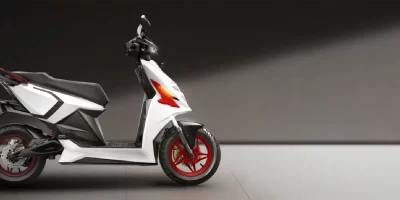
Golf carts, e-bikes, electric scooters, and some industrial equipment frequently use these batteries.
Lithium-ion batteries are lighter, have a better energy density, and can charge more quickly than conventional lead-acid batteries.
What distinguishes a 36V Li ion battery from other voltage alternatives, though?
The quantity and arrangement of cells hold the key to the solution.
In order to obtain the required capacity and current output, a 36V battery is often made up of ten cells connected in series (3.6V nominal per cell), which are frequently grouped in different parallel configurations.
An integral part of these batteries is a Battery Management System (BMS).
It balances cells, keeps an eye on temperature, voltage, and current, and guards against short circuits, overcharging, and overdischarging of the battery.
The battery could deteriorate more quickly or potentially become dangerous without a BMS.
Lifespan is a major problem for battery users.
What is the maximum number of charge-discharge cycles that a 36 volt Li-ion battery can withstand?
Depending on usage, charging methods, and environmental factors, these batteries can typically last between 1,000 and 2,000 cycles.
By guaranteeing that no single cell is stressed beyond safe bounds, a well-integrated BMS contributes to cycle life maximization.
For example:
Overcharging can increase cell temperature and reduce lifespan.
Deep discharging can lead to capacity loss.
Imbalanced cells may wear unevenly, shortening overall battery life.
Even in high-demand applications, a 36V Li ion battery may deliver years of dependable performance with proper maintenance.
For longevity and safety, a 36 volt Li ion battery needs to be maintained.
Here are some useful pointers:
Use the Correct Charger: Always use a charger designed for your specific voltage and chemistry.
Avoid Extreme Temperatures: High heat accelerates degradation, while extreme cold reduces performance temporarily.
Do Not Over-Discharge: Keep the battery above the minimum recommended voltage.
Store at Partial Charge: For long-term storage, 40–60% charge is optimal.
Monitor Through BMS: Use the BMS to track health, balance cells, and receive alerts for abnormal conditions.
The battery’s cycle life, energy density, and efficiency can all be fully achieved with the right maintenance.
How do 36V Li-ion batteries compare to 36V lead-acid batteries, which are still popular among consumers?
| Feature | 36V Li Ion Battery | 36V Lead Acid Battery |
|---|---|---|
| Weight | Lighter, high energy density | Heavier |
| Lifespan | 1,000–2,000 cycles | 300–500 cycles |
| Efficiency | Higher charging/discharging efficiency | Lower efficiency |
| Maintenance | Low maintenance, mostly BMS monitored | Requires water topping and equalization |
| Cost | Higher upfront | Lower upfront |
Lead-acid batteries are still less expensive at first, but 36V Li ion batteries provide better long-term performance, require less upkeep, and work with contemporary electronics.
Additionally, the BMS guarantees safe operation, which is typically lacking in lead-acid installations.
Li ion batteries with a voltage of 36 volts are frequently utilized in:
E-bikes and scooters: Lightweight and high energy density makes them ideal for mobility devices.
Golf carts: Longer run times and quicker charging improve usability.
Industrial tools and AGVs: High discharge currents for motors and machinery.
Solar energy storage: Reliable cycle life for off-grid or hybrid solar systems.
The system design, motor specs, and necessary power all influence battery voltage selection.
A BMS guarantees dependable functioning and safeguards the investment in every situation.
Higher voltages like 48V and 51.2V offer benefits for more demanding systems, but 36V batteries are appropriate for light-to medium-duty applications:
48V Li Ion Battery: Larger systems and stronger motors are supported by higher voltage.
Frequently seen in compact EVs, scooters, and high-performance e-bikes.
51.2V Li Ion Battery: gives extra headroom for energy storage, which is typical for long-run energy storage systems and industrial applications.
The trade-offs include possibly bigger size, more complicated BMS management, and somewhat higher expenses.
Power requirements, runtime, and compatibility with current equipment all play a role in selecting the appropriate voltage.
Whether 36 volt Li ion batteries can be fully charged is a frequently asked question.
In a nutshell, if handled properly, the answer is yes.
When used in conjunction with a BMS, contemporary lithium-ion batteries enable complete charging without causing cell damage.
By keeping an eye on every cell and halting the charge when the maximum voltage is reached, the BMS avoids overcharging.
Without a BMS, charging over safe limits can result in:
Reduced lifespan
Overheating
Potential safety hazards
As a result, having a well-designed BMS is crucial for both performance and safety.
The Battery Management System (BMS) is the unsung hero of all these subjects.
This is why it is important:
Cell Balancing: Prevents weak cells from limiting the whole battery.
Temperature Monitoring: Protects against overheating.
Voltage Protection: Prevents overcharge and deep discharge.
Current Management: Controls charge/discharge currents to stay within safe limits.
Safety Alerts: Detects faults and prevents accidents.
Whether you select 36V, 48V, or 51.2V Li ion batteries, a high-quality BMS guarantees that you optimize performance, efficiency, and longevity.

When choosing between Li ion batteries with 36V, 48V, and 51.2V, take into:
Application Requirements: Motor power, runtime, and load conditions.
Space and Size Constraints: Larger voltage batteries may need more room.
Budget: Higher voltage and capacity increase upfront cost.
Maintenance and Safety: A BMS reduces maintenance effort and increases safety.
A 36 volt Li ion battery balances performance, weight, and cost for the majority of small to medium-sized devices, such as golf carts, e-bikes, and scooters.
Systems with higher voltages are more appropriate for heavy-duty or industrial energy storage applications.
Solar storage systems, electric cars, and mobility gadgets can all be easily integrated with a well-managed 36 volt Li ion battery.
In order to provide more intelligent energy management and longer battery life, modern systems frequently include real-time monitoring of battery health, voltage, temperature, and cycle count.
Once more, the foundation of this connection is a BMS, which offers data analytics, security, and efficiency optimization.
A balance between voltage, capacity, application, and longevity is necessary when choosing a lithium-ion battery.
While 48V and 51.2V batteries are used in more powerful industrial and energy storage applications, a 36V Li ion battery is best suited for small-scale systems and lightweight mobility.
A top-notch BMS maximizes return on investment and minimizes maintenance issues by guaranteeing safe, effective, and dependable performance in every situation.
Ayaa Technology offers a variety of high-performance 36V Li ion batteries with dependable BMS integration that are appropriate for e-bikes, scooters, golf carts, industrial instruments, and energy storage systems.
Q1:How long will a 36V lithium battery last?
A1:Depending on how frequently and thoroughly the battery is discharged, that translates to seven to ten years of consistent use.
36V lithium batteries are a more superior long-term option for both recreational and commercial use, while conventional lead-acid batteries only last roughly 300–500 cycles.
Q2:How many 12v batteries to make 36V?
A2:”How do you create a higher-voltage battery pack?” is a question we receive frequently.
The solution is to continue connecting batteries in series.
In the following figure, for instance, three 12-volt batteries are connected in series to form a 36-volt, 35-amp battery pack.
Q3:What is a 36 volt battery used for?
A3:Electric bikes and scooters are among the many gadgets that run on 36V batteries.
power equipment. Marine machinery, such as trolling motors.
Q4:What is the difference between a lithium battery and a li-ion battery?
A4:What Distinguishes Lithium-Ion Batteries From Lithium Batteries?
Lithium-ion batteries are rechargeable, whereas lithium cells are not.
This is the primary distinction between the two types of batteries.
Charge/discharge cycles in lithium-ion cells can occur thousands of times.
Q5:What is the 80 20 rule for lithium batteries?
A5:Lithium batteries should be charged up to 80% for everyday usage, according to the 80/20 rule.
Only when necessary—for example, prior to a lengthy journey or a complete discharge cycle—charge to 100%. Keep the battery from discharging below 20%.
Contact Us