ДомО насСОБЫТИЯ И НОВОСТИWhy a High-Performance bms for lithium lifepo4 is the Core of Modern Energy Storage
Why a High-Performance bms for lithium lifepo4 is the Core of Modern Energy Storage
555
Why a High-Performance bms for lithium lifepo4 is the Core of Modern Energy Storage
Lithium Iron Phosphate (LiFePO4) has become the ideal chemical for mission-critical storage as the world moves closer to sustainable energy by 2026.
The market prefers this technology because of its cycle lifespan and safety, from large solar arrays to high-reliability mobile power.
However, the complex electronic architecture that controls these systems—rather than just the chemical cells—is what gives them their actual performance.
As the digital guardian of the power system, a high-performance bms for lithium lifepo4 makes sure that every electron is transported effectively and safely.
The intrinsic benefits of iron phosphate chemistry lay dormant without this astute management, leaving the hardware susceptible to electrical instability and environmental damage.
What exactly is a bms for lithium lifepo4 and how is it defined?
An integrated electronic management system designed especially to manage the special voltage and temperature properties of iron phosphate batteries is called a bms for lithium lifepo4.
These units are calibrated for a considerably flatter and narrower voltage discharge curve than normal lithium-ion management systems.
1.Voltage Mapping: The system monitors the individual cell voltages, typically maintaining them within a precise window of 2.5V to 3.65V per cell.
2.High-Precision Monitoring: LiFePO4 voltage varies relatively little between 20% and 80% charge, hence high-resolution sensors are required for the BMS to precisely assess the battery’s condition.
3.Operational Command: As the main decision-maker, the BMS communicates with external charges and loads to stop any one component from going over its physical limitations.
How does a bms for lithium lifepo4 operate within a battery pack?
A bms for lithium lifepo4 operates through an ongoing cycle of data collection, analysis, and execution.
The BMS carries out a number of background operations to keep the battery in balance as it enters a charge or discharge phase.
●Dynamic Cell Balancing: In order to ensure that the entire pack reaches 100% capacity at the same time, the BMS detects cells with slightly higher voltages during the last stages of charging and drains out surplus energy.
●Continuous Current Auditing: In order to avoid internal overheating or “lithium plating” during fast-charge sessions, the system continuously calculates the incoming and exiting amperage and modifies the flow.
●Environmental Interlock: By monitoring a network of thermistors, the BMS can instantly pause operations if the internal temperature deviates from the safe operating profile.
Why is the bms for lithium lifepo4 so critical for industrial energy safety?
The importance of a bms for lithium lifepo4 cannot be overstated, particularly when considering the pillars of safety, lifespan, reliability, and efficiency.
1.Safety: A BMS is necessary to prevent external short circuits or over-current events that could harm the nearby infrastructure, even though LiFePO4 is chemically safer than cobalt-based lithium.
2.Lifespan: The BMS allows for 5,000 to 10,000 useable cycles by preventing the chemical deterioration that happens when cells are overextended by enforcing stringent voltage floors and ceilings.
3.Reliability: In professional applications, a BMS provides the predictability needed to plan maintenance and avoid sudden power-offs during critical operations.
4.Efficiency: The BMS ensures a higher round-trip efficiency for solar and wind storage systems by reducing energy waste throughout the conversion process through active control.
In which diverse professional applications is a bms for lithium lifepo4 most utilized?
The 12V to 48V standards have made this technology the backbone of modern mobile and stationary energy infrastructure.
What are the key technical functions of a modern battery management system?
A professional bms for lithium lifepo4 is defined by its ability to perform multiple complex functions simultaneously without manual intervention.
●Protection Layers: The core duty involves guarding against over-charge, over-discharge, over-current, and short-circuit scenarios through high-speed MOSFET switching.
●Performance Management: This includes the active balancing of cells and the management of charge/discharge cycles to ensure even wear across the entire battery pack.
●Status Estimation: The BMS uses advanced algorithms to provide accurate State of Charge (SoC) and State of Health (SoH) data, which is vital for energy planning.
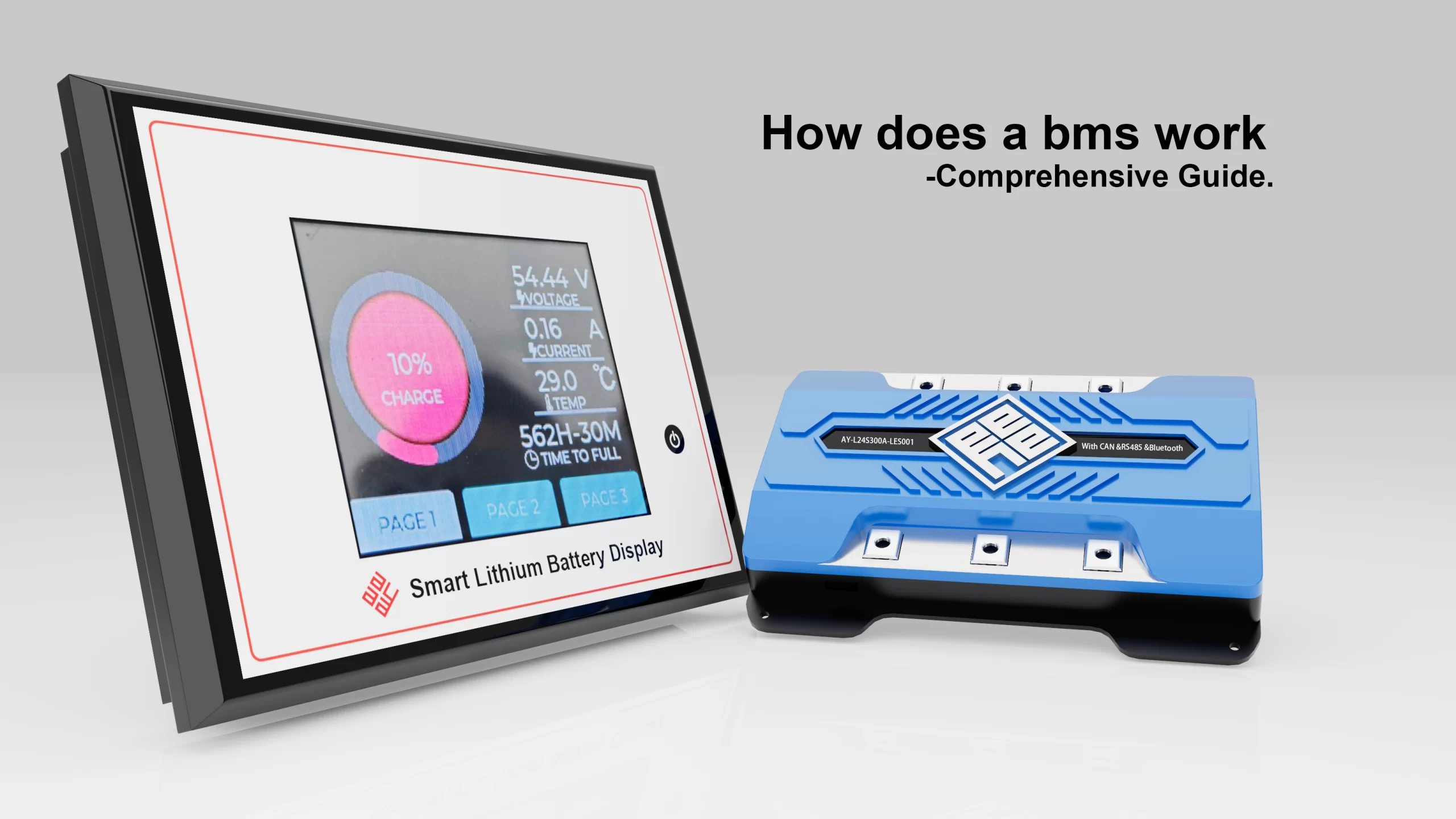
●Communication Integration: Modern units support CANbus, RS485, and Bluetooth, allowing the battery to “talk” to inverters, smartphone apps, and cloud-based management platforms.
What are the specific advantages of a dedicated LiFePO4 BMS over other systems?
A bms for lithium lifepo4 is not a generic tool; it offers specific advantages tailored to the chemistry’s unique behavior.
1.Tailored Voltage Thresholds: Generic lithium systems often have cut-off points that are too high or too low for LiFePO4, which can lead to permanent cell damage or under-utilization.
2.Thermal Tolerance Management: Compared to other lithium kinds, LiFePO4 can run safely at greater temperatures; a specialized BMS enables the user to take advantage of this range without causing premature safety shut-offs.
3.Optimized Idle Consumption: These systems are designed for long-term storage, ensuring that the BMS itself doesn’t drain the battery during months of inactivity.
How should a professional bms for lithium lifepo4 be installed and configured?
The installation process determines the long-term viability of the battery system and requires a methodical approach to electrical engineering.
●Location and Mounting: The BMS must be installed in a dry, ventilated area, ideally secured to a heat-sink or the battery case to manage thermal dissipation.
●Wiring and Connectivity: The balance harness must be connected with absolute precision; even a single loose wire can lead to inaccurate voltage readings and system failure.
●Programming and Calibration: Using a configuration tool, the technician must input the specific cell capacities and desired safety margins based on the project’s specific load profile.
●Integration with External Systems: The final step involves syncing the BMS with the local power conversion system (PCS) or inverter to ensure seamless communication during operation.
Securing the Future of Global Energy with Ayaa Technology
The intelligence of the systems that oversee our most important energy resources is driving the shift to an electrified future.
The fundamental technology that enables companies to fully utilize lithium iron phosphate without sacrificing quality is a bms for lithium lifepo4.
Each integrated management system from Ayaa Technology is designed to withstand the demands of industrial use, offering the durability, safety, and data transparency necessary for business-level performance.
By selecting Ayaa Technology, you are making an investment in both a future of energy independence and a heritage of technical superiority.
We equip your infrastructure with the most cutting-edge management logic available, guaranteeing that your power is constantly safe, effective, and prepared for the challenges of the future.
You can rely on Ayaa Technology to set the standard for intelligent energy management by offering safe solutions that accelerate the worldwide transformation.
Часто задаваемые вопросы
Q1:What is the best BMS for LiFePO4 cells?
A1:Your lithium iron phosphate (LiFePO4) solar cell projects will benefit greatly from the AYAA BMS 24S 200A Battery Management System (BMS), which supports 7S-24S configurations and has Bluetooth and an active balancer.
Q2:Do I need a BMS for LiFePO4?
A2:Yes, LiFePO4 batteries require a Battery Management System (BMS).
Serving as the battery’s “brain,” it guards against cell imbalance, overcharging, overdischarging, and overheating.
You run the danger of irreversible battery degradation, a shorter battery life, or major safety risks like fire without a BMS.
Q3:How to calculate BMS for LiFePO4 battery?
A3:The battery pack’s total voltage and the BMS voltage must coincide.
The BMS must handle 12.8V if your battery pack is 12.8V; else, it won’t work correctly.
For instance, a BMS that can handle 12.8V is needed when four cells are connected in series and have a total voltage of 12.8V.
Q4:What is BMS for LiFePO4?
A4:The intelligence part in charge of managing and controlling your LiFePO4 cells is called a Battery Management System, or BMS.
Q5:How to choose BMS for LiFePO4?
A5:Compatibility: Verify that the BMS was created especially for LiFePO4 cells.
Voltage and Current Monitoring: Every cell in the LiFePO4 battery pack should have its voltage and current precisely monitored by the BMS.