
- Industries

Home Backup & Garden BMS
View More >Electric Forklift BMS
View More >Golf Cart BMS
View More >Electric Two-wheeler BMS
View More >Aviation & UAV BMS
View More >BMS For Power Tools
View More >Medical Equipment BMS
View More >








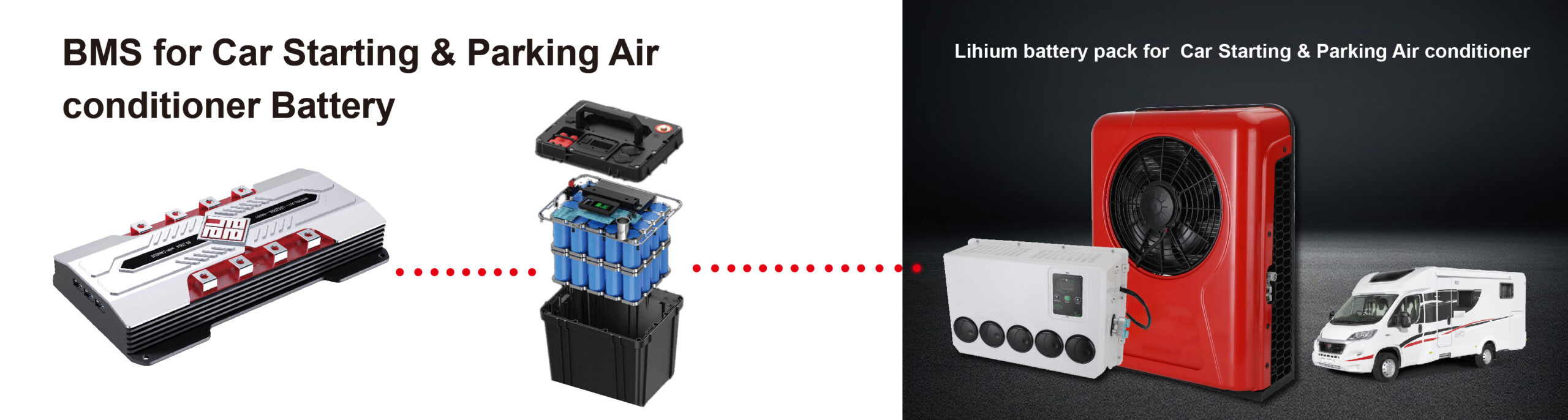


| LF | LI | |||
| Model Number | AY-L10S200A-ES002 (4S-10S) | |||
| Communication Interface | RS485/CAN/BLE | |||
| Charging voltage | DC:12.8V-32V CC/CV(3.2V/Cell) 4s-10s | DC:16.8V-42V CC/CV(4.2V/Cell) 4s-10s | ||
| Maximal continuous charging current | 200A | |||
| Maximal continuous discharging current | 200A | |||
| Current consume in normal operation | ≤15mA | |||
| Current consume in sleep operation | ≤150uA | |||
| Balance voltage for single cell | 3.5±0.05V | 4.0±0.05V | ||
| Over charge detection voltage | 3.65±0.05V | 4.25±0.05V | ||
| Charge Over current detection current | 220±3A | |||
| Discharge Over current detection current 1 | 400±3A | |||
| Discharge Over current detection current 2 | 500±3A | |||
| Short Protection | YES | |||
| SOC | 5%~8% | |||
 | |
| Size | L165 * W123 * T30 mm |
| NTC | 10K |
| Temperature switch | / ℃(the batteries temperature) |
| Weak current switch | YES |
| Active balance | YES |
| Heater | YES |
| Braking Resistors | NO |
| Low temperature protection when charge | 0℃ | ||
| Release temperature( low temperature protection) | 5℃ | ||
| Over temperature protection when charge | 60℃ | ||
| Release temperature( over temperature protection) | 55℃ | ||
| Low temperature protection when discharge | -15℃ | ||
| Release temperature( low temperature protection) | -10℃ | ||
| Over temperature protection when discharge | 65℃ | ||
| Release temperature( over temperature protection) | 55℃ | ||
| Operating Temperature Range | -40~+85℃ | ||
| Storage Temperature Range | -40~+125℃ | ||
| LCD display screen | YES |
| LED light board | YES |
| Bluetooth mode | YES |
| 4G | YES |
| GPS | YES |
Custom Active Balance BMS 4S–10S 12V–32V 200A for RV Battery Systems
Product Introduction
The 4S–10S 12V–32V 200A Active Balance Smart BMS is developed for compact energy storage applications, start-stop cars, and RV battery systems. In one unit, it incorporates active balancing, battery monitoring, and multi-application compatibility. In order to maintain balanced performance, this BMS redistributes energy among cells while monitoring voltage, current, temperature, and state of charge. RVs, electric reach truck forklifts, golf cars, automobile start-stop systems, and maritime battery configurations can all use it.
This RV battery BMS supports a variety of low-voltage battery systems by combining active balancing, monitoring, and customizable design.
For more information or technical support, feel free to contact us.

Maintains constant voltage levels throughout the battery pack by transferring energy across cells. Particularly in RV and start-stop applications, this lessens imbalance during repeated cycles of charging and discharging.
It is appropriate for a variety of low-voltage applications, such as automotive and small energy storage setups, because it supports 4S–10S configurations within a 12V–32V range.
Manages up to 200a steady current that satisfies the power requirements of machinery and vehicles, including marine systems and forklifts.
Provides customers with a clear understanding of battery performance during operation by continually monitoring voltage, current, temperature, and state of charge.
Mobile devices or vehicle systems can be integrated with CAN, UART, and optional BLE interfaces for parameter change and monitoring.
Voltage limitations, current thresholds, and communication protocols can all be customized by users to meet the needs of particular applications.
Contains a number of safeguards to prevent aberrant circumstances and regulate battery operation within predetermined bounds.
Intended for installation in areas with limited space, including car engine bays or RV battery compartments.
Maintains battery operation data, including voltage history and charge cycles, for system analysis and maintenance scheduling.
A variety of low-voltage battery systems used in energy storage and mobility applications are compatible with the 4S–10S 200A Active Balance Smart BMS.

Oversees the onboard battery systems for appliances, lighting, and auxiliary power requirements while traveling and using off the grid.

Supports energy control and battery monitoring for industrial handling and warehouse equipment.

Preserves battery performance and balance in automobile systems that undergo frequent cycles of charging and discharging.

Offers energy management for electric vehicles that are utilized for short distances in both residential and business settings.

Oversees the battery systems that boats employ for onboard electrical equipment and propulsion.


We are your dependable partner for scalable, intelligent, high-current BMS systems, regardless of whether your company manufactures electric cars, supplies battery packs, or integrates systems. We can power your next breakthrough.
We are the best at understanding the demands of the changing electric vehicle and energy storage markets because to our more than 20 years of experience in battery management and power solutions.
In order to deliver smarter, safer, and more effective goods to the market, our committed R&D team keeps pushing the limits of technology, from integrated software platforms to clever BMS design.
To guarantee longevity, stability, and peak performance in real-world applications like forklifts, golf carts, motorbikes, and energy storage systems, our BMS and power solutions are put through rigorous testing in harsh environments.
In order to satisfy your unique requirements, we provide extensive customization options that cover form factors, wireless modules, communication protocols, and battery kinds.
Our technical staff is on hand around-the-clock to assist you with setup, integration, and troubleshooting, from pre-sales consultation to after-sales servicing.
Every product we supply is of the highest quality and safety thanks to our complete compliance with international standards including CE, IEC62109, VDE, and CQC. We are your reliable partner for scalable, intelligent, high-current BMS systems, regardless of your company’s role as a system integrator, electric vehicle manufacturer, or battery pack supplier. Your next breakthrough can be powered by us.
Our Certificates 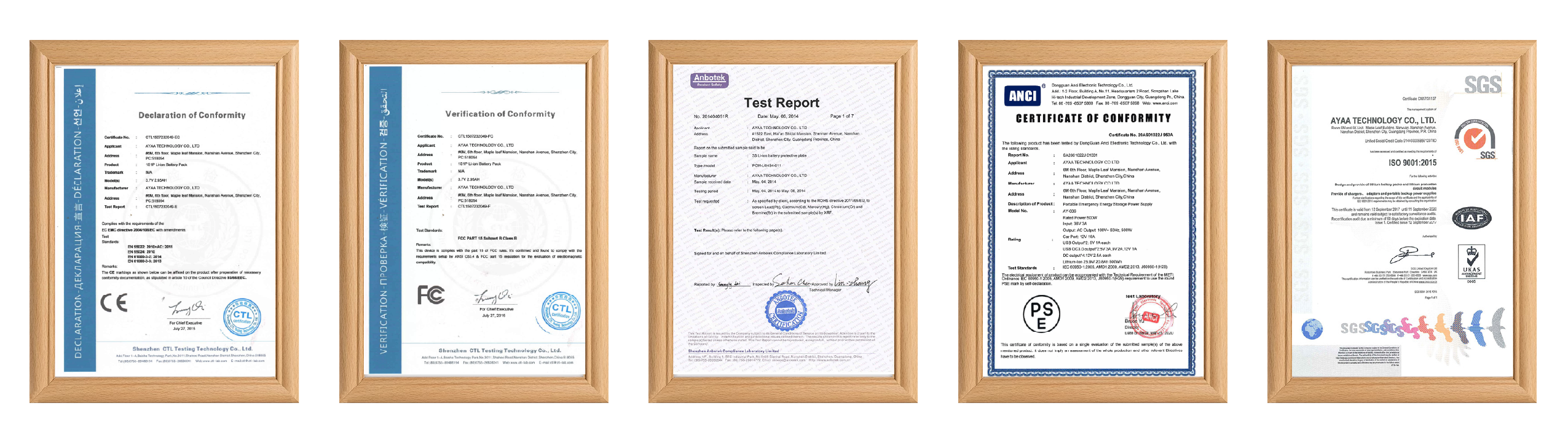 FAQ: Q:What does a smart BMS do? A:Temperature impacts, lifetime aging, self-charge/discharge, and other variables are all within the control of the smart BMS. The usage of BMS is pointless without any of this. Therefore, BMS applications guarantee that your battery is constantly operating at its best capacity and range. Q: What are the three types of BMS? A: In total, there are three common types of BMS architectures: 1.Small, single-board BMS. 2.Distributed BMS. 3.Large, centralized BMS. Q: What is the difference between smart BMS and dumb BMS? A:Simple Voltage and Current Monitoring: Simple voltage and current monitoring is the main focus of dumb BMS. It ensures battery safety by providing protection against overcharging and overdischarging, but it lacks the sophisticated capabilities of a Smart BMS. Q: What is the difference between energy management system and BMS? A:Those who wish to concentrate on management, strategic planning, and leadership positions are best suited for BBM. For students interested in quantitative management strategies and data-driven decision-making, the Bachelor of Management Studies (BMS) program is a good fit because it is more analytical and research-focused. Q: What is better than BMS? A:Because of the practical skills they learn in school, BBA graduates typically make more money than their BMS counterparts. Q: What are the advantages and disadvantages of BMS? A: The fact that they offer centralized control is one benefit. They also have the benefit of lowering operating expenses overall. High beginning and installation expenses as well as the requirement for frequent maintenance are drawbacks. |
Share


