- Industries

Home Backup & Garden BMS
View More >Electric Forklift BMS
View More >Golf Cart BMS
View More >Electric Two-wheeler BMS
View More >Aviation & UAV BMS
View More >BMS For Power Tools
View More >Medical Equipment BMS
View More >








Home About Us EVENTS & NEWS Why BMS with Active Cell Balancing Is the Smartest Investment for Your Battery System
Battery Management Systems (BMS) are now considered essential in the field of energy storage systems, rather than merely a luxury. The need for sophisticated monitoring and management grows as battery technologies progress, especially with the increasing use of lithium-based chemistries. Among the most recent developments, BMS with active cell balancing is a revolutionary way to preserve battery longevity, performance, and health.

An intelligent system called a BMS with active cell balancing is made to keep an eye on, control, and maximize the performance of battery cells, particularly those found in LiFePO4 or lithium-ion packs. Active balancing moves energy from more charged cells to less charged ones, maintaining a constant cell voltage and optimizing usable capacity, in contrast to passive balancing, which releases surplus energy as heat.
A BMS with active cell balancing not only prolongs the battery’s life but also keeps it operating at peak efficiency throughout its cycle life by making sure that each cell works within safe voltage, current, and temperature limitations. This is especially important for high-demand applications like industrial robotics, drones, solar energy storage, and electric cars.
Conventional BMS solutions frequently use passive balancing, which wastes valuable capacity and produces needless heat by merely using resistors to bleed off excess energy. On the other hand, active balancing uses capacitive or inductive techniques to transfer surplus charge from higher-voltage cells to lower-voltage cells.
This approach offers several key advantages:
Improved energy efficiency: More energy is conserved and used effectively.
Reduced heat generation: Minimizing heat reduces cooling requirements and fire risk.
Longer battery lifespan: Even charge distribution minimizes stress and aging on individual cells.
A BMS with active cell balancing is the more sensible and environmentally friendly choice for individuals seeking the most return on investment.
Safety is one of the most important functions of any battery management system. Active cell balancing in a BMS improves safety by avoiding:
Overcharging or undercharging of individual cells
Thermal runaway due to imbalance
Unexpected system shutdowns caused by voltage discrepancies
It serves as your battery pack’s round-the-clock protector by continuously regulating cell voltages and keeping an eye on temperatures. This is particularly crucial for mission-critical applications including emergency backup power systems, medical equipment, and drones.
Faster and more reliable charging is a significant advantage of BMS with active cell balancing. In order to keep the highest-voltage cell from being overcharged, traditional BMS systems frequently stop charging early. As a result, the pack is underutilized.
On the other hand, active balancing preserves pack safety while enabling each cell to charge to its maximum capacity. It can also:
Enable higher charge/discharge rates
Reduce charging cycle time
Ensure higher state-of-charge accuracy
Longer run durations and quicker preparedness are the results, giving you a significant competitive advantage in industries like logistics and transportation.
Despite having a little higher initial cost than passive systems, BMS with active cell balancing offers substantial long-term financial advantages. Here’s why:
Fewer replacement cycles due to longer battery life
Reduced maintenance and downtime
Lower thermal management costs
Better energy utilization (up to 95%+ vs. 85% in passive systems)
Active balancing frequently results in a cheaper total cost of ownership during the battery’s operating lifespan. This can result in savings of tens of thousands of dollars for solar farms and commercial fleets.
Consider the following factors while assessing a BMS with active cell balancing:
Cell configuration compatibility (e.g., 7S–24S, 16S–20S)
Maximum continuous current support (e.g., 90A to 300A)
Communication protocols (CAN, RS485, UART)
Balancing method (capacitive, inductive, transformer-based)
Parallel operation capability
Temperature and fault detection algorithms
Firmware upgradeability and app control (Bluetooth, Wi-Fi)
Your program will operate at its best if you choose the correct mix.
The majority of high-performance systems require expert tuning to match your battery chemistry, usage pattern, and climatic circumstances, even if some off-the-shelf BMS with active cell balancing devices are plug-and-play.
Professional setup guarantees that whether you’re creating a new battery pack or modifying an existing system:
Correct calibration for state-of-charge (SOC) estimation
Proper voltage and temperature thresholds
Safe connection with inverters or controllers
However, open-source BMS solutions with active balancing can also be advantageous for seasoned do-it-yourselfers if they are backed by sufficient documentation.
Battery packs are at the center of the global shift toward cleaner, more intelligent energy systems. A move in the direction of increased sustainability is selecting a BMS with active cell balancing.
Active BMS improves efficiency, prolongs battery life, and lowers waste heat:
Decreases reliance on frequent battery replacements
Minimizes environmental impact
Enables more scalable microgrid and ESS deployments
Such clever ideas will become the norm rather than the exception as climate-conscious regulations tighten.
Active cell balancing in a BMS is particularly advantageous in:
Electric vehicles (EVs): Enables longer range and better acceleration
Solar energy storage systems: Allows for deeper daily cycling
Drones: Supports stable flight and longer airtime
Industrial automation: Maintains uptime for AMRs and AGVs
Marine battery systems: Handles harsh environments and long idle periods
This clever technology can help any system that needs consistent long-term energy performance or cycles often.
Here is a quick comparison of three well-known models that offer active cell balancing to help you better understand what’s available on the market:
| Model | Cell Range | Max Current | Communication | Key Features |
|---|---|---|---|---|
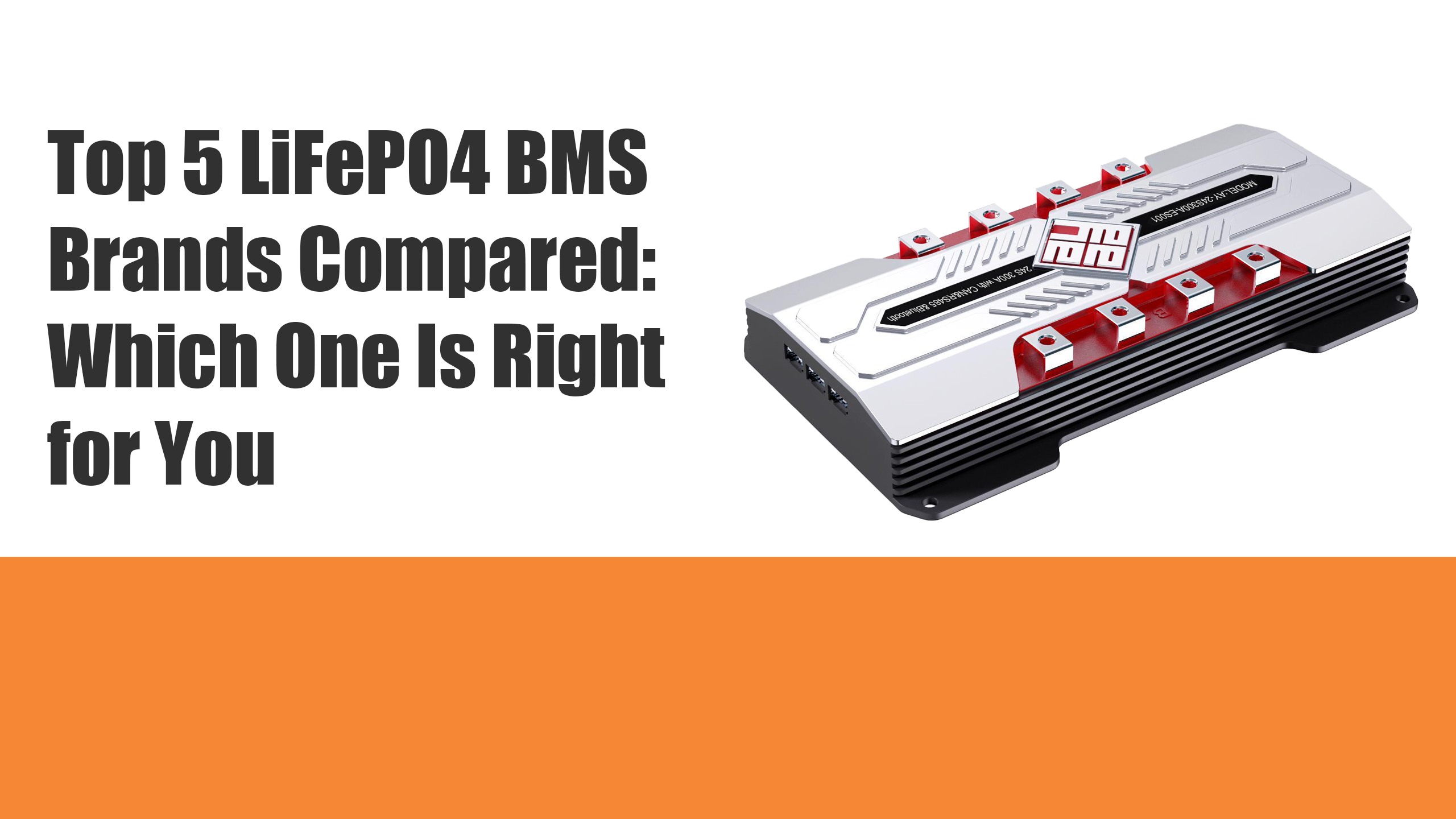
| AY-L24S300A-ES001 | 7S–24S | 300A | CAN, RS485, UART | Multi-protocol, advanced fault logging, heating control |
| AY-L10S200A-ES002 | 4S–10S | 200A | CAN, UART, RS485 | Durable PCB, real-time monitoring, mobile diagnostics |
| AY-LS20S90A-H150 | 16S–20S | 90A | CAN | Compact size, high compatibility, parallel-ready balancing |
Each unit serves a variety of use cases, ranging from ESS and UAVs to EVs and forklifts, but they all incorporate smart BMS with active cell balancing to guarantee maximum capacity and safety.
The answer is a resounding yes.
A BMS with active cell balancing is a calculated investment in energy dependability, longevity, and safety rather than merely a technical improvement. As the need for intelligent battery systems in automation, mobility, and renewable energy increases, smart BMS solutions will continue to be at the forefront of innovation.
Q:What is active cell balancing in BMS?
A:With this method, the extra charge from an overcharged cell is transferred to the comparatively undercharged cells. Because of this, the energy is essentially not lost, making it far more effective than the Passive Cell Balancing method.
Q:Do I need an active balancer if I have BMS?
A:Only the battery’s interior cells are balanced by the internal BMS. The battery’s voltage in relation to another battery in your series battery combination is irrelevant. If there is any voltage differential between the 12 volt batteries in series, the external balancers will help to somewhat balance the voltage.
Q:What is the difference between BMS and active balancer?
A:For lithium battery packs to remain healthy and work properly, a balancer and a BMS are both essential. While a balancer makes sure all cells function together to maintain balance and prolong the battery’s service life, a BMS guards against hazardous operating circumstances.
Q:Will BMS balance cells?
A:Yes. When the battery is not charging, a BMS will typically keep the cells balanced. There are some really good BMSs that let you choose when balance takes place. They can be configured in those BMS to only balance when the cells are discharged or only when they are charging.
Q:Is cell balancing necessary?
A:Only packs with many cells connected in series require balancing. Since they are physically connected to one another, parallel cells will spontaneously balance; however, groups of parallel wired cells that are wired in series (also known as parallel-series wiring) need to be balanced throughout cell groups.
Q:What is the difference between active and passive cell balancing?
A:In contrast to passive cell balancing, which only drains charge during the charge cycle, active cell balancing redistributes charge during the charging and discharging cycle. As a result, active cell balancing lengthens system operation and may improve charging effectiveness.
Ayaa Technology offers high-performance BMS solutions. They are made for demanding applications and set a new benchmark for superior battery management by combining multi-protocol communication, sophisticated monitoring, and advanced cell balancing.
Contact Us