- Industries

Home Backup & Garden BMS
View More >Electric Forklift BMS
View More >Golf Cart BMS
View More >Electric Two-wheeler BMS
View More >Aviation & UAV BMS
View More >BMS For Power Tools
View More >Medical Equipment BMS
View More >








Home About Us EVENTS & NEWS The Ultimate Guide to 48V Battery Management Systems: From Core Principles to Practical Applications
In the era of electric mobility and home energy storage, the 48V battery has emerged as a mainstream choice due to its efficiency and safety. However, the true backbone of a 48V battery management system (BMS) is not the battery itself but its “brain”—the 48V BMS. Whether you’re addressing range anxiety in electric vehicles or building a reliable home energy system, a high-quality 48V battery management system is critical. This comprehensive guide explores the principles, technologies, and applications of 48V BMS, empowering you to maximise battery performance, ensure safety, and achieve optimal return on investment.

A 48V battery management system is an electronic system designed to monitor, control, and protect a 48V battery pack. Its core functions include real-time monitoring of voltage, current, and temperature to ensure safe operation while optimising performance and lifespan. Acting as the battery’s “brain,” the 48V BMS balances individual cells, prevents risks like overcharging, over-discharging, overheating, or overcurrent, and ensures seamless operation in applications like electric vehicles (EVs) and energy storage systems.
The 48V battery is widely adopted in EVs and energy storage due to its efficiency and versatility. However, inconsistencies among battery cells can lead to performance degradation or safety hazards. A 48V battery management system mitigates these issues by actively balancing cells, ensuring uniform charging and discharging to extend battery life. For example, in e-bikes, a 48V BMS prevents damage from overuse, while in home energy systems, it ensures stable and safe energy storage. Without a robust BMS, a 48V battery risks inefficiency, reduced lifespan, or even catastrophic failures like fires.
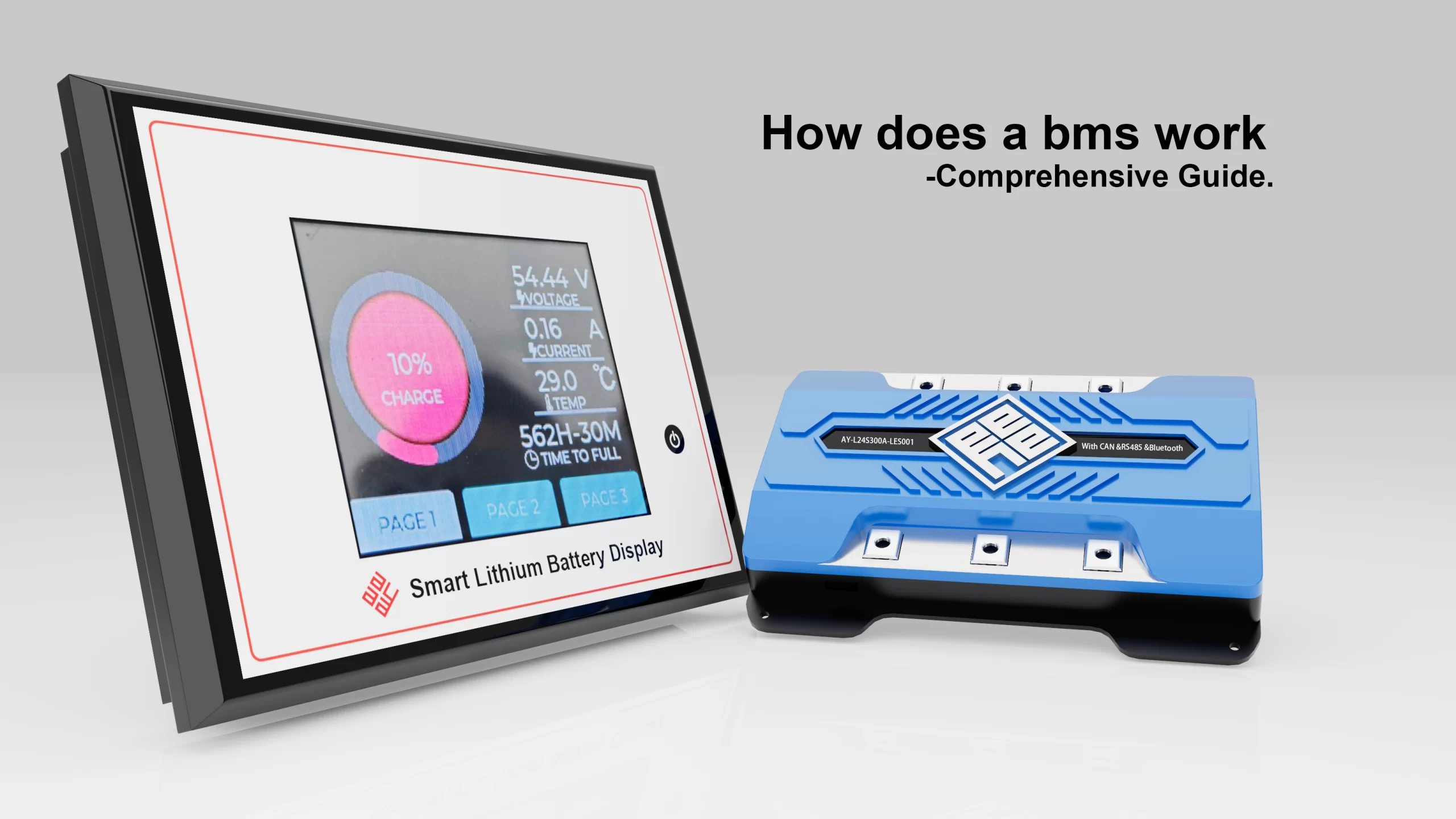
A 48V battery management system operates through multi-layered monitoring and protection mechanisms. Sensors collect real-time data on voltage, current, and temperature, which a microprocessor analyses using preset algorithms. If a cell’s voltage is too high, the BMS activates balancing circuits to redistribute or dissipate excess energy, maintaining equilibrium. Additionally, the 48V BMS supports communication protocols like CAN bus or Bluetooth, enabling remote monitoring and diagnostics for users or higher-level systems.

Absolutely. By optimising battery usage, a 48V battery management system enhances energy efficiency and reduces losses. In energy storage systems, its intelligent scheduling adjusts output based on load demands, minimising wasteful charge-discharge cycles. Balancing technology ensures maximum capacity utilisation, extending runtime. For users, this translates to lower operating costs and higher reliability, making the 48V BMS indispensable for cost-effective applications.
Modern 48V battery management systems are modular and programmable, offering flexibility for specific applications. DIY enthusiasts and engineers can adjust voltage thresholds, current limits, or temperature protections to suit different battery chemistries (e.g., lithium-ion or LiFePO4). This adaptability makes the 48V BMS ideal for both large-scale commercial projects and niche DIY endeavours, ensuring tailored performance and safety.
Range anxiety is a key concern for EV users, driven by battery degradation, cell imbalances, and inefficient management. A 48V battery management system addresses these issues through real-time monitoring and intelligent adjustments. For instance, during acceleration in e-bikes, the 48V BMS prevents excessive current draw, protecting cells from damage. Its balancing function ensures all cells contribute equally, maximising usable capacity. Key features include:
Real-time monitoring: Tracks cell voltage and health to prevent degradation.
Balancing adjustments: Maintains uniform cell voltages for optimal capacity.
Temperature control: Prevents overheating to extend lifespan.
Charge optimisation: Allocates current based on battery state.
Anomaly protection: Cuts off power during overcharge or over-discharge.
By enhancing durability and safety, a 48V battery management system ensures a more reliable range, alleviating user concerns.
A 48V BMS relies on communication protocols like CAN, RS485, and UART to interact with motor controllers, chargers, or cloud platforms. These protocols enable the 48V battery management system to share critical data, such as battery health or fault alerts, ensuring intelligent operation. Here’s how they differ:
CAN (Controller Area Network): Fast and robust, ideal for EVs due to its interference resistance.
RS-485: Cost-effective and long-range, suited for energy storage or industrial applications.
UART: Simple and common, used in smaller devices for basic data transfer.
By transmitting real-time alerts (e.g., overheating warnings) via CAN, a 48V BMS enhances safety, making protocol selection a critical consideration for system integration.
When a 48V battery encounters issues, the 48V BMS often displays error codes or indicators. Common alarms include:
OVP (Over Voltage Protection): Triggered by overcharging.
UVP (Under Voltage Protection): Indicates over-discharging.
OCP (Over Current Protection): Detects excessive current.
OTP (Over Temperature Protection): Signals overheating.
To troubleshoot:
Check error codes: Review the BMS display or software.
Inspect cell voltages: Identify outliers (too high or low).
Verify temperature sensors: Ensure connections are secure.
Test output current: Confirm it’s within BMS limits.
Reset or update firmware: Address potential software issues.
Understanding these codes prevents misdiagnosing battery failures, as many issues stem from the 48V BMS protecting the system, saving users from costly repairs.
The shift from 12V to 48V battery systems is driven by superior efficiency and performance. Compared to 12V, a 48V battery offers:
Higher energy density: Stores more energy in less space.
Better transmission efficiency: Lower current reduces energy loss.
Suitability for high-power applications: Ideal for EVs, energy storage, and server power.
A 48V battery management system enables this transition by providing robust protections like overvoltage, overcurrent, and balancing, ensuring safe operation at higher voltages. While 12V remains viable for low-power devices, the 48V BMS makes 48V batteries the preferred choice for modern, high-efficiency applications.
Lithium iron phosphate (LiFePO4) batteries are prized for safety and longevity, making them an ideal match for a 48V battery management system. Benefits include:
Safety: LiFePO4’s thermal stability, combined with BMS protections, minimises fire risks.
Longevity: Up to 3,000–6,000 cycles, enhanced by BMS balancing.
Versatility: Perfect for home storage, solar systems, and EVs.
The 48V BMS optimises LiFePO4 performance by monitoring cells, balancing capacity, managing temperature, and enabling smart communication with inverters or IoT platforms. This combination outperforms traditional lead-acid batteries, offering a lightweight, safe, and durable alternative for modern energy needs.
The 48V battery management system is far more than a protective circuit—it’s the cornerstone of intelligent, safe, and long-lasting 48V battery performance. From precise monitoring to advanced balancing and communication protocols, the 48V BMS drives efficiency and safety across applications. Whether you’re selecting a pre-built system or customising for a DIY project, understanding the 48V battery management system is key to maximising your investment. As electric mobility and renewable energy grow, the 48V BMS will continue to shape a safer, more efficient energy future.
Contact Us