
- Industries

Home Backup & Garden BMS
View More >Electric Forklift BMS
View More >Golf Cart BMS
View More >Electric Two-wheeler BMS
View More >Aviation & UAV BMS
View More >BMS For Power Tools
View More >Medical Equipment BMS
View More >








Home About Us EVENTS & NEWS Smart BMS Explained: How Intelligent Battery Management Transforms Performance
Learn how a smart BMS improves battery performance, safety, and monitoring.
A smart BMS (Battery Management System) is an advanced system designed to monitor, control, and protect lithium-ion battery packs.
Unlike standard BMS, a smart BMS uses cognitive algorithms and communication interfaces to optimize battery performance, extend lifespan, and ensure safety.
It is extensively utilized in industrial energy systems, solar energy storage, electric vehicles, RVs, and maritime applications.
By continuously monitoring battery health and modifying operational parameters in real time, a smart BMS guarantees that batteries work effectively and securely under all situations.

A smart BMS comprises of several important components working together to regulate battery health and performance:
Voltage and Current Sensors: Measure individual cell voltages and overall pack current.
Temperature Sensors: Detect thermal conditions to prevent overheating.
Microcontroller Unit (MCU): Processes data and executes protective and optimization commands.
Communication Modules: Enable Bluetooth, CAN, or UART connections for monitoring and remote control.
Cell Balancing Circuits: Ensure all cells maintain similar voltage levels, preventing overcharge or overdischarge.
Protection Circuits: Automatically disconnect or limit current in abnormal conditions.
The smart BMS’s internal structure enables proactive action, averting possible malfunctions and preserving peak performance throughout all battery cells.
How Does It Monitor Battery Voltage and Current?
A smart BMS continuously measures individual cell voltages and the total pack voltage.
Additionally, it keeps an eye on charge and discharge currents, giving real-time information about energy efficiency and consumption.
How Does Temperature Regulation Work in a Smart BMS?
Temperature sensors within the smart BMS detect inappropriate heat generation.
The technology can prevent thermal runaway by limiting current or activating cooling systems if the battery temperature rises over safe limits.
What Is SOC and SOH Monitoring, and Why Is It Important?
SOC (State of Charge): Indicates the remaining capacity of the battery.
SOH (State of Health): Reflects battery degradation and longevity.
By keeping an eye on SOC and SOH, users can properly predict battery life and prevent unplanned failures.
How Does Cell Balancing Enhance Battery Life?
To keep voltage levels consistent, cell balancing redistributes energy among cells.
By preventing individual cells from being overcharged or overdischarged, this procedure increases the overall dependability and lifespan of the pack.
How Does a Smart BMS Ensure Safety and Protection?
A smart BMS provides multiple layers of protection, including:
Overvoltage and undervoltage protection
Overcurrent and short-circuit protection
Overtemperature shutdown
Communication fault alerts
These safety measures protect both the battery and the connected devices.
A BMS offers major improvements over standard battery management systems:
Real-time Monitoring: Track every cell’s voltage, current, and temperature in real time.
Remote Monitoring: Use Bluetooth or network interfaces to monitor battery status from a distance.
Fault Detection and Safety Alarms: Receive alerts for abnormal conditions instantly.
Improved Cell Balancing Performance: Automatically balance cells for longer battery life and consistent performance.
How to Choose a Suitable Smart BMS?
Select a BMS compatible with your battery type, voltage range, and application scenario.
Consider communication technologies like Bluetooth or CAN for remote monitoring.
What Tools Are Needed for Installation?
Basic equipment include insulated screwdrivers, wire cutters, a multimeter, and protective gloves.
How to Disconnect the Battery Safely?
To avoid electrical risks and short circuits, always disconnect all loads and turn off the battery before installing the BMS.
How to Connect the BMS to the Battery Pack?
Follow the manufacturer’s wiring diagram carefully. Connect each battery cell to the BMS monitoring leads and check correct polarity.
What Safety Measures Should You Follow?
Put on safety gear, stay away from terminals, and check connections twice before turning on the power.
How to Set Up Bluetooth or Other Communication Interfaces?
Pair the BMS with the correct app or program.
Set up variables like voltage thresholds, alert notifications, and cell counts.
How to Test the System After Installation?
Check that the communication interface functions, all cells report the right voltages, and the protection measures activate as intended during the test.

For batteries to remain safe, effective, and long-lasting, a BMS is essential.
Without a smart BMS, lithium-ion batteries are prone to overcharging, overheating, and early failure.
Intelligent management ensures maximum performance for applications ranging from RVs and electric vehicles to renewable energy storage systems.
When selecting a smart BMS, consider:
Supported voltage range and series cells
Communication method (Bluetooth, CAN, UART)
Material and build quality
Compatibility with your battery pack and application needs

Supports 7 to 24 series cells
Intelligent monitoring for voltage, current, and temperature
Suitable for high-capacity lithium-ion packs in RVs, marine applications, and solar storage
Advanced protection features for overvoltage, overcurrent, and temperature anomalies
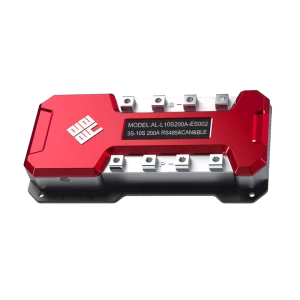
Compatible with 4 to 10 series cells
Durable BMS material ensures long-term reliability
Supports Bluetooth and other communication methods for remote monitoring
Optimized for small to medium lithium-ion battery packs
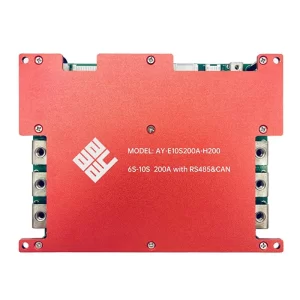
Supports 6 to 10 series cells
Enables parallel connection for expanded capacity
High compatibility with various lithium-ion packs
Advanced protocols for seamless integration and data reporting
A smart BMS transforms battery management by combining real-time monitoring, remote control, safety protection, and cell balancing.
It guarantees longer battery life, safer operation, and optimal performance for both personal and industrial applications.
Leading devices exhibit the cutting-edge features of modern smart BMS technology.
For durable and intelligent battery solutions, Ayaa Technology continues to set the benchmark in BMS design and innovation.
Q1:What is a smart BMS?
A1:A Smart BMS (Battery Management System) is a complex circuit board developed to control your battery pack.
The BMS intervenes to: Prevent deep discharges and overcharging, rather than letting your cells handle themselves.
Individual cells should be balanced to function harmoniously.
Q2:What is the difference between smart BMS and normal BMS?
A2:He only refers to the app’s individual cell voltage reporting as “smart” BMS.
It’s a helpful function to monitor individual cell heath without opening up the battery and putting a multimeter on each cell.
It only accomplishes that.
You can decide if that’s worth it to you or not.
Q3:What does BMS actually do?
A3:A battery management system (BMS) monitors and manages the performance of a battery to ensure its safety, lifespan, and optimal functioning.
It accomplishes this by monitoring and controlling variables like temperature, voltage, and current as well as by guarding against problems like overcharging, overdischarging, and overheating.
Key functions include evaluating the battery’s state of charge, balancing the cells to maintain uniform performance, and shutting down the battery in case of harmful conditions.
Q4:What are the three types of BMS?
A4:Centralised BMS – One control device manages the entire pack.
Modular BMS – Split into parts, perfect for larger systems.
Distributed BMS: Maximum precision is possible because each cell has its own controller.
Q5:Is it better to charge to 80% or 100%?
A5:While charging a phone to 80% is preferable for long-term battery health, charging it to 100% when necessary for a long day without a charger is acceptable.
Consistently keeping the battery between 20% and 80% lessens stress on the battery cells and slows down degeneration.
Contact Us