- Industries

Home Backup & Garden BMS
View More >Electric Forklift BMS
View More >Golf Cart BMS
View More >Electric Two-wheeler BMS
View More >Aviation & UAV BMS
View More >BMS For Power Tools
View More >Medical Equipment BMS
View More >








Home About Us EVENTS & NEWS How a BMS System Works: Core Modules and Operational Principles
It is more crucial than ever to manage lithium-ion batteries efficiently since they are increasingly the go-to power source for a variety of devices, including portable electronics, electric cars, and renewable energy storage. The battery management system, or bms system, is essential to this since it keeps an eye on, safeguards, and maximizes lithium-ion batteries and battery packs. Anyone working in battery technology or applications that use lithium-ion energy storage must comprehend the fundamentals of a bms system.
This article examines lithium-ion batteries and packs, presents the bms system, describes its fundamental components, outlines its working principles, and emphasizes how it enhances battery performance, safety, and cost effectiveness.

Rechargeable energy storage devices with a high energy density, low weight, and a comparatively long lifespan are lithium-ion batteries. Everything from electric automobiles to smartphones is powered by them. Since the nominal voltage of a single lithium-ion cell is normally between 3.6 and 3.7 volts, it is frequently necessary to combine many cells in series and/or parallel in order to get the required voltage and capacity for an application. A battery pack is the name given to this collection of cells.
There are a number of important electrical factors to take into account while building or dealing with lithium-ion battery packs:
Voltage Requirements:The sum of the individual cell voltages in series is the overall pack voltage. To prevent damage or underperformance, it must closely match the device’s power requirements.
Temperature Limits: Within certain temperature ranges, lithium-ion cells can function securely. Overcoming these boundaries may shorten longevity or present safety risks.
Current Consumption: Without harming the cells, the battery pack must supply enough current to meet the load, even during periods of high demand.
Charging Current: In order to avoid overheating, overcharging, or deterioration, controlled charging currents are essential.
The bms system is required because controlling these parameters is difficult, particularly when several cells are involved.
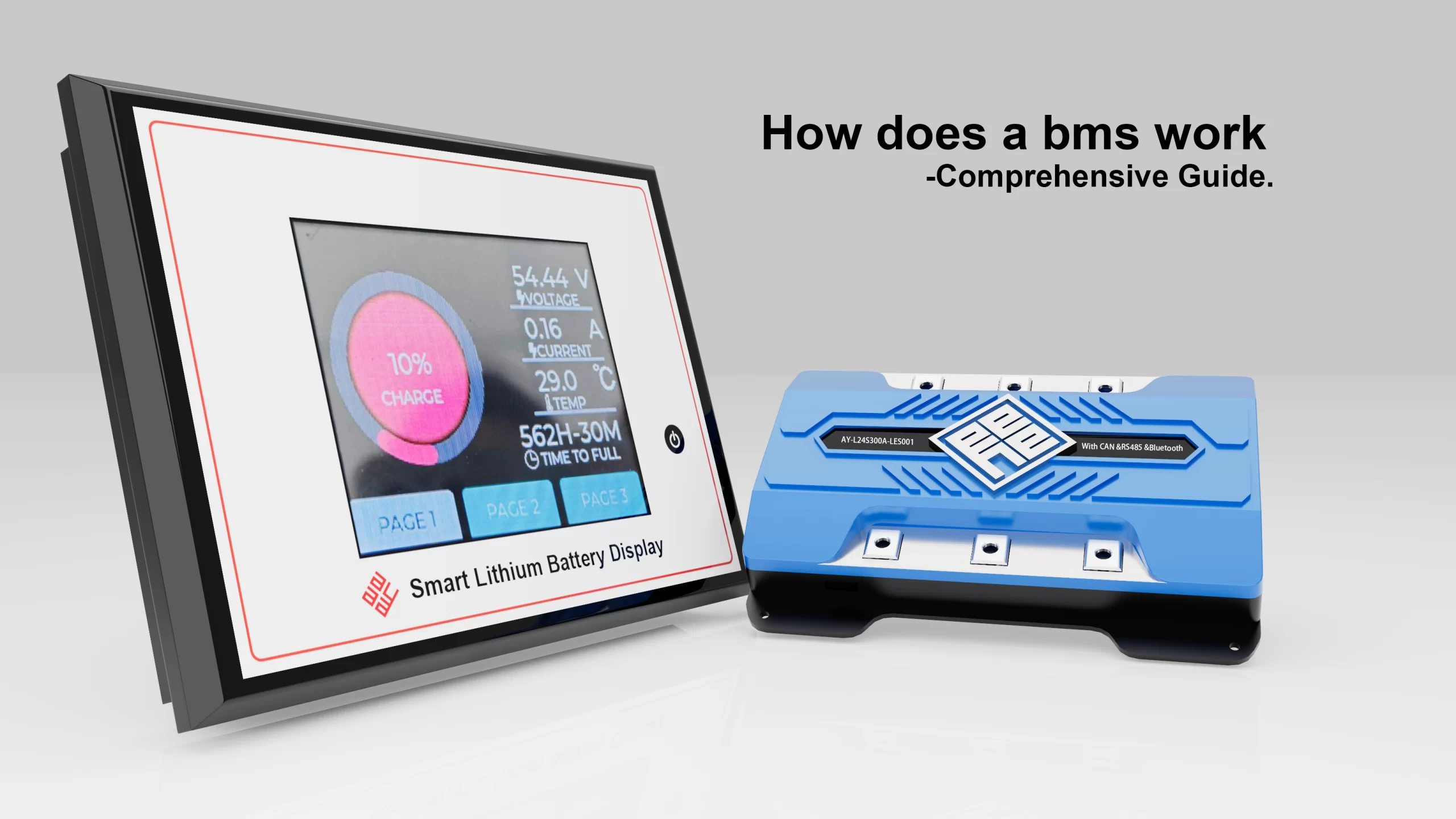
A rechargeable battery (cell or pack) is managed by an electrical system called a battery management system (BMS), which makes sure the battery runs effectively, safely, and dependably. In addition to performing control tasks like balancing cell voltages and guarding against hazardous operating circumstances, it keeps an eye on critical metrics including voltage, current, and temperature.
Lithium-ion battery packs may overcharge, overdischarge, overheat, and prematurely fail without an appropriate bms system, all of which could result in expensive repairs or hazardous circumstances.
The bms system essentially serves as the battery pack’s “brain,” coordinating the performance and health of each individual cell while making sure the system as a whole runs within safe and ideal bounds.
There are many benefits to putting in place a trustworthy BMS system:
Enhanced Safety: It avoids dangerous situations like thermal runaway or short circuits by continuously monitoring cell voltages, currents, and temperatures.
Improved Battery Performance: By ensuring consistent cycles of charging and discharging, balancing cells maximize useful capacity and preserve voltage stability.
Extended Battery Lifespan:Preventing overload and deep discharge minimizes stress on cells, reducing degradation.
Diagnostic and Prognostic Capability: Preventative maintenance is made possible by advanced BMS systems that can monitor battery status and forecast problems.
Operational Efficiency: System efficiency is increased by optimized charging and discharging, which lowers energy losses.
To monitor and control the battery pack, a bms system consists of multiple crucial parts:
4.1 Cutoff MOSFETs (Field Effect Transistors)
Cutoff MOSFETs function as switches that allow the battery pack to be disconnected from the charger or load. These transistors, which are managed by the BMS, prevent hazardous situations for the battery by switching off current flow in the event of an overvoltage, undervoltage, overcurrent, or short circuit.
4.2 Coulomb Counter (Battery Gauge)
The quantity of charge entering and exiting the battery pack is monitored by the Coulomb counter. It determines the State of Charge (SOC) by tracking current over time, providing precise battery charge level indicator that goes beyond straightforward voltage readings.
4.3 Battery Voltage Monitor
The voltage of each cell or group of cells in the pack is continuously measured by this module. In order to identify imbalances or overvoltage situations that could harm cells, voltage monitoring is essential.
4.4 Temperature Sensors
In order to avoid overheating, which can result in safety hazards and rapid battery wear, temperature monitoring is essential. BMS temperature sensors are positioned thoughtfully throughout the pack to measure cell and ambient temperatures.
4.5 Additional Modules
A bms system may have data recording, diagnostic features, and communication interfaces (CAN bus, SMBus, Bluetooth), depending on its sophistication. These features allow for integration with external controllers or cloud monitoring services.
A bms system operates through a closed-loop process of control, monitoring, and decision-making:
Monitoring: Sensors continuously gather data on voltage, current, and temperature.
Evaluation: The BMS microcontroller processes sensor inputs against predefined safety thresholds and performance criteria.
Control Actions: Based on evaluations, the BMS regulates charging/discharging by controlling MOSFET switches, balancing cells through bleed resistors or active balancing circuits, and issuing alerts or shutting down the system if unsafe conditions arise.
Communication: Data on battery status, health, and alarms is transmitted to external devices or users for real-time monitoring and decision-making.
This dynamic management increases energy efficiency, extends service life, and guarantees the battery pack works within safe bounds.
6.1 Safety Management
Preventing overcharge, overdischarge, overcurrent, overheating, and short circuits is the primary purpose. This safeguards users and other connected devices in addition to the battery pack.
6.2 Battery Performance Enhancement
In order to optimize usable capacity and guarantee consistent power production throughout the battery’s discharge cycle, the bms system balances cell voltages and regulates charging settings.
6.3 Health Monitoring and Diagnostics
In order to provide diagnostics that may be utilized for maintenance scheduling and failure prediction, modern BMS systems examine battery health indicators such internal resistance and capacity fade.
Through battery damage prevention and performance optimization, a BMS system minimizes the need for expensive replacements and repairs. By extending the battery’s useful life and reducing losses when charging and discharging, it improves energy efficiency and eventually results in significant cost savings.
Additionally, operators can further save operating costs by optimizing consumption patterns, maintenance plans, and system settings with the help of BMS-enabled data analytics.
Q:What is a BMS system?
A:A computer-based system called a Building Management System (BMS), sometimes referred to as a Building Automation System (BAS), keeps an eye on and manages the mechanical and electrical systems of a building, including the HVAC, lighting, and security systems. It seeks to guarantee occupant comfort and safety, enhance energy efficiency, and optimize building operations.
Q:How does the BMS system work?
A:Through a single network of hardware and software, a Building Management System (BMS) integrates and controls multiple building systems, such as HVAC, lighting, and security. After collecting and analyzing sensor data, it automatically modifies settings for maximum comfort and efficiency. In essence, a BMS streamlines operations and lowers energy usage by serving as the “brain” of a building.
Q:Why do we need a BMS system?
A:Facility managers can identify where and how they are losing energy with the help of a BMS; A BMS prolongs asset life, increasing owners’ return on investment; A BMS provides enhanced safety and ideal working conditions for extremely complex buildings, such refineries or hospitals.
Q:What does BMS actually do?
A:Definition: A battery management system (BMS) is a piece of technology used to monitor a battery pack, which is a collection of battery cells electrically arranged in a row x column matrix, in order to deliver a specific range of voltage and current for a predetermined amount of time under anticipated load conditions.
Q:How to check BMS system?
A:Cells connected in series and parallel must be simulated, as well as their behavior in response to changes in temperature and ambient conditions, in order to test a BMS effectively and safely. To replicate the cells, current, temperature sensors, and insulation resistance, engineers require a BMS environment with emulators.
Q:What is the lifespan of a BMS system?
A:BMS Controllers are made to function safely for ten years, regardless of outside factors.
Q:Does a BMS stop charging when full?
A:The fully charged cells’ voltage will gradually increase until it reaches 3.7V. The cell voltages will then drop once more as the BMS turns off the charger.
Q:How many types of BMS are there?
A:Three main categories of BMS architectures exist in total: little BMS with only one board. BMS that is distributed. Big, centralized BMS.
One essential part of contemporary lithium-ion battery packs is the bms system. Its fundamental components—cutoff MOSFETs, coulomb counters, temperature sensors, voltage monitors, and communication interfaces—cooperate to improve performance, guarantee safety, and offer diagnostic information. Users and designers can better appreciate a bms system’s role in optimizing battery longevity, efficiency, and dependability by knowing how it works.
It is not only advised but also necessary for anyone dealing with lithium-ion battery technology to invest in a top-notch BMS system.
Feel free to contact knowledgeable suppliers who specialize in creating unique configurations to meet a range of needs if you would want to investigate cutting-edge BMS system solutions for your battery applications.
Contact Us