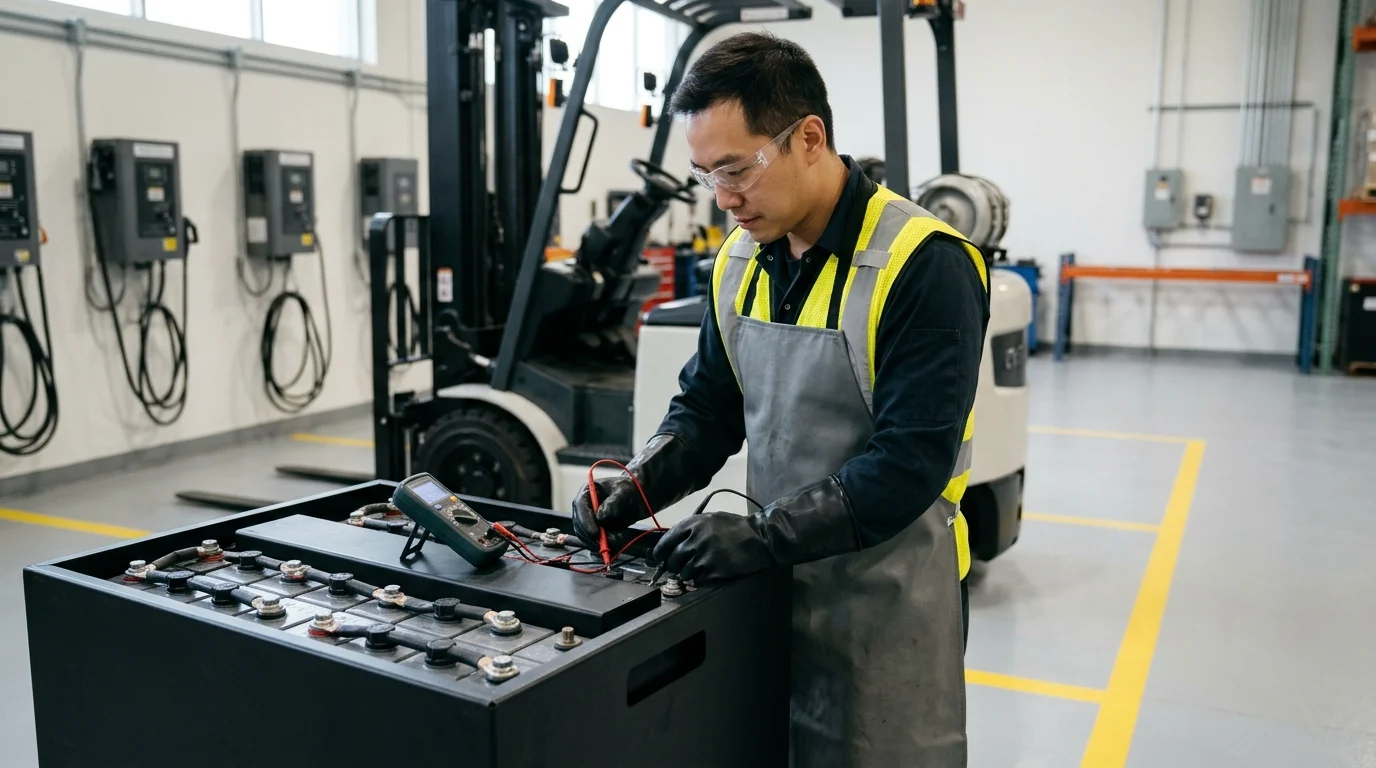


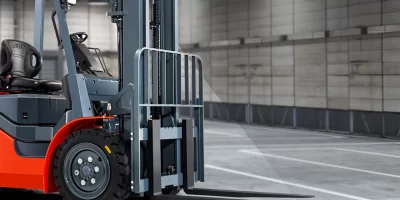





Understanding your true forklift battery price starts with specs. In our review, new lead-acid forklift battery prices ranged from $3,975 to $18,250. Lithium-ion packs cost more upfront. A leading supplier guide quotes $6,000 to over $25,000.
Price ranges vary widely based on voltage, capacity, chemistry, and dimensions. Charger requirements also affect your final cost. Below, we compare lead-acid and lithium-ion options. We also show how to calculate total cost of ownership.

Forklift Battery Price: What Does a New Battery Cost?
Forklift Battery Prices by Battery Type
Start with the broad picture. Treat these ranges as budgeting starting points. They reflect diverse voltages and capacities rather than flat market averages.
| Battery type | Indicative price (USD) | Basis |
|---|---|---|
| Lead-acid | $3,975–$18,250 | Posted prices from one US retailer, 24V–80V, listings reviewed |
| Lithium-ion (LiFePO4) | $6,000–$25,000+ | Supplier’s own estimate, not a posted price |
Some guides quote $2,000 to $6,000 for standard lead-acid units. That fits smaller 24V batteries. However, 48V and 80V listings sit higher. The lithium range comes from ROYPOW’s 2026 cost guide, serving as a rough benchmark.
Forklift Battery Prices by Voltage and Capacity
Ranges only go so far, so here are actual listings. These are new lead-acid batteries from Machine Maxx USA, one per voltage plus a high-capacity 48V unit.
| Voltage | Model | Listed capacity | Listed price |
|---|---|---|---|
| 24V | 12-125M-13 | 750Ah | $4,924 |
| 36V | 18-85-13 | 510Ah | $5,994 |
| 48V | 24-85-13 | 510Ah | $7,795 |
| 48V | 24-85-33 | 1,360Ah | $18,250 |
| 80V | 40-125-11 | 750Ah | $14,915 |
Know Your Voltage and Capacity? See AYAA TECH Battery Packs
Explore Product CatalogWhat Factors Affect Forklift Battery Prices?
Battery Chemistry and Manufacturing Design
Lead-acid is a mature, low-cost design: lead plates in liquid electrolyte. Lithium-ion packs, usually LiFePO4 in forklifts, add cells, a BMS, and a sealed enclosure built to rigorous industrial standards such as UL 2580. That is why the sticker price is higher, before any operating savings enter the picture.
Voltage, Amp-Hour Capacity, and Energy Requirements
More cells in series means higher voltage and a higher price. The 80V example above costs about three times the 24V one at the same 750Ah. Capacity adds cost the same way. Just don’t compare Ah numbers on their own.
[Engineering Note] An Ah rating means little without its discharge rate, as defined in international standards like IEC 62619. Two batteries marked 510Ah at different discharge rates are not identical. Always ask for the rating condition in writing.
Battery Dimensions, Weight, and Customization
The battery must fit the compartment and provide sufficient counterbalance weight. The 48V 510Ah listing above weighs 2,255 lb. Non-standard trays and connectors also increase costs. For example, Euro-style plugs often require an added fee.
BMS Features, Operating Conditions, and Warranty
Lithium packs rely on a BMS for protection and monitoring. These electronic features directly influence price and charger communication. Always check operating temperature limits and warranty terms carefully. For instance, some 5-year warranties offer three years of full coverage plus two years prorated.
Battery Charger Compatibility and Charging Requirements
A charger for one battery may not suit another. Voltage, current, and charging profile must match perfectly. Furthermore, some lithium packs require the charger to communicate with the BMS via protocol standards like the CiA 454 energy management profile. If switching chemistries requires a new charger, include that cost in your budget.
Is a Lithium Forklift Battery Worth the Higher Price?
Comparing Upfront Cost and Long-Term Ownership Costs
The table shows which way each factor leans. It doesn’t size the gap, because that depends on your own hours and labor rates.
| Factor | Lead-acid | Lithium-ion (LiFePO4) |
|---|---|---|
| Upfront price | Lower | Higher |
| Charging | Suits single-shift conventional charging; one retailer says opportunity charging cuts cycle life. | Built for partial charges between shifts, if pack and charger support it |
| Maintenance | Watering and cleaning | Little routine upkeep |
| Charging efficiency | Lower | Higher |
| Replacement | Shorter cycle life under heavy use; multi-shift fleets may need spare batteries | Longer rated life; check the warranty conditions behind it |
Read that as direction, not a verdict. Lead-acid wins on purchase price. Lithium-ion wins only when you use its strengths, like charging flexibility and low upkeep.
How Shift Patterns Affect Battery Costs
Single-shift trucks charge for hours overnight, making lead-acid’s slow charge time acceptable. However, multi-shift operations change the economic picture dramatically. You must fund spare batteries, swap labor, and downtime while trucks wait for fresh packs.

When Should a Business Consider Lithium-Ion?
Consider lithium when trucks run multiple shifts or space is limited. It also excels when battery swapping and maintenance consume significant labor. Conversely, skip lithium if your fleet runs single shifts with long charging windows. In that scenario, paying the premium buys unneeded flexibility.
How to Calculate the Total Cost of a Forklift Battery
Gather the Numbers for Your Forklift Fleet
Start with your own data. A simple worksheet beats a generic savings claim.
| Input | What to record |
|---|---|
| Fleet size | Number of trucks |
| Battery purchase price | Price per battery |
| Replacements in the period | Count × price |
| Annual operating hours | Hours per truck |
| Number of shifts | Per day |
| Estimated service life | Years or cycles |
| Electricity | Price per kWh; charging kWh per year |
| Maintenance | Labor hours × rate, plus consumables |
| Battery-related downtime | Hours lost × cost per hour |
| Charger cost | Only if a new or extra charger is needed |
Use metered charging energy where you can. A nominal-capacity estimate ignores charging losses, so if you must estimate, write down your assumptions.
Use a Simple Formula to Estimate Total Cost
TCO over the evaluation period = initial battery purchase cost + required battery replacement costs + required charger purchase cost + charging electricity cost + maintenance labor and consumables + measurable battery-related downtime cost
Cost per Operating Hour = TCO over the Evaluation Period ÷ Total Operating Hours
Use the same evaluation period and the same assumptions for every option.
[Engineering Note] Don’t count anything twice. If downtime already includes swap labor costs, exclude that labor from maintenance calculations.
Compare Battery Costs Under Different Operating Conditions
Single-shift warehouse. Each truck uses one battery and charges overnight. Purchase price, replacement cycles, and maintenance labor drive overall costs. Lithium must win on those factors alone, which is rarely cost-effective.
Multi-shift distribution center. Trucks run continuously throughout the day. Spare batteries, swap labor, downtime, and electricity costs matter far more here. Operations can recover the lithium premium much faster under these demanding conditions.
Need a Battery Built Around Your Duty Cycle?
Consult a Battery ArchitectHow to Choose the Right Forklift Battery for Your Equipment
Confirm the Forklift’s Voltage and Capacity
Read the truck’s data plate and OEM specification for voltage and required capacity. Don’t drop below the OEM capacity without checking runtime and lifting performance first.
Check Battery Dimensions, Weight, and Connectors
Measure the compartment itself, not just the old battery. Then confirm the minimum weight and the connector type.
[Engineering Note] The right voltage doesn’t make a battery a safe replacement. A pack that is too light, too large, or wrongly connected remains unsafe under OSHA 1910.178 guidelines. Lithium packs often weigh less than lead-acid units. Always verify the truck’s minimum counterbalance weight requirement.

Confirm That the Battery and Charger Are Compatible
Match the charger’s voltage, current, and profile to battery chemistry. Always obtain written confirmation from both equipment manufacturers.
How to Get an Accurate Forklift Battery Quote
Prepare These Details Before Requesting a Quote
- Forklift make and model
- Voltage and Ah rating, with the rating condition
- Existing battery dimensions and weight
- Connector type
- Operating hours and number of shifts
- Preferred chemistry
- Existing charger specifications
Compare Quotes Using the Same Specifications
Only compare quotes when voltage, capacity, chemistry, and dimensions match identically. A lower price with lower Ah or an unstated discharge rate offers no real savings.
Conclusion
Forklift battery price quotes reflect specific voltages, capacities, chemistries, and tray sizes. Furthermore, initial purchase price alone does not determine lifetime operating expense. The right battery must match your truck, charger, and shift pattern. Calculate your total ownership costs before committing to a purchase.
FAQ
How Long Does a Forklift Battery Last?
There is no single figure. Service life depends on chemistry, hours and cycles, charging, maintenance, and operating conditions. One retailer cites about 1,500 cycles, roughly five years, for single-shift lead-acid. Always compare cycle life ratings and warranty terms.
What Is the Best Type of Battery for a Forklift?
The ideal battery depends on your workload, shift pattern, and maintenance capacity. Lead-acid suits single-shift use with long overnight charging windows. Lithium-ion is superior for multi-shift facilities where battery swaps create downtime.
What Size Battery Does a Forklift Use?
Check the truck’s data plate and OEM specification for voltage, required capacity, compartment dimensions, and minimum battery weight. Common voltages are 24V, 36V, 48V, and 80V, but only the truck’s own specification decides.
How Much Does a 36V Forklift Battery Cost?
In the listings we reviewed, a new 36V 510Ah lead-acid battery was priced at $5,994. Larger capacities cost more, and lithium-ion pricing varies by pack and supplier. Confirm capacity and chemistry before comparing quotes.
How Much Does a 48V Forklift Battery Cost?
A new 48V 510Ah lead-acid battery was listed at $7,795, and a 1,360Ah unit at $18,250. One supplier guide puts 48V lithium at $8,000 to $20,000+. Treat that as a rough guide and confirm with a quote.
Is a Lithium Forklift Battery Worth the Higher Price?
Not always. Long operating hours, opportunity charging, and zero watering favor lithium-ion. However, single-shift trucks with long charge windows rarely recover the upfront premium. Calculate your total ownership costs to confirm.
Can I Use My Existing Charger With a Lithium Forklift Battery?
Only if compatibility is formally verified. You must match voltage, amperage, and charging profile to the battery. Additionally, verify whether the lithium BMS requires CAN bus communication. Standard lead-acid chargers rarely meet these requirements.