
- Industries

Home Backup & Garden BMS
View More >Electric Forklift BMS
View More >Golf Cart BMS
View More >Electric Two-wheeler BMS
View More >Aviation & UAV BMS
View More >BMS For Power Tools
View More >Medical Equipment BMS
View More >





Home About Us EVENTS & NEWS The Complete Guide to Drone Camera Battery
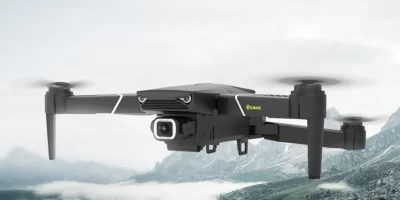
Drones with cameras have revolutionized industrial inspections, aerial photography, and filmmaking.
Camera drones, in contrast to regular drones, have high-resolution cameras that can record footage of a professional caliber.
However, the camera is insufficient on its own. A dependable drone camera battery is essential for optimizing flying performance, video quality, and operating safety.
In order to enable longer flight lengths and power sophisticated electronics like gimbals, sensors, and high-resolution imaging devices, camera drones mostly rely on energy-dense and lightweight batteries.
The drone’s performance could deteriorate without an optimal battery, resulting in shorter flying times, erratic video, or even abrupt mid-air shutdowns.

Drones with cameras are used in many different sectors.
Drones are used in cinematography to record dramatic aerial images that were previously only achievable with helicopters.
Drones efficiently monitor large-scale operations in construction and agriculture, and they offer dynamic property overviews for real estate.
Camera drones can swiftly assess disaster areas during search and rescue operations, efficiently directing human responders.
The drone’s operating range, flight duration, and cargo capacity are all determined by the drone camera battery.
A poor battery can restrict these features and jeopardize the success of the mission.
Think of a movie production that is filming a challenging aerial scenario.
Multiple flying runs without frequent swapping or downtime are possible when using a high-capacity drone camera battery.
Drones are required to monitor large crop fields in agriculture, which is another example.
High energy density and steady output batteries provide reliable performance over several flights, minimizing the need for frequent recharge.
In every case, operational effectiveness and the caliber of the recorded video are directly impacted by battery dependability.
The drone camera battery is its important component.
It guarantees the flawless operation of the camera and other onboard electronics in addition to providing the energy needed to lift and move the drone.
Important factors that make battery quality important include:
Flight Stability: Voltage drops that could result in abrupt motor throttling or camera tremors are avoided via stable power delivery.
Extended Flight Time: Longer flights without mid-flight disruptions are made possible by high-capacity batteries.
Safety: Modern batteries that are connected to a Battery Management System (BMS) guard against thermal runaway, overcharge, and overdischarge.
Even the most sophisticated drone equipment cannot function properly without a dependable battery.
When selecting a drone camera battery, consider the following key features:
1. High Capacity and Energy Density
Longer flying periods are correlated with higher capacity (measured in mAh or Ah).
Energy-dense batteries are essential for drones with large camera payloads because they store more power in a small package.
2. Thermal Stability
Controlling the temperature is essential.
Even in situations with high discharge rates or varying environmental conditions, batteries must retain constant voltage and performance.
Failure risk is decreased by heat-resistant chemistry.
3. Fast Charging Capability
Downtime is important in professional applications.
High-rate charging batteries enable quick flight changes, improving operational effectiveness.
4. Real-Time Battery Monitoring
Temperature, voltage, current, and charge level are all monitored via integrated BMS systems.
Real-time monitoring guarantees battery longevity, balances cells, and avoids unplanned shutdowns.
Knowing your operational requirements is essential to selecting the best drone camera battery.
Important factors include:
High Energy Density: Necessary to handle large camera payloads without adding undue weight.
Durability and Safety: Batteries must be able to endure repeated cycles of charging and discharging as well as physical harm.
Fast Charging: Reduces operational downtime, especially for time-sensitive projects.
Long Cycle Life: Ensures that batteries maintain capacity over hundreds of flights.
An correctly matched battery ensures reliable video capture and enhances drone performance.

A number of factors influence the choice of drone camera battery:
Drone Specifications: Verify voltage, current, and capacity compatibility with your drone.
Mission Requirements: Consider flight duration, payload weight, and environmental conditions.
Battery Chemistry: Although LiPo (Lithium Polymer) and Li-ion (Lithium-ion) are widely used, more sophisticated alternatives like LiFePO4 might provide greater safety and a longer lifespan.
BMS Integration: A smart battery with a BMS enhances safety, performance, and lifespan.
A thorough evaluation guarantees that your drone runs effectively and without needless risk.
Proper maintenance extends battery lifespan and safety:
Store batteries in a cool, dry place.
Avoid overcharging or deep discharging.
Clean connectors regularly.
Maintain batteries at 40–60% charge if stored long-term.
Periodically update firmware to match drone electronics.
A drone camera battery that is properly maintained minimizes operational risks and continuously provides performance.
Battery technology is rapidly evolving. Current trends include:
Solid-State Batteries: Offering higher energy density and improved safety.
Faster Charging Systems: Reducing downtime between missions.
Intelligent BMS Features: Offering IoT-based drone fleet integration, predictive maintenance, and sophisticated diagnostics.
These patterns suggest that drone camera batteries of the future will be safer, more effective, and able to sustain larger payloads for extended periods of time.
Leading producer of cutting-edge drone batteries, Ayya Technology provides premium drone camera batteries that are enhanced for longevity, performance, and safety.
For professional drone operators, filmmakers, and industrial applications, their batteries incorporate intelligent BMS systems to provide steady power delivery, real-time monitoring, and an extended lifespan.
More than just an energy source, a professional drone camera battery is essential for camera function, drone stability, and flight duration.
Choosing the appropriate battery guarantees optimal performance and safety, from comprehending battery sorts, essential features, and maintenance procedures to utilizing BMS integration.
Drone operators can rely on batteries that improve efficiency, dependability, and mission success in every aerial application because to technology developments and industry leaders like Ayya Technology.
Q1:What is the battery life of a drone camera?
A1:The majority of consumer drones available today can fly for 20 to 40 minutes on a single battery charge.
While high-end drones from producers like DJI and Autel can last up to 40 minutes, entry-level versions usually last around 20 minutes.
Q2:Which is better 18650 or 21700 for drones?
A2:Greater Energy Density: Longer runtimes and greater capacity are made possible by the 21700 cell’s higher energy density (Wh/kg) as compared to the 18650.
This is perfect for robotics or unmanned aerial vehicles (UAVs) where longer operating times are crucial.
Q3:What kind of battery is best for drones?
A3:Lithium Polymer Batteries (LiPo):Overview: For drones that need high energy density and quick discharge rates, LiPo batteries are the best option because they are strong and lightweight.
Q4:Why do drones run out of battery so fast?
A4:The drone’s motor must work harder in windy circumstances, consuming battery power more quickly.
Similar effects from humidity might make your drone heavier.
Your drone’s battery will run out faster if it weighs more.
Q5:What is the 80 20 rule for lithium batteries?
A5:The 80/20 rule suggests that lithium batteries should not be drained below 20% or charged above 80% in order to extend their lifespan.
This is because the battery is stressed by extreme states of charge, both high and low.
By keeping the battery in this mid-range, strain and heat are reduced, slowing down degradation and extending the battery’s lifespan.
Contact Us