- Industries

Home Backup & Garden BMS
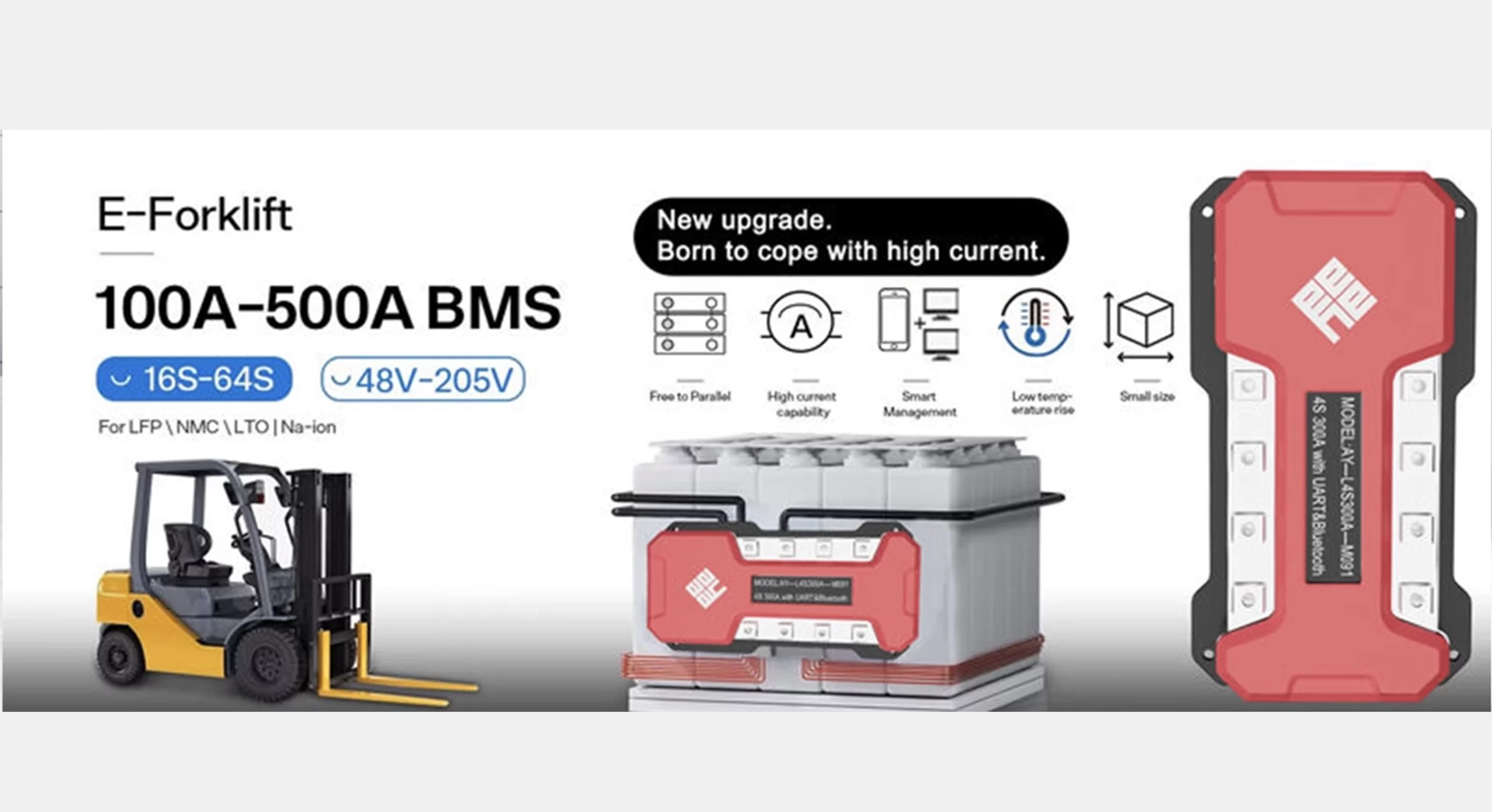
View More >Electric Forklift BMS
View More >Golf Cart BMS
View More >Electric Two-wheeler BMS
View More >Aviation & UAV BMS
View More >BMS For Power Tools
View More >Medical Equipment BMS
View More >







Home About Us EVENTS & NEWS BMS for Motorcycle Battery: The Ultimate Guide to Performance and Safety
Motorcycles are now much more than their mechanical origins. As electric motorbikes and hybrid two-wheelers have grown in popularity, sophisticated electronics have become essential to efficiency, performance, and safety. Among these innovations, the BMS for Motorcycle Battery has emerged as one of the most critical components for ensuring reliability, longevity, and safety of the battery pack.
We’ll go over the definition of a BMS (Battery Management System), how it functions with motorbike batteries, its importance, its underlying technology, and how riders may choose one with knowledge.

A BMS for Motorcycle Battery is an intelligent electronic system designed to monitor, manage, and protect the battery pack of electric or hybrid motorcycles.It acts as the battery’s brain, maximizing performance and prolonging the battery’s life while making sure each cell runs within safe bounds.
A motorbike BMS’s primary duties include:
Monitoring voltage, current, and temperature
Balancing charge between cells
Preventing overcharging and over-discharging
Managing thermal safety
Communicating with the motorcycle’s control system via protocols like CAN, UART, or Bluetooth
Even the most sophisticated lithium-ion or LiFePO4 motorbike battery would be susceptible to hazardous failures or early deterioration in the absence of a BMS.
The BMS for Motorcycle Battery operates in real-time, constantly gathering data from sensors embedded in the battery pack.It uses this information to make important choices:
Voltage Regulation: Ensures each cell remains within its safe voltage range.
Current Control: Limits charging and discharging currents to avoid overheating or damage.
Cell Balancing: Uses passive or active balancing methods to equalize voltage among cells, preventing weak cells from limiting battery performance.
Thermal Management: Monitors temperature across the battery pack to prevent thermal runaway.
State of Charge (SOC) & State of Health (SOH): Calculates remaining battery capacity and predicts the battery’s lifespan.
Communication: Shares vital battery status information with the motorcycle’s dashboard or mobile applications.
In addition to safeguarding the battery, this clever management maximizes performance in terms of dependability, range, and acceleration.
Choosing a high-quality BMS for Motorcycle Battery isn’t just about safety—it’s about performance and cost savings over the life of your motorcycle.
Key reasons to invest in a robust motorcycle BMS:
Extended Battery Life: Prevents deep discharges and overcharges, which can degrade cells.
Safety Assurance: Minimizes risk of fires, overheating, or electrical failures.
Optimized Performance: Ensures peak power output for acceleration and long-distance rides.
Diagnostic Insights: Provides riders with real-time battery health data.
Lower Maintenance Costs: Reduces the need for premature battery replacements.
Although BMS technology is most frequently linked to electric motorcycles, it’s being utilized more and more in:
Fully Electric Motorcycles (EV bikes)
Hybrid Motorcycles
Electric Scooters
Three-Wheeled Electric Motorcycles
Custom Electric Motorcycle Conversions
High-Performance Racing Bikes
In each of these uses, the BMS for Motorcycle Battery guarantees reliable performance in a range of scenarios, including high-speed racing, cross-country travel, and city commuting.
The nominal capacity of the battery and the efficiency with which that energy is used and stored determine an electric motorcycle’s riding range. A BMS for Motorcycle Battery plays a decisive role here by actively managing every aspect of energy consumption.
First of all, it avoids over-discharge, which over time can lower effective capacity and cause irreversible damage to lithium cells. The BMS guarantees that the battery can continuously provide the maximum amount of useful energy by keeping cells within an ideal voltage range.
Second, it uses cell balancing to do rid of the “weak cell effect.” The battery pack’s overall performance is determined by the cell with the smallest capacity. The BMS’s active cell balancing allows the pack to discharge more evenly and last longer trips by redistributing charge to weaker cells while charging.
Furthermore, in order to modify energy delivery according to load, speed, and terrain, contemporary motorcycle BMS devices interface with ride control systems. For instance, the BMS can momentarily raise current restrictions for improved torque during steep ascents or fast acceleration while preventing overheating.
Finally, by providing accurate State of Charge (SOC) data to the rider, the BMS for Motorcycle Battery removes range anxiety. In order to plan charging stops and prevent becoming stranded, riders receive real-time updates on the projected distance left.
Charging is one of the most critical phases in a battery’s lifecycle, and a BMS for Motorcycle Battery optimizes this process with intelligent algorithms.
The BMS continuously checks the cell temperature during rapid charging to make sure that the increased current doesn’t result in an excessive accumulation of heat. If any cell gets close to its thermal limit, it can dynamically lower the charging pace, ensuring longevity and safety.
In conventional charging, the BMS gradually tops off the charge by switching to a constant voltage phase after maintaining a steady current until the cells reach a predetermined voltage. By reducing stress on the lithium-ion or LiFePO4 cells, this mild method extends their cycle life.
For riders who keep their bikes in storage for extended periods of time, certain motorcycle BMS units also offer partial charging options. By charging only to 80–90% SOC, the BMS lessens the cells’ chemical aging.
An additional advantage is integration with regenerative braking systems. The BMS for Motorcycle Battery ensures that regenerated energy from braking is safely absorbed without overcharging, even if the battery is nearly full.
Because of these intelligent charging controls, the BMS is essential for increasing battery life and providing adaptability for various riding styles.
While a BMS for Motorcycle Battery provides multiple safety layers, optimal battery care still requires rider awareness.
Thermal Safety: Avoid subjecting the motorcycle to prolonged frigid conditions or intense heat (such as summertime direct sunlight). Extreme weather can hasten degradation even though the BMS monitors and responds to temperature.
Proper Storage: Keep the battery at between 50 and 60 percent SOC if the motorcycle will not be used for several weeks or months. Through periodic cell voltage checks and self-discharge prevention, the BMS can assist in maintaining this charge level.
Charger Compatibility: Chargers should always be compatible with the voltage and chemistry of the battery. Irreparable harm can result from an incompatible charger that circumvents BMS safeguards.
Routine Diagnostics: For diagnostic purposes, many contemporary motorcycle BMS systems feature CAN-bus interfaces or Bluetooth applications. Periodically, riders should look for fault codes, temperature abnormalities, or cell imbalances.
Firmware Updates: Manufacturers may provide upgrades for advanced BMS systems that enhance safety algorithms or provide new features. Installing these updates guarantees the best possible protection and performance.
Riders optimize performance and battery life by fusing best practices with the built-in protections of the BMS.
Selecting the right BMS for Motorcycle Battery requires matching technical specifications to your motorcycle’s requirements.
Voltage & Current Ratings: Make sure the BMS can manage peak discharge currents during acceleration and supports the nominal voltage of your battery pack (such as 48V or 72V).
Balancing Method: High-performance motorcycles benefit greatly from active balancing since it increases usable capacity and dynamically redistributes charge. Although it is easier, passive balancing consumes energy as heat.
Communication Protocols: If you require interaction with a fleet management system or motorcycle dashboard, search for BMS units that enable Bluetooth, RS485, or CAN.
Thermal Sensors: More precise safety control is provided by the pack’s numerous temperature sensors.
Customizable Parameters: Certain BMS products let manufacturers or users adjust charge limits, balancing current, and protection levels.
Keep in mind that premium BMS models provide cutting-edge capabilities like cloud connectivity, encrypted communication, and predictive maintenance when evaluating companies. These features improve the riding experience in addition to protecting the battery.
The next decade will see rapid innovation in BMS for Motorcycle Battery technology, driven by advancements in AI, IoT, and battery chemistry.
AI-Driven Predictive Maintenance: The BMS’s machine learning algorithms will examine past riding and charging data to anticipate any issues before they arise, enabling proactive assistance.
Cloud Integration: Future BMS devices will be able to link to cloud platforms, allowing for firmware updates, remote diagnostics, and even suggestions for ride improvement. From anywhere in the globe, riders will be able to monitor the condition of their motorcycle’s battery.
Advanced Thermal Management: High-performance motorcycle BMS units equipped with liquid cooling systems will enable higher sustained discharge and quicker charging without overheating.
V2X (Vehicle-to-Everything) Energy Sharing: With the help of the BMS’s intelligent control, electric motorcycles might serve as portable power banks, delivering energy to houses, tools, or even other vehicles.
Support for New Chemistries: As solid-state batteries and high-silicon anode technologies emerge, the BMS for Motorcycle Battery will evolve to handle new voltage ranges, charging profiles, and thermal requirements.
These patterns imply that for many years to come, the BMS will remain the most important component affecting motorcycle battery performance, safety, and efficiency.
Q:Which is better PCM or BMS battery?
A:Similar to PCMs, battery management systems (BMS) provide more extensive functions for tracking a battery’s condition. It has a clever software-integrated microprocessor that can compute and interpret various battery measurements, such as SOC (State of Charge) and SOH (State of Health).
Q:Can I use a lithium-ion battery without BMS?
A:Any lithium in series requires a bms at the very least for charging; failing to use one is extremely unprofessional and a ticking fire pit.
Q:How do I know what BMS I need?
A:Seek out features that are suitable with the voltage levels of your battery and meet your needs. You’ll need a strong BMS if your batteries require consistent cycles of charging and discharging as well as dependable power delivery. That is, one made to withstand the highest possible voltage and current.
Q:Do you really need a BMS?
A:Incorrect charging/discharging circumstances and cell imbalance can cause a battery’s lifespan to drop by 50% or more in the absence of a BMS. For these batteries to reach their maximum lifespan potential, the BMS is necessary. In order to maintain battery longevity, the BMS checks and balances everything inside.
Q:Which type of BMS is best?
A:Because modular BMSs can help manage complexity and increase the BMS’s reliability, they are most effective in medium-to-large battery systems.
Q:How to wake up BMS on a lithium battery?
A:If the BMS (Battery Management System) of a lithium battery has gone into protection mode, you can attempt charging it using a suitable charger that has a low-voltage recovery option or jumpstarting the BMS with a brief low voltage from another battery. For this reason, some batteries also feature a reset button or connector.
Q:How to avoid a lithium-ion battery fire?
A:Spare lithium-ion batteries should be kept away from combustible objects. Lithium-ion batteries should not be kept in hot cars or exposed to direct sunlight. This poses a risk of fire. Lithium-ion batteries should be taken out of your checked smart luggage and carried on the aircraft.
Q:Can you run a lithium battery and a regular battery together?
A:Lithium batteries and regular lead-acid batteries might theoretically be used in the same system, but careful control of the charging and discharging procedures is required.
The BMS for Motorcycle Battery is no longer optional—it’s the central nervous system of modern electric and hybrid motorcycles.A smart BMS revolutionizes the riding experience by improving performance, increasing range, and guaranteeing safety and dependability.
Purchasing a top-notch BMS is the best option for riders and manufacturers that want to meet the highest standards. For motorcycle applications, Shenzhen Ayaa Technology provides cutting-edge BMS systems that provide unrivaled dependability, active cell balancing, and precise monitoring, making your journeys safer, longer, and more effective.
Contact Us