- Industries

Home Backup & Garden BMS
View More >Electric Forklift BMS
View More >Golf Cart BMS
View More >Electric Two-wheeler BMS
View More >Aviation & UAV BMS
View More >BMS For Power Tools
View More >Medical Equipment BMS
View More >








Home About Us EVENTS & NEWS Is a BMS for Lithium Ion Battery the Key to Longer Lifespan?
The foundation of contemporary electrification is now lithium-ion technology, which powers everything from industrial machinery and smart devices to electric cars and energy storage systems.
However, worries about longevity, dependability, and safety are growing along with performance expectations.
For engineers, system integrators, and commercial buyers alike, this poses a crucial question: is a BMS for lithium ion battery really the secret to a longer lifespan and safer operation?
In a nutshell, the answer is yes, but the reasons go well beyond simple defense.
As the brain layer of the battery pack, a contemporary battery management system (BMS) makes sure each cell performs consistently in real-world scenarios while operating within ideal bounds.
Anyone making an investment in lithium-ion battery systems must comprehend how and why this operates.

What chemical processes power a lithium-ion battery?
The flow of lithium ions between the cathode and anode during charging and discharging allows a lithium-ion battery to store energy.
The anode is usually graphite, and common cathode materials are lithium cobalt oxide (LCO), lithium nickel manganese cobalt oxide (NMC), and lithium iron phosphate (LFP).
Lithium ions move through the electrolyte from the anode to the cathode during discharge, producing electrical energy.
This process is reversed by charging.
High energy density and efficiency are made possible by the chemistry, but there are risks if voltage, current, or temperature deviate beyond safe bounds.
Advantages include:
1.High energy density
2.Lightweight construction
3.Low self-discharge
4.Long cycle life when properly managed
Challenges include:
1.Sensitivity to overcharge and overdischarge
2.Thermal runaway risk under abuse conditions
3.Cell imbalance over time
4.Performance degradation without active management
These difficulties clarify why a bms for lithium ion battery is now essential rather than optional.
How do cost, complexity, and battery size influence BMS design?
The size, voltage level, and intended use of the battery pack all directly affect a BMS’s scope.
While a large industrial or mobility system needs a complex BMS with multi-layer monitoring and communication functions, a small consumer battery might employ a simple protective circuit.
Designers must balance:
1.Component cost versus performance
2.System complexity versus reliability
3.Physical size and thermal constraints
Manufacturers can modify protection and control features without completely redesigning the system thanks to a scalable BMS for lithium battery architecture.
How do application and regulatory requirements affect implementation?
Strict safety and certification requirements must be met by battery systems used in grid storage, electric vehicles, and medical equipment.
Government rules frequently require traceability, fault reporting capabilities, and particular security measures.
In these situations, a bms for li ion battery needs to provide diagnostics, record compliance, and communicate with higher-level control systems in addition to protecting the battery.
How does current protection prevent catastrophic failure?
The battery is constantly monitored to make sure it never goes above safe charge or discharge limits.
The BMS disconnects the load or charger right away if it detects high current, which can be caused by short circuits, motor stalls, or malfunctioning chargers.
This feature is essential for avoiding internal cell stress, connector damage, and conductor overheating.
Why is voltage protection essential at the cell level?
There is a limited safe voltage window for every lithium-ion cell.
While undervoltage speeds up capacity loss and internal resistance increase, overvoltage can result in thermal instability and lithium plating.
A bms for lithium ion battery continuously monitors each cell’s voltage, applying cutoffs and balancing techniques to maintain cell alignment.
How does temperature protection safeguard performance?
Extreme temperatures are one of the most rapid ways that lithium-ion batteries deteriorate.
The BMS’s integrated temperature sensors enable it to:
1.Limit charging in cold environments
2.Reduce discharge rates under high heat
3.Trigger shutdowns if thermal thresholds are exceeded
The key to safer operation and longer battery life is this proactive heat monitoring.
What role does capacity management play?
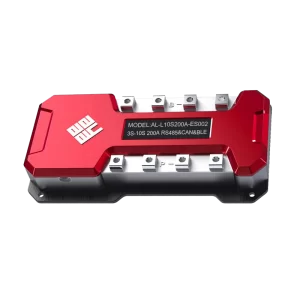
A BMS assesses state of charge (SoC) and state of health (SoH) in addition to protection.
These computations assist systems in scheduling maintenance, forecasting runtime, and optimizing charging behavior throughout the battery’s life.
How does monitoring improve reliability?
Operators can see battery conditions in real time thanks to continuous data collecting on voltage, current, and temperature.
This openness facilitates more intelligent operating choices and lessens unforeseen failures.
Why is protection more than just an emergency response?
Protection involves both preventing and responding to flaws.
A bms for lithium battery slows degradation over hundreds or thousands of cycles by proactively managing operating limits, which lessens cumulative stress on cells.
How does cell balancing extend battery lifespan?
As batteries age, cell imbalance is unavoidable.
By redistributing energy to maintain consistent cell voltages, active or passive balancing keeps weaker cells from limiting the performance of the entire pack.
What is the role of thermal management?
Both passive and active thermal control techniques guarantee that heat is dispersed and removed uniformly.
This stability enhances long-term dependability and reduces localized aging.
How does a BMS monitor battery behavior over time?
By keeping track of past data, a BMS makes trend analysis and early problematic behavior detection possible.
This is particularly useful for commercial and industrial applications.
How does it estimate battery operating status accurately?
More sophisticated algorithms estimate SoC and SoH more accurately than basic voltage-based techniques by combining voltage, current, and temperature data.
Why is performance optimization a continuous process?
A bms for lithium ion battery automatically modifies limitations in response to usage trends and environmental factors, maximizing usable energy without sacrificing safety.
How does communication add value?
CAN, SMBus, and Bluetooth communication are supported by many contemporary BMS platforms, enabling smooth integration with cloud platforms, energy management systems, and vehicle controllers.
How does controlled operation slow degradation?
The BMS significantly lessens the mechanisms that lead to capacity fading by preventing deep discharges, high currents, and heat extremes.
Why do unmanaged batteries fail earlier?
Inadequate control causes cells to deteriorate unevenly, move apart electrically, and undergo repetitive stress, which frequently results in early pack failure.
A well-designed bms for lithium ion battery maximizes useable life by ensuring that the battery ages consistently throughout.
Can a BMS prevent thermal runaway?
Early fault identification and quick isolation greatly lessen the chance of thermal events spreading, even though no system can completely remove danger.
Why is redundancy important in safety-critical systems?
High-end BMS systems include fail-safe circuitry and redundant sensors to guarantee protection even in the event of a component failure.
How will predictive analytics change battery management?
Predictive models will be used more frequently by future BMS platforms to foresee faults before they happen, changing maintenance from reactive to proactive.
Why is connectivity becoming essential?
Cloud connection opens up new efficiency and service models by enabling fleet operators and energy providers to remotely monitor thousands of batteries.
How will smarter BMS architectures reshape energy systems?
The BMS for lithium ion battery will change from a protective device to a strategic asset for energy optimization as batteries get bigger and more integrated into infrastructure.
So, is a bms for lithium ion battery the secret to a longer lifespan and safer operation?
Of course.
It controls every important factor that affects how a battery functions, ages, and reacts to obstacles in the real world.
The BMS turns lithium-ion batteries into dependable, long-term energy solutions through accurate monitoring, intelligent protection, communication, and predictive analytics.
Investing in cutting-edge BMS technology is now a strategic choice rather than a technical one as industries continue to electrify and seek higher performance with lower risk.
In contemporary lithium-ion applications, Ayaa Technology’s solutions demonstrate how intelligent BMS design can enable safer operation, longer battery life, and better total system value.
Q1:Is BMS necessary for a lithium-ion battery?
A1:For multi-cell packs, it is typically not advised to use a lithium battery without a BMS because of performance and safety issues.
If the gadget or charger has protective circuitry, single-cell batteries can operate without a separate BMS.
Q2:What is BMS in a lithium-ion battery?
A2:The electronic “brain” of a lithium battery pack, a battery management system (BMS) monitors and controls voltage, current, temperature, and cell balancing, preventing overcharging, overdischarging, and overheating to guarantee dependable operation and guard against damage.
It serves as an essential safety measure, controlling charging and discharging, safeguarding individual cells, and guaranteeing that the battery pack as a whole performs at its best.
Q3:What is the 40 80 rule for lithium batteries?
A3:To lessen stress and increase longevity, the “40–80 rule” recommends maintaining the state-of-charge (SoC) of lithium-ion batteries between around 40% and about 80%.
The battery cells’ internal chemical and thermal stress is greatly reduced by avoiding full charges (100%) and deep discharges (0% or close to).
Q4:Do I need a BMS for LiFePO4?
A4:For LiFePO4 batteries, a Battery Management System (BMS) is an essential safety feature rather than an add-on.
It offers ongoing security that is unmatched by manual monitoring.
Q5:Can I run a lithium battery without BMS?
A5:No, you shouldn’t and you can’t.
To meet safety regulations in Australia, lithium batteries need to include an integrated safety device called a Battery Management System (BMS).
In order to avoid deep drain, overheating, and overcharging—all of which can result in battery failure or even present a fire risk—a BMS is crucial.
Contact Us