- Industries

Home Backup & Garden BMS
View More >Electric Forklift BMS
View More >Golf Cart BMS
View More >Electric Two-wheeler BMS
View More >Aviation & UAV BMS
View More >BMS For Power Tools
View More >Medical Equipment BMS
View More >








Home About Us EVENTS & NEWS Is Battery 12V LiFePO4 Worth the Investment for 12V Applications? A Complete Buyer’s Guide
For many years, 12V batteries have served as the foundation for a wide range of power systems, including RVs, off-grid solar, automobiles, and maritime applications.
However, consumers are beginning to wonder if conventional battery technologies really make sense as energy demands rise and dependability becomes more crucial.
Is it time to move beyond conventional solutions?
Is a battery 12v lifepo4 truly worth the investment for modern 12V applications?
This buyer’s guide delves deeply into the workings of 12V batteries, explains why conventional solutions are currently struggling, and shows how LiFePO4 technology, when paired with a sophisticated Battery Management System (BMS), is changing expectations for performance, longevity, and safety.

What defines a 12V battery system?
A “12V battery” is a system-level voltage classification rather than a single cell.
In actuality, it is accomplished by joining many cells in series:
Lead-acid batteries typically consist of six 2V cells in series
Lithium-based 12V batteries usually rely on four cells in series (4S)
A 4S arrangement is perfect for 12V-class systems because a single cell in LiFePO4 chemistry has a nominal voltage of roughly 3.2V.
LiFePO4 (Lithium Iron Phosphate) uses a stable phosphate-based cathode structure.
This chemistry delivers:
1.High thermal stability
2.Lower risk of thermal runaway
3.A flatter discharge curve
4.Long cycle life under deep discharge conditions
Because of these features, battery 12v lifepo4 systems are especially well suited for situations where durability, safety, and consistency are more important than raw energy density.
LiFePO4 batteries sustain a steady voltage for the majority of the discharge cycle, in contrast to lead-acid batteries that experience voltage sag during discharge.
This has an immediate effect on:
1.Equipment efficiency
2.Motor performance
3.Inverter stability
4.Sensitive electronics protection
But even the finest chemistry might operate poorly without good management, which is why BMS is crucial.
What happens when cells are connected in series?
Series connections increase voltage. In a 12V LiFePO4 battery:
4 cells in series (4S) define the system voltage
Voltage imbalance between cells can occur over time
One poor cell can reduce the performance of the entire pack in the absence of active monitoring.
Parallel connections increase capacity (Ah):
1.Higher runtime
2.Greater current capability
3.Reduced stress on individual cells
But parallel layouts also make the system more complex, which increases the importance of controlling current distribution and cell balancing.
A high-quality BMS ensures:
1.Cell voltage balancing
2.Overcharge and over-discharge protection
3.Overcurrent and short-circuit protection
4.Temperature monitoring
BMS is the fundamental intelligence that transforms individual cells into a dependable energy system in a battery 12v lifepo4.
It is not an add-on.
Lead-acid batteries: Why are they still so widely used?
Lead-acid batteries dominate the market due to:
1.Low upfront cost
2.Mature manufacturing ecosystem
3.Wide availability
Common types include flooded, AGM, and gel batteries.
What are the inherent limitations of lead-acid technology?
Despite their popularity, lead-acid batteries face serious challenges:
1.Limited depth of discharge (typically 50%)
2.Short cycle life
3.Heavy weight and low energy density
4.Frequent maintenance requirements
As energy usage becomes more intensive, these drawbacks become increasingly costly.
How do lithium-ion batteries compare?
Lithium-ion batteries (such as NMC or NCA) offer:
Higher energy density
Lighter weight
However, they frequently compromise safety and thermal stability, which makes them less suitable for demanding or unattended 12V applications.
Why does LiFePO4 stand out among 12V battery options?
LiFePO4 uniquely balances:
1.Safety
2.Longevity
3.Usable capacity
4.System reliability
This balance is precisely why battery 12v lifepo4 solutions are rapidly replacing both lead-acid and other lithium chemistries in 12V systems.
Why does partial discharge damage lead-acid batteries?
Lead-acid batteries suffer from sulfation when repeatedly undercharged. This leads to:
1.Permanent capacity loss
2.Increased internal resistance
3.Shortened service life
Modern applications demand:
1.High peak currents
2.Deep cycling
3.Frequent charge-discharge cycles
Lead-acid batteries were never designed for such usage patterns.
Lead-acid batteries are highly sensitive to temperature, experiencing:
Reduced capacity in cold environments
Accelerated degradation in heat
These limitations significantly reduce system reliability in real-world conditions.
What usage patterns should influence your decision?
Ask yourself:
1.Will the battery be deeply discharged daily?
2.Is high current output required?
3.Will the system operate unattended?
These questions often point directly toward LiFePO4 solutions.
While lead-acid batteries are cheaper initially, they often require:
1.Multiple replacements
2.Higher maintenance costs
3.Efficiency losses
Over time, a battery 12v lifepo4 typically delivers a lower total cost of ownership.
LiFePO4 batteries require:
1.No watering
2.No equalization charging
3.Minimal user intervention
With a smart BMS, the system becomes effectively self-managing.
Why are RV and camper systems moving to LiFePO4?
RV users benefit from:
1.Lightweight design
2.Fast charging
3.Stable voltage for appliances
Marine environments demand:
1.High reliability
2.Corrosion resistance
3.Safety under vibration
BMS-controlled LiFePO4 systems excel in these conditions.
Solar systems rely on deep cycling. LiFePO4 batteries offer:
1.High cycle life
2.High round-trip efficiency
3.Predictable performance
This makes battery 12v lifepo4 a natural fit for renewable energy storage.
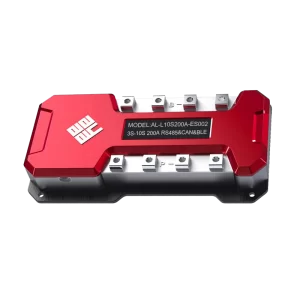
What protection functions does a BMS provide?
A robust BMS manages:
1.Overvoltage and undervoltage
2.Charge and discharge current limits
3.Thermal protection
Cell imbalance leads to:
Reduced usable capacity
Accelerated cell aging
Active or well-designed passive balancing dramatically extends battery life.
The BMS turns chemistry into a reliable power source by continuously monitoring internal conditions to prevent breakdowns before they happen.
Does higher upfront cost translate into real value?
Yes—when evaluated across:
1.Cycle life
2.Usable energy
3.Maintenance savings
4.Reliability
LiFePO4 systems consistently outperform alternatives.
Users who value:
1.Long-term performance
2.Safety
3.Minimal downtime
will see the greatest return on investment.
Selecting the best 12V battery now takes into account system intelligence, safety, and lifecycle value in addition to chemistry.
The transition from disposable energy storage to long-term, high-performance power solutions is fundamentally represented by a well-designed battery 12v lifepo4, backed by a sophisticated BMS.
Businesses like Ayaa Technology are pushing the limits of BMS design and LiFePO4 system integration to enable consumers realize the full potential of contemporary 12V energy storage as demand for safer, smarter, and more efficient electrical systems rises.
Q1:Are LiFePO4 batteries better than lithium?
A1:Lithium-ion (Li-ion, usually NMC/NCA) and lithium iron phosphate (LFP) are both “better” in different ways.
While Li-ion (NMC/NCA) offers higher energy density (more power in less space), which makes Li-ion better for portable electronics (phones, laptops) where space and weight are crucial, LFP offers superior safety, longevity, and cost-effectiveness (lower cost per cycle).
Q2:What is a LiFePO4 battery?
A2:One particular kind of lithium-ion battery is the lithium iron phosphate (LiFePO4) battery.
LiFePO4 technology has a number of benefits over conventional lithium-ion batteries.
Longer life cycles, increased safety, increased discharge capacity, and reduced environmental and humanitarian effect are some of these.
Q3:Is it better to have 2 100Ah batteries or 1 200Ah battery?
A3:A 200Ah battery is more practical and efficient, providing easier management, if you require significant power for larger systems.
However, two 100Ah batteries can be a preferable choice for distributed or smaller configurations, offering more flexibility.
Q4:Do I need a special charger for a LiFePO4 battery?
A4:Yes, LiFePO4 batteries require a special charger with a specific voltage (about 14.6V for 12V packs) and a Constant Current/Constant Voltage (CC/CV) profile.
You also need to disable the float/trickle charge mode because using a regular lead-acid charger can harm the battery, shorten its lifespan, and cause poor performance or even failure.
Q5:Is it bad to keep LiFePO4 batteries fully charged?
A5:A fully charged LiFePO4 battery can be stored.
If you wish to keep these batteries for a longer period of time, it is advised that they be fully charged.
The self-discharge rate of these batteries is often extremely low.
Contact Us